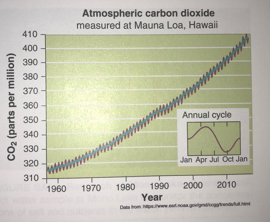
Which of the following most directly explains the periodic fluctuations of the curve?
Which of the following most directly explains the periodic fluctuations of the curve?
Which of the following most directly explains the periodic fluctuations of the curve?
Which of the following is most likely a significant cause of the general trend indicated by the graph?
Which of the following is true of carbon as it cycles in nature?
Which of the following elements is most likely to limit primary production in freshwater lakes?
Which of the following diagrams correctly illustrates the nitrogen cycle?
Which of the following best describes soil in many tropical rain forests?
The ultimate source of energy for terrestrial ecosystems is
The two major processes involved in the carbon cycle are
The process in the hydrologic cycle in which water vapor is released from leaves into the atmosphere is called
The net annual primary productivity of a particular wetland ecosystem is found to be 8,000 kcal/m2 per year. If respiration by the aquatic producers is 12,000 kcal/m2 per year, what is the gross annual primary productivity for this ecosystem, in kcal/m2 per year?
The major biological source of dissolved oxygen in the ocean comes from
The greatest amount of freshwater is found in which of the following?
Losses of usable energy between successive trophic levels in an ecosystem are best accounted for by which of the following?
How does the burning of fossil fuels contribute to the net increase in atmospheric carbon?
Which of the following exemplifies when legumes fix nitrogen into the soil with help from bacteria and the bacteria receive nutrients from the legume plant?
Which of the following exemplifies when moss grows on a tree trunk in a forest so it can receive light and moisture but the tree is unaffected?
Which of the following exemplifies when ticks feed on a deer?
A field is abandoned, and an invasive plant that can live in nutrient-poor soil moves into the field. If the land is later cleared of this invasive species and it is discovered that the soil has an abundance of nitrogen compounds, what conclusion can best be made?
Which of the following best describes gross primary productivity in an ecosystem?
Phytoplankton are most abundant in the upper few hundred feet of most bodies of water because
Which of the following describes the process where plant roots absorb ammonium ions and nitrate ions for use in making molecules such as DNA, amino acids, and proteins?
Which environment is characterized by the highest diversity of tree species?
Which environment is most likely to be characterized by dry scrub with frequent fires?
Which of the following best helps to explain why phosphorus is often a limiting factor in many ecosystems?
Of the following organisms, which occupies the lowest trophic level?