Log in
Sign up for FREE
arrow_back
Library

Unit 1 Ecosystems MCQ

star
star
star
star
star
Last updated 12 months ago
25 questions
1
1
1
1
1
1
1
1
1
1
1
1
1
1
1
1
1
1
1
1
1
1
1
1
1
Question 1
1.

Question 2
2.

Question 3
3.

Question 4
4.

Question 5
5.

Question 6
6.

Question 7
7.

Question 8
8.

Question 9
9.

Question 10
10.

Question 11
11.

Question 12
12.

Question 13
13.

Question 14
14.

Question 15
15.

Question 16
16.

Question 17
17.

Question 18
18.

Question 19
19.

Question 20
20.

Question 21
21.

Question 22
22.

Question 23
23.

Question 24
24.

Question 25
25.

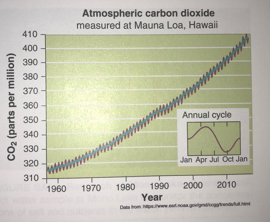
Which of the following most directly explains the periodic fluctuations of the curve?
Daily variations in air temperature
Seasonal variations in photosynthetic activity
Seasonal variations in ocean water temperature
Daily variations in sea level
Which of the following is most likely a significant cause of the general trend indicated by the graph?
Reduction of ozone concentrations in the upper atmosphere
Increase in consumption of fossil fuels
Increase in evaporation of ocean water
Reduction in size of polar ice caps
Which of the following is true of carbon as it cycles in nature?
The CO2 concentrations in the atmosphere is reduced by cutting trees
Carbon dioxide is released during photosynthesis
Carbon reservoirs include forests and oceans
Carbon compounds rarely exist in the gaseous state
Which of the following elements is most likely to limit primary production in freshwater lakes?
Phosphorus
Calcium
Carbon
Oxygen
Which of the following diagrams correctly illustrates the nitrogen cycle?
Which of the following best describes soil in many tropical rain forests?
They are deep and well drained
They are quickly depleted of nutrients when the forest is removed
They are similar to soils in grasslands
They lack soil horizons
The ultimate source of energy for terrestrial ecosystems is
Nutrients in vegetation
The sun
Nutrients in soil
Primary consumers
The two major processes involved in the carbon cycle are
Photosynthesis and respiration
Weathering and erosion
Evaporation and transpiration
Fixation and denitrification
The process in the hydrologic cycle in which water vapor is released from leaves into the atmosphere is called
Sublimation
Infiltration
Transpiration
Percolation
The net annual primary productivity of a particular wetland ecosystem is found to be 8,000 kcal/m2 per year. If respiration by the aquatic producers is 12,000 kcal/m2 per year, what is the gross annual primary productivity for this ecosystem, in kcal/m2 per year?
20,000
4,000
8,000
12,000
The major biological source of dissolved oxygen in the ocean comes from
Oxidation of sulfur by bacteria in ocean vent communities
Decomposition of organic sediments on the ocean floor
Metabolic processes of coral in reefs
Photosynthesis by phytoplankton
The greatest amount of freshwater is found in which of the following?
Rivers and streams
The atmosphere
Estuaries
Polar ice caps and glaciers
Losses of usable energy between successive trophic levels in an ecosystem are best accounted for by which of the following?
The second law of thermodynamics
The first law of thermodynamics
The law of conservation of matter
Limiting factors in the ecosystem
How does the burning of fossil fuels contribute to the net increase in atmospheric carbon?
Carbon that has been sequestered underground is added to the carbon cycle, cycling between the atmosphere and the biosphere
Carbon released by the burning is not in a form that can be readily absorbed by plants, leaving residual carbon in the atmosphere
Carbon released by the burning is more easily absorbed in the atmosphere than that produced by natural means
Carbon released by the burning increases plant growth, producing more carbon for the atmosphere
Which of the following exemplifies when legumes fix nitrogen into the soil with help from bacteria and the bacteria receive nutrients from the legume plant?
Competition
Commensalism
Parasitism
Mutualism
Which of the following exemplifies when moss grows on a tree trunk in a forest so it can receive light and moisture but the tree is unaffected?
Commensalism
Parasitism
Competition
Mutualism
Which of the following exemplifies when ticks feed on a deer?
Mutualism
Parasitism
Commensalism
Competition
A field is abandoned, and an invasive plant that can live in nutrient-poor soil moves into the field. If the land is later cleared of this invasive species and it is discovered that the soil has an abundance of nitrogen compounds, what conclusion can best be made?
The plants used up all of the phosphorus and potassium and left the nitrogen behind
More rock was weathered and broken down to release nitrogen compounds
Primary succession always produces an abundance of nitrogen
Bacteria in soil and root nodules converted free nitrogen into nitrogen compounds
Which of the following best describes gross primary productivity in an ecosystem?
Gross primary productivity is the total amount of energy captured by producers plus the energy used by consumers over time.
Gross primary productivity is the total amount of energy lost as heat during energy transfer between trophic levels.
Gross primary productivity is the total amount of energy captured by producers minus the energy that producers respire over time.
Gross primary productivity is the total amount of solar energy captured by producers through photosynthesis over time.
Phytoplankton are most abundant in the upper few hundred feet of most bodies of water because
Sunlight does not penetrate to great depths in water
They can most readily hide from predators there
They feed on zooplankton, which are found only in the top layers of water
As primary producers, they must be accessible to many other organisms
Which of the following describes the process where plant roots absorb ammonium ions and nitrate ions for use in making molecules such as DNA, amino acids, and proteins?
Nitrification
Nitrogen fixation
Denitrification
Assimilation
Which environment is characterized by the highest diversity of tree species?
Which environment is most likely to be characterized by dry scrub with frequent fires?
Which of the following best helps to explain why phosphorus is often a limiting factor in many ecosystems?
Phosphate is not readily taken up by plants
There is usually a gaseous phase in the phosphorus cycle
Under many conditions, phosphorus forms stable insoluble compounds (rocks)
Phosphorus cycles very quickly through environments
Of the following organisms, which occupies the lowest trophic level?
Hawk
Snake
Deer
Spider