11
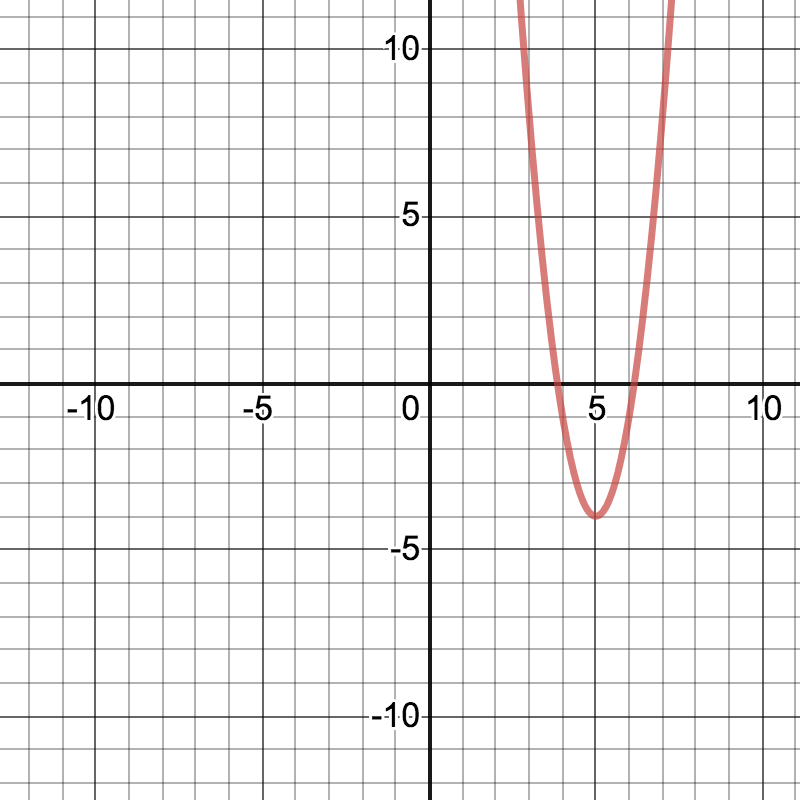
Write the equation of this transformed graph.
Write the equation of this transformed graph.
When given an equaiton of a function, describe how you know when you have a horizontal translation. And explain how you know which way it gets translated (shifted). Use an example if it hepls you explain.
| Draggable item | arrow_right_alt | Corresponding Item |
|---|---|---|
| arrow_right_alt | vertical dilation by a factor of 3, horizontal translation right 5 and vertical translation up 9. | |
| arrow_right_alt | horizontal dilation by a factor of 3, horizontal translation right 5 vertical tanslation up 9. | |
| arrow_right_alt | Horizontal dilation by a factor of 1/3, vertical translation down 9 | |
| arrow_right_alt | Vertical dilation by a factor of 1/3, horizontal translation left 5 and vertical translation up 9. | |
| arrow_right_alt | horizontal dialtion by a factor of 1/3, horizontal translation left 5 and vertical translation up 9. | |
| arrow_right_alt | Horizontal dialtion by a factor of 3, vertical translation up 9. | |
| arrow_right_alt | Horizontal dilation by a factor of 3, horizontal translation right 9. |
Select the equaiton that represents Radical function with a vertical dialtion of 1/2, a horizontal translation left 4 and a vertical translation down 8.
Select all of the transformations of the parent function occuring in the given function equation.
Write the equation of this transformed graph.
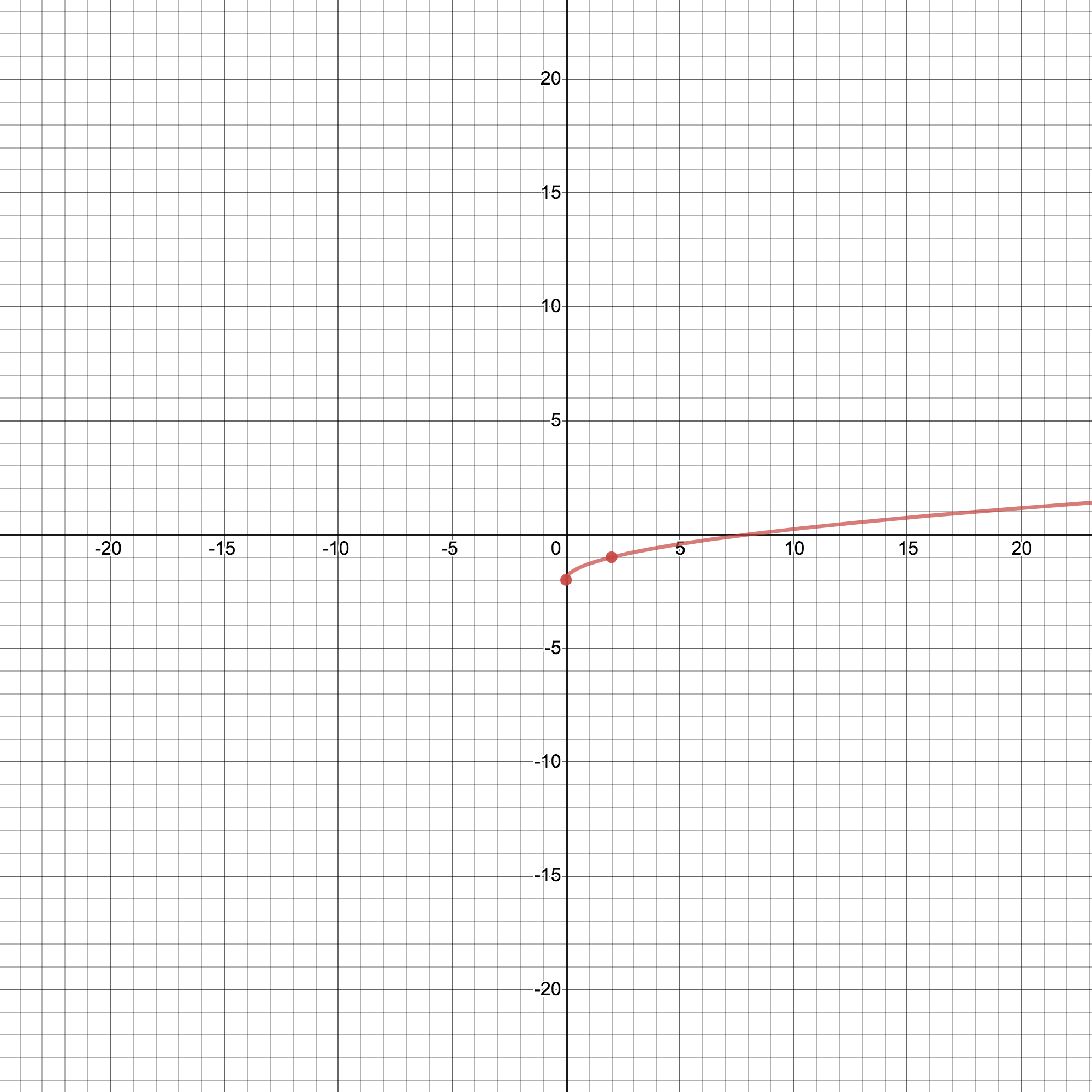
Write the equation of the transformed graph.
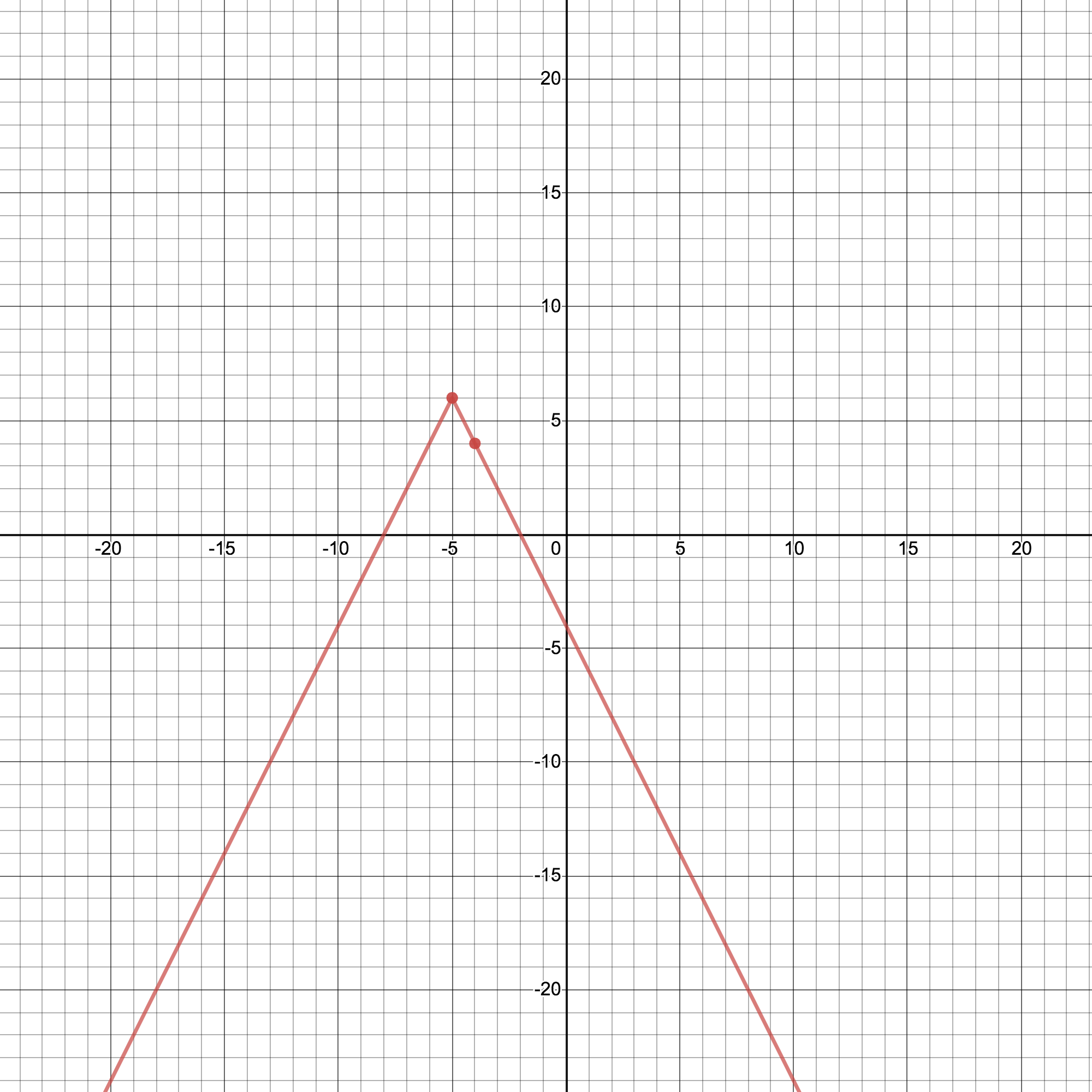
Write the equation of the transformed graph.
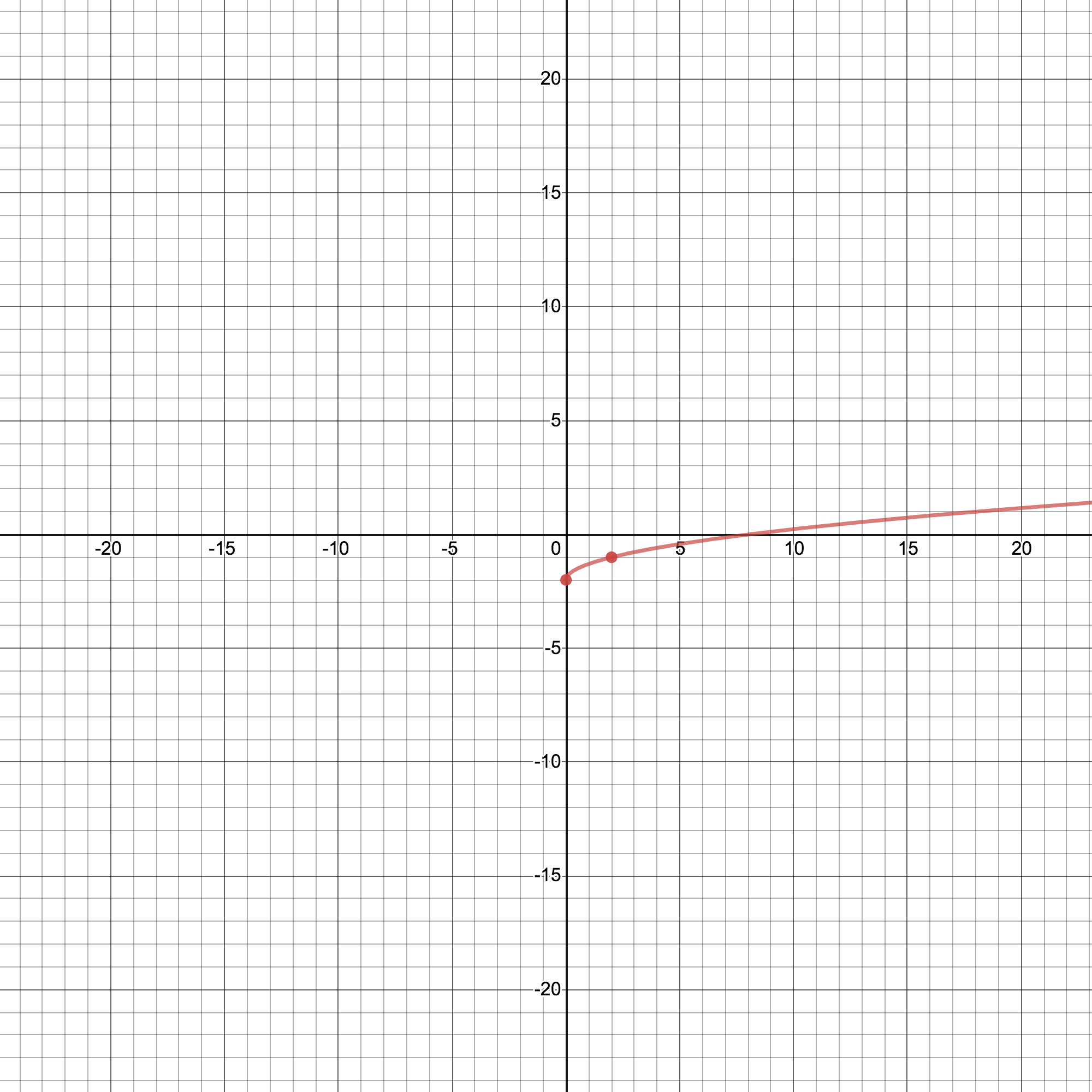
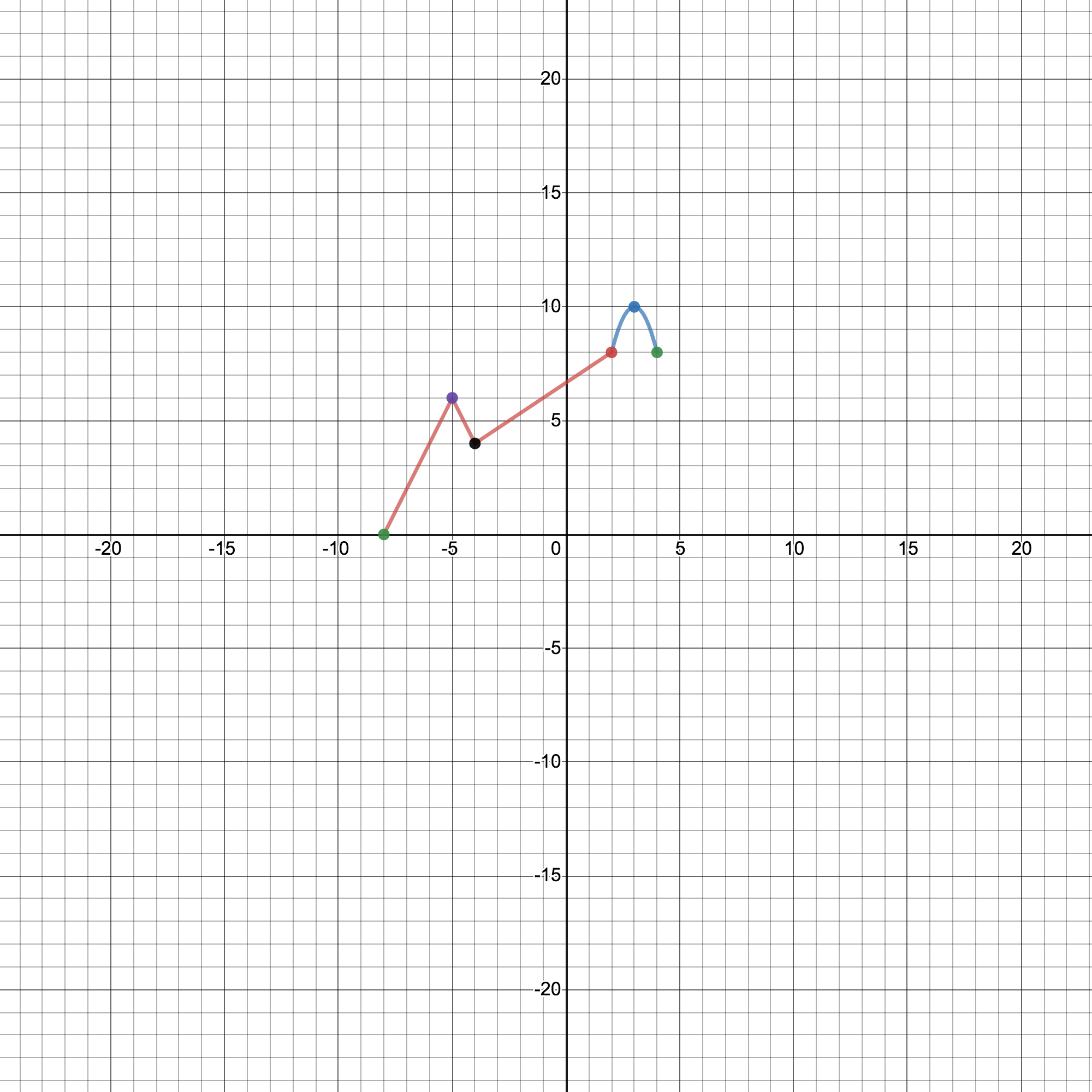
Select the appropriate domain and range from this list.
Given the graph f(x) to the left, if you we to transform it to:
Name 4 of the six points needed to graph this transformation.