Log in
Sign up for FREE
arrow_back
Library

MB 2.6

star
star
star
star
star
Last updated about 3 years ago
15 questions
Untitled Section
Part 1
Part 2
Part 3
Part 4
4
Finished?
Objective: KWBAT gather and evaluate evidence from text to argue the effects of a fecal transplant on the human body.

Read both of the articles for two new types of bacteria and then complete the matching activity at the end.

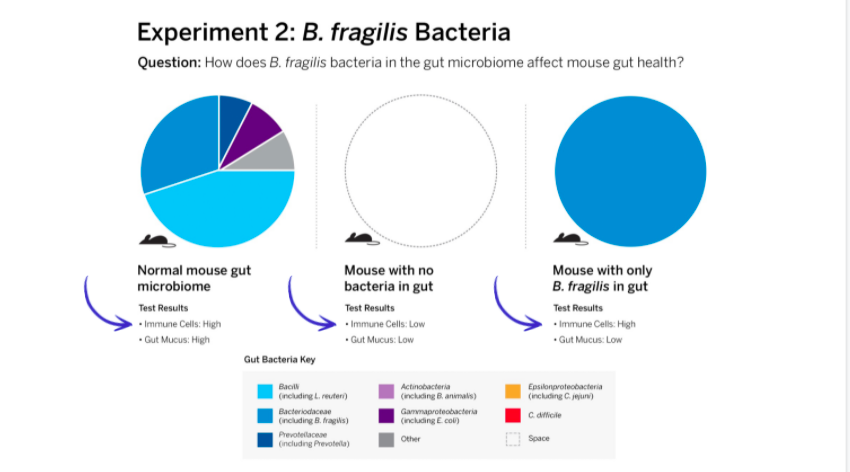
1. Read: Bacteria B. fragilis
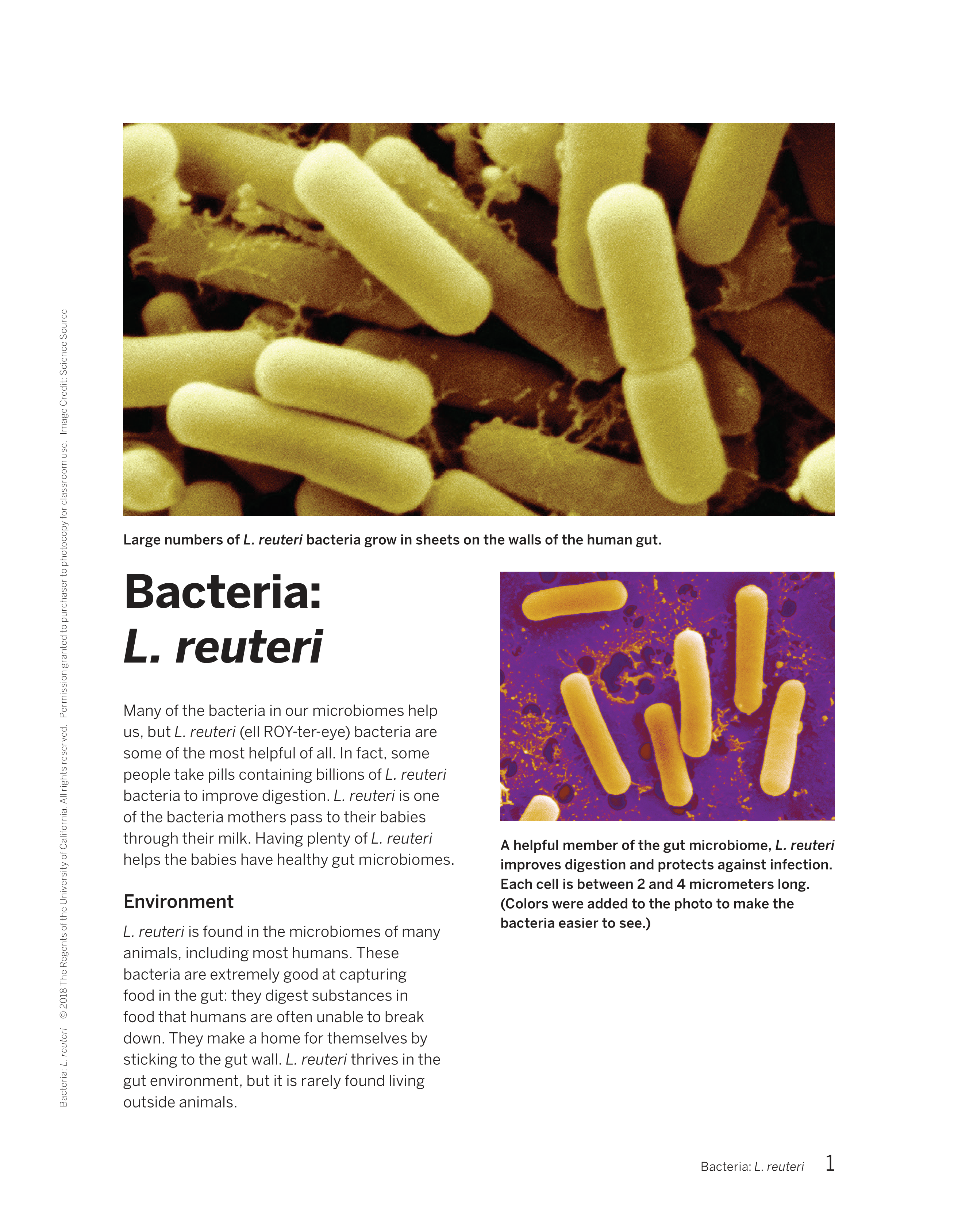
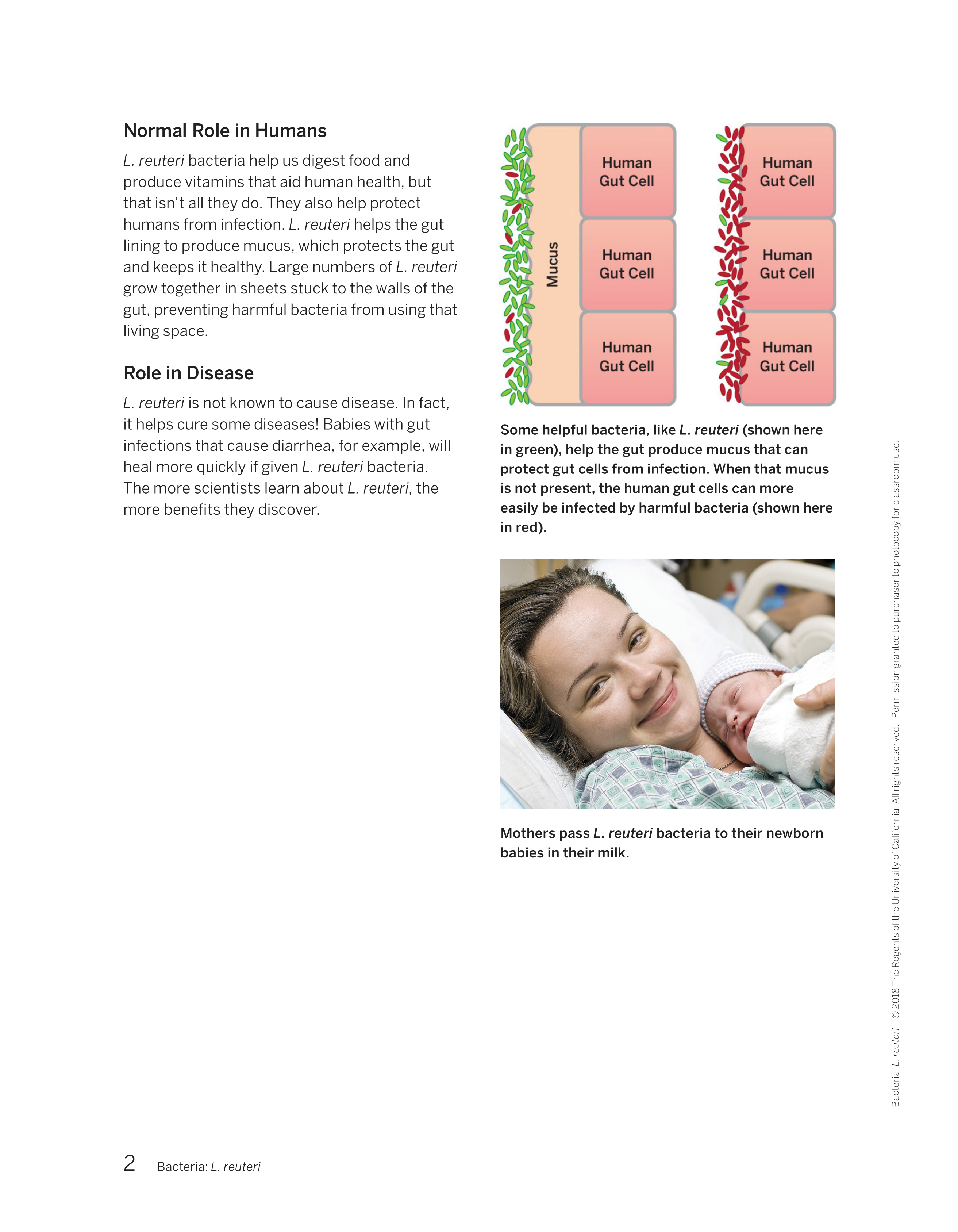
2. Read: Bacteria L. reuteri
3. Completing Matching activity

Part 1: Do Now


Bacteria from the fecal transplant can fill up the space in the gut, limiting the food and space for invading harmful bacteria. One piece of evidence that supports this claim is that Patient 23’s case study showed that before the fecal transplant, the patient had low bacteria in his gut, and the bacteria included C. difficile. In week 9, after the fecal transplant, the patient had high bacteria in his gut and no C. difficile.
1
1
1
0
Question 4
4.

Reflect: Why is it important to include reasoning in an argument?

(reasoning: connecting the evidence to the claim)

Part 2: Analyzing Experiments about Bacteria

2
2

Part 3: Reading about Bacteria

Link to article:

https://ereader.learning.amplify.com/#/reader/ebbb6e2f-7f05-47f8-ab7a-27d71434b4b8
1
1
2
0
Question 10
10.

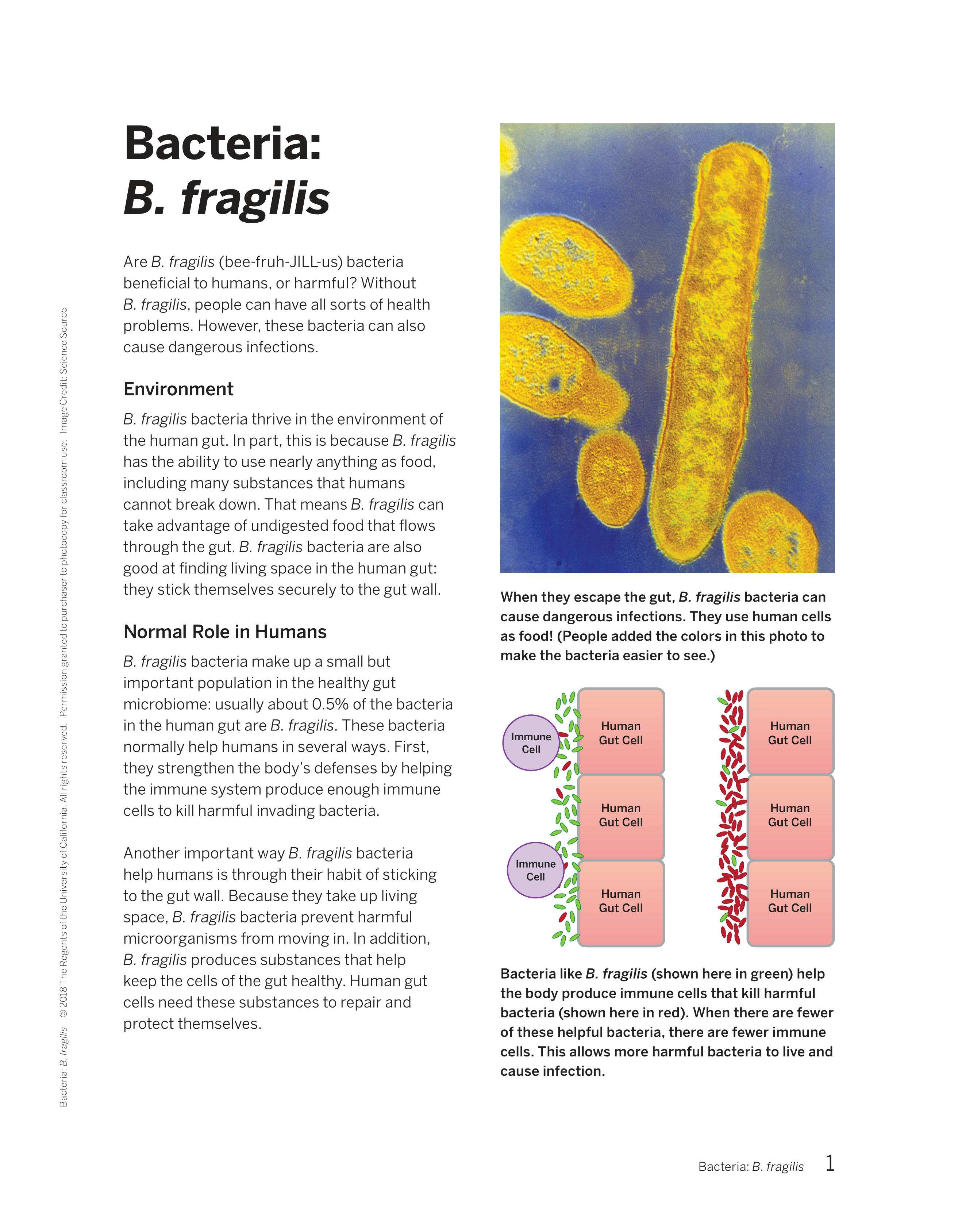
Summarize this diagram. What does it show us?

Sentence starter:
This diagram shows us.....

0
Question 11
11.

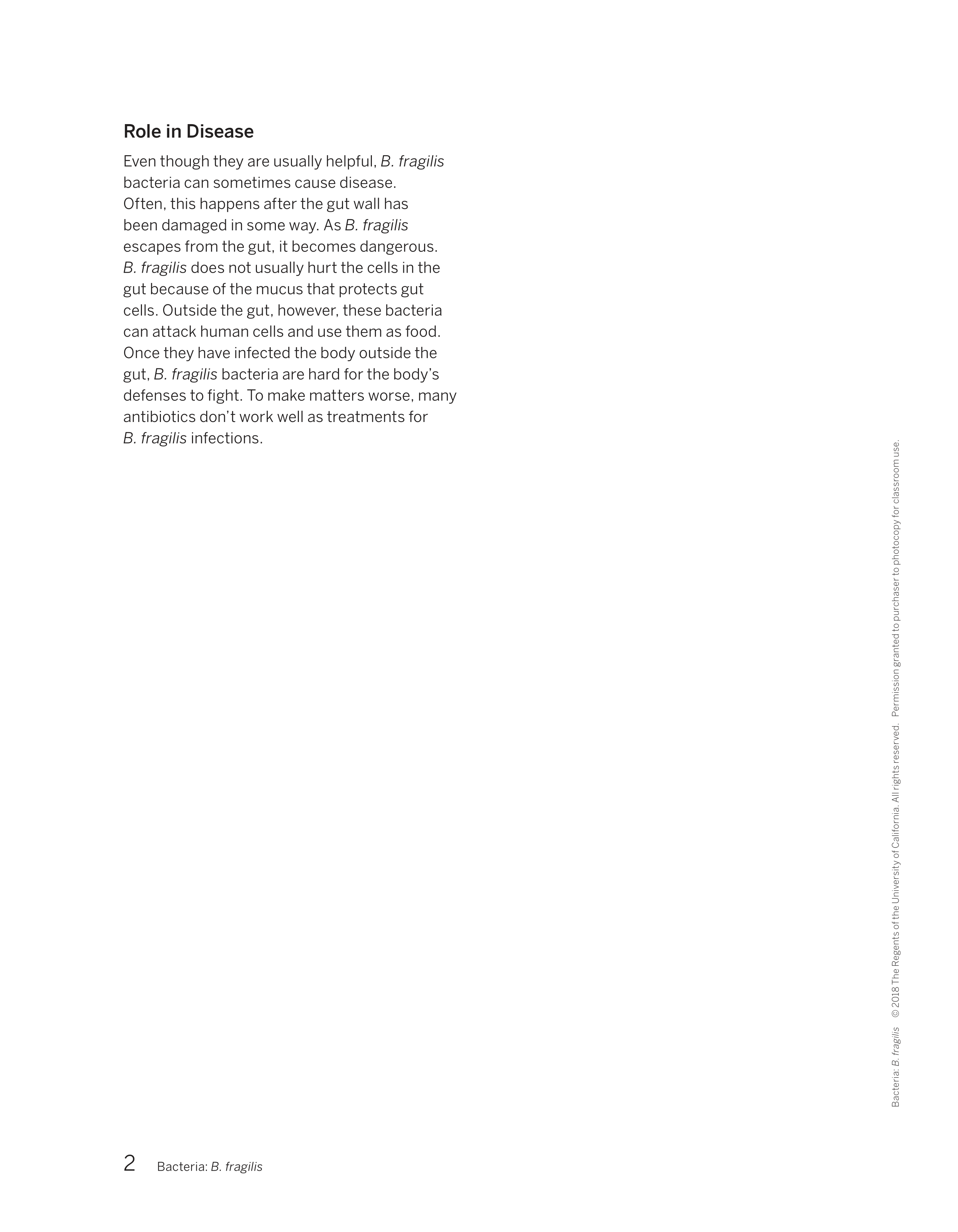
Explain what happens when B. fragilis is outside of the gut.

Sentence starter:
When B. fragilis is outside of the gut....

Link to article:

https://ereader.learning.amplify.com/#/reader/04f650ad-db8b-42fa-ba49-a66d81a42d07
0
Question 12
12.

Which quote from the first paragraph best supports this claim:

L. reuteri is one of the most helpful types of bacteria for the human microbiome.

Find a quote that supports this claim.

2
1
Question 14
14.

What does L. reuteri produce in the human gut?

Question 15
15.

Match the correct type of bacteria with their effect on the human body. You may have to revisit previous lessons and use the articles for this.

hints:
  • Patient 23😬
  • You just read about two GOOD bacteria types

Draggable itemarrow_right_altCorresponding Item
C. jejuni
arrow_right_alt
Vomiting, Diarrhea, Fever
B. fragilis
arrow_right_alt
Stomach Pains, Diarrhea, Bloating
L. reuteri
arrow_right_alt
Produces Immune Cells
C. difficile
arrow_right_alt
Produces Mucus
Finished early?
We are going to do a practice quiz at the end of the lesson, so best review your previous formatives!
  • Practice Independent Blooket: https://www.blooket.com/play?hwId=6310c488dc99b3278105c30c
Question 1
1.

What is the claim from the above statement?

Question 2
2.

What is the evidence from the above statement?

Question 3
3.

What is the reasoning from the above statement?

Question 5
5.

Use the pie chart on the left to complete this question:

How does B. fragilis bacteria in the gut microbiome affect mouse gut health?
Select all that apply.
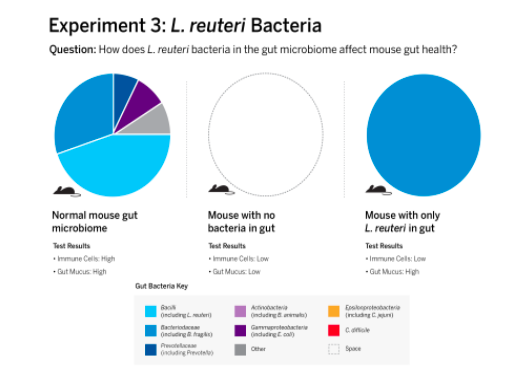
Question 6
6.

Use the pie chart on the left to complete this question:

How does L. reuteri bacteria in the gut microbiome affect mouse gut health?

Select all that apply.
Question 7
7.

True or False: The bacteria B. fragilis can cause dangerous infections.

Question 8
8.

True or false: B. fragilis has the ability to use nearly anything as food in the human gut

Question 9
9.

How does the bacteria B. fragilis help humans?

Question 13
13.

What two effects does L. reuteri have on the gut microbiome