09.29.20 (Sync) - Valence Electrons and Ions
star
star
star
star
star
Last updated almost 6 years ago
32 Nsɛmmisa
1
1

1
1
1
1
1
1
1
1
1
1
1
1
1
1
1
1
1
1
1
1
1
1
1

1
1
1
1
1
1
1
Objectives: Students will...
predict the number of valence electrons in an atom using the periodic table.
predict the type of ion that an atom will form based on the atom’s location on the periodic table.
calculate the number of protons, neutrons, electrons, mass number and charge of an ion.
A set of students were asked to draw the electron spin diagram and write the electron configuration for the element silicon. Their answers are in the 'show your work' section below.
Examine the three answers in the 'show your work' box. Using the red/orange pen feature, grade their responses.
Warm up #2
Two new words we will start using today are Group and Period.
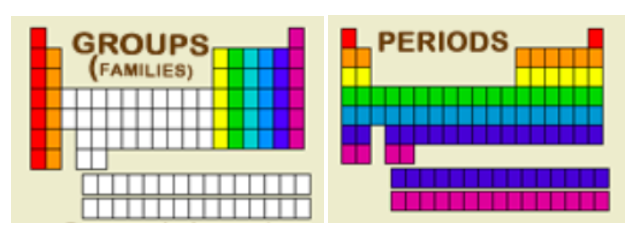
Using the image above, pick the best description for each
How are patterns in electron arrangements related to the location of an element on the periodic table?
Why?
The arrangement of electrons in an atom determines many of the chemical properties of an element. Two types of electrons can be found in an atom. The core electrons, or inner electrons, are found "inside" the atom - that is, they are not able to participate in bonding. The valence electrons are the outermost electrons. Valence electrons participate in bonding and the number of valence electrons correlates with the reactivity of the element. Valence electrons include all electrons found in the highest occupied energy level in the electron configuration for the element.
Consider the definition of 'valence electron' above.
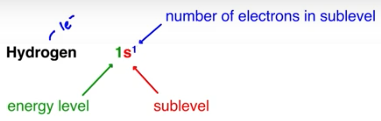
How might you be able to determine then number of valence electrons in an atom by looking at the electron configuration for an element?
Hint: Here's a screenshot from Mrs. Hanson's video about electron configurations:
Group 1 Elements
First, identify the electron configuration and number of valence electrons for the following elements.
Next, circle the elements on the periodic table.
4 valence electrons
2 valence electrons
1s1
1s2 2s2 2p6 3s2 3p6 4s1
1s2 2s1
1s2 2s2 2p6 3s1
1 valence electron
3 valence electrons
Hydrogen
Lithium
Sodium
Potassium
Group 2 Elements
First, identify the electron configuration and number of valence electrons for the following elements.
Next, circle the elements on the periodic table.
3 valence electrons
1 valence electrons
2 valence electrons
1s2 2s2 2p6 3s2 3p6 4s2
4 valence electrons
1s2 2s2 2p6 3s2
1s2 2s2
Beryllium
Magnesium
Calcium
Group 13 Elements
First, identify the electron configuration and number of valence electrons for the following elements.
Next, circle the elements on the periodic table.
1s2 2s2 2p6 3s2 3p6 4s2 3d10 4p1
4 valence electrons
1 valence electrons
1s2 2s2 2p1
3 valence electrons
1s2 2s2 2p6 3s2 3p1
6 valence electrons
2 valence electrons
Boron
Aluminum
Gallium
Group 14 Elements
First, identify the electron configuration and number of valence electrons for the following elements.
Next, circle the elements on the periodic table.
6 valence electrons
2 valence electrons
1s2 2s2 2p2
1s2 2s2 2p6 3s2 3p6 4s2 3d10 4p2
3 valence electrons
4 valence electrons
1s2 2s2 2p6 3s2 3p2
Carbon
Silicon
Germanium
Group 15 Elements
First, identify the electron configuration and number of valence electrons for the following elements.
Next, circle the elements on the periodic table.
1s2 2s2 2p6 3s2 3p3
4 valence Electrons
1s2 2s2 2p3
1s2 2s2 2p6 3s2 3p6 4s2 3d10 4p3
5 valence Electrons
3 valence electrons
6 valence Electrons
Nitrogen
Phosphorus
Arsenic
Group 16 Elements
First, identify the electron configuration and number of valence electrons for the following elements.
Next, circle the elements on the periodic table.
1s2 2s2 2p6 3s2 3p4
4 valence Electrons
3 valence electrons
6 valence Electrons
2 valence Electrons
1s2 2s2 2p6 3s2 3p6 4s2 3d10 4p4
1s2 2s2 2p4
Oxygen
Sulfur
Selenium
Group 17 Elements
First, identify the electron configuration and number of valence electrons for the following elements.
Next, circle the elements on the periodic table.
5 valence electrons
1s2 2s2 2p6 3s2 3p6 4s2 3d10 4p5
4 valence Electrons
1s2 2s2 2p5
2 valence Electrons
3 valence electrons
7 valence Electrons
1s2 2s2 2p6 3s2 3p5
Fluorine
Chlorine
Bromine
Group 17 Elements
First, identify the electron configuration and number of valence electrons for the following elements.
Next, circle the elements on the periodic table.
3 valence electrons
2 valence Electrons
1s2 2s2 2p6
8 valence Electrons
6 valence electrons
1s2
1s2 2s2 2p6 3s2 3p6 4s2 3d10 4p6
4 valence Electrons
1s2 2s2 2p6 3s2 3p6
Neon
Argon
Krypton
Helium
What do you notice about the electron configurations and number of valence electrons for elements that are in the same group on the periodic table?
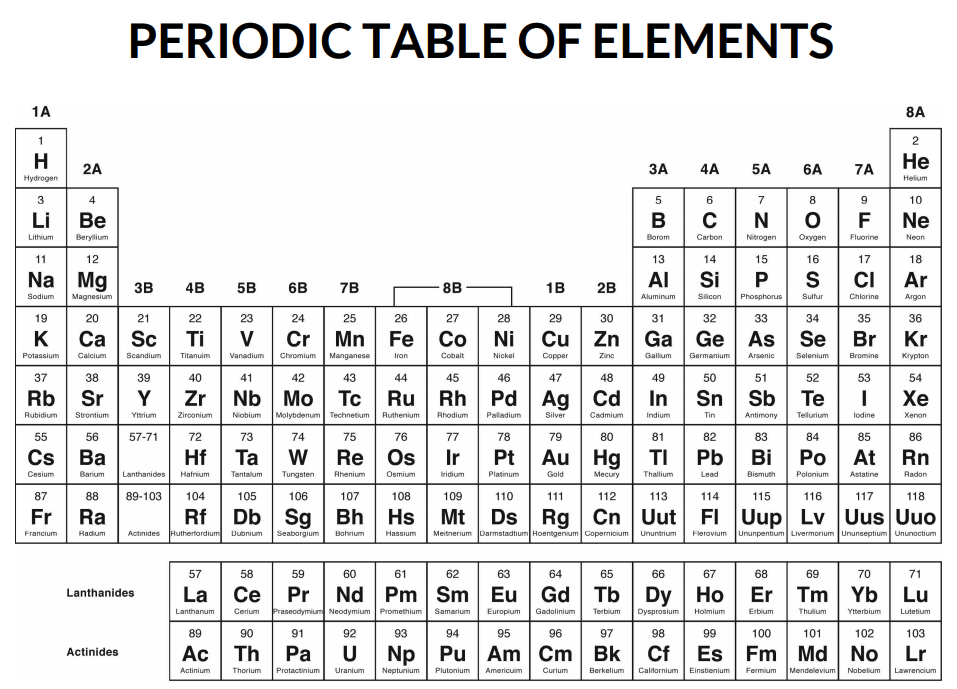
Use the periodic table above to put the following elements in order from fewest number of valence electrons to greatest number of valence electrons.
Tin
Gallium
Bismuth
Tellurium
Rubiduim
Barium
Xenon
Iodine
For each element listed below:
Circle the valence electrons on the electron configurations (in the 'show your work' box')
Circle the elements on the periodic table.
Match the elements with their number of valence electrons
Iron
Krypton
Copper
Silver
Antimony
Molybdenum
2 valence electrons
9 valence electrons
8 valence electrons
10 valence electrons
5 valence electrons
Consider your answers to #14. Do electrons in d orbitals ever count as valence electrons? Why or why not?
Consider your answer to #14. In general, how many valence electrons do elements in the d block have?
Why?
Many atoms present in nature are not in their 'atom' form. Rather, they are in 'ion' form. An atom's ion form is dependent on its number of valence electrons, and force of attraction between the nucleus and the electrons. In this part of the activity, you will determine what an ion is and how they are formed.
Directions: Use the Build an Atom simulation below to answer questions 17-25.
(Make sure to open the 'net charge' box!)
If you'd like to have 'Build an Atom' open in a different window, click on the following link: Build an Atom
Play with the simulation for a few minutes using the Atom screen. Write down three new things you notice as you play with the simulation.
What is the difference between a neutral atom and an ion?
Using what you learned from the simulation, define the term 'ion' in your own words.
Use the simulation to build stable atoms (He) or ions (Li, Be, and B). Draw the atoms or ions in the 'show your work' area, then identify the number of protons and electrons in the atom/ions.
(You may simply write the number of protons and neutrons in the nucleus, but please draw the electrons!)
2 electrons
5 protons
3 protons
4 electrons
5 electrons
3 electrons
2 protons
4 protons
Stable atom of helium (He)
Stable ion of lithium (Li+)
Stable ion of beryllium (Be2+)
Stable ion of boron (B3+)
What do you notice about the number of electrons in Li+, Be+2, B3+, and He?
Think about your answer for #21. Why do you think lithium always forms a +1 ion, beryllium always forms a +2 ion, and boron always forms a +3 ion?
Use the simulation to build stable atoms (Ne) or ions (F, O, and N). Draw the atoms or ions in the 'show your work' area, then identify the number of protons and electrons in the atom/ions.
(You may simply write the number of protons and neutrons in the nucleus, but please draw the electrons!)
9 protons
10 protons
7 protons
10 electrons
8 electrons
8 protons
7 electrons
9 electrons
Stable atom of Ne
Stable atom of F (F1-)
Stable atom of O (O2-)
Stable atom of N (N3-)
What do you notice about the number of electrons in F-, O2-, N3-, and Ne?
Think about your answer for #24. Why do you think fluorine always forms a -1 ion, oxygen always forms a -2 ion, and nitrogen always forms a -3 ion?
Use the periodic table below to answer questions 26-30.
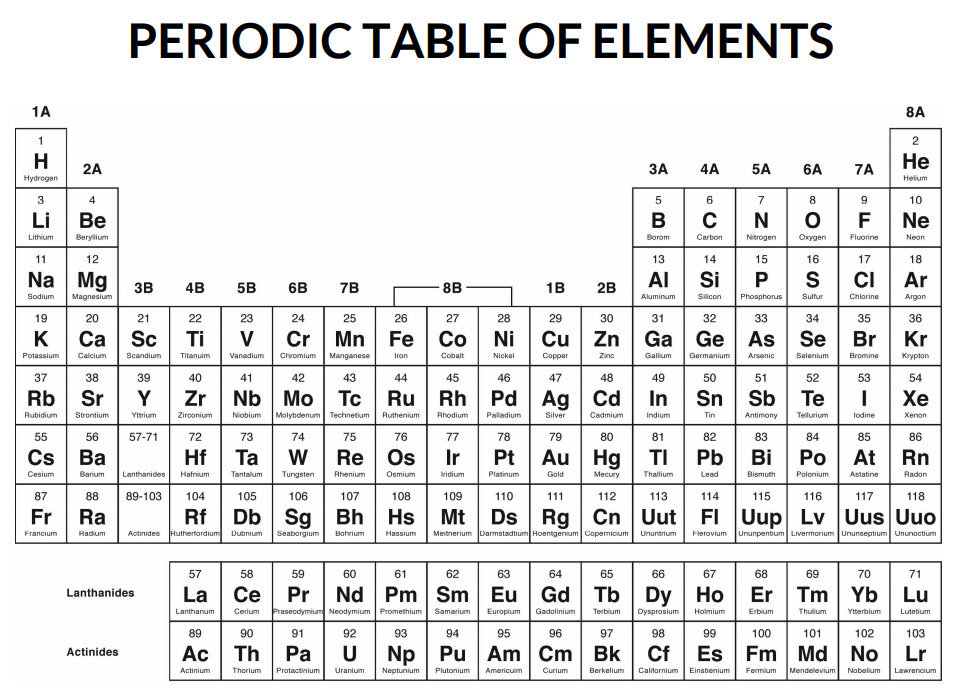
Complete the table below to show how the ions listed form
Consider the ions in #26. How can you calculate the charge of an ion?

Using the periodic table above, complete the table below to summarize the patterns between ions that form and the location of elements on the periodic table. The first row is done for you.
Hint: for the 'Will atom gain or lose electrons?' column, consider the number of electrons the atom has and the number of electrons that would need to be lost or gained in order to create an ion. For example, it is far easier for a lithium atom to lose one electron than it is to gain seven.)
Label the smaller periodic table below with the charges that the ions form for each of the groups shown.
Elements in groups 1, 2, and 13 often form cations, while elements in groups 15, 16, and 17 often form anions. Considering this, which of the following are the best definitions for cation and anion?
First, complete the table in the 'show your work' box. You must complete EVERY box, not just the colored boxes!
Next, match the colored boxes with the number that you wrote in the box.
| Draggable item | arrow_right_alt | Corresponding Item |
|---|---|---|
| arrow_right_alt | cation |
| arrow_right_alt | 1 gained |
| arrow_right_alt | 5 |
| arrow_right_alt | lose or gain |
| arrow_right_alt | 17 |
| arrow_right_alt | 3 |
| arrow_right_alt | Ge+4 or Ge-4 |
First, complete the table in the 'show your work' box. You must complete EVERY box, not just the colored boxes!
Next, match the colored boxes with the number that you wrote in the box.
| Draggable item | arrow_right_alt | Corresponding Item |
|---|---|---|
| arrow_right_alt | 82 |
| arrow_right_alt | 103 |
| arrow_right_alt | 27 |
| arrow_right_alt | +2 |
| arrow_right_alt | 70 |
| arrow_right_alt | 19 |
| arrow_right_alt | 79 |