10/5 Ecological Tolerance/Natural Disruptions 7th

Last updated 7 months ago
15 questions
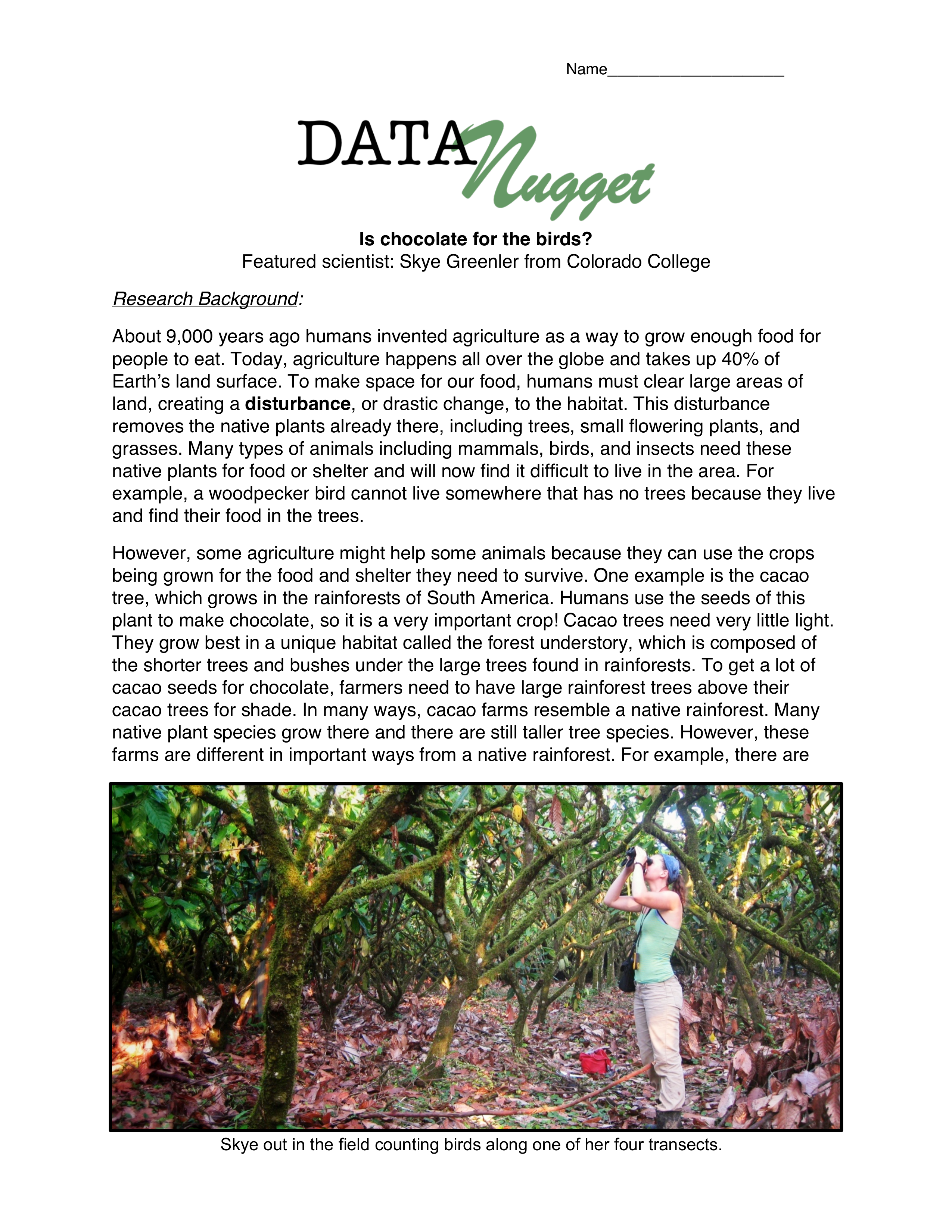
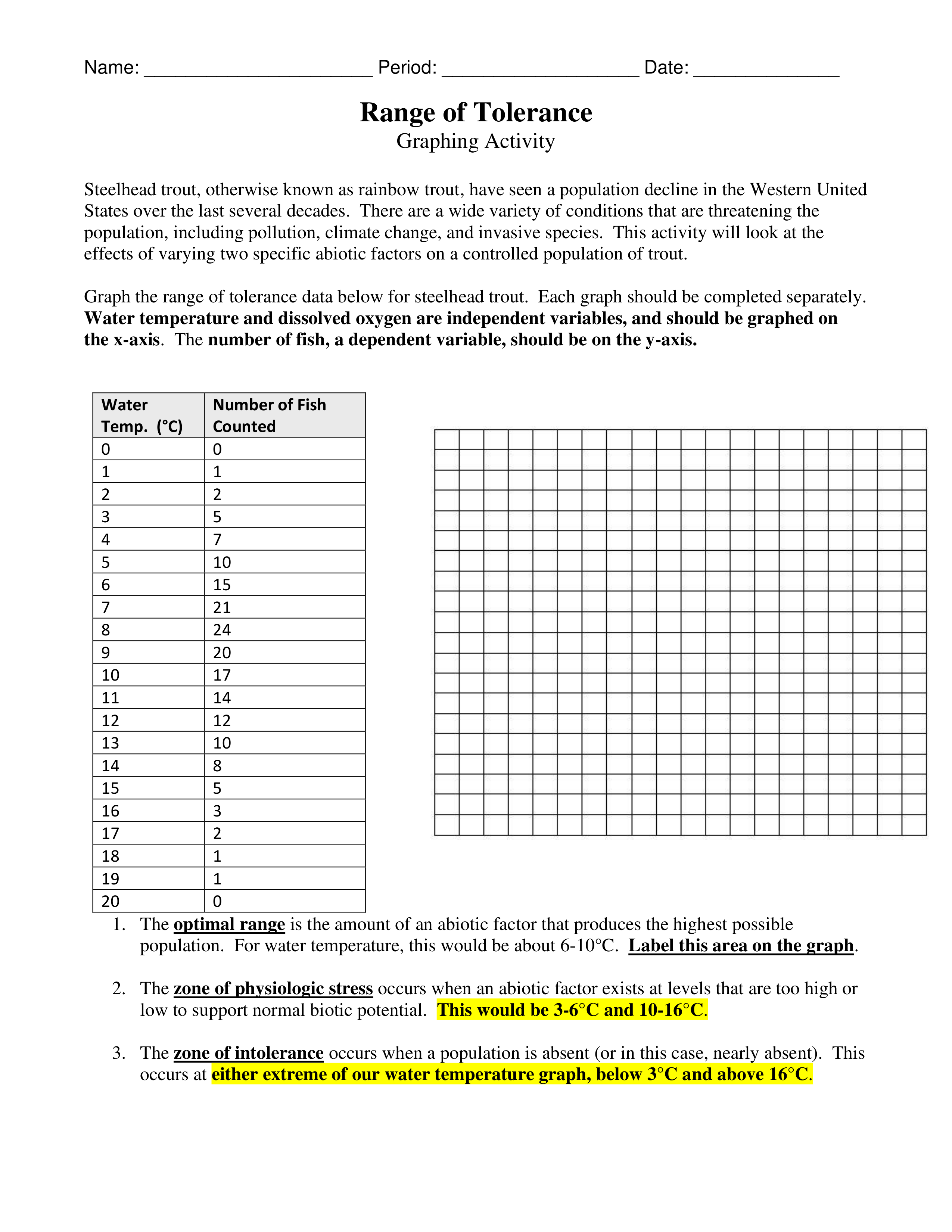
Steelhead trout, otherwise known as rainbow trout, have seen a population decline in the Western United States over the last several decades. There are a wide variety of conditions that are threatening the population, including pollution, climate change, and invasive species. This activity will look at the effects of varying two specific abiotic factors on a controlled population of trout.
Graph the range of tolerance data below for steelhead trout. Each graph should be completed separately.

Water temperature and dissolved oxygen are independent variables, and should be graphed on the x-axis. The number of fish, a dependent variable, should be on the y-axis.
1

Graph the data in a line graph.

The optimal range is the amount of an abiotic factor that produces the highest possible population. For water temperature, this would be about 6-10°C. Label this area on the graph.
The zone of physiologic stress occurs when an abiotic factor exists at levels that are too high or low to support normal biotic potential. This would be 3-6°C and 10-16°C.
The zone of intolerance occurs when a population is absent (or in this case, nearly absent). This occurs at either extreme of our water temperature graph, below 3°C and above 16°C.
1

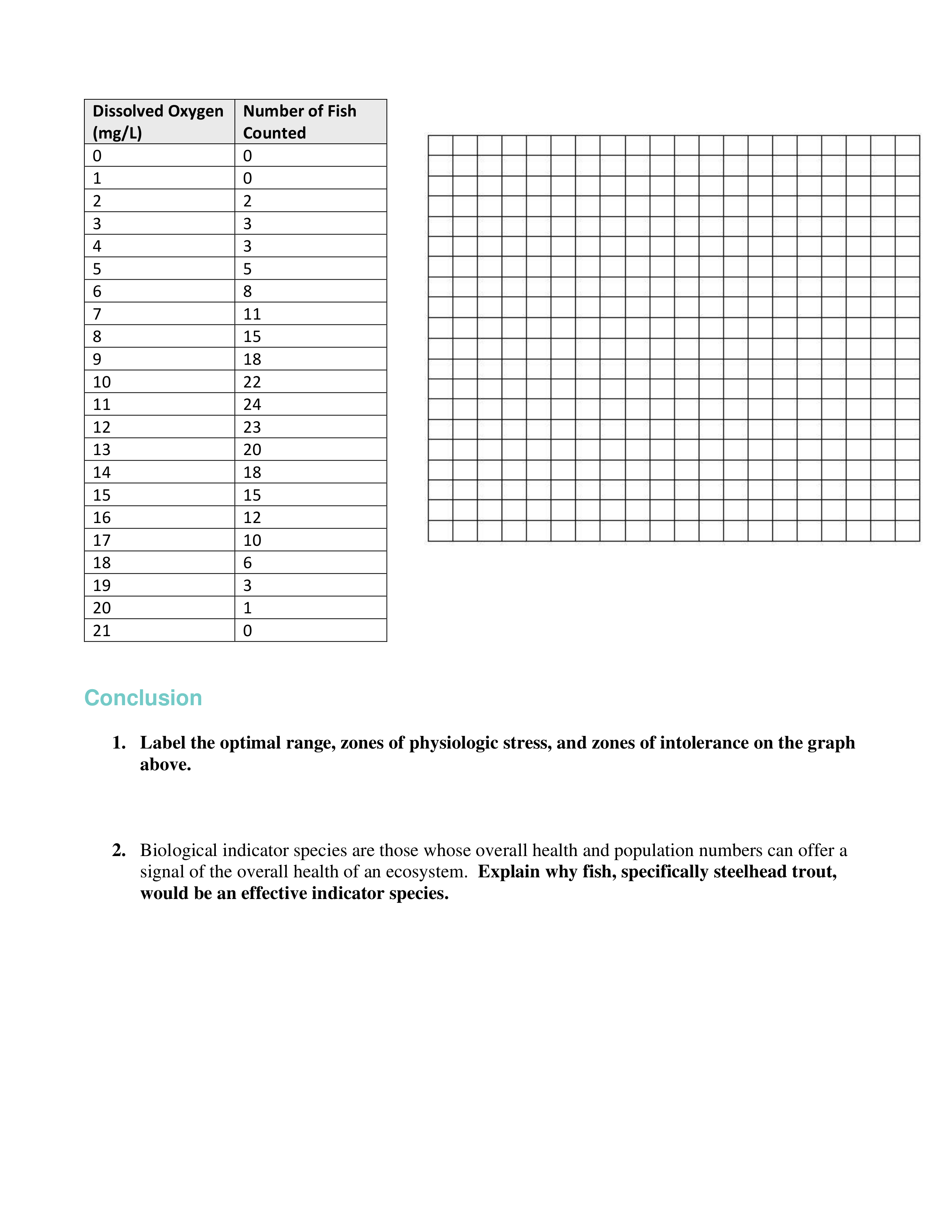
Graph the data in a line graph.

Label the optimal range, zones of physiologic stress, and zones of intolerance on the graph above.
1

Biological indicator species are those whose overall health and population numbers can offer a signal of the overall health of an ecosystem. Explain why fish, specifically steelhead trout, would be an effective indicator species.

1

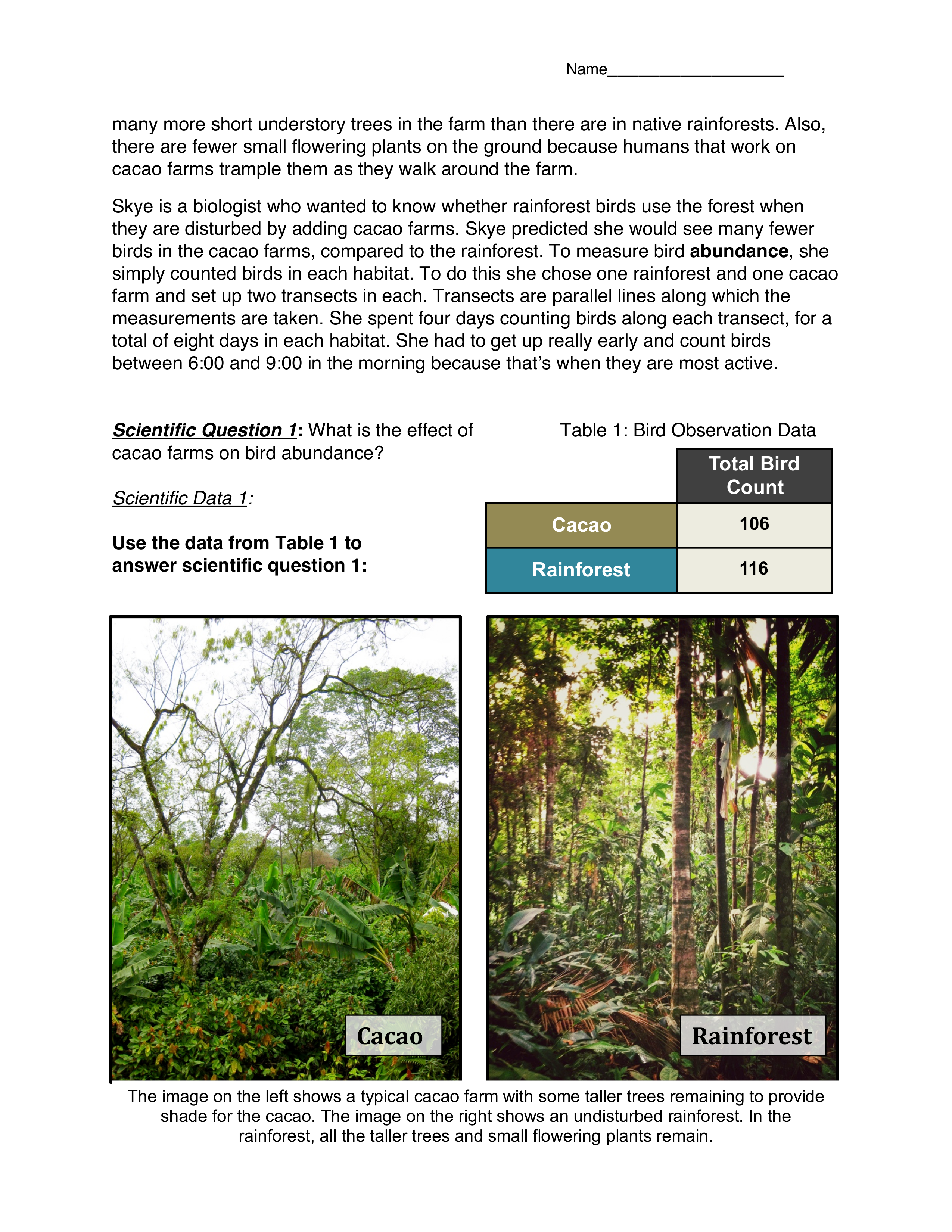
What is a disturbance?

1

What did Sky predict?

1

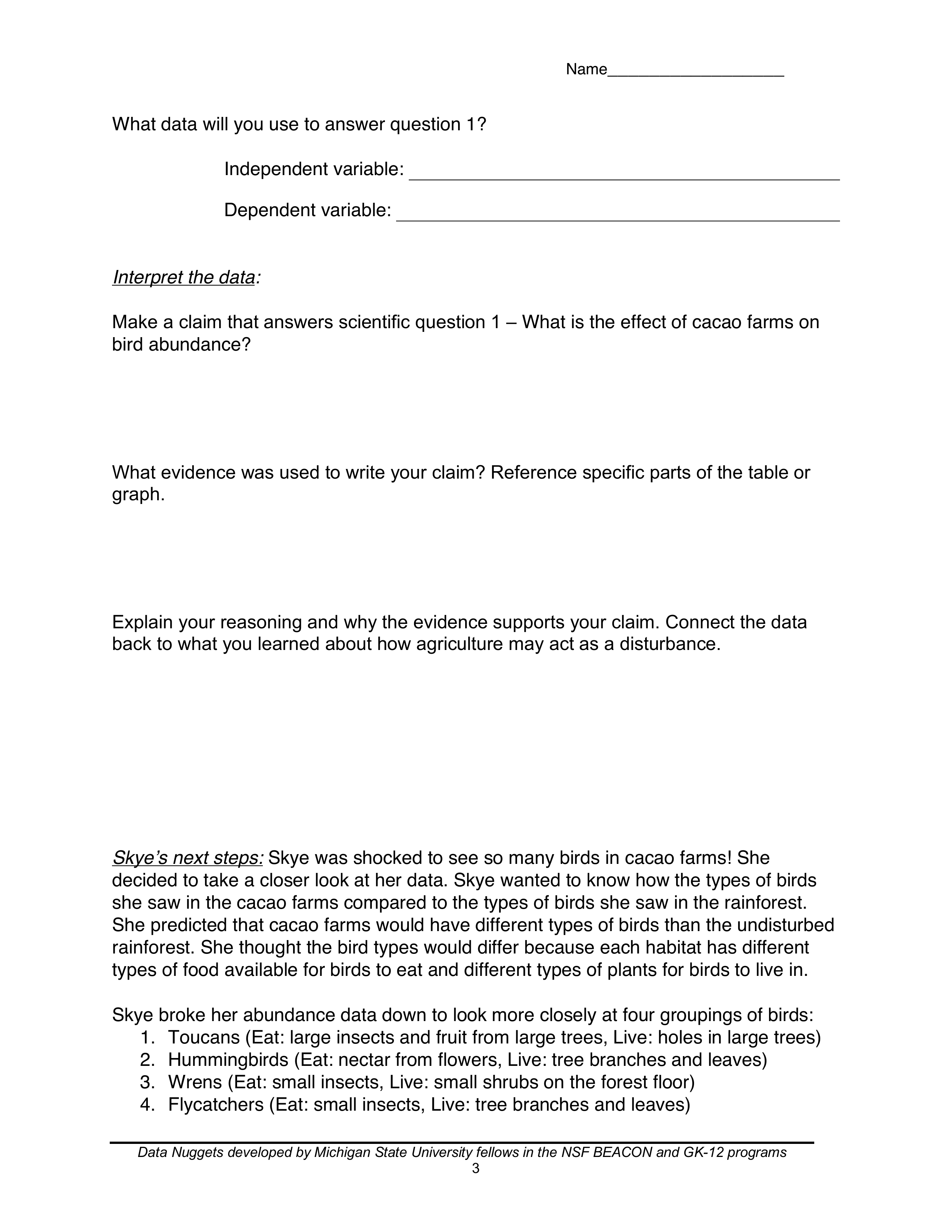
What is the independent variable?

1

What is the dependent variable?

1

What is the effect of cacao farms on bird abundance?

1

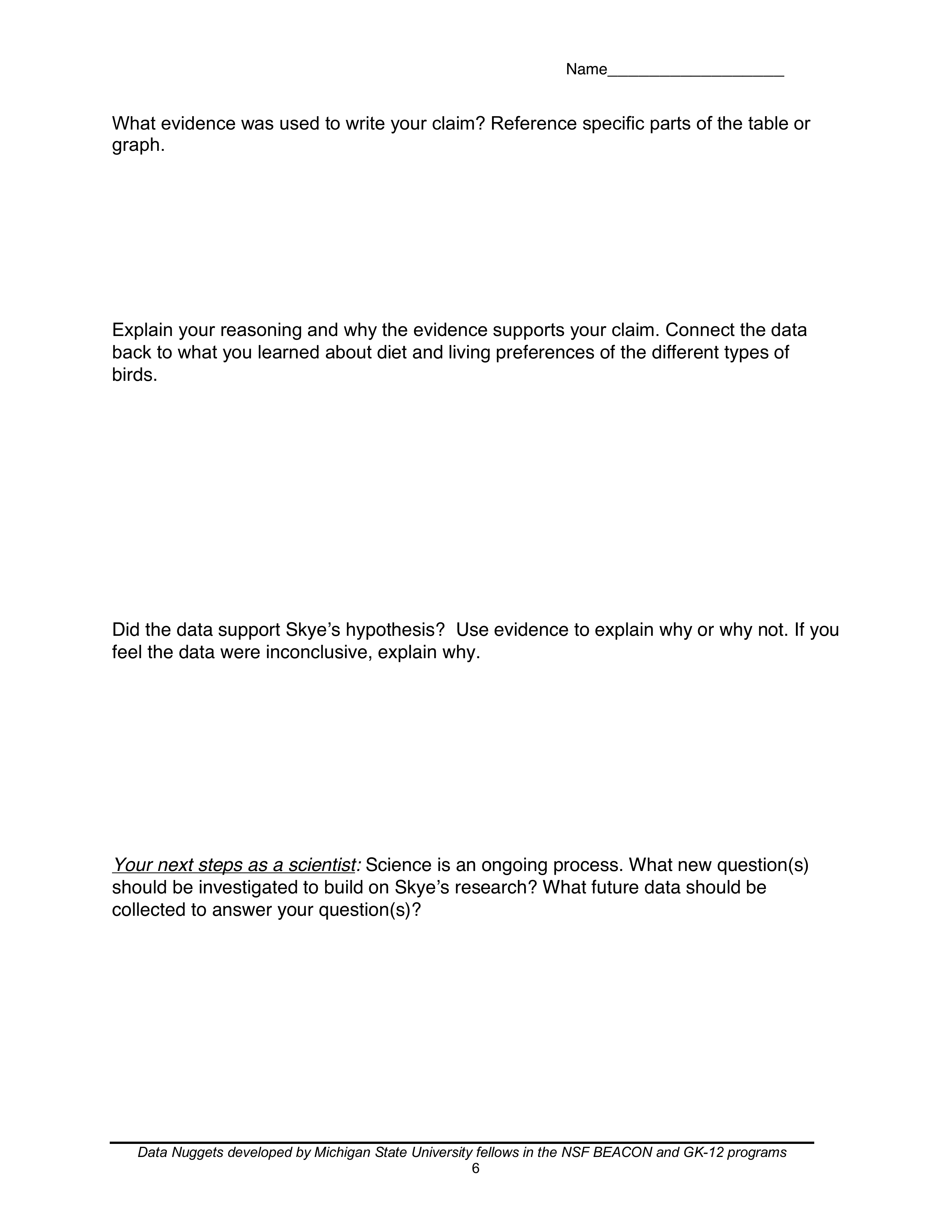
What evidence was used to write your claim? Reference specific parts of the table or
graph.

1

Explain your reasoning and why the evidence supports your claim. Connect the data
back to what you learned about how agriculture may act as a disturbance.

1

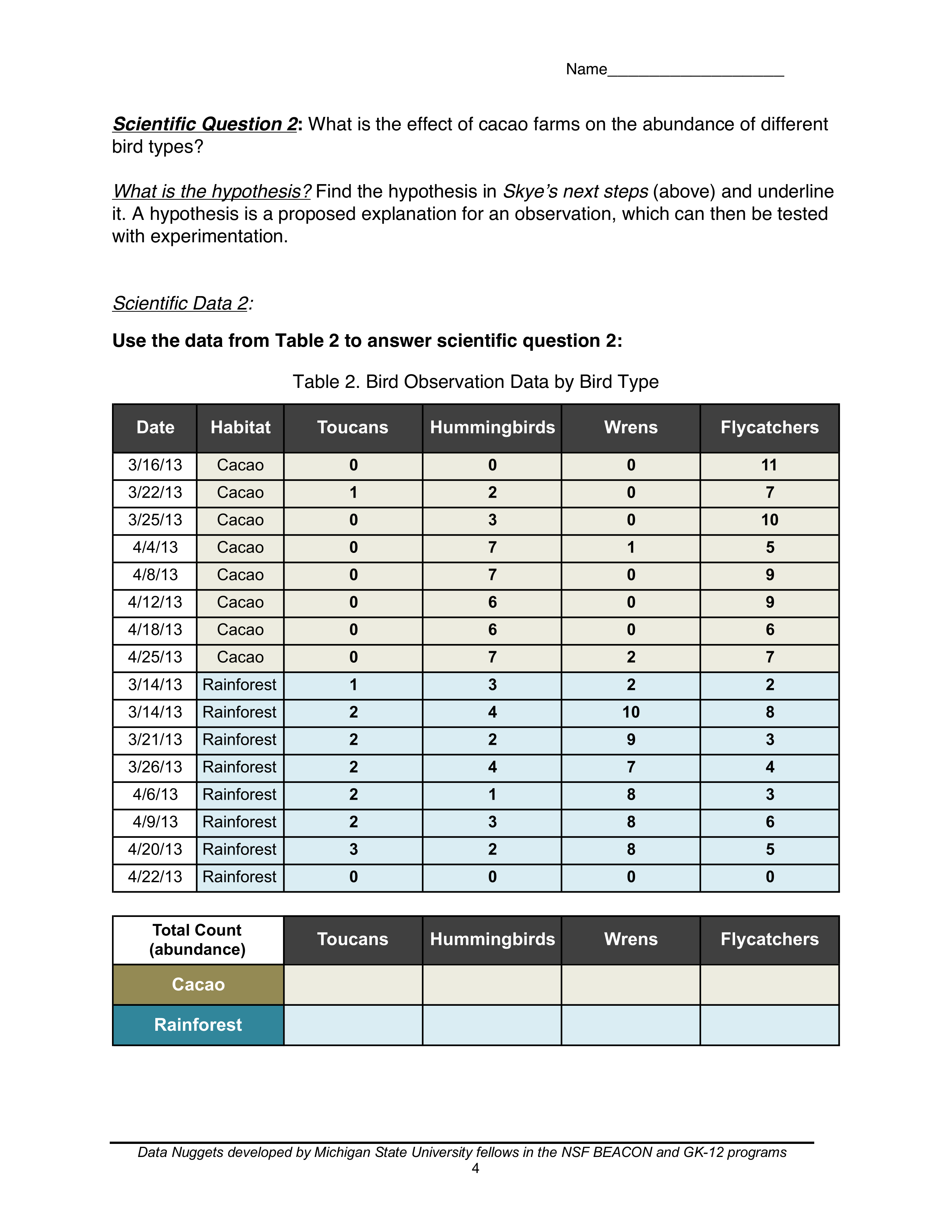
Fill out the data table.

1

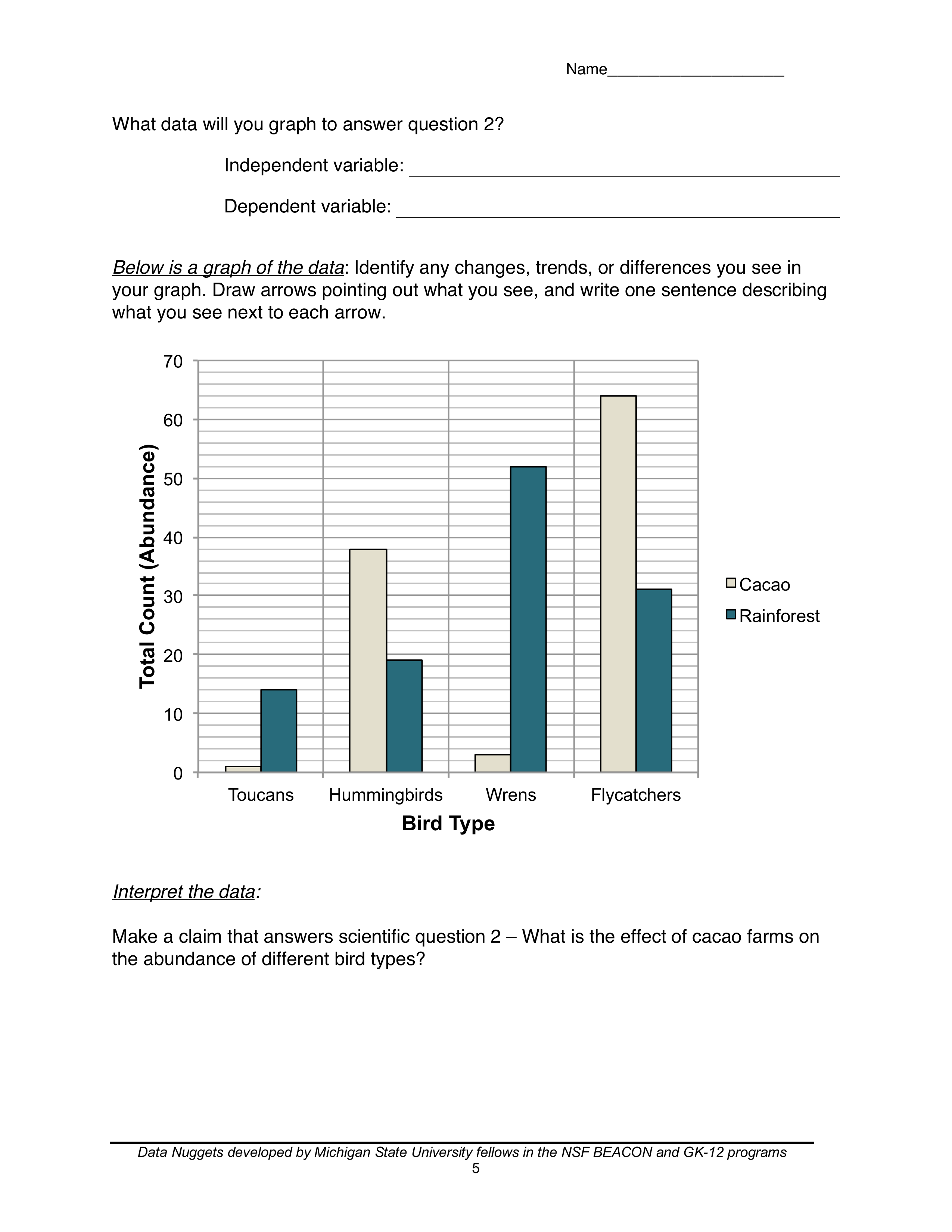
What is the effect of cacao farms on the abundance of different bird types?

1

What evidence was used to write your claim? Reference specific parts of the table or
graph.

1

Explain your reasoning and why the evidence supports your claim. Connect the data
back to what you learned about diet and living preferences of the different types of
birds.

1

Did the data support Skye’s hypothesis? Use evidence to explain why or why not. If you
feel the data were inconclusive, explain why.