P6 Food Chains Pre-assessment
star
star
star
star
star
Last updated almost 6 years ago
18 Nsɛmmisa
1
1
1
1
1
1
1
5
1
1
1
1
1
10
1
1
1
1
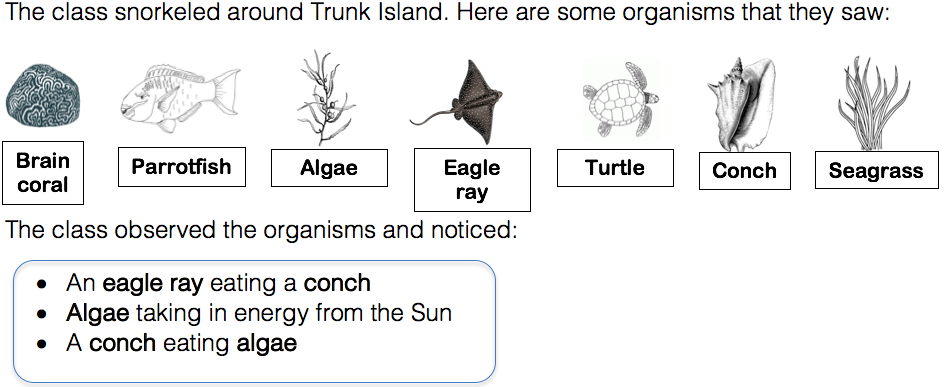
Ms. Lightbourne’s P6 class planned a snorkelling trip to learn about food chains.
Before The Field Trip
Before they went, Ms. Lightbourne wanted to see what the class already knew.
Organisms are living things.
Food chains show relationships between what different organisms eat in a habitat.
Food chains begin with a consumer.
Almost all producers get their energy from the Sun.
Animals are called consumers because they eat other organisms.
Predators are eaten by prey.
Prey hunt, kill and eat predators.
Create a food chain based on the information above.
Click on "show your work"
Type the name of the organisms on the lines. Draw in the arrows between each organism.
When you have finished click the blue check mark in the top right corner.
Which organism in the food chain above is the producer?
Where do producers get their food from?
Identify an organism from this food chain that is a predator.
Identify an organism from this food chain that is prey.
Identify organisms from this food chain that are consumers.
Click on "show your work" and then follow the instructions to create your own food chain.
When you have finished click the blue check mark in the top right corner.
Some turtles like to eat seagrass.
Scientists have been monitoring the numbers of turtles and the amount of seagrass seen around Trunk Island. Here is some of their data:
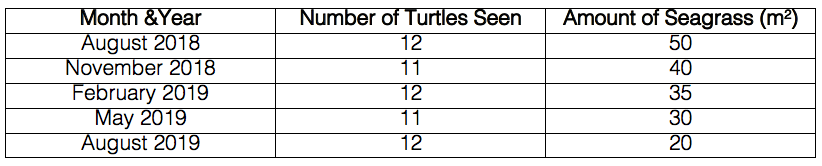
Look at the data above and select the correct answer to complete each statement.
After one year, the number of turtles seen around Trunk Island:
The amount of seagrass seen throughout the year:
Did the amount of seagrass available have an effect on the number of turtles in the area?
Look at your answer to question 17.
Why do you think this happened?