(10/26) World War 1 Ends
star
star
star
star
star
Last updated almost 6 years ago
5 Nsɛmmisa
20
20
20
20
20
The war raged into 1918. In September 1918, more than one million United States troops fought in a huge battle in the meuse-Argonne, a region of northeastern France. More Americans fought in this battle than in any other single battle in U.S. history. The Allied Powers won the battle, which led to the final defeat of the Central Powers. The U.S. had helped turn the tide of the war. (That means that the Allies were able to finally win the war because the U.S. sent troops to help fight.)
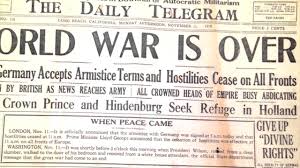
On November 11, 1918, the Central Powers surrendered, or gave up. Today, November 11 is celebrated as Veterans Day, to remember the Americans who fought in World War 1 and our nation's other wars.
In World War 1, losses were huge for both sides. The Central Powers lost more than 3 million soldiers and nearly 3.5 million civilians (Civilians are people who are not in the military). The Allied Powers lost nearly 5 million soldiers and more than 3 million civilians. The United States alone lost about 120,000 individuals. Many more were wounded (hurt). The war had been devastating and costly. Everyone hoped there would never be another war like that again.
In January of 1919, President Woodrow Wilson and the other Allied leaders met in Versailles, France, outside Paris, to draw up a peace treaty. Wilson hoped the peace treaty would not punish the Central Powers and would make sure there would be lasting peace. He came up with the idea of the League of Nations, which is an international (many nations) organization formed to prevent wars and promote peace. The League of Nations agreed that in the future, countries would work things out peacefully instead of having another war.
The Treaty of Versailles officially ended WW1. Against President Wilson's wishes, Germany was punished harshly. The treaty demanded:
1. Germany had to pay lots of money to the Allies
2. Germany had to promise NOT to rebuild its army
3. Germany had to give up some of its territories (land)
The League of Nations was a good thing that came out of WW1, but the harsh treatment of the Central Powers, especially Germany, eventually led to another conflict - World War 2!!
Even though it was President Wilson's idea, the United States did not join the League of Nations. Many Americans feared that it might force the United States into future wars. People wanted to return to a policy of isolationism. Remember that isolationism is the belief that countries should stay out of other countries affairs (mind their own business). But that would only last about 20 years...
November 11 is a day of celebration to remember the Americans who fought in World War 1 and our nation's other wars.
A person who is not in the military
An international organization formed to prevent future wars and promote peace.
This ended World War 1
The Treaty of Versailles punished Germany by... (Select all that apply)