Different Literarry lens or critism. Covers Marxist, Historical, and Critical Race Theory with examples.
Definitions:
1.) An independent clause is a simple sentence
2.) An independent clause (simple sentence) contains a subject and a predicate.
3.) A predicate is the verb half of the sentence.
4.) A fragment is when an independent clause is missing either the subject or the predicate (verb half).
According to the definition above, what two things are in an independent clause?
According to the definition above, what is the predicate? What does the word "predicate" mean?
According to the definitions above, what is a fragment?
What is the example below MISSING?
going to the park
What is the example below MISSING?
The awful waffle
What is the example below MISSING?
The amazing and beautiful lady
What is the example below MISSING?
completed the GoFormative
Literature, along with art and history, is part of the humanities, meaning the study of human beings. As we read literature and study history it is important to use our critial thinking and imagine ourselves in different shoes through our analysis, even if we disagree or do not normally look at history or art from certain perspectives. The goal is to understand the human being from all angles.
Our focus as listed in our syllabus along with most literary critisim and literary lens theory is to take the position of the most vulnerable. For example, rather than try to understand the rich land owner, we will focus on the views and situation of the poor or less wealthy renter.
What is the study of "the humaities"?
What is it important to do through anlaysis when studying literature or history
What position does this class as well as most literary theory take?
LENS #1: Socio-Cultural/ Historical Critism
Definition: Socio-cultural/ Historical critics examine the social surroundings in which the author wrote. They consider the politics and social movements during the time period of the text’s creation. The idea is to understand how the text was shaped or help shape society.
Recurring Question: How did the text help to shape history, and/or how did events during the author's life help shape the text?
Based on the reading above, What is the idea or goal of socio-cultural/ historical critisim?

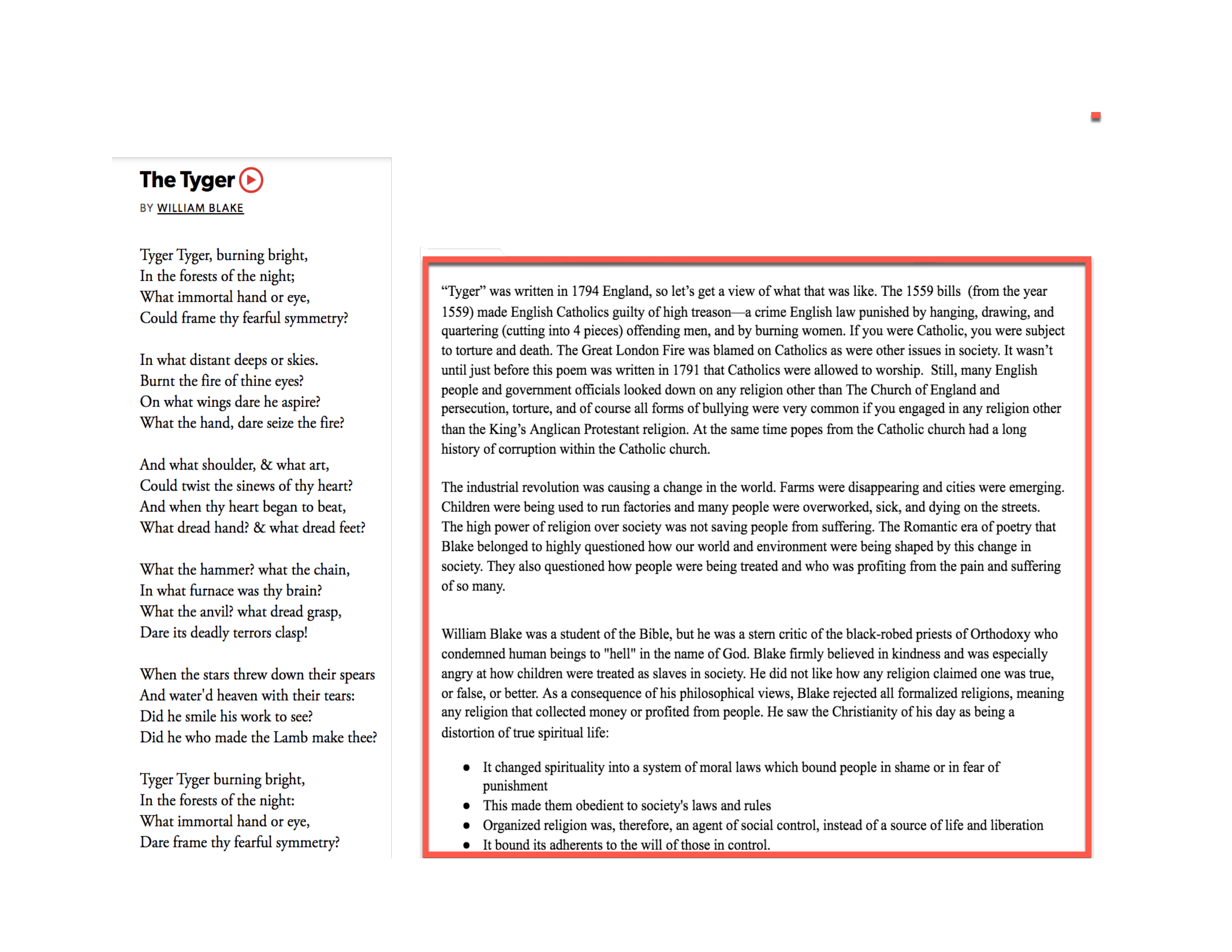
Please see above link if you cannot zoom in to the text. Which of the following, according to these documents, explains the political/cultural situation in England when William Blake was alive and writing?
BE A HISTORICAL CRITIC: What line from the poem connects to the historical/political/cultural situation of Blake's 1794 England? Write the line from the poem and explain specifically why this line relates to the situtation in 1794 England.
This question is worth 5 points. Minimum 30 words.
LENS #2: Marxist Critism
Definition: This is criticism inspired by the historical, economic and sociological theory of philosopher and economist Karl Marx and Friedrich Engels. Its focus is economic conditions and different classes of people within society. To put it simply, it focuses on the power of the rich, and the disadvantages of the poor that can be found in a text.
Recurring Questions: Who has the power/money in society? Who does not? What happens in society as a result of this?
According to the text above, what -to put it simply- is the focus of marxist critism?
According to the text above, What are the three questions Marxist critisim of a text asks?

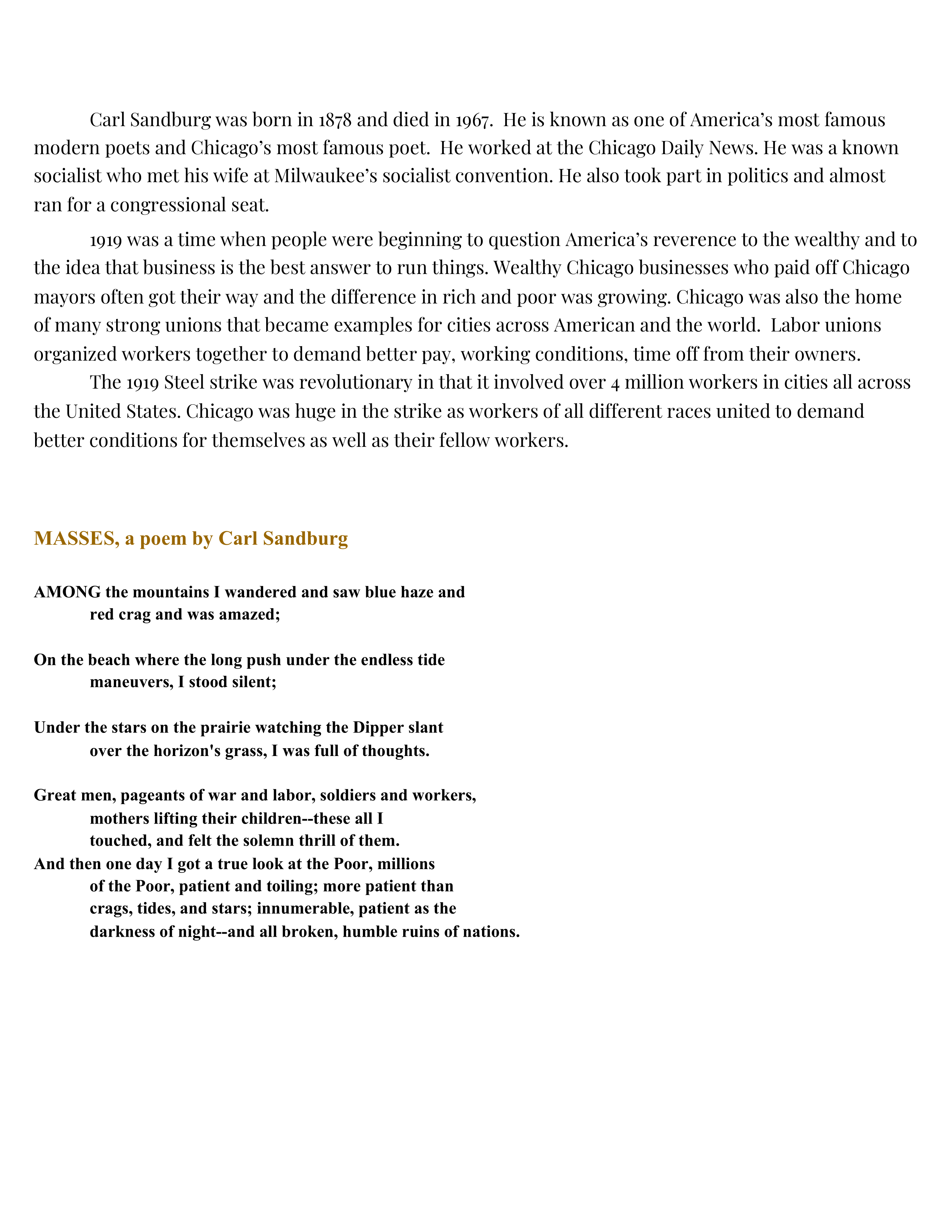
According to the text, what was (and still is) Chicago home to?
BE A MARXIST CRITIC: How does this poem treat either poor or rich/powerful members of society? Identify a specific line or lines and explain how this poem discusses class (rich/poor members in society.
This question is worth 5 points. Minimum 30 words.
LENS #3: Critical Race Theory
Definition: Examines the appearance of race and racism across art and literature. Examples can be types of hair that are portrayed in film, art, novels. Race theorists look at personalities given to black/brown characters. Race theorists also look at if there is a presence of other races in stories or are all characters white?
Race theorists stand by that historically, white/straight/male images of power were honored in literature and art. It wasn't until critism of this did we see change. Race theorists often combine with Marxist theory to point out the relationship of poverty to racial conditions.
Recurring Questions: What race has the most power or is considerded the hero of a text? Is there a presence of other races and if so, how are those other races presented?
According to the text above, what is Critical Race Theory about?

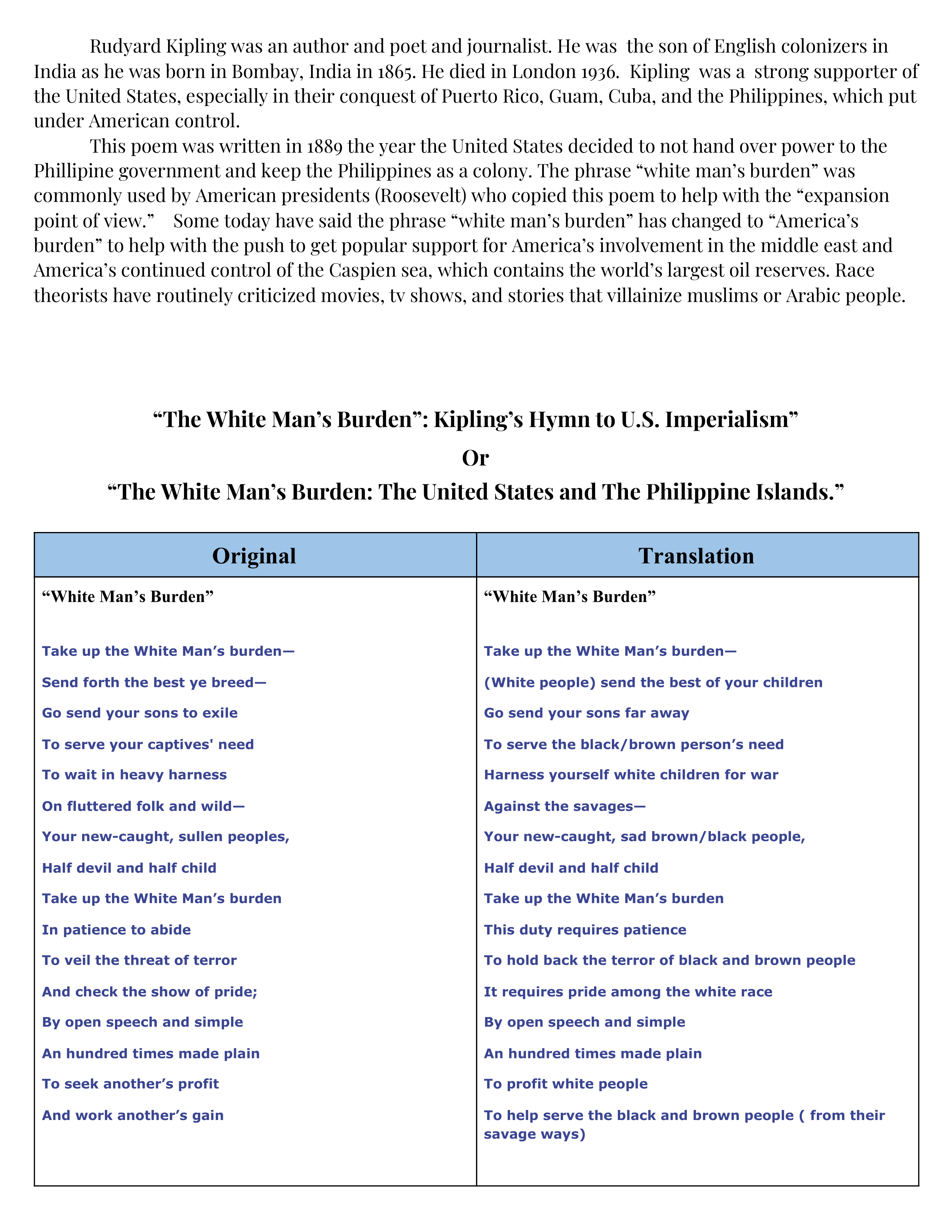
Historical Lens: According to the text, What event happened that influenced this poem?
BE A CRITICAL RACE THEORIST: Identify how this poem deals with race and race relations. Be sure to include a specific line or lines from the poem.
This question is worth 5 points. Minimum 30 words.
Historical Lens:
What event during Sandburg's time as a writer in Chicago (1919) occured that involved tension between those with less power/wealth with those with more power/wealth?
In the poem, we see the first three parts are describing the beauty of nature. Click all of the answers that are in the poem where the speaker comments on the beauty of nature
See above link if you are having trouble reading the small font.
Which line shows the speaker comparing the beauty of the Masses (the title) to the beauty of nature?
Click all of the examples that describe non-white people (see orginal poem). Do not choose any examples that are not in the original poem.