Which of the following identifies the number and location of protons in a lithium atom?
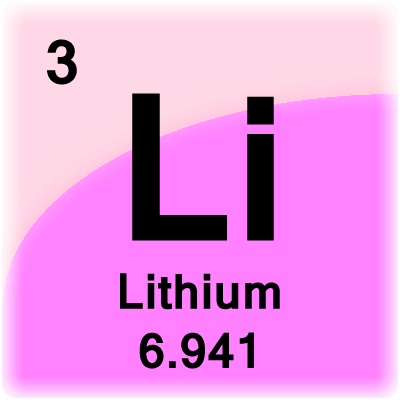
Which of the following identifies the number and location of protons in a lithium atom?
Which statement about water is false?
Cobalt has an atomic mass of 59 and an atomic number of 27. How many neutrons does cobalt have?
Which of the following identifies the number and location of protons in a lithium atom?
In a sugar water solution...
Match each description with the correct property of water.
| Draggable item | arrow_right_alt | Corresponding Item |
|---|---|---|
Water is great at breaking apart substances due to its partial charges. | arrow_right_alt | Cohesion |
Water acts as a great barrier due to its cohesive forces. | arrow_right_alt | High Heat Capacity |
Water forms droplets. | arrow_right_alt | Capillary Action |
Water can move against the force of gravity by traveling through blood vessels from our feet to our heart. | arrow_right_alt | Surface Tension |
Water has a resistance to changes in temperature. | arrow_right_alt | Universal Solvent |
Which statement about polar molecules is true? Select all that apply.
Which statement about ionic bonds is true? Select all that apply.
What defines if an atom is stable?
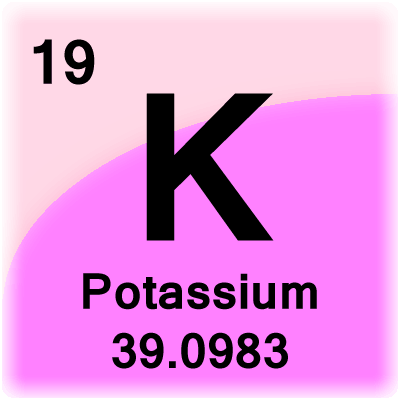
Which statement about potassium-42 is true? Select all that apply.
Examine the diagram below. Which statement below is false?

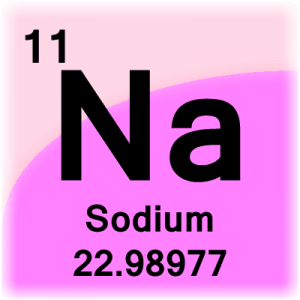
In the space below, draw a sodium atom with all its subatomic particles.
Please drag each statement under its correct category (acid, base, or water).
An example is lemon juice.
Releases more H+ ions than OH- ions in solution.
Has a pH less than 7.
Releases equal concentrations of H+ and OH- ions in solution.
Releases more OH- ions than H+ ions in solution.
Has a pH of 7.
An example is bleach.
Has a pH greater than 7.
Acid
Base
Water
Draw 2 water molecules. (You do NOT need to include the subatomic particles in the atoms.) In your drawing, label a hydrogen bond and a covalent bond.
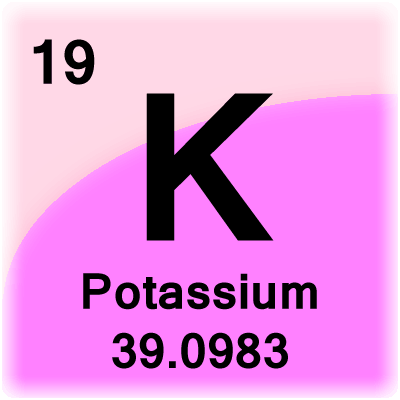
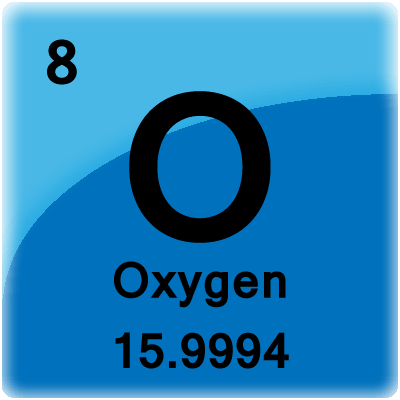
Potassium oxide is a compound formed via ionic bonding between potassium (K) and oxygen (O) atoms. Demonstrate how this ionic compound forms. You only need to include the electrons in your atoms.
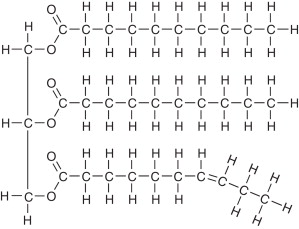
Organic chemistry studies carbon-based molecules. Due to its atomic structure, carbon atoms form the base of many large, complex molecules. In the space below, draw a carbon atom. Then, explain why carbon is an important atom in creating large molecules, such as the one shown below.