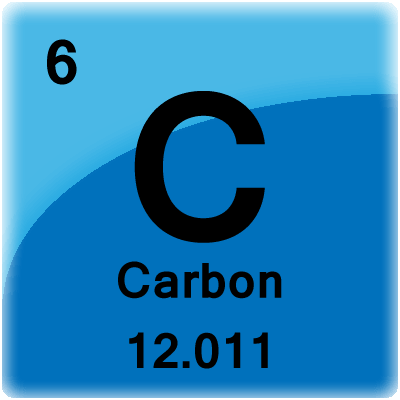
Which of the following identifies the number and location of protons in a lithium atom?
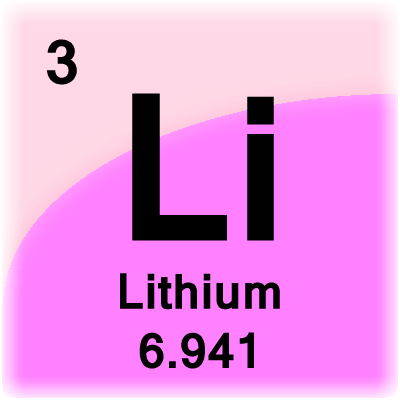
Which of the following identifies the number and location of protons in a lithium atom?
Which statement explains why water is polar?
If an atom contains 3 protons, 4 neutrons, and 3 electrons, its atomic mass is...
A covalent bond is formed as a result of...
When sugar is dissolved in water, water is the...
In a water molecule, shared electrons spend more time around the oxygen atom than the hydrogen atoms. As a result, the oxygen atom is...
Which of the following identifies the number and location of protons in a lithium atom?
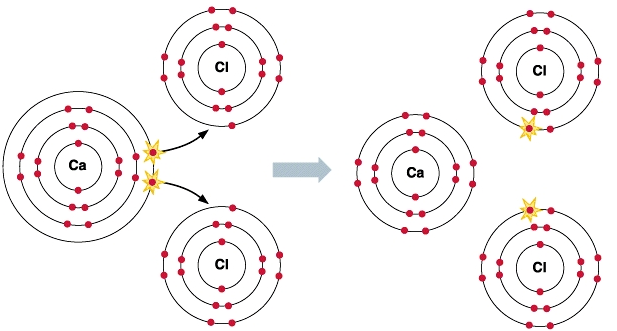
Examine the image below. What type of bond is forming between the calcium and chlorine atoms?
The attraction between polar molecules is called a(n)...
Sulfuric acid is a very strong acid; it would have a pH of...
If an atom contains 11 protons and 12 neutrons, its atomic number is...
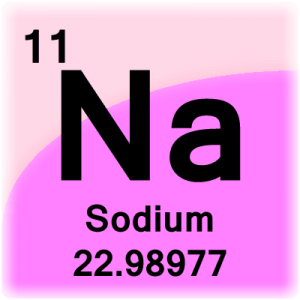
In the space below, draw a sodium atom with all its subatomic particles.
Match each description with its correct property of water.
| Draggable item | arrow_right_alt | Corresponding Item |
|---|---|---|
Describes water's ability to dissolve many solutes. | arrow_right_alt | Cohesion |
Describes water's resistance to changes in temperature. | arrow_right_alt | Adhesion |
Allows insects to "walk on water." | arrow_right_alt | Capillary Action |
Occurs when water molecules are attracted to one another to form a droplet. | arrow_right_alt | High Heat Capacity |
Occurs when water can climb up thin tubes against the force of gravity. | arrow_right_alt | Universal Solvent |
Occurs when water molecules are attracted to other substances. | arrow_right_alt | Surface Tension |
What defines if an atom is stable?
When a sample of sodium chloride (NaCl) dissolves in water, it separates into sodium (Na) ions and chloride (Cl) ions. Which of the following best accounts for the positive charge of the sodium ions?
Which of the following correctly describes the subatomic particles?
Sulfur has 16 electrons. Which of the following is the arrangement of electrons for sulfur?
In the space below, draw a second water molecule. Using a dashed line, draw a hydrogen bond. Lastly, label a covalent bond.
Match each definition with the correct term.
| Draggable item | arrow_right_alt | Corresponding Item |
|---|---|---|
A substance formed by the chemical combination of 2 or more elements in definite proportions. | arrow_right_alt | Atom |
The building block of all matter. | arrow_right_alt | Suspension |
A pure substance that contains one type of atom. | arrow_right_alt | Compound |
A mixture of water and undissolved materials. | arrow_right_alt | Element |
Organic chemistry studies carbon-based molecules. Due to its atomic structure, carbon atoms form the base of many large, complex molecules. In the space below, draw a carbon atom. Then, exaplain why carbon can form many bonds with other atoms to create large molecules.