Log in
Sign up for FREE
arrow_back
Library

Wednesday 9/24 - PES 3.3

star
star
star
star
star
Last updated 5 months ago
20 questions
PES 3.3 Seeing Stars for a Year
0
Investigating Star Visibility for One Year
0
0
0
0
0
0
0
0
0
0
0
0
0
Independent Practice
Exit Ticket
Question 1
1.

Draggable itemarrow_right_altCorresponding Item
arrow_right_alt
arrow_right_alt
arrow_right_alt

Directions:

  • Open Sim 1: Patterns of Earth and Sky:
  • https://learning.amplify.com/patternsofearthandsky/
  • Change the date to your starting date - January 1, 2017
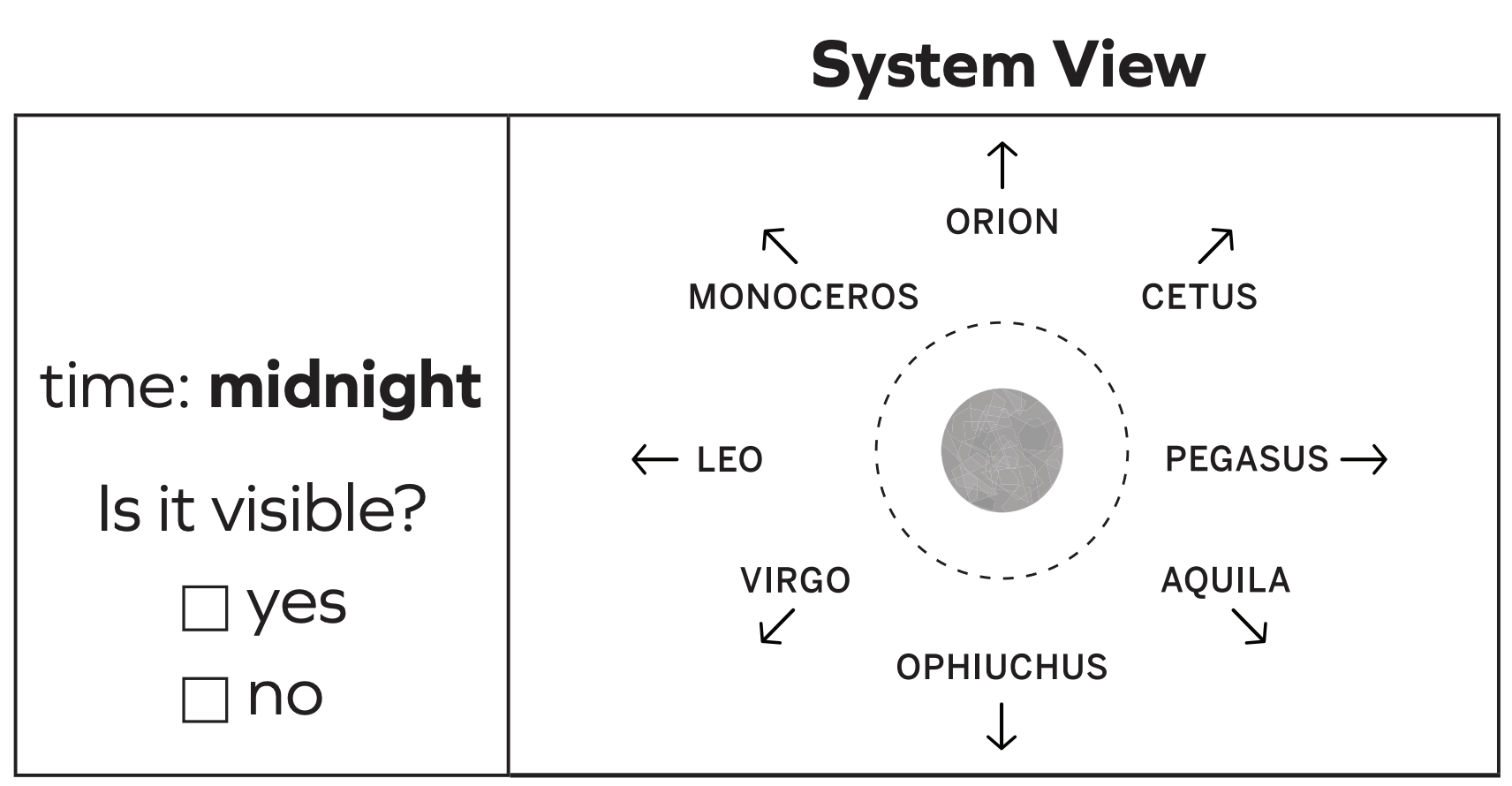
  • Click MIDNIGHT.
  • Click on your constellation name in System View to highlight our constellation, LEO
  • Can you see your ENTIRE constellation? Choose β€œYes” or β€œNo.”
  • Remember to use the red arrows to allow the observer to look sideways.
  • If you can only see part of your constellation, write NO.
  • Find the location of Earth and the observer in System View.
  • Select earth's position around the sun.
  • Change to the next month on the simulation and repeat!
Question 2
2.

πŸ’š January 1, 2017

  • Can you see your ENTIRE constellation? Choose β€œYes” or β€œNo.”
  • Remember to use the red arrows to allow the observer to look sideways.
  • If you can only see part of your constellation, write NO.
  • Find the location of Earth and the observer in System View.
  • Select earth's position around the sun.
  • Change to the next month on the simulation and repeat!

Question 3
3.

πŸ’š February 1, 2017

  • Can you see your ENTIRE constellation? Choose β€œYes” or β€œNo.”
  • Remember to use the red arrows to allow the observer to look sideways.
  • If you can only see part of your constellation, write NO.
  • Find the location of Earth and the observer in System View.
  • Select earth's position around the sun.
  • Change to the next month on the simulation and repeat!

Question 4
4.

πŸ’š March 1, 2017

Question 5
5.

πŸ’š April 1, 2017

Question 6
6.

πŸ’š May 1, 2017

Question 7
7.

June 1, 2017

Question 8
8.

July 1, 2017

Question 9
9.

August 1, 2017

Question 10
10.

πŸ’š September 1, 2017

Question 11
11.

πŸ’š October 1, 2017

Question 12
12.

November 1, 2017

Question 13
13.

πŸ’š December 1, 2017

Question 14
14.

0
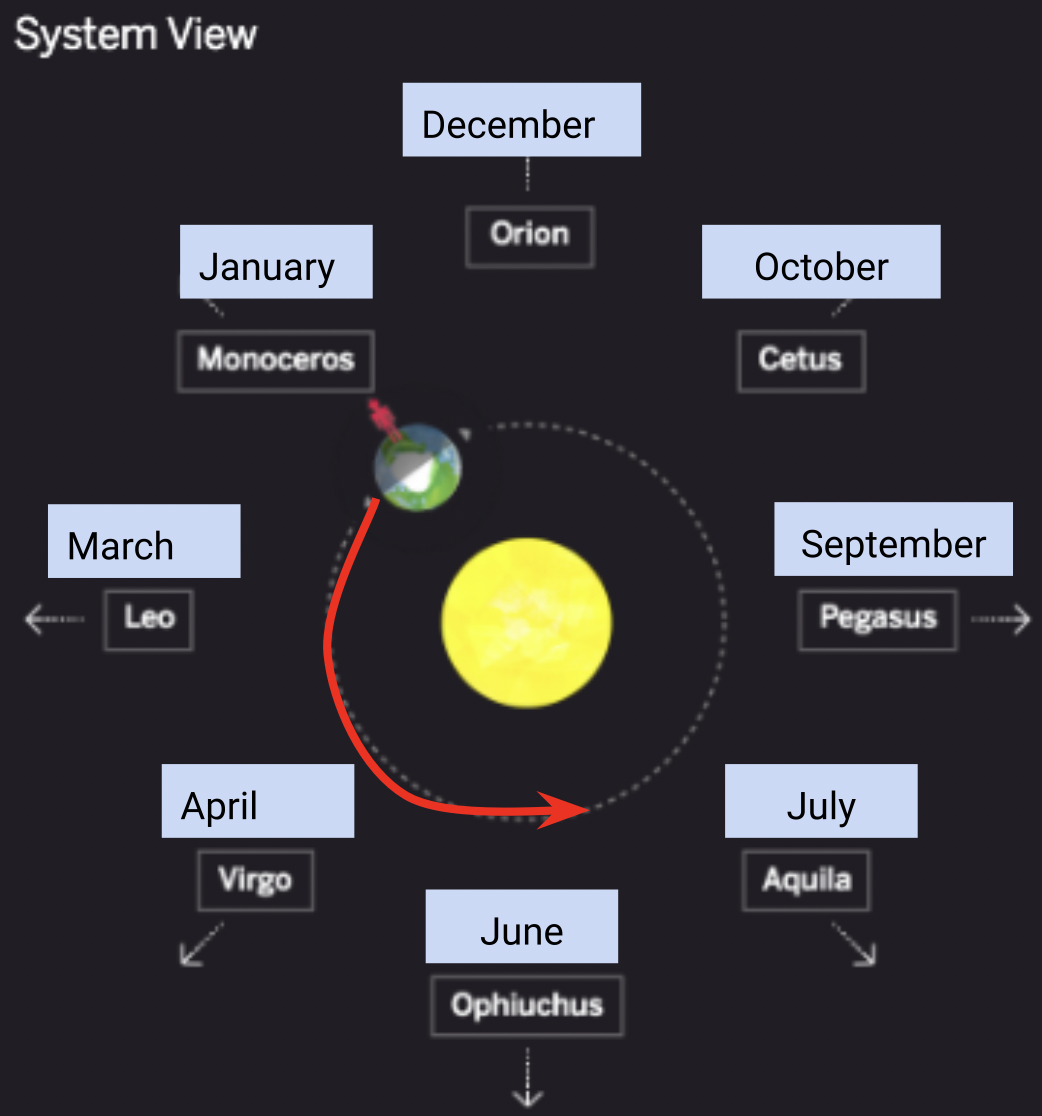
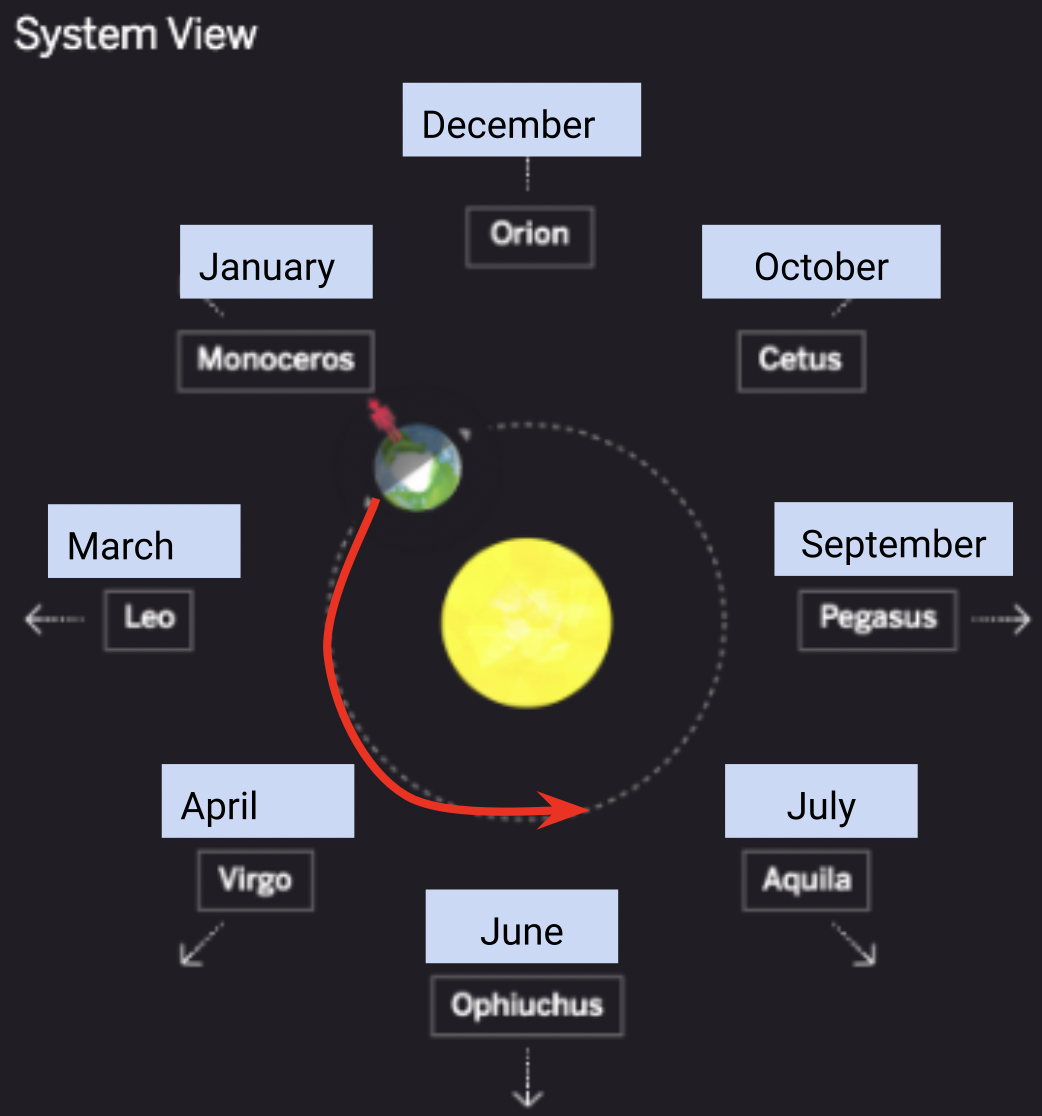
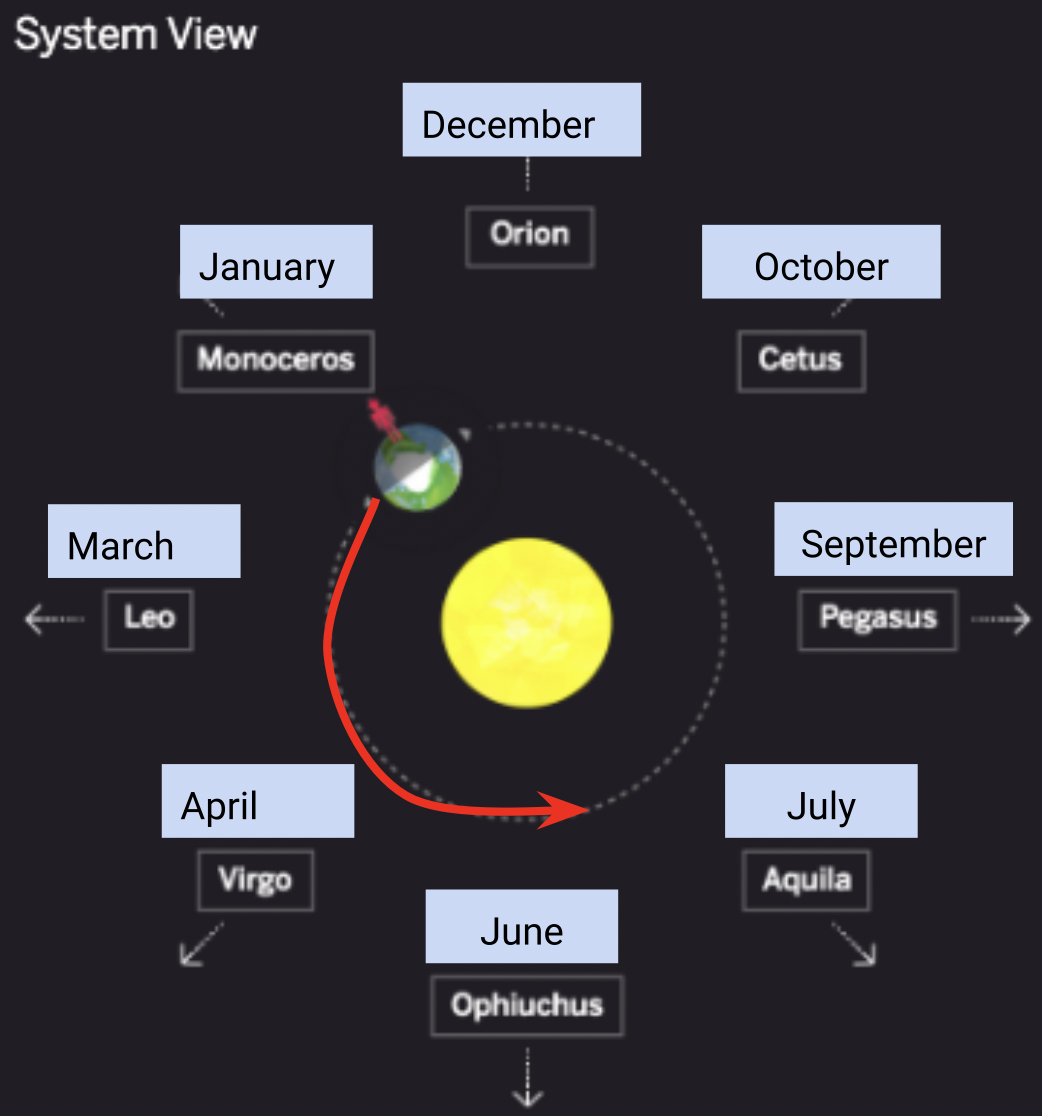
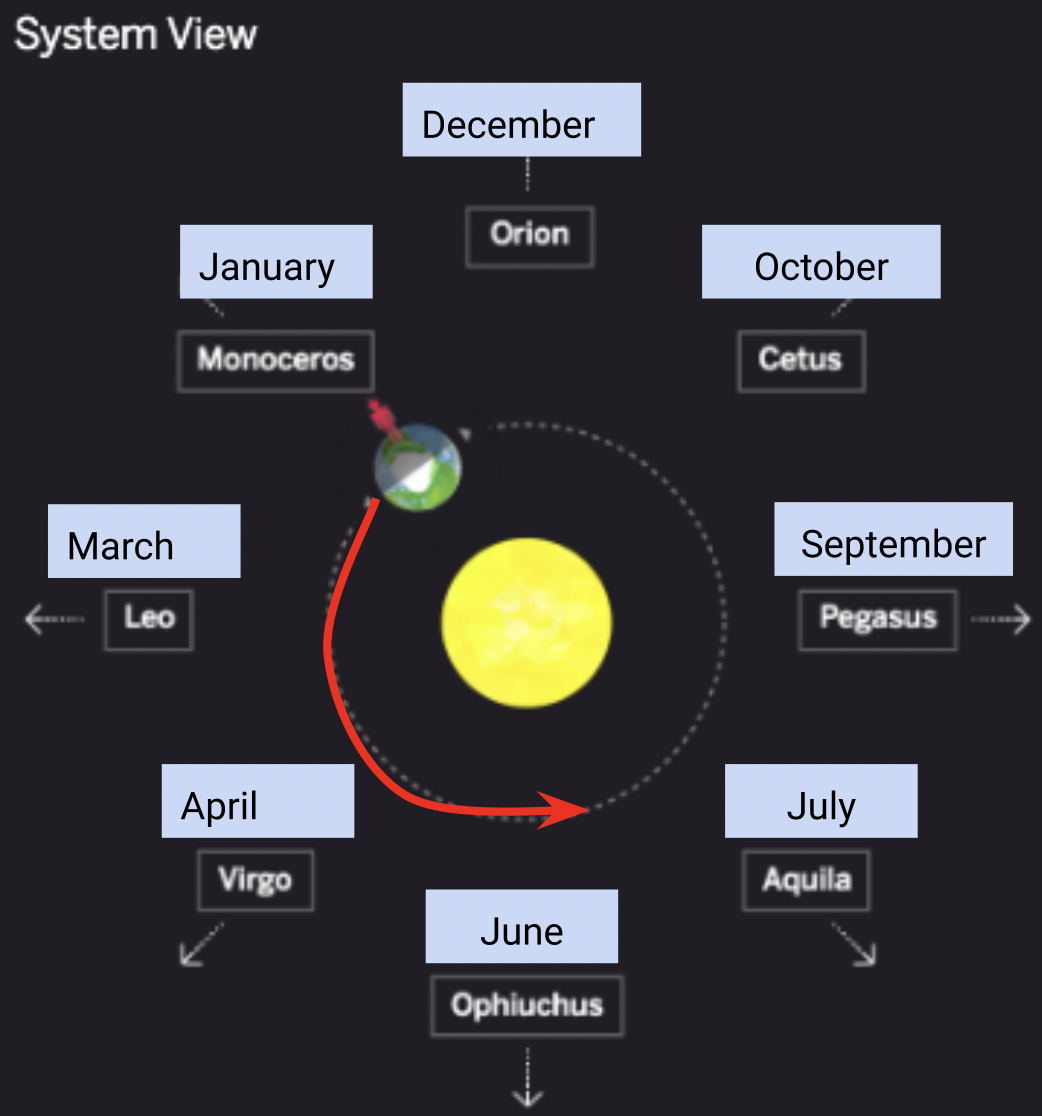
This image shows the months of the year when in North America, an observer's head points directly towards each constellation as Earth travels around the sun.

1
1
1
1

If a person were to look into the sky at midnight on January 1 and again at midnight on July 1, would they see the same constellations in the sky? Why or why not? Explain your answer with details.


1
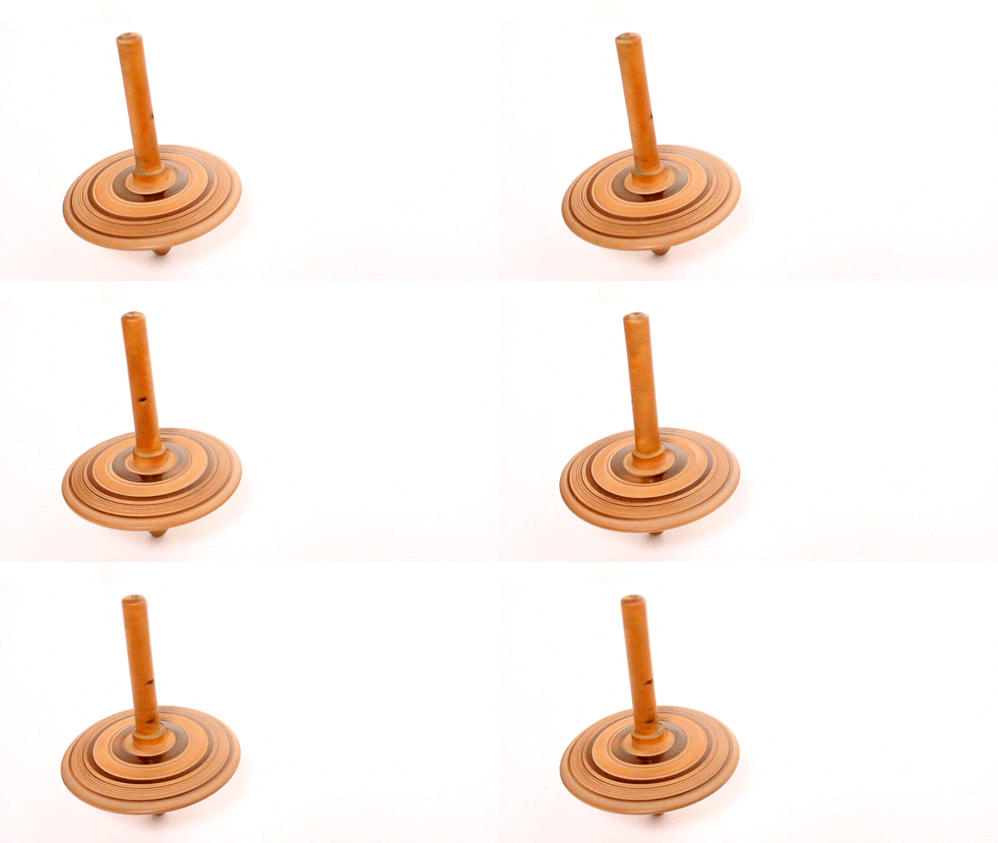
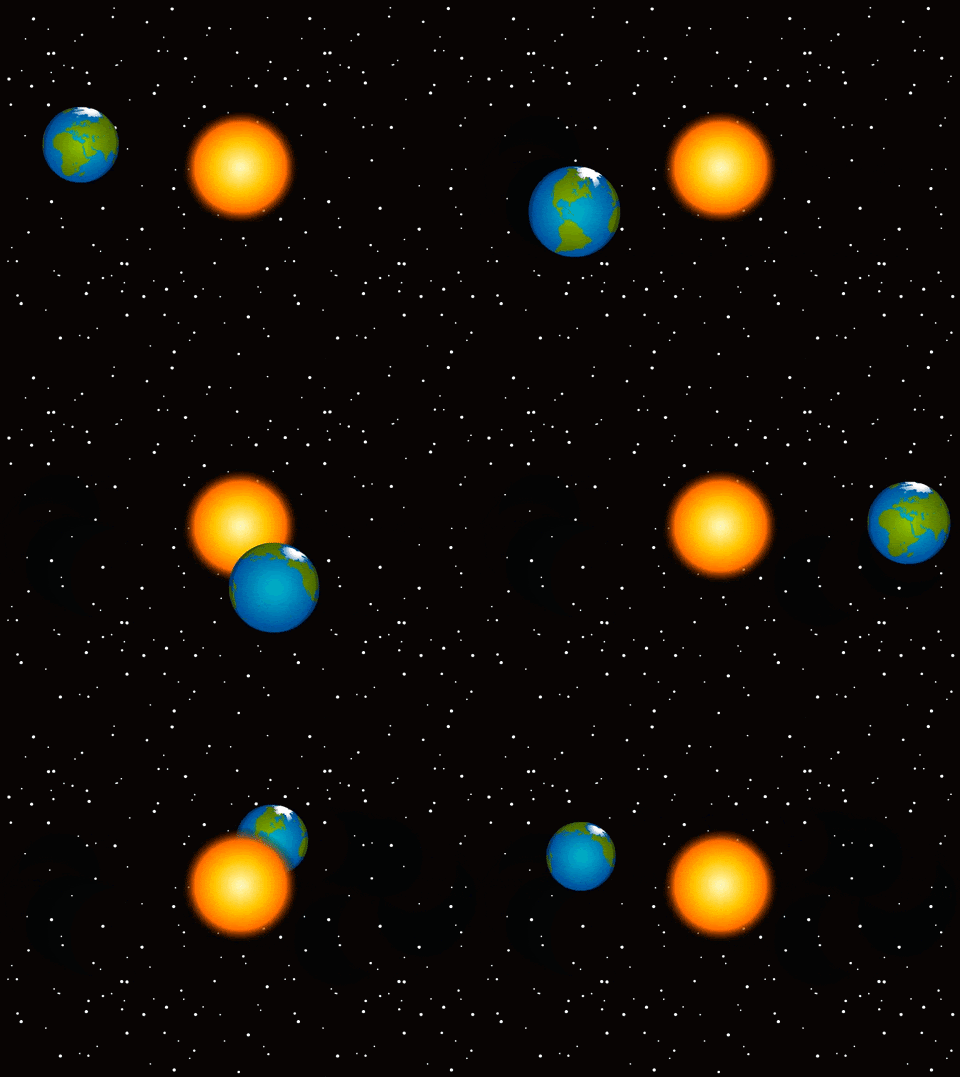
πŸ’š Match the movement to the correct image
Spinning (rotating) and orbiting (revolving)
Spin / Rotate - turn around its axis (the center of object)
Orbit / Revolve - move in a regular path around something
What months is constellation LEO visible (see the entire constellation) in the year 2017? Choose the months you can see LEO.
JAN 1/1/17
FEB 2/1/17
MAR 3/1/17
APR 4/1/17
MAY 5/1/17
JUNE 6/1/17
JUL 7/1/17
AUG 8/1/17
SEP 9/1/17
OCT 10/1/17
NOV 11/1/17
DEC 12/1/17
Question 15
15.

Question 16
16.

Question 17
17.

Question 18
18.

πŸ’š Describe how the earth moves for the person in the diagram (Bob) to see the constellation Cetus in the sky.

Question 19
19.

πŸ’š Describe how the earth moves for the person in the diagram (Bob) to experience daytime.

Question 20
20.

πŸ’š Choose ONE Sentence Starter:

  • The person would see the same constellations in the sky because ________________
  • The person would see different constellations in the sky because ________________

Use the words in the word bank.

Word Bank: revolve/orbit earth sun position location stars

πŸ’š What month was the observer’s head directly pointing towards the constellation Leo?
A) January
B) February
C) March
D) April
πŸ’š According to the diagram, which of the following is true?
A) On August nights, Pegasus is directly overhead.
B) The best month to see Orion at night is April.
C) In July, an observer in North America will see Aquila overhead at night.
D) An observer cannot see Orion in December.
πŸ’š Based on this diagram, how long does it take for the Earth to travel (ORBIT / REVOLVE) around the sun?
A) 1 day / 24 hours
B) 1 month
C) 1 year / 12 months