QUESTION 1
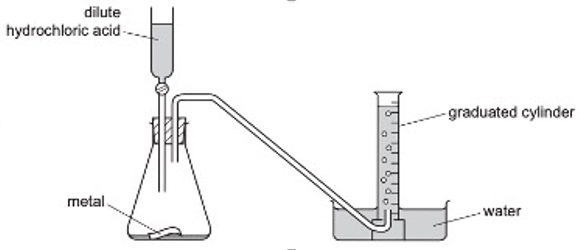
Consider the following experiment conducted to measure the rate of reaction between a metal and acid.
You have only ONE hour to complete this assessment. No reading time is necessary. Your time begins as soon as the assessment is opened. After one hour, if you are still writing, Formative will force submit your answers (don't worry you won't lose the answers you have filled in if it submits automatically). Good luck!
Consider the following experiment conducted to measure the rate of reaction between a metal and acid.
What change will DECREASE the rate of reaction?
Write the name of the gas that is being collected in the inverted measuring cylinder.
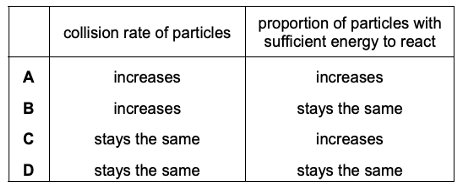
Rebecca repeats the experiment, with an increased concentration of acid. Which statement best describes the effect of an increase in concentration on the reacting particles?
Which of these Boltzmann distributions represents the effect of increasing the concentration of acid?
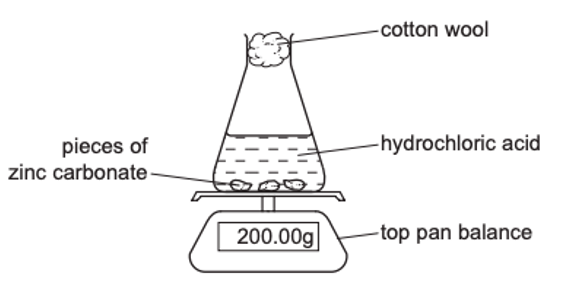
A student investigates the reaction between zinc carbonate and hydrochloric acid. Her set-up is shown below - She repeats the experiment a second time using the same set-up however this time she uses zinc carbonate powder.
Explain why the mass of the reaction flask decreases over time.
Identify the factor being manipulated in order to affect the rate of reaction
Which statement best describes the effect of this change (Expt 2) on the reacting particles?
What is the independent variable in this experiment?
What is the dependent variable in this experiment?
Identify one controlled variable.
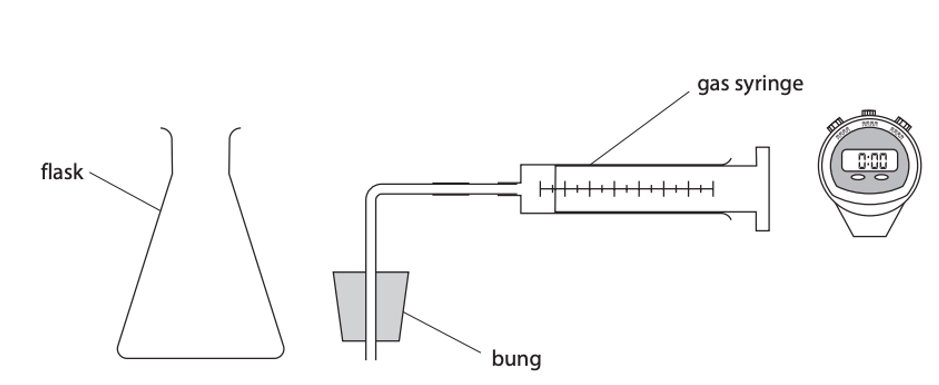
Leandro decided to do a similar experiment with magnesium ribbon and hydrochloric acid, using the apparatus shown below. The hydrochloric acid is in EXCESS.
The following sentences describe the steps of his method. Arrange them in the correct sequence (order)
Record the volume of gas in the syringe every minute for 8 minutes
Quickly put the stopper into the flask with the gas syringe
Put the magnesium ribbon into the flask
Pour 50 cm3 of 0,5 mol.dm-3 hydrochloric acid into the flask
Clean the strip of magnesium ribbon to remove the magnesium oxide layer
The syringes below show the position of the plunger at the start and end of the experiment:
What is the syringe reading at the start in cm3? Write number value ONLY.
What is the syringe reading at the end in cm3? Write number value ONLY.
What is the total volume of gas produced in cm3? Write number value ONLY.
The experiment was repeated. Which of the following changes would cause the volume of gas collected to increase? Select all that may apply.
Consider this experiment you have learnt about.
Use this link if you cannot access the video: https://drive.google.com/file/d/0B5A_aIE5kJWSNktQOGdpeTJZbDA/view?usp=sharing&resourcekey=0-8WUId1ZZ72RWVH8zOj8RzQ
Idenitfy the reactants used in this reaction. Select all that apply.
Which of the following changes will affect the measured rate of this reaction?
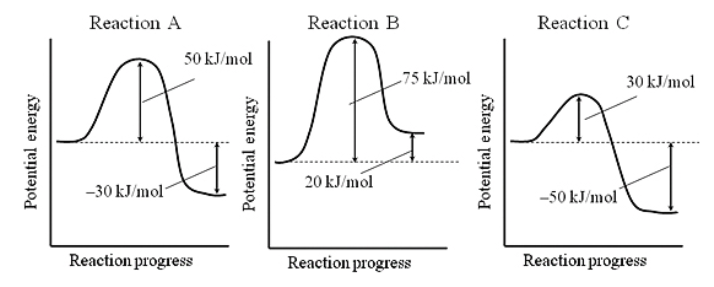
Consider the energy profile diagrams representing three different chemical reactions.
Which of these reactions is likely to proceed at the slowest rate?
Assume the that reaction C is a reaction between hydrogen and nitrogen to form ammonia.
The equation for Reaction C can be written as:
Given that the balanced equation for Reaction C is N2 + 3H2 ➝ 2NH3, how much energy is released/absorbed in total for this reaction? Choose between released and absorbed AND a numerical value
What is the volume reading below, in cm3?
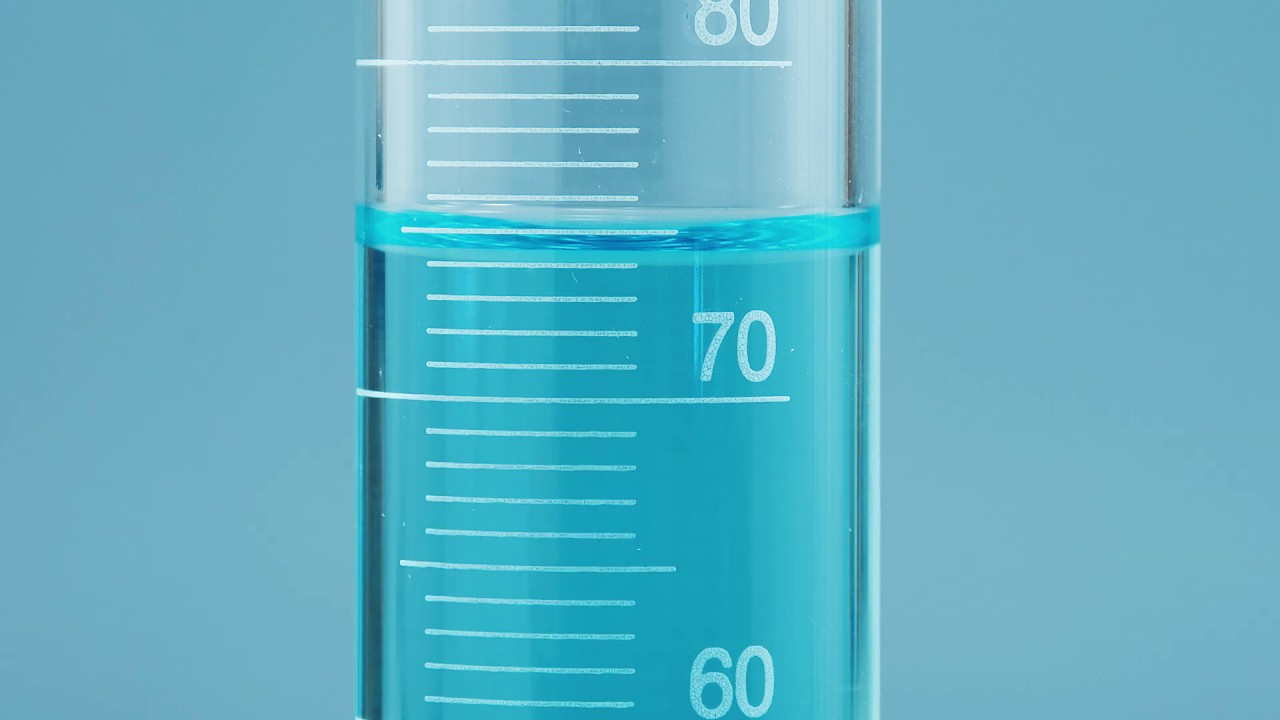
Write number value only, no unit necessary
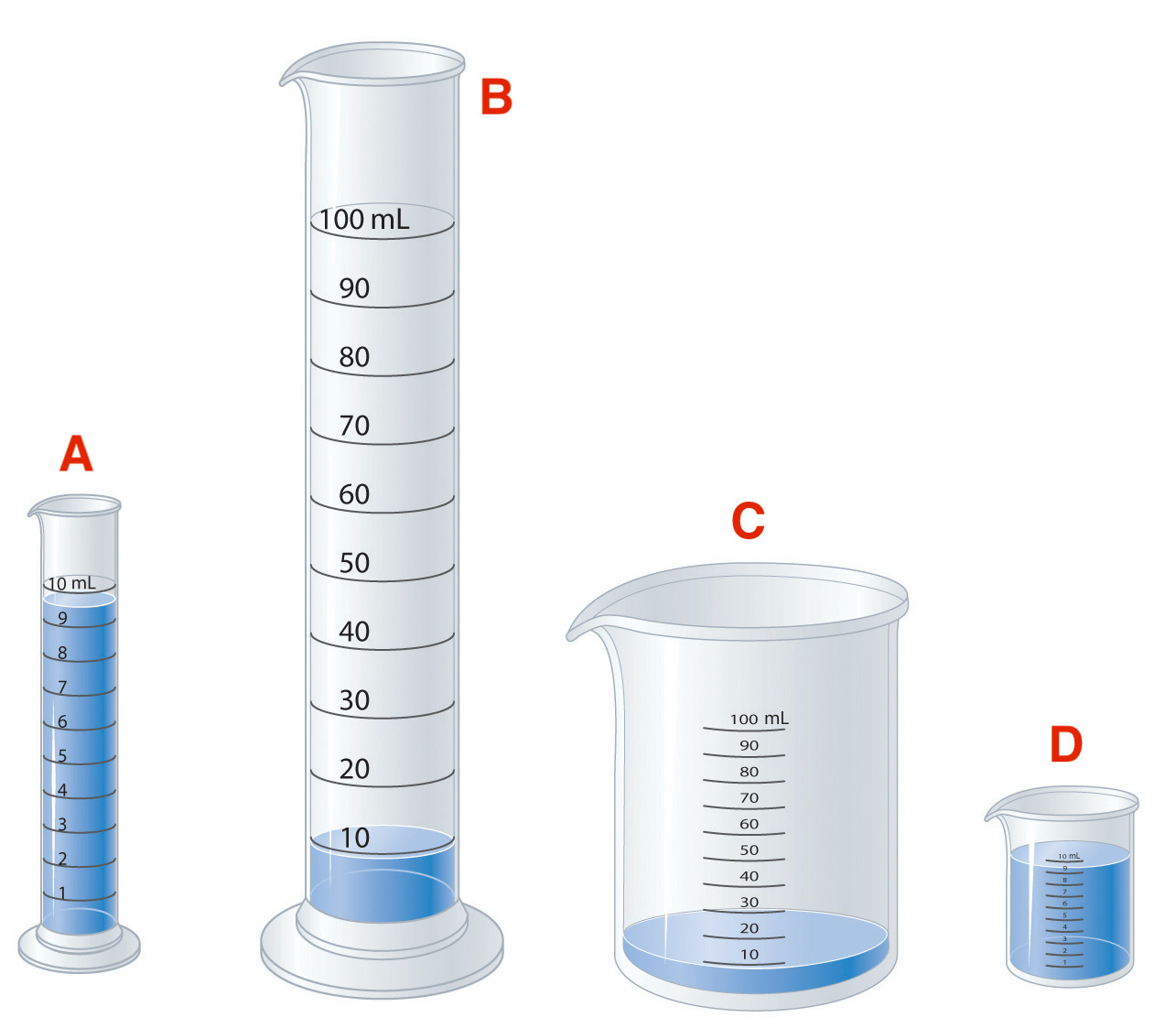
Which one of these would be most suitable to use to measure a liquid of volume of 9 cm3?
The sealed reaction vessel has a fixed number of molecules of gas. A change is made after 10 ps (while all other factors are controlled).
(If you are unable to view the video, use this link: https://drive.google.com/file/d/1qWfXwx2W-f6YaqTmNfxZppki-mBbAoGl/view?usp=sharing)
What change was made in the experiment above?
Which of these Boltzmann distributions represents the effect of this change?
Watch the video clip of an experiment you have learnt about.
Use this link if you cannot access the video: https://drive.google.com/file/d/0B5A_aIE5kJWSV21obUgtaDdyc0U/view?usp=sharing&resourcekey=0-o0lo1_0KqIHbhc1F6UZuBA
Which statement regarding this experiment is FALSE?