Covid -19 Assessment
star
star
star
star
star
Last updated almost 6 years ago
24 Nsɛmmisa

1
1
1
1
1
1
1
1
1
1
1
1
1
1
1
1
1
1
1
1
1
1
1
1
A hospital in Vienna noted that many of their female patients were dying of childbed fever after they had given birth in the hospital. The rates of this fever were much higher in the hospital than they were for women who had given birth at a different clinic. In fact, 10% of the women at the hospital contracted fever compared to 4% at the clinic.
Ignatz Semmelweiss was a doctor at the clinic and he felt that the fever was being transmitted on the hands of the doctors when they went from the morgue to examine the woman. He asked the doctors to wash their hands. After hand washing was required, the number of cases of childbed fever were reduced. He also noted that a doctor contracted the same fever after he cut himself with a scalpel that had been used after an autopsy. Semmelweis concluded that the fever was caused by some element that could be transferred from person to person.
What is the scientific question that the doctor was researching?
What is the claim or answer to the question?
What is the evidence that supports the claim? Select two.
What is the reasoning? Explain why the evidence supports the claim.
If childbed fever is something that could be transferred from person to person, then...
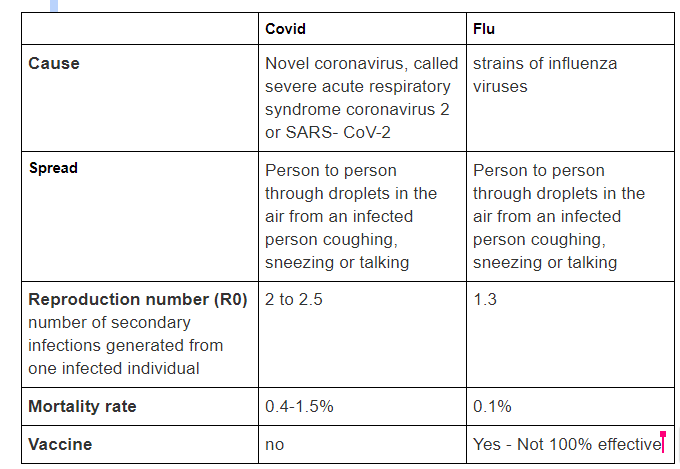
With so much information circling about coronavirus (COVID-19), it’s hard to know what to believe and what are myths that are simply untrue and have no evidence to support them. We spoke with Infectious Disease Specialist Farida Malik, MD, to clear up some of the false information that has unfortunately spread through the internet, social media and other sources. Dr. Malik shared her responses to address these myths by providing facts from expert sources, such as the Centers for Disease Control and Prevention (CDC), World Health Organization (WHO), and trusted medical journals.
MYTH: COVID-19 is no worse than seasonal flu.
FACTS:
What sources are used for the above information? Check all that apply.
What is the question the article is addressing?
What is the claim of the article? What is the answer to the question?
What evidence does the article use to support the claim? Select three.
Which of the following is the best scientific reasoning for how the evidence supports the claim that Covid-19 is worse than the seasonal flu?
The common cold and Sars-Cov-2 are
The Spanish Flu of 1918 infected 500 million people or one-third of the world’s population. The number of deaths was estimated to be at least 50 million worldwide with about 675,000 occurring in the United States. How does the Spanish Flu compare to Sars-Cov-2?
How does media affect our perception of disease? Check all that apply.
Smallpox was a disease that left survivors blinded and scarred as a result of a severe rash. Which statement about smallpox is true?
What is the relationship between disease deadliness and contagiousness?
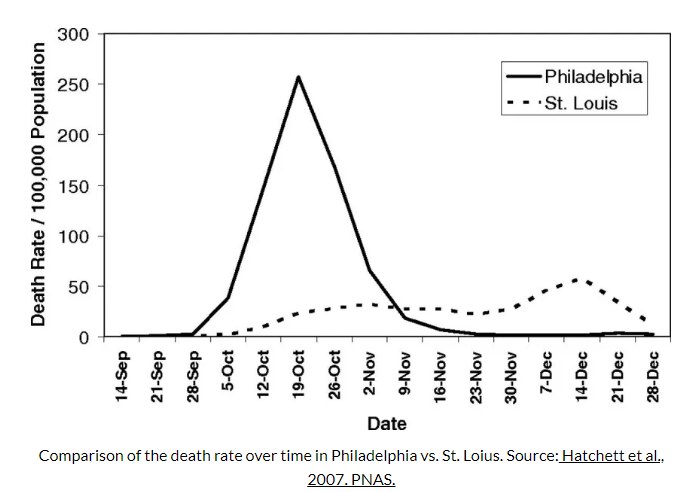
Which statement describes the line representing Philadelphia in the graph above?
Which statement describes the line representing St. Louis in the graph above?
Which of the following caused the differences in the two cities' death rates?
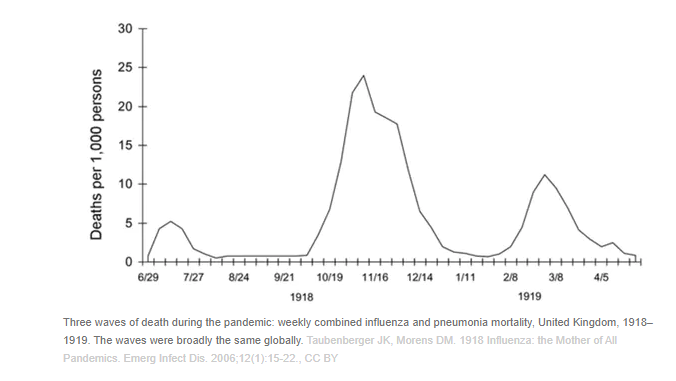
Looking at the graph above, what trend in the data suggests that social distancing measures were relaxed?
Using your background knowledge of seasonal flu, infer why the death rates decreased during August and September.
Which description below matches this step in the virus reproduction model?

Which description below matches this step in the virus reproduction model?

Which description below matches this step in the virus reproduction model?

Based on the table below, what is a possible claim about the infection rate of the virus?
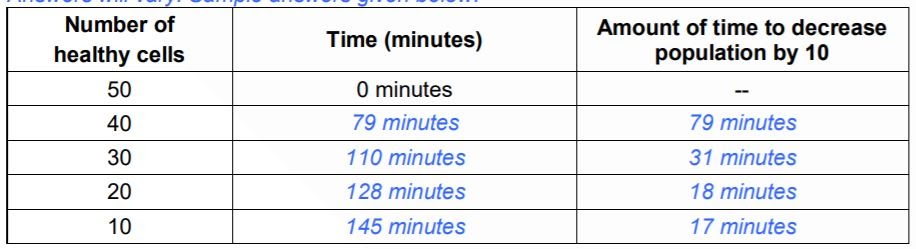
Based on the data, which of the following is the best scientific explanation for the viral infection rate?