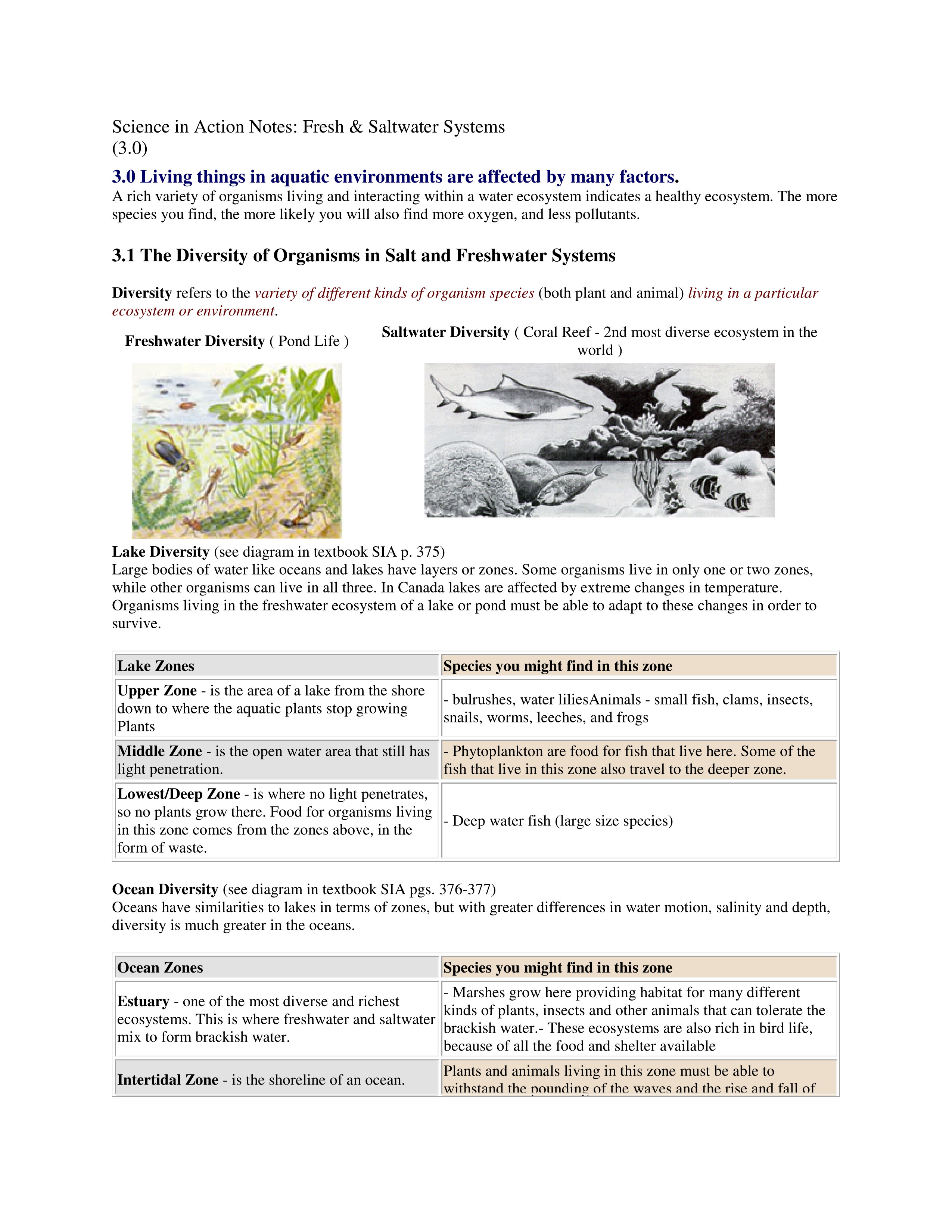
Diversity occurs within many different ecosystems around the world. The ecosystem that is the most diverse is the ...
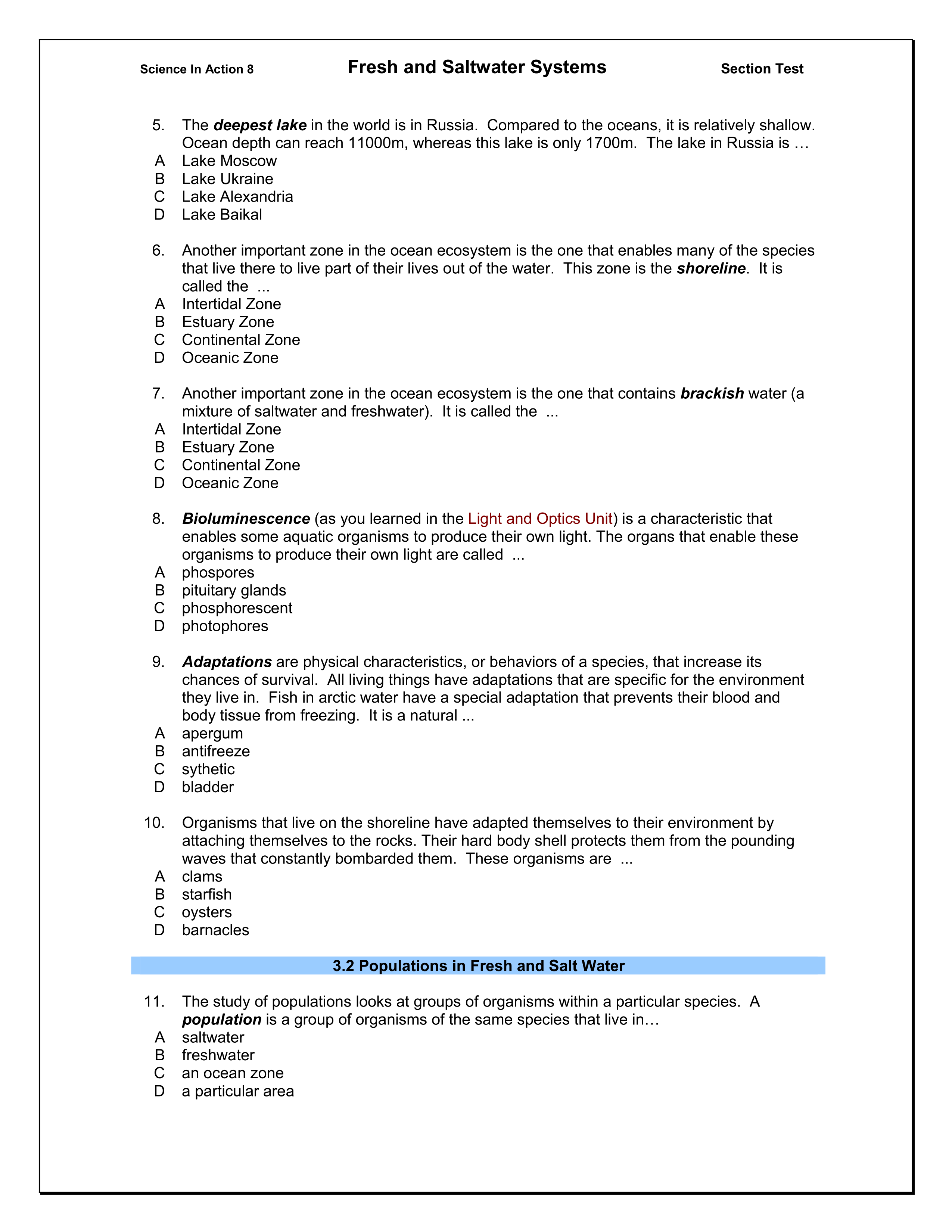
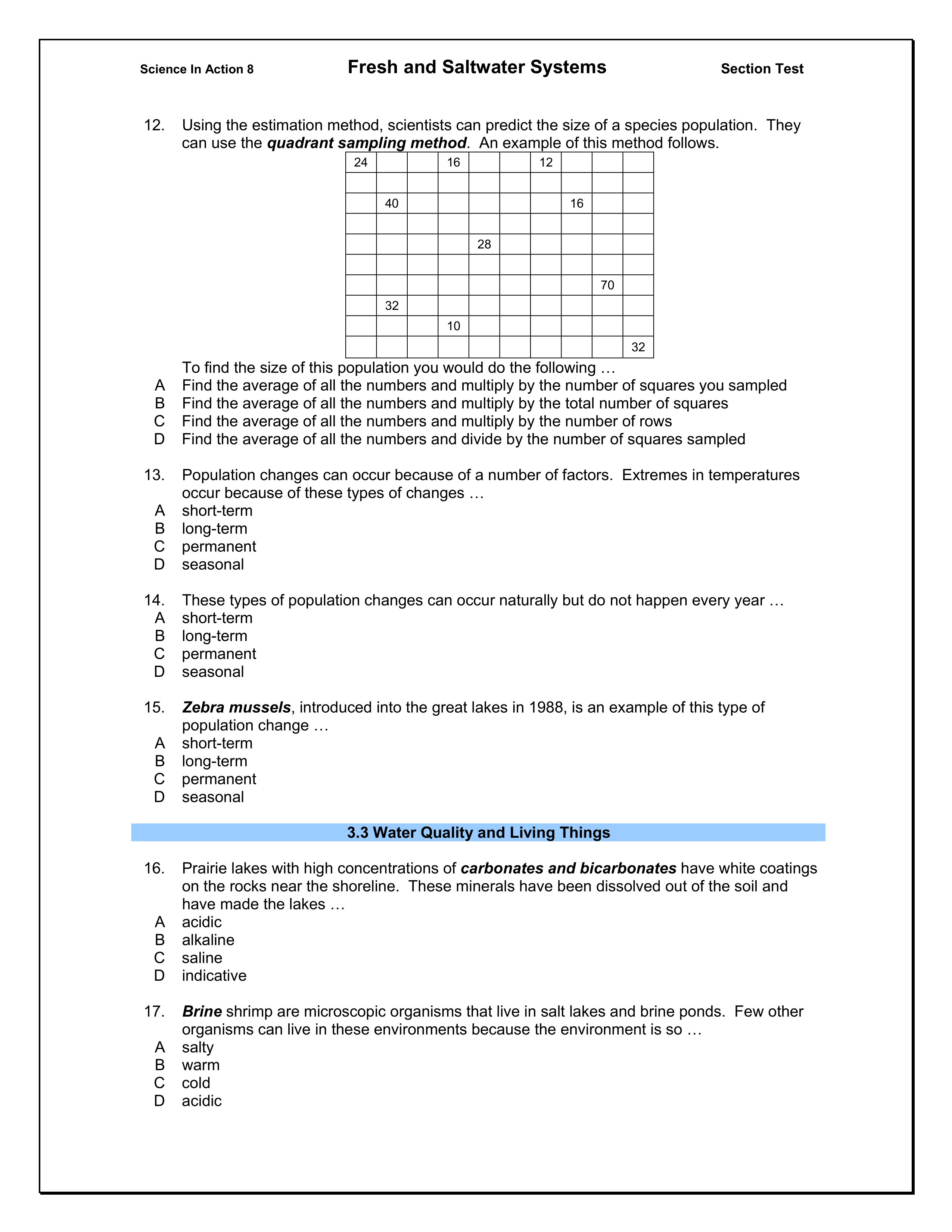
Using the estimation method, scientists can predict the size of a species population. They can use the quadrant sampling method. An example of this method is shown in the question. To find the size of this population you would do the following...
Often when too many chemicals are added to an environment, pollution occurs. This is evident when fertilizer runoff from farmer’s fields increases the growth of green slime in a body of water nearby. This green slime is called ...
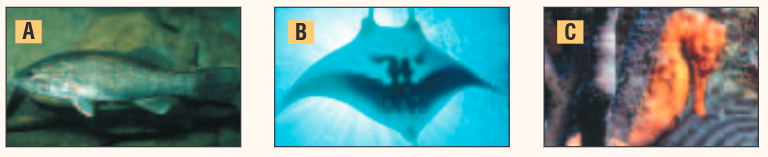
In the Figure below, why do all these animals have gills? What is the purpose of gills?
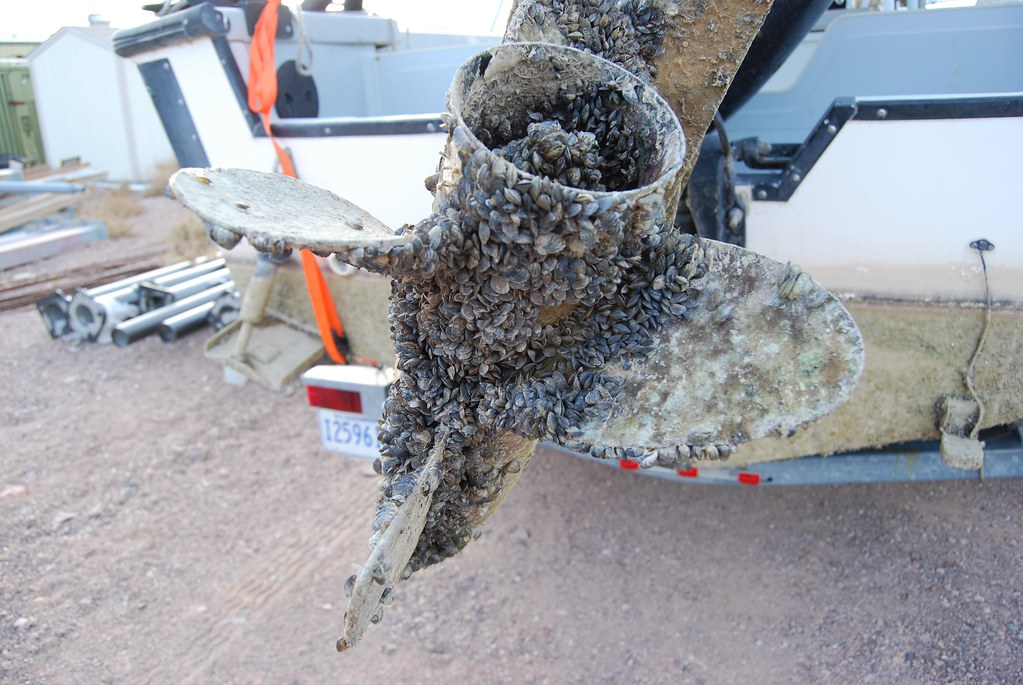
The zebra mussel population in the Great Lakes has exploded. Do you think that this population growth will continue in the same way? Why or why not?
An ecosystem is any place where living organisms interact with other living organisms and non-living things. This many, of all the major types of organisms, live in saltwater environments for some time in their lives ...
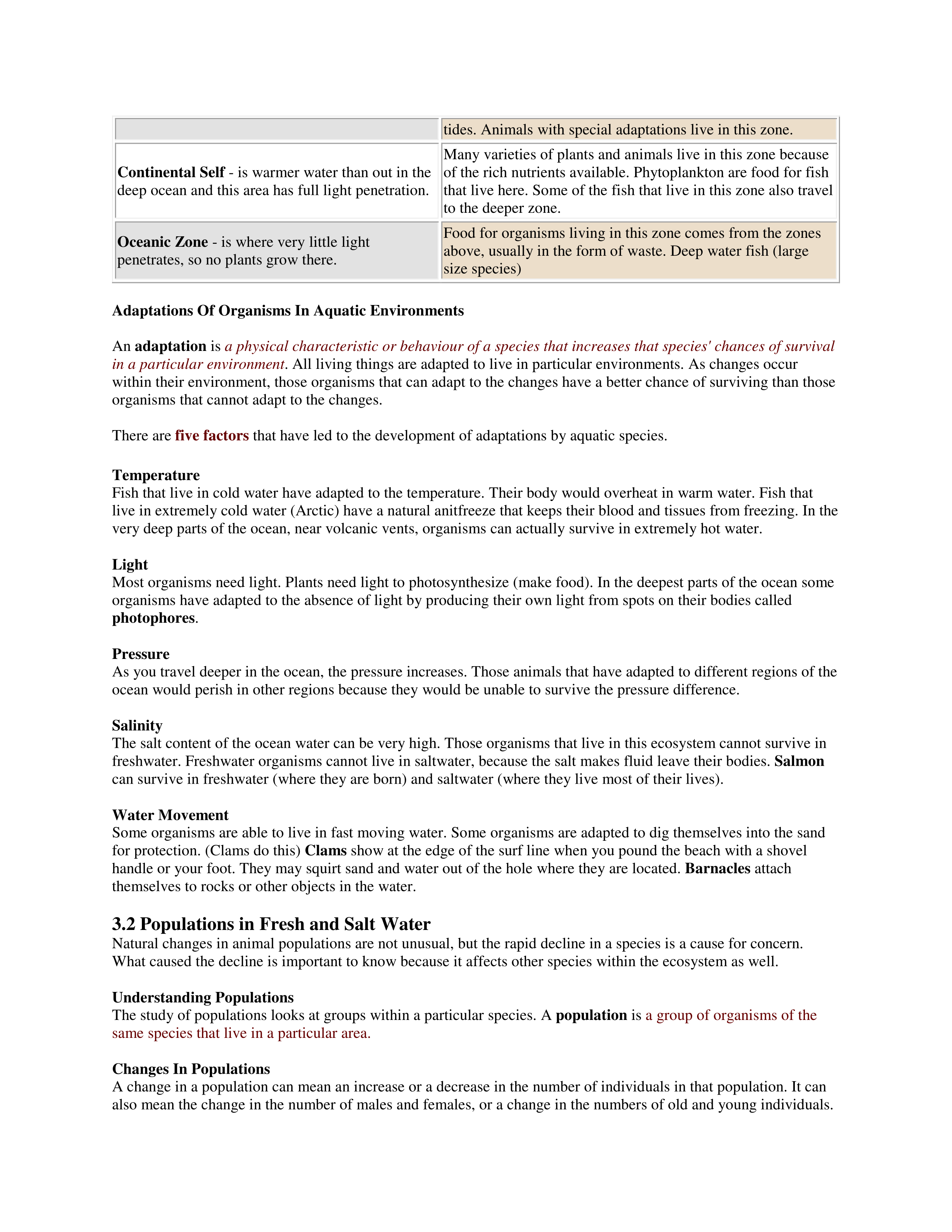
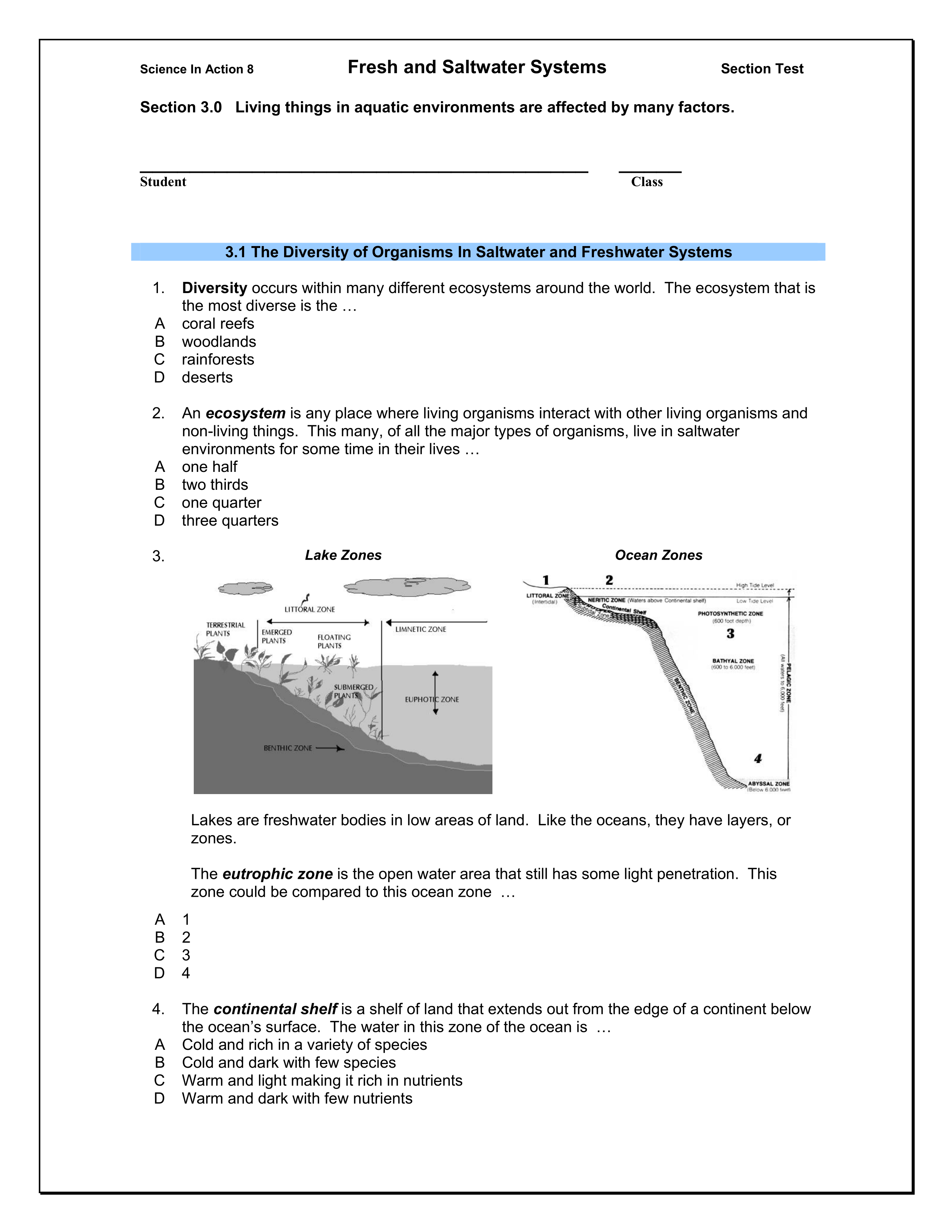
The eutrophic zone is the open water area that still has some light penetration. This zone could be compared to this ocean zone ...
The continental shelf is a shelf of land that extends out from the edge of a continent below the ocean’s surface. The water in this zone of the ocean is ...
The deepest lake in the world is in Russia. Compared to the oceans, it is relatively shallow. Ocean depth can reach 11000m, whereas this lake is only 1700m. The lake in Russia is ...
Another important zone in the ocean ecosystem is the one that enables many of the species that live there to live part of their lives out of the water. This zone is the shoreline. It is called the ...
Another important zone in the ocean ecosystem is the one that contains brackish water (a mixture of saltwater and freshwater). It is called the ...
Bioluminescence (as you learned in the Light and Optics Unit) is a characteristic that enables some aquatic organisms to produce their own light. The organs that enable these organisms to produce their own light are called...
Adaptations are physical characteristics or behaviors of a species, that increase its
chances of survival. All living things have adaptations that are specific to the environment they live in. Fish in arctic water have a special adaptation that prevents their blood and body tissue from freezing. It is natural ...
Organisms that live on the shoreline have adapted themselves to their environment by attaching themselves to the rocks. Their hard body shell protects them from the pounding
waves that constantly bombarded them. These organisms are ...
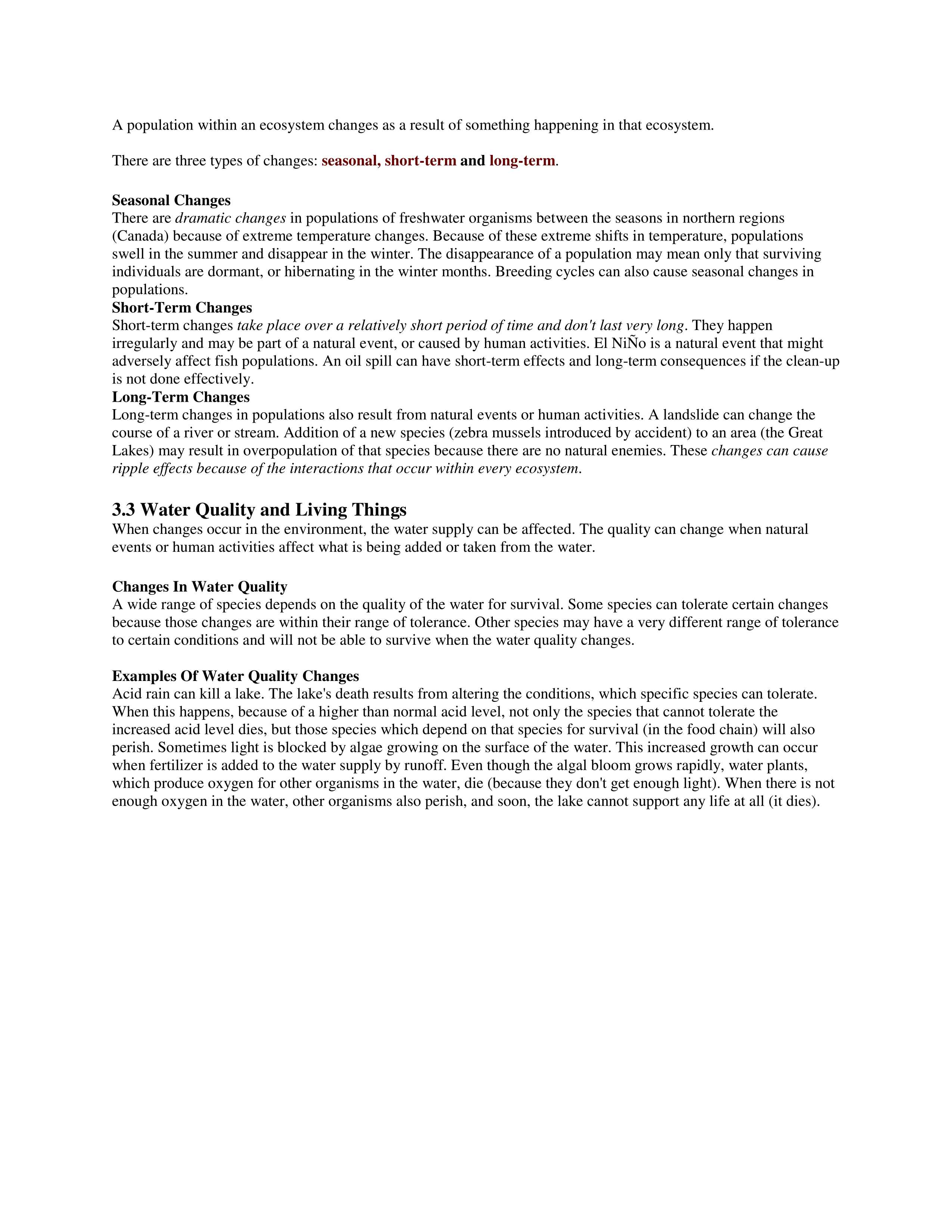
The study of populations looks at groups of organisms within a particular species. A population is a group of organisms of the same species that live in...
Population changes can occur because of a number of factors. Extremes in temperatures
occur because of these types of changes ...
These types of population changes can occur naturally but do not happen every year ...
Zebra mussels, introduced into the great lakes in 1988, is an example of this type of population change ...
Prairie lakes with high concentrations of carbonates and bicarbonates have white coatings on the rocks near the shoreline. These minerals have been dissolved out of the soil and
have made the lakes ...
Brine shrimp are microscopic organisms that live in salt lakes and brine ponds. Few other organisms can live in these environments because the environment is so...
Which of the following environments would have the greatest diversity?
A population is related to a species in the following way ...
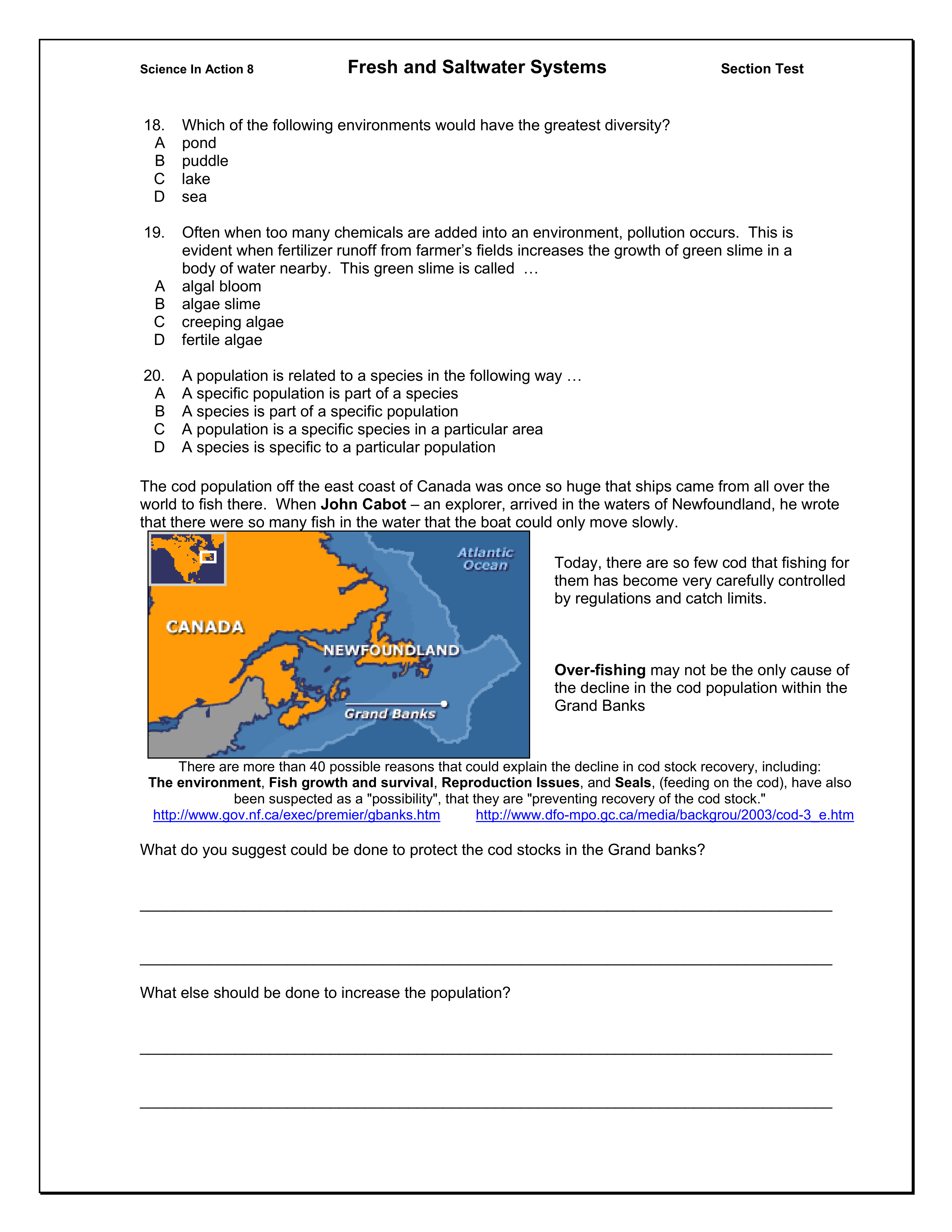
What do you suggest could be done to protect the cod stocks in the Grand Banks? (There is a video at the bottom that may help in your answering of this question. Take a look at it.)
What else should be done to increase the population?