Log in
Sign up for FREE
arrow_back
Library
NPA Test
By Heidi N Johnson
star
star
star
star
star
Share
share
Last updated almost 5 years ago
30 questions
Add this activity
1
1
1
1
1
1
1
1
1
1
1
1
1
1
1
1
1
1
1
1
1
1
1
1
1
1
1
1
1
1
Question 1
1.
Why is it important to limit the amount of sodium in your diet?
sodium improves vision and reaction time
excess sodium is linked to developing osteoperosis
sodium is linked to hypertension (high blood pressure)
excess sodium is stored as fat in the body
Question 2
2.
Which factor can reduce the risk of developing obesity, heart disease, and osteoperosis?
sedentary lifestyle
environmental pollution
over-exposure to the sun
eating according to the MyPlate recommendations
Question 3
3.
Which is a possible consequence of fad dieting?
lifelong healthy eating habits
decreased food cravings
increased physical fitness
temporary weight loss and then weight fluctuations
Question 4
4.
Which nutrient deficiency contributes to osteoperosis?
vitamin A
Calcium
Iron
Folic Acid
Question 5
5.
What should a healthy weight-loss plan include?
staying up later each night to boost your metabolism
taking lots of supplements to get extra nutrients
balanced diet and exercise
skipping a meal to cut calories
Question 6
6.
Why is it important for vegetarians to plan their diets?
they must include the appropriate plant sources in order to intake all the essential vitamins and minerals
they must include animal foods, which are their only source of protein
they must include supplements because plant sources will not provide enough fiber
they must limit their fluid intake because fruits and veggies have plenty of water in them
Question 7
7.
Which statement best describes the difference between Anorexia Nervosa and Bulimia Nervosa?
Aneroxia is considered an eating disorder and bulimia is not
anorexia affects mostly females, bulimia affects mostly males
anorexia involves self-starvation, bulimia involves eating then purging
bulimia is a psychological disorder and anorexia is not
Question 8
8.
What weather conditions contribute to the risk of dehydration and heat illness?
low humidity, cool temperatures
high humidity, high temperatures
no humidity, mild temperatures
rain and freezing temperatures
Question 9
9.
The difference between hypothermia and frostbite is
hypothermia occurs only in Northern states, while frostbite occurs only in Southern states
hypothermia involves lowering of the core body temperature while frostbite involves freezing of tissues (usually fingers, toes, nose, and ears)
hypothermia occurs when temperatures are at or below freezing, while frostbite occurs when it rains
hypothermia occurs in all climates, while frostbite happens in Wintery conditions
Question 10
10.
Which nutrient contributes to the prevention of the birth defect Spina Bifida?
Vitamin A
Folic Acid
Calcium
Iron
Question 11
11.
A person who is lactose intolerant has trouble digesting
plant based food
milk and dairy products
grains
trans saturated fats
Question 12
12.
Dietary Fiber is an important component of _______ which are mostly found in the ______ food group.
carbs, grains
carbs, fruits
minerals, veggies
protein, meats
Question 13
13.
The five major food groups are
grains, veggies, dairy, meat, and beans
grains, veggies, fruits, dairy, and protein
carbs, proteins, vitamins, minerals, and dairy
fruits, veggies, carbs, minerals, and water
Question 14
14.
A lacto-ovo vegetarian
will eat any type of meat
will eat dairy and eggs
will only eat vegetables
will eat meat, as long as it is not red
Question 15
15.
A measurement that takes your body weight relative to your height is
metabolism
body fat ratio
Body Mass Index
Body Composition
Question 16
16.
A safe, responsible, and maintainable weight loss rate would be:
1-2 pounds per day
1-2 pounds per week
1-2 pounds per month
5 pounds per week
Question 17
17.
Which fitness test measured flexibility?
PACER
Push ups
Sit and reach
Sit ups
Question 18
18.
Everyone who exercises should have a sports drink to stay hydrated.
True
False
Question 19
19.
A vegan will eat fish
True
False
Question 20
20.
Fish, Chicken, and Beef are from the protein food group
True
False
Question 21
21.
A food with empty calories would have, lots of calories, with very little nutrients (such as candy and soda).
True
False
Question 22
22.
Peanuts are one of the eight most common food allergens
True
False
Question 23
23.
Our bodies use fats first when they need energy
True
False
Question 24
24.
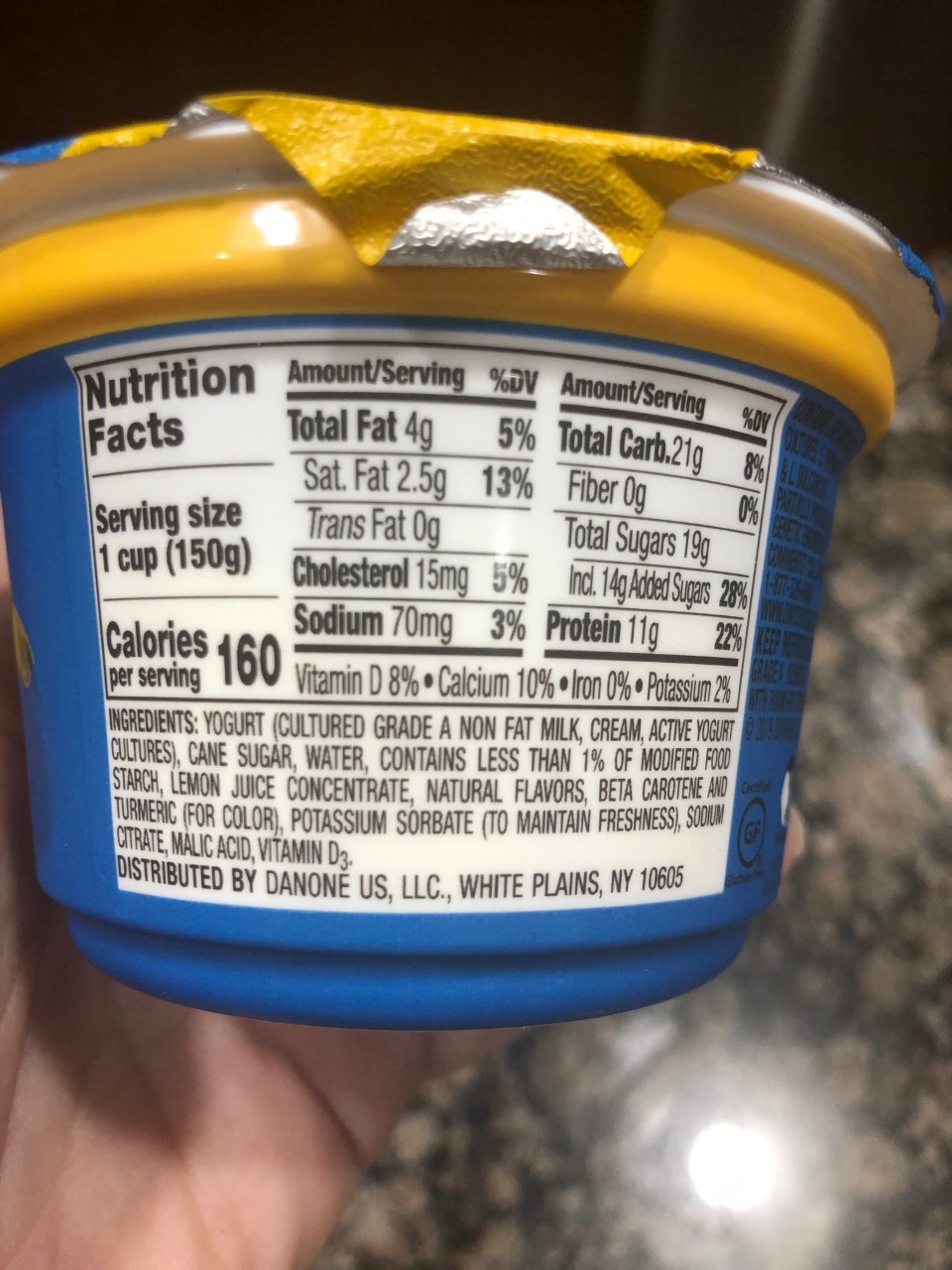
Look at the food label above. How many calories are in this cup of yogurt?
150
160
15
21
Question 25
25.
When planning your workouts, use FITT (frequency, intensity, time, type).
True
False
Question 26
26.
What are the 6 nutrients?
calories, trans fat, water, sugar, fiber, vitamins
carbohydrates, proteins, fats, vitamins, minerals, water
saturated fat, unsaturated fat, trans fat, fiber, sugar, calcium
amino acids, complex carbohydrates, fiber, iron, insulin, calories
Question 27
27.
The ratio of fat to muscle, organs, bones, and other necessary body parts that account for our weight is called:
body mass index
body composition
basal metabolic rate
obesity
Question 28
28.
Which of the following is an ingredient that is trans fat?
iron
partially hydrogenated soybean oil
added sugar
dextrose
Question 29
29.
The ability of muscles to perform exercises over and over again without tiring is called:
muscular endurance
muscular strength
cardiorespiratory endurance
flexibility
Question 30
30.
A vegan will eat honey.
True
False