How many single bonds does the following compound have in the structure?
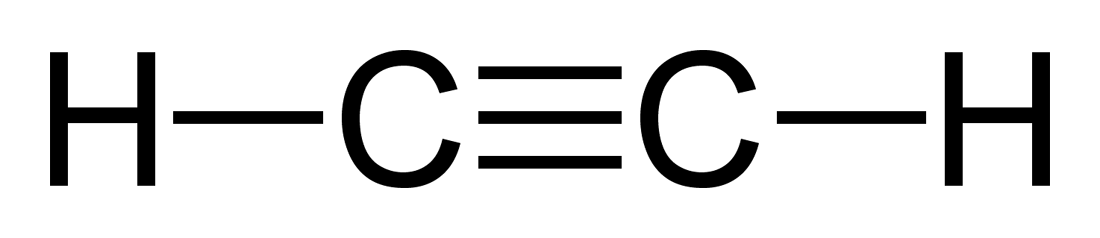
How many single bonds does the following compound have in the structure?
In what form do elements such as hydrogen, nitrogen, and oxygen normally occur?
How many electrons are shared in a single covalent bond?
How many electrons are shared in a triple covalent bond?
How many valence electrons does sulfur have?
Bond length is the distance between....
Reaction which will feel cold to the touch.
Which of the following relationships relating to bond length is generally correct?
If the electrons shared are centered between two atoms, the attachment is called a ____________ bond.
If the sharing involves the overlap of parallel orbitals, the attachment is called a _________ bond.
When sharing of electrons occurs, the attachment between atoms that results is called a __________________ bond.
Combine the following nonmetals to form covalent compounds(molecules): H and S
Combine the following nonmetals to form covalent compounds(molecules): F and I
Combine the following nonmetals to form covalent compounds(molecules): N and
Combine the following nonmetals to form covalent compounds(molecules): C and O
Combine the following nonmetals to form covalent compounds(molecules): P and F
Combine the following nonmetals to form covalent compounds(molecules): S and Br
Combine the following nonmetals to form covalent compounds(molecules): C and I
Combine the following nonmetals to form covalent compounds(molecules): Br and O
How many single bonds does the following compound have in the structure?
How many pi bonds does the following compound have in the structure?
How many electrons are shared in the structure?
What types of bonds does the following compound have ________________ bonds?