Log in
Sign up for FREE
arrow_back
Library
Topic 3.1
By Kevin Struble
star
star
star
star
star
Share
share
Last updated about 5 years ago
10 questions
Add this activity
1
A1.F-IF.A.1
HS.MP.3
…
+2
1
A1.F-IF.A.1
HS.MP.3
…
+2
1
A1.F-IF.A.1
HS.MP.3
…
+2
1
A1.F-IF.A.1
HS.MP.3
…
+2
1
A1.F-IF.A.1
HS.MP.3
…
+2
1
A1.F-IF.A.1
HS.MP.3
…
+2
1
A1.F-IF.A.1
HS.MP.3
…
+2
1
A1.F-IF.A.1
HS.MP.3
…
+2
1
A1.F-IF.A.1
HS.MP.3
…
+2
1
A1.F-IF.A.1
HS.MP.3
…
+2
Question 1
1.
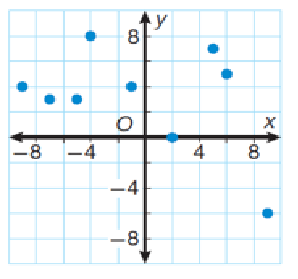
Give the domain of the relation:
Question 2
2.
Give the range of the relation:
Question 3
3.
Draw a mapping diagram to represent the set of ordered pairs
visibility
View drawing
Question 4
4.
Determine y=3x-1 represents a function.
Yes, it is a function.
No, it is not a function.
There is not enough information to determine if it is a function.
Question 5
5.
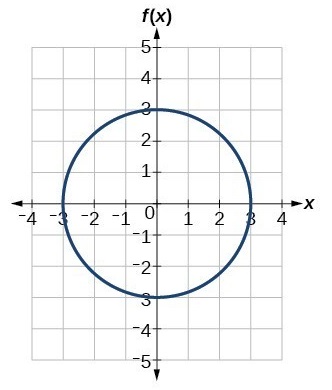
Determine if the graph represents a function.
Yes, it is a function.
No, it is not a function.
There is not enough information to determine if it is a function.
Question 6
6.
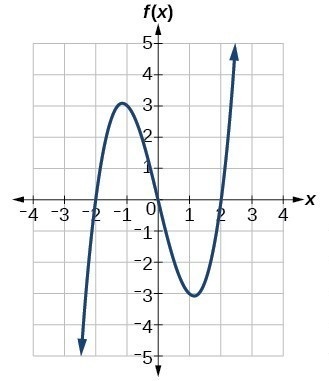
Determine if the graph represents a function.
Yes, it is a function.
No, it is not a function.
There is not enough information to determine if it is a function.
Question 7
7.
Determine if the table represents a function.

Yes, it is a function.
No, it is not a function.
There is not enough information to determine if it is a function.
Question 8
8.
What type of graph is shown below?
Discontinuous
Continuous
Graph type is not listed
Discrete
Point graph
Question 9
9.
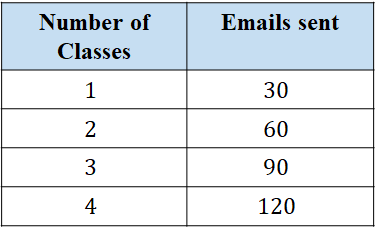
The table shows the number of emails history classes send to their senators. What is the range of the data?
Question 10
10.
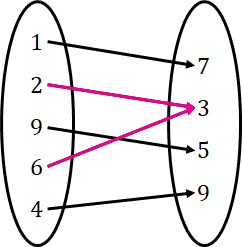
Does the mapping diagram show a relation or a function?
Function
Relation