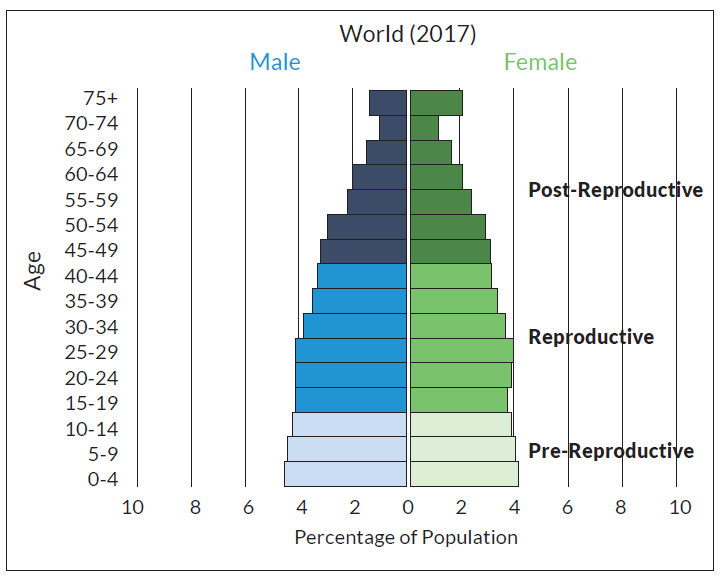
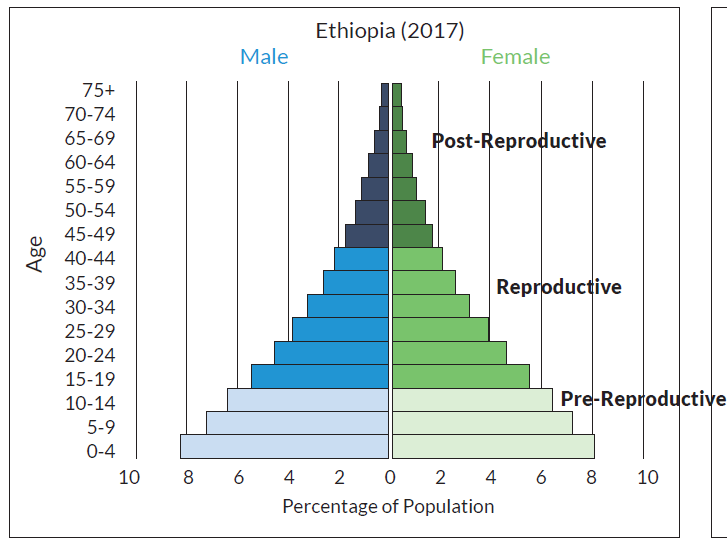
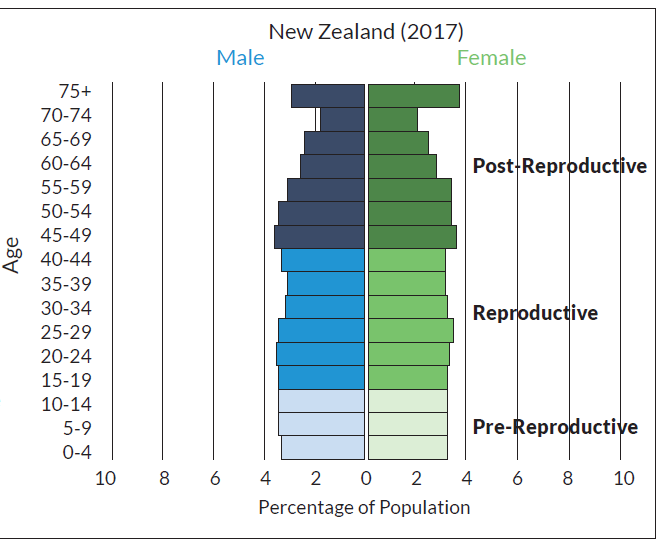
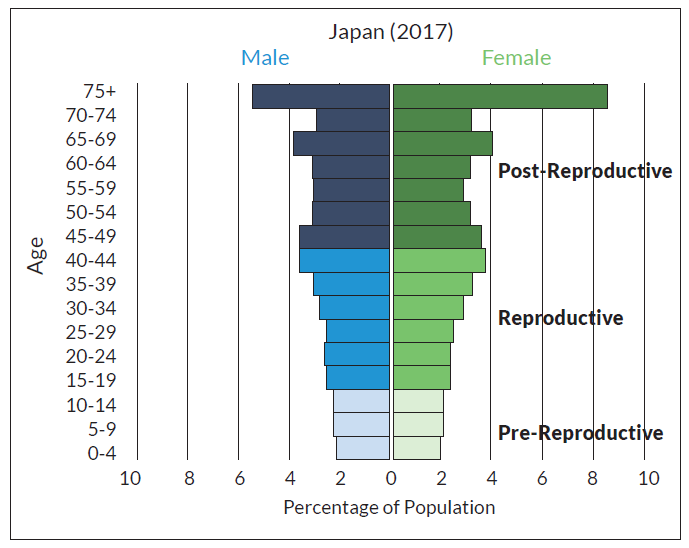
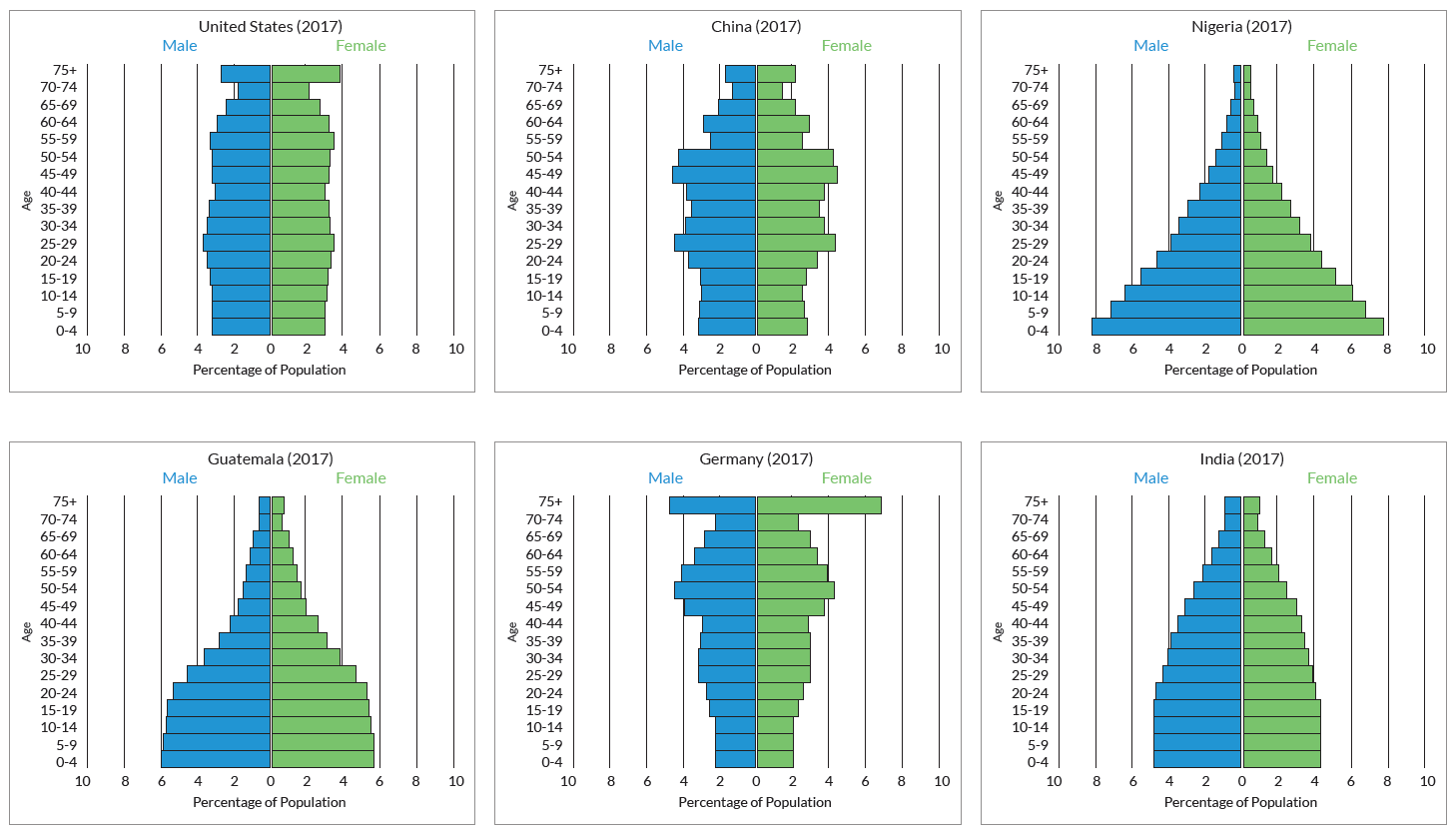
This is a type of graph used by demographers to study the distribution of people across sex and age categories.
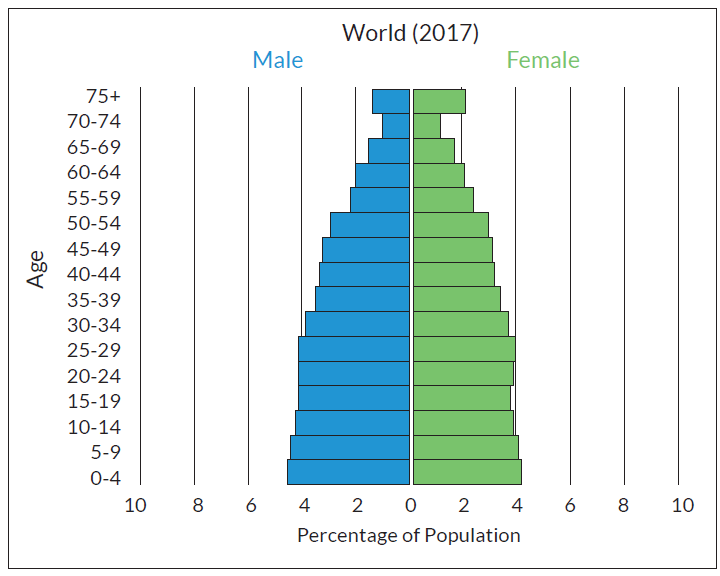
The graph represents the entire world population, sorted by age and sex – with the youngest at the bottom and the oldest at the top and males on the left, females on the right. Each age level/sex grouping is called a cohort. A cohort represents the percentage of people within that sex and age range within the population. So
on the world population pyramid, we can see that 4.5 percent of the global population is made up of
males aged 0-4.