On the graph below, what is the variable on the X-axis?
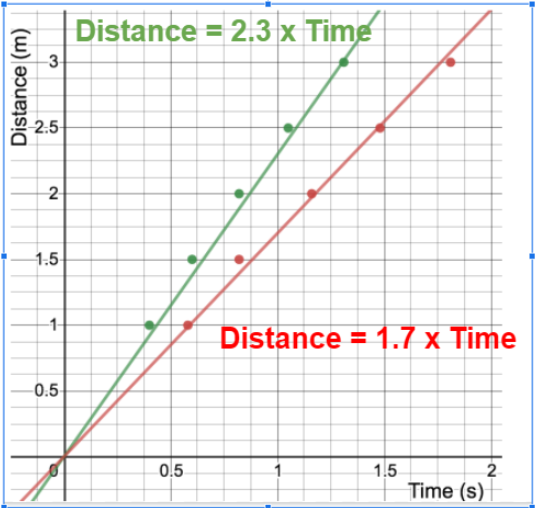
On the graph below, what is the variable on the X-axis?
Patterns Physics-Proportional-Linear Pattern
This is our second quiz of the year and it will cover the science inquiry process we used to make a data-based prediction for how far the bowling ball rolled in 6.0 seconds. There are two parts,
Part 1: a data collection part in Desmos and
Part 2: a multiple choice and essay part in GoFormative.
There is a time limit on this quiz, which is due at the end of the class period, but it will likely take you much less time. I will score what you have completed at the end of the period. If you do not finish, we will make arrangements to finish next week- likely during Applied Learning time.
Take a deep breadth, take your time to read each question, and pick the best answer- or write what you think. When done, I will have you work in teams on a new problem- determining whether the cat is walking up or down the stairs...this will definately exercise your cognitive muscles.
I wish you the best!
Mr. Scannell
On the graph below, what is the variable on the X-axis?
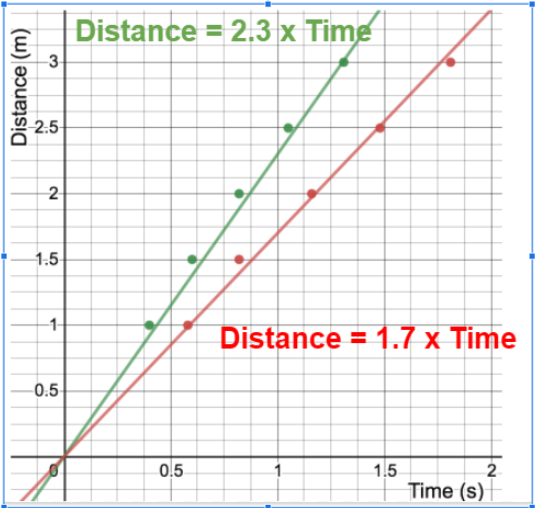
Which of the following is a data point on the red line?
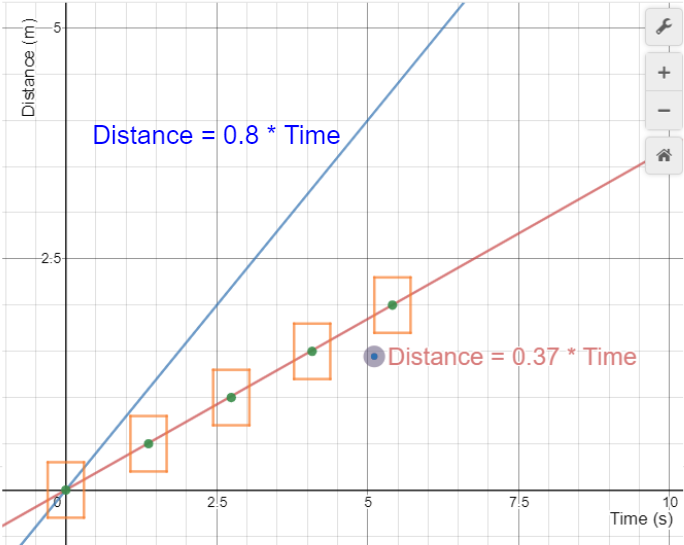
The graph above shows data for two bowling balls that were rolling along a flat floor. Which line has the larger A-value
The A-value for the ball the moves slower is ...
The A-value for the ball the moves faster is ...
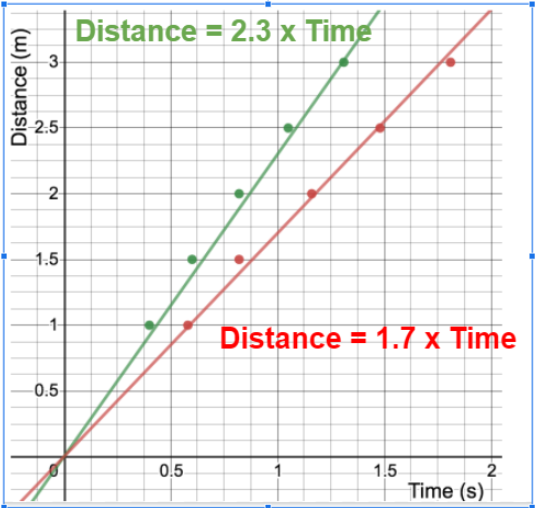
One significant differences for the two lines on the graph is,
When looking at a graph, the bigger the A-value,
In the real world, the A-value represents
In the graph world, the A-value represents
In the mathematical model (aka - the math equation), the A-value represents
Thinking about our class definition of science:
Science is… through collaboration, finding and using patterns in nature to predict the future, make data-informed decisions in the present, and understand the past.
How well did the Ball on the Floor Experiment match our definition of science? How do you think we could apply this in learning about other things in our world? Provide at least 2 pieces of evidence for each of these questions to receive full credit (2 pts = 9 or 10 on scoring guide; 1 pt=7 on scoring guide).