केंद्रीय विद्यालय संगठन-दिल्ली संभाग KENDRIYA VIDYALAY SANGATHAN DELHI REGION मध्यावधिपरीक्षा (2020-21) Half Yearly Examination (2020-21) cloned 10/17/2020 cloned 10/17/2020

Last updated about 5 years ago
23 questions
0

Name of the Vidyalaya / विद्यालय का नाम

0

Name of the student / विद्यार्थी का नाम

0

Section / खंड

0

Roll No. / अनुक्रमांक

केंद्रीय विद्यालय संगठन-दिल्ली संभाग
KENDRIYA VIDYALAY SANGATHAN DELHI REGION
मध्यावधिपरीक्षा(2020-21)
Half Yearly Examination (2020-21)
कक्षा-XI विषय–इतिहास
CLASS-XI SUBJECT-HISTORY
समय – 1 घंटा 30 मिनट अधिकतम अंक- 40
TIME - 1 ½ hours Maximum MARKS - 40
सामान्य निर्देश-
· सभी प्रश्नों के उत्तर दें। कुछ सवालों में आंतरिक विकल्प हैं। प्रत्येक प्रश्न के विरूद्ध अंक अंकित किए गए हैं। इस प्रश्न पत्र में छह खंड शामिल हैं।
· खंड क : प्रश्न संख्या 1 से 10 वस्तुनिष्ठ प्रकार के प्रश्न होते हैं जो 1 अंक के हैं।
· खंड ख : प्रश्न संख्या 11 केस आधारित / स्रोत है जिसमें बहुविकल्पीय प्रश्न हैं। प्रश्न के 3 उप-भाग होते हैं। प्रत्येक उप-भाग 1 अंक का हैं|
· खंड ग: प्रश्न संख्या 12 एवं 13, प्रत्येक प्रश्न 3 अंक का हैं| उत्तर 100 शब्दों से अधिक नहीं होना चाहिए।
· खंड घ: प्रश्न 14, 8 अंक का हैं| उत्तर 350 शब्दों से अधिक नहीं होना चाहिए।
· खंड च: प्रश्न संख्या 15 और 16 स्रोत आधारित प्रश्न हैं जिनमें से प्रत्येक 5 अंक का हैं।
· खंड छ : प्रश्न संख्या 17 एक मानचित्र आधारित प्रश्न है | इसमें दिए गए स्थानों को चिन्हित तथा पहचान करना है। उत्तर पुस्तिका के साथ मानचित्र को संलग्न करें।
General Instructions:
· Answer all the questions. Some questions have an internal choice. Marks are indicated against each question. This question paper comprises of six sections.
· Section A: Question numbers 1 to 10 are objective type questions carrying 1 mark.
· Section B: Question numbers 11 is Case Based/ Source Based having Multiple Choice questions. Each question has 3 sub-parts.
· Section C: Answer to questions carrying 3 marks (Question 12 to 13) should not exceed 100 words each.
· Section D: Answer to question carrying 8 marks (Question 14) should not exceed 350 words.
· Section E: Question number 15 & 16 are Source-based questions carrying 5 marks each.
. Section F: Question number 17 is a Map question that includes the identification and location of significant test items. Attach the map with the answer book.
खंड ‘अ’ / Part ‘A’ 10x1= 10 Marks
1

1. ‘प्रिंसिपेट’ (प्रमुख नागरिक) - का शीर्षक किसने धारण किया? 1

Who acquire the title of ‘Principate’ (leading citizen) ?

1

2. रोमन सेना के बारे में निम्नलिखित कथनों पर विचार करें-      1
I. सैनिकों को पच्चीस साल की सेवा देनी पड़ी|
II. वैतनिक सेना रोमन साम्राज्य की एक विशिष्ट विशेषता थी|
III.  सेना रोमन साम्राज्य की सबसे बड़ी एकल संगठित संस्था थी|
निम्नलिखित में से कौन सा कथन सही है / हैं?
Consider the following statements regarding Roman Army-
I. soldiers had to put up twenty five years of service
II. paid army was a distinctive feature of the Roman Empire
III. The army was the largest single organised body of the Roman Empire
Which of the following statement(s) is/are correct?

1

3. कॉन्स्टेंटाइन के नवाचारों के संदर्भ में निम्नलिखित कथनों पर विचार करें-           1
I. उन्होंने एक नया मूल्यवर्ग, सॉलिडस, शुद्ध चांदी का 4 ½  ग्राम का एक सिक्का पेश किया|
II. उन्होंने कॉन्स्टेंटिनोपल में दूसरी राजधानी की स्थापना की|
III. उसने साम्राज्य के आधिकारिक धर्म के रूप में ईसाई धर्म बनाने का फैसला किया|
निम्नलिखित में से कौन सा कथन सही है / हैं?
With reference to Constantine's innovations consider the following statements-
I. He introduced a new denomination, the solidus, a coin of 4½ gm of pure silver.
II. He founded a second capital at Constantinople.
III. He decided to make Christianity as the official religion of the Empire.
Which of the following statement(s) is/are correct?

1

4. रोमन साम्राज्य में महिलाओं की स्थिति के संदर्भ में निम्नलिखित में से गलत कथन की पहचान करें- 1
Identify the following incorrect statements regarding the status of women in the Roman Empire.

1

5. प्रमुख केंद्र के रूप में मिलान करें - 1
(क) उमय्यद ख़लीफ़ा – (i) काहिरा
(ख) अब्बासिद ख़लीफ़ा – (ii) दमिश्क
(ग) फ़ातिमिद ख़लीफ़ा – (iii) निशापुर
(घ) सलजूक तुर्क - (iv) बगदाद
Match as the main centre -
(a) Umayyad caliph - (i) Cairo
(b) Abbasids caliph - (ii) Damascus
(c) Fatimids caliph - (iii) Nishapur
(d) Saljuq Turks - (iv) Baghdad

1

6. जेरूसलम में............... द्वारा चट्टान का गुम्बद बनवाया गया था | 1
The Dome of Rock was built by............... in Jerusalem.

1

7. सूफीवाद के संदर्भ में निम्नलिखित में से गलत कथन की पहचान करें- 1
Identify the following incorrect statements regarding Sufism

1

8. लॉर्ड द्वारा नाइट को दिया जाने वाला भूमि खंड कहलाता था- 1
The lord gave the Knight a piece of land was known as-

1

9. निम्नलिखित में से किस इतिहासकार को जिन्हें, सामंतवाद पर कार्य करने के लिए जाना जाता है, की हत्या द्वितीय विश्व युद्ध के दौरान नाजियों द्वारा कर दी गई? 1
Which of the following historians, known for working on feudalism, was assassinated by the Nazis during World War II?

1

10. निम्नलिखित में से गलत मिलान की पहचान करें- 1
Identify the wrong match from the following.

खंड ‘ख’ / Part ‘B’ 3x1= 3 Marks
11. निम्नलिखित अंश को ध्यान से पढ़ें और तीन प्रश्नों के उत्तर दें: -
Read the following excerpt carefully and answer three questions: -
इस्लामी कैलेंडर
हिजरी सन की स्थापना उमर की खिलाफत के समय की गई थी ,जिसका पहला वर्ष 622 ई. में पड़ता था | हिजरी सन की तारीख को जब अंग्रेजी में लिखा जाता है तो वर्ष के बाद ए.एच. लगाया जाता है| हिजरी वर्ष चन्द्र वर्ष है, जिसमे 354 दिन ,29 अथवा 30 दिनों के बारहवें महीनें (मुहर्रम से धुल हिज्जा तक ) होते हैं | प्रत्येक दिन सूर्यास्त के समय से शुरू होता है और प्रत्येक महीने अर्ध चन्द्र के दिन से शुरू होता है | हिजरी वर्ष सौर वर्ष से 11 दिन कम होता है | अतः हिजरी कोई भी धार्मिक त्यौहार ,जिसमे रमजान के रोज़े , ईद और हज शामिल हैं, मौसम के अनुरूप नहीं होता | हिजरी कैलेंडर की तारीखों को ग्रेगोरियन कैलेंडर (जिनकी स्थापना पोप ग्रैगरी 13वें द्वारा 1582 ई. में की गई थी) की तारीखों के साथ मिलाने का कोई सरल तरीका नहीं है|
ISLAMIC CALENDAR
The Hijri era was established during the Caliphate of Uma, with the first year falling in 622 CE. A date in the Hijri Calendar is followed by the letters A.H.The hijri year is a Lunar year of 354 days,12 months (Muharram to Dhul Hijja) of 29 or 30 days. Each day being at sunset and each month with the sighting of the crescent moon. The Hijri year is about 11 days shorter than the solar year. Therefore, none of the Religious festivals including the Ramzan fast, Id, and Hajj, corresponds in any way to seasons. There is no easy to match the dates of the Hijri calendar with the dates in the Gregorian Calendar (Established by Pope Gregory XIII in 1582 C.E.).
1

11 (I) .
अभिकथन: - हिजरी कैलेंडर की तारीखों को ग्रेगोरियन कैलेंडर की तारीखों के साथ मिलाने का कोई सरल तरीका नहीं है| 1
कारण:- ग्रेगोरियन कैलेंडर सौर वर्ष पर आधारित है जबकि हिजरी कैलेंडर चंद्र वर्ष पर आधारित है|
Assertion: - There is no simple way to combine the dates of the Hijri calendar with the dates of the Gregorian calendar.
Reason: - The Gregorian calendar is based on the solar year while the Hijri calendar is based on the lunar year.

1

11(II). हिजरी कैलेंडर के संदर्भ में निम्नलिखित कथनों पर विचार करें| 1
(i) पैगंबर मोहम्मद के मदीना से मक्का आगमन के वर्ष से हिजरी सन की शुरुआत हुई|
(ii) प्रत्येक दिन सूर्यास्त के समय से शुरू होता है और प्रत्येक महीने अर्ध चन्द्र के दिन से शुरू होता है|
(iii) हिजरी सन की स्थापना उमर की खिलाफत के समय की गई थी|
निम्नलिखित में से कौन सा कथन सही है / हैं?
With reference to the Hijri calendar consider the following statements.
(i) Hijri Sun started from the year of Prophet Mohammad's arrival to Mecca from Madina.
(ii) Each day being at sunset and each month with the sighting of the crescent moon.
(iii) The Hijri era was established during the Caliphate of Uma.
Which of the following statement(s) is/are correct?

1

11 (III).
निम्नलिखित में से गलत कथन की पहचान करें| 1
Identify the incorrect statement from the following.

खंड ‘ग’ / Part ‘C’ 2x3= 6 Marks
3

Q 12 . “पहली और दूसरी शताब्दी शांति, समृद्धि और आर्थिक विस्तार की अवधि थी, तीसरी शताब्दी रोमन साम्राज्य में संकट लेकर आई।" इस कथन के अनुसार तीसरी शताब्दी के संकट की व्याख्या करें। 3
“First and second centuries were a period of peace, prosperity and economic expansion, the third century brought the crisis in Roman empire”. According to this statement explain the crisis of the third century.

3

13. 'नगर की हवा स्वतंत्र बनाती है', इस कथन के संदर्भ में यूरोप में एक चौथे वर्ग के रूप में नगर और नगर वासियों के उद्भव के परिणाम को स्पष्ट कीजिए| 3
‘Town air makes free’, Explain the result of the emergence of Town and townspeople as a fourth order in Europe in the context of this statement.

खंड ‘घ’ / Part ‘D’ 1x8= 8 Marks
8

14. “मुस्लिम दुनिया के प्रति शत्रुता ग्यारहवीं शताब्दी में धर्मयुद्ध के रूप में अधिक स्पष्ट हो गई|” एशिया और यूरोप पर इसके प्रभाव की व्याख्या करें।
“Hostility towards the Muslim world became more pronounced in the eleventh century as Crusade”. Explain its impact on Asia and Europe.
अथवा / OR
इस्लामी कला और संस्कृति को समझने के लिए बहुतायत साहित्य उपलब्ध है। उपयुक्त उदाहरणों के साथ बताइए।
A plenty of literature is available to understand the Islamic art and culture. Describe with suitable examples.

खंड ‘च’ / Part ‘E’
5

15. निम्नलिखित अनुच्छेदों को ध्यानपूर्वक पढ़िए और साथ में दिए गए प्रश्नों का विवेकपूर्ण उत्तर दीजिये | 1x5 = 5 marks
Read the text carefully and answer the questions associated with it rationally.
डाक्टर गैलेन के अनुसार रोमन शहरों का ग्रामीण क्षेत्रों के साथ बर्ताव
कई प्रांतों में लगातार कई वर्षों से पड़ रहे अकाल ने साधारण से साधारण बुद्धिवाले आदमी को भी यह बता दिया कि लोगों में कुपोषण के कारण बीमारियाँ हो रही है । शहर में रहने वाले लोगों का फसल कटाइ के शीघ्र बाद आने वाले वर्ष के लिये पर्याप्त मात्रा में खाधान्न अपने भंडारों से भर लेना एक रिवाज था। सारा गेहुँ , जौ, सेम तथा मसुर और दालों का काफी बड़ा हिस्सा शहरियों द्वारा ले जाने के बाद भी कई प्रकार की दालें किसानों के लिये बची रह गई थीं । सर्दियों के लिये जो कुछ बचा था ,उसे खा-पीकर खत्म कर देने के पशचात देहाती लोगों के वसंत ऋतु में अस्वास्थ्कर खाद्यों पर निर्भर रहना पड़ा ; उन्होनें पेड़ों की टहनियों , छालें ,जड़ें ,झाड़ियाँ अखाद्य पेड़ पौधे और पत्ते खाकर किसी तरह अपने प्राणों को बचाए रखा ।
I. गांव को शहर का दर्जा कैसे प्राप्त होता था ? 2
II. रोमन शहरो वाशियो का ग्रामिणो के साथ कैसा बर्ताव था ? 2
III. देहाती लोग वसंत ऋतु में किस प्रकार अपना जीवन निर्वाह करते थे ? 1
Doctor Galen on how Roman Cities Treated the Countryside
The famine prevalent for many successive years in many provinces has clearly displayed for men of any understanding the effect of malnutrition in generating illness. The city-dwellers, as it was their custom to collect and store enough grain for the whole of the next year immediately after the harvest, carried off all the immediately after the harvest, carried off all the wheat, barley, beans and lentils, and left to the peasants various kinds of pules-after taking quite a large proportion of these to the city. After consuming what was left in the course of the winter, the country people had to resort to unhealthy foods in the spring; they ate twigs and shoots of trees and bushes and bulbs and roots of inedible plants……..
I. How did the village get the status of the city? 2
II. How Roman cities were treated with villagers 2
III. How did the Countrysidepeople live their lives in the spring? 1

5

16 . निम्नलिखित अनुच्छेदों को ध्यानपूर्वक पढ़िए और साथ में दिए गए प्रश्नों का विवेकपूर्ण उत्तर दीजिये | 1x5 = 5 marks
Read the text carefully and answer the questions associated with it rationally.
बेनेडिक्टीन ( Benedictine) मठो मे भिक्षुओं के लिए एक हस्तलिखित पुस्तक होती थी जिसमे नियमो के 73 अध्याय थे । इसका पालन भिक्षुओं दवारा कई सदियों तक किया जाता रहा । इस पुस्तक के कुछ नियम इस प्रकार है ;
अध्याय 6 : भिक्षुओं को बोलने की आज्ञा कभी – कभी दी जानी चहिये ।
अध्याय 7 : विनम्रता का अर्थ है आज्ञा पालन ।
अध्याय 33 : किसी भी भिक्षुओं को निजी धन नहीं रखना चाहिए ।
अध्याय 47 : आलस्य आत्मा का शत्रु है , इसलिए भिक्षुओं और भिक्षुणियों को निश्चित समय मे शारीरिक श्रम और निश्चित घंटों में पवित्र पाठ करना चाहिए ।
अध्याय 48 : मठ इस प्रकार बनाने चाहिए कि आवश्यकता की समस्त वस्तुए –जल ,चक्कि, उद्यान, कर्यशाला सभी उसकी सीमा के अंदर हो ।
क. भिक्षुओं और भिक्षुणियों से आप क्या समझते हैं? 2
ख. बेनेडिक्टीन ने भिक्षुओं और भिक्षुणियों के लिये कितने कानुन बनाये थे? 2
ग. किन्हीं दो मूल्यों को लिखें जो ये नियम बढ़ावा दें रहे हैं? 1
In Benedictine monasteries, there was a manuscript with 73 chapter of rules which were followed by monks for many centuries. Here are some of the rules they had to follow.
Chapter 6: Permission to speak should rarely be granted to monks.
Chapter 7: Humility means obedience.
Chapter 33: No monk should own private property.
Chapter 47: Idleness is the enemy of the soul, so friars and sisters should be occupied at certain times in manual labour, and at fixed hours in sacred reading.
Chapter 48: The monastery should be laid out in such a way that all necessities be found within its bounds: water, mill, garden, workshops.
a) What do you mean by Monks and Nuns? 2
b) How many rules were followed by Benedict monks and nuns? 1
c) Write any two values which these rules promote. 2

खंड ‘छ’ / Part ‘F’
3

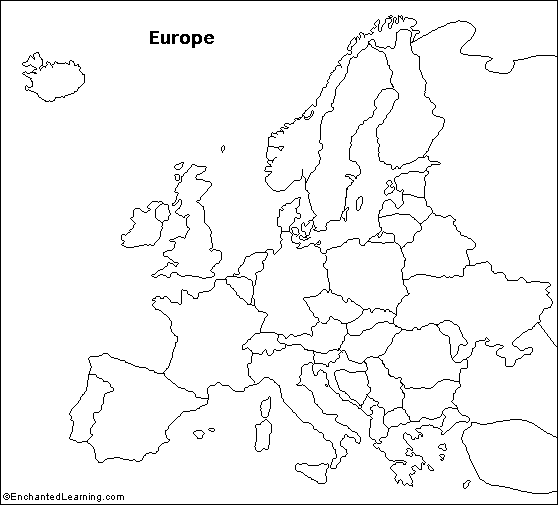
17. यूरोप के राजनितिक मानचित्र में निम्न को दर्शाये| 3 x 1= 3 Marksa
Show the following on the political map of Europe.
A. गॉल प्रांत / Gaul province B. एंजिल लैंड / Angles land C. रोम / Rome
नोट: निम्नलिखित प्रश्न केवल दृष्टिबाधित परीक्षार्थियों के लिए प्रश्न संख्या 17 के स्थान पर है:
Note: The following questions are for visually impaired candidate only in lieu of Q. No. 17.

रोमन साम्राज्य के अंतर्गत भूमध्य सागर के तटों पर स्थापित किन्हीं तीन शहरी केंद्रों के नाम बताएं|
Name any three urban centres established on the shores of the Mediterranean Sea under the Roman Empire.