3.3 Index Fossils
star
star
star
star
star
Last updated almost 6 years ago
12 Nsɛmmisa
10
10
10

10
10

10
10
10
10
10
10
10
You find a different rock with some kind of trilobite and an ammonoid. During which period could this rock have formed? Explain.
Identify the coral index fossil that would most likely be found in the same layer as the index fossil Ctenocrinus.
Each index fossil existed for a relatively short geologic time interval. State one other characteristic that each fossil must have to be considered an index fossil.
Look at the image above. Both organisms that formed the fossils found in rock layers 3 and 4
Look at the image above. Evidence best indicates that rock layers 4 and 8 were deposited during the same geologic period because both layers
Look at the image above. Three rock layers formed during the Silurian Period. Which fossil might be found in these rock layers?
Fossils of trilobites, graptolites, and eurypterids are found in the same bedrock layer in New York State. During which geologic time interval could this bedrock layer have formed?
Which statement can best be supported by the fossil record?
According to the fossil evidence which sequence shows the order in which these four life-forms first appeared on Earth? (Use “Life on Earth” column)
Fossils of Brachiopods, Trilobites, and Placoderm fish are found in the same bedrock layer in New York State. Name one period in which this bedrock layer could have formed.
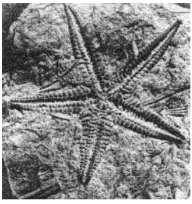
You find the fossil (right) in the bedrock of New York State. In what type of rock was it likely found?
How did this rock form? (Use The Rock Cycle if you can’t remember!)