2.16 Stream Particle Velocity
star
star
star
star
star
Last updated almost 6 years ago
9 Nsɛmmisa
10
10
10
10
10
10
10
10
10
Where are the largest sediments found in a river? Why do you think this is?
How do the silt and clay move in the stream channel?
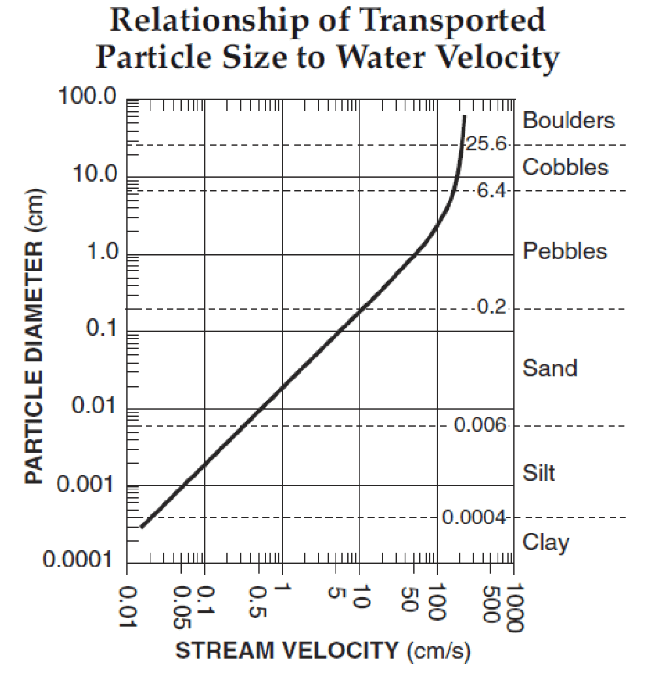
The largest particles that a stream deposits as it enters a pond are 8 centimeters in diameter. The minimum velocity of the stream is approximately
Which stream velocity carried only clay particles to the depositional environment where the shale formed?
What is the minimum water velocity needed in a stream to maintain the transportation of the smallest boulder?
A stream’s velocity decreases from 100 cm/s to 5 cm/s. Which size sediment particles will still be transported by the stream?
A stream is flowing at a velocity of 75 centimeters per second. The biggest particles it can transport is
A stream flowing at a velocity of 75 centimeters per second can transport
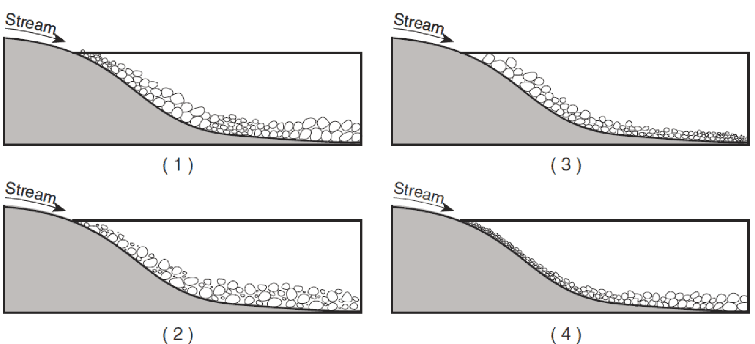
Which cross section above best shows the pattern of sediments deposited by the stream as it enters the ocean?