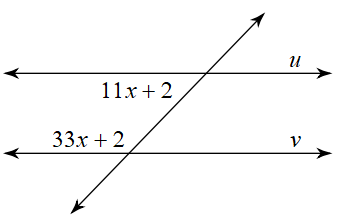
Log in
Sign up for FREE
arrow_back
Library

Lesson 4.2/4.3 Practice

star
star
star
star
star
Last updated over 5 years ago
15 questions
1
1
1
1
1
1
1
1
1
1
1
1
1
1
1
You do not need to use the show your work tool unless it says that you need to. Other wise it is available as a tool if you need it.
Question 1
1.

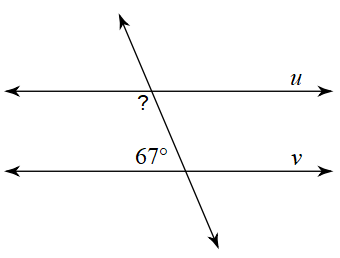
Name the angle relationship and state whether the angles are equal to each other or supplementary based on our parallel line postulates/theorems?

You can abbreviate relationships with:
Verical Angles(VA), Linear Pairs(LP), Alternate Interior Angles(AI), Alternate Exterior Angles(AE), Same Side Interior Angles (SSI), and Corresponding Angles(CA)

Then state the measure of the angle for (?) in diagram.
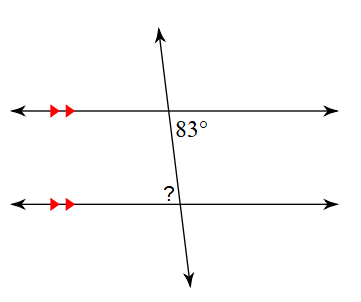
Question 2
2.

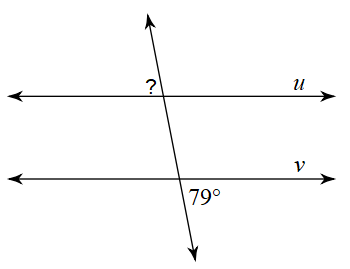
Name the angle relationship and state whether the angles are equal to each other or supplementary based on our parallel line postulates/theorems?

You can abbreviate relationships with:
Verical Angles(VA), Linear Pairs(LP), Alternate Interior Angles(AI), Alternate Exterior Angles(AE), Same Side Interior Angles (SSI), and Corresponding Angles(CA)

Then state the measure of the angle for (?) in diagram.
Question 3
3.

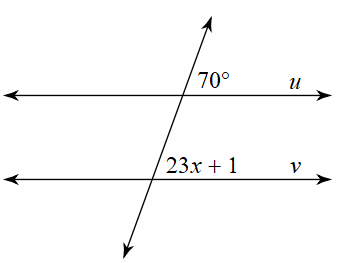
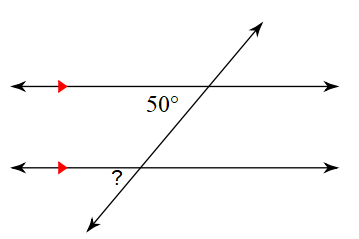
Name the angle relationship and state whether the angles are equal to each other or supplementary?
You can abbreviate relationships with:

Verical Angles(VA), Linear Pairs(LP), Alternate Interior Angles(AI), Alternate Exterior Angles(AE), Same Side Interior Angles (SSI), and Corresponding Angles(CA)

Then state the measure of the angle for (?) in diagram.
Question 4
4.

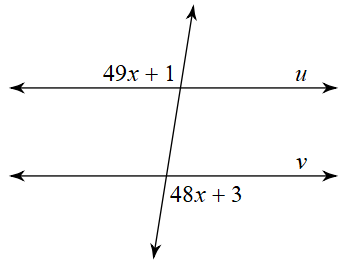
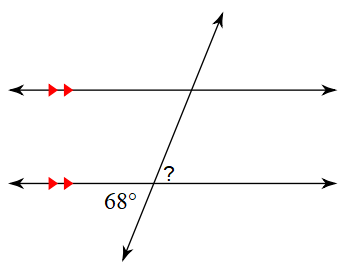
Name the angle relationship and state whether the angles are equal to each other or supplementary
based on our parallel line postulates/theorems?

You can abbreviate relationships with:
Verical Angles(VA), Linear Pairs(LP), Alternate Interior Angles(AI), Alternate Exterior Angles(AE), Same Side Interior Angles (SSI), and Corresponding Angles(CA)

Then state the measure of the angle for (?) in diagram.
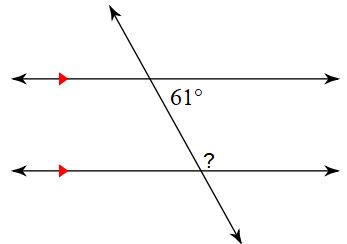
Question 5
5.

Name the angle relationship and state whether the angles are equal to each other or supplementary based on our parallel line postulates/theorems?

You can abbreviate relationships with:
Verical Angles(VA), Linear Pairs(LP), Alternate Interior Angles(AI), Alternate Exterior Angles(AE), Same Side Interior Angles (SSI), and Corresponding Angles(CA)

Then state the measure of the angle for (?) in diagram.
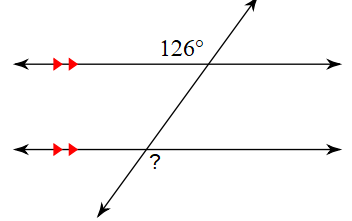
Question 6
6.

Name the angle relationship and state whether the angles are equal to each other or supplementary?
You can abbreviate relationships with:

Verical Angles(VA), Linear Pairs(LP), Alternate Interior Angles(AI), Alternate Exterior Angles(AE), Same Side Interior Angles (SSI), and Corresponding Angles(CA)

Then state the measure of the angle for (?) in diagram.
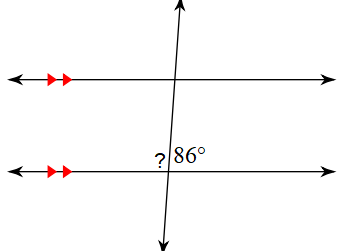
Question 7
7.

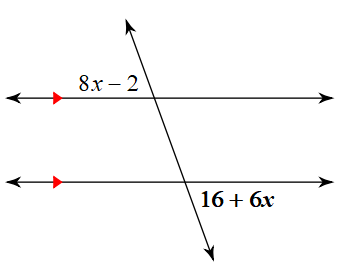
Name the angle relationship and state whether the angles are equal to each other or supplementary based on our parallel line postulates/theorems?

You can abbreviate relationships with:
Verical Angles(VA), Linear Pairs(LP), Alternate Interior Angles(AI), Alternate Exterior Angles(AE), Same Side Interior Angles (SSI), and Corresponding Angles(CA)

Then solve for x and state the angle measure for the angle in bold. (Show work in Show your work section)

Question 8
8.

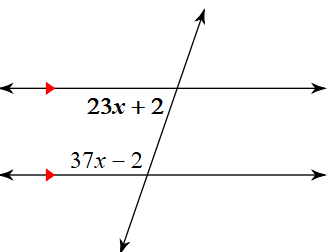
Name the angle relationship and state whether the angles are equal to each other or supplementary?
You can abbreviate relationships with:

Verical Angles(VA), Linear Pairs(LP), Alternate Interior Angles(AI), Alternate Exterior Angles(AE), Same Side Interior Angles (SSI), and Corresponding Angles(CA)

Then solve for x and state the angle measure for the angle in bold. (Show work in Show your work section)

Question 9
9.

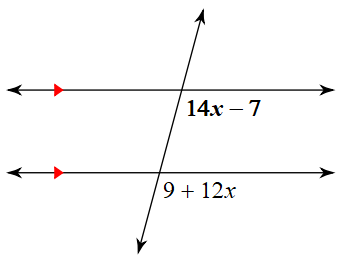
Name the angle relationship and state whether the angles are equal to each other or supplementary based on our parallel line postulates/theorems?

You can abbreviate relationships with:
Verical Angles(VA), Linear Pairs(LP), Alternate Interior Angles(AI), Alternate Exterior Angles(AE), Same Side Interior Angles (SSI), and Corresponding Angles(CA)

Then solve for x and state the angle measure for the angle in bold. (Show work in Show your work section)

Question 10
10.

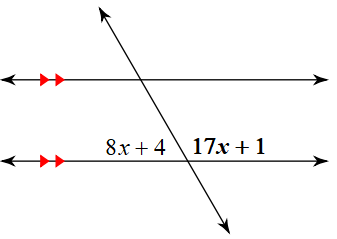
Name the angle relationship and state whether the angles are equal to each other or supplementary?
You can abbreviate relationships with:

Verical Angles(VA), Linear Pairs(LP), Alternate Interior Angles(AI), Alternate Exterior Angles(AE), Same Side Interior Angles (SSI), and Corresponding Angles(CA)

Then solve for x and state the angle measure for the angle in bold. (Show work in Show your work section)

Question 11
11.

For proving lines parallel we use our converse postulates/theorems.
Alternate Interior Angles Converse(AIC), Alternate Exterior Angles Converse(AEC), Same Side Interior Angles Converse (SSIC), and Corresponding Angles Converse(CAC)

State which postulate/theorem you would use to make u//v in the diagram, then find the degree of that angle.

Also, redraw the pic in the show your work section and make the proper marks to show the lines are parallel.

Question 12
12.

For proving lines parallel we use our converse postulates/theorems.
Alternate Interior Angles Converse(AIC), Alternate Exterior Angles Converse(AEC), Same Side Interior Angles Converse (SSIC), and Corresponding Angles Converse(CAC)

State which postulate/theorem you would use to make u//v in the diagram, then find the degree of that angle.

Also, redraw the pic in the show your work section and make the proper marks to show the lines are parallel.

Question 13
13.

For proving lines parallel we use our converse postulates/theorems.
Alternate Interior Angles Converse(AIC), Alternate Exterior Angles Converse(AEC), Same Side Interior Angles Converse (SSIC), and Corresponding Angles Converse(CAC)

State which postulate/theorem you would use to make u//v in the diagram, then find the degree of that angle. (If you need to find x first, do so in the show your work section)

Also, redraw the pic in the show your work section and make the proper marks to show the lines are parallel.

Question 14
14.

For proving lines parallel we use our converse postulates/theorems.
Alternate Interior Angles Converse(AIC), Alternate Exterior Angles Converse(AEC), Same Side Interior Angles Converse (SSIC), and Corresponding Angles Converse(CAC)

State which postulate/theorem you would use to make u//v in the diagram, then find the value for x that would make u//v.

Also, redraw the pic in the show your work section and make the proper marks to show the lines are parallel.

Question 15
15.

For proving lines parallel we use our converse postulates/theorems.
Alternate Interior Angles Converse(AIC), Alternate Exterior Angles Converse(AEC), Same Side Interior Angles Converse (SSIC), and Corresponding Angles Converse(CAC)

State which postulate/theorem you would use to make u//v in the diagram, then find the degree of that angle. (If you need to find x first do so in the show your work section)

Also, redraw the pic in the show your work section and make the proper marks to show the lines are parallel.