Grade 8: Fresh and Saltwater Review
star
star
star
star
star
Last updated about 4 years ago
15 Nsɛmmisa
1
1
1
1
1
1
1
1
4
4
1
1
1
1
4
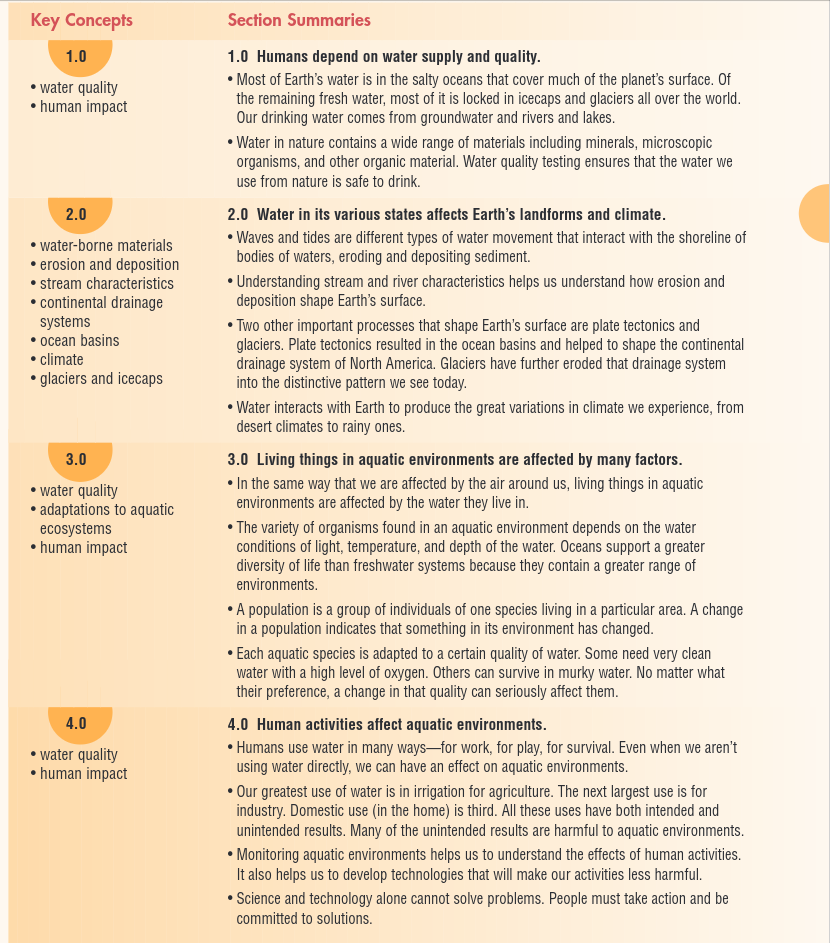
Where is most of the water on Earth located?
Describe the differences between the water in a lake and the water in the ocean.
What is the difference between salinity and hardness in water?
Even when water appears to be clear and clean, it may not be safe enough to drink. Describe two things that could make it unsafe for human use.
A friend of yours has moved out to the country but she doesn’t like the well water there because it has a salty taste. What would you suggest your friend’s family do to improve the quality of their water?
How do waves affect a coastline?
What is the difference between a current and a tide?
What is the Continental Divide?
What is a glacier? How do glaciers affect the environment?
Which water environment would you go to if you wanted to study as many different types of aquatic organisms as possible? Why does it have so many different types of organisms?
Define the term adaptation in your own words. Give two examples of adaptations that fish have to living in water.
Describe three types of human activities that can affect aquatic organisms.
Describe three major ways that people use water worldwide.
What is indirect water use? Give some examples to support your explanation.
Agree or disagree with the following statements. Give evidence to support your decisions.
a) Because water is recycling itself all the time, we don’t have to conserve it.
b) Only human activities can have negative effects on aquatic animals.