"Make Way for Elephants" Podcast Analysis & Review
star
star
star
star
star
Last updated almost 4 years ago
12 Nsɛmmisa
1
1
1
1
1
1
1
1
1
1
1
1
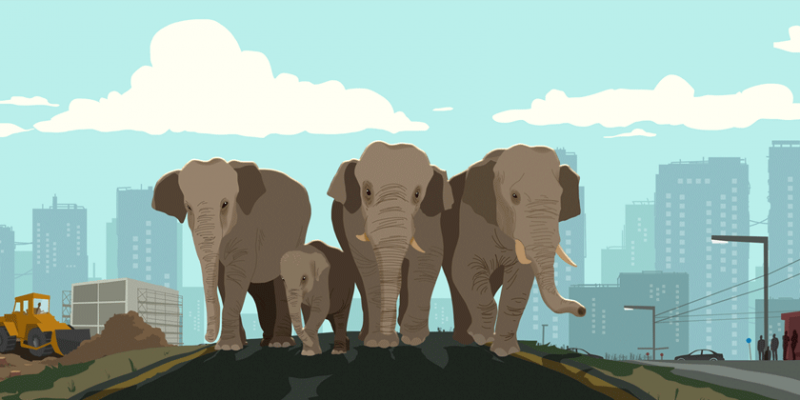
Background: We are experiencing what scientists consider the 6th mass extinction and which they believe is primarily anthropogenic. Biodiversity loss is the result of HIPPCO - Habitat loss, Invasive Species, Population growth, Pollution, Climate Change, and Overexploitation. Sometimes species are threatened by our own fear of them. But can’t we all just get along?
Directions:
1) Please watch this short video to help you understand how Elephant-Human interactions can be problematic.
2) Listen to the podcast Make Way for Elephants (Sidedoor, Season 7, 10/6/2021) to understand the plight of the Asian elephant and innovative solutions that have been implemented to help humans and elephants coexist. (The podcast is 32 minutes long.)
Learning Objectives and Essential Knowledge:
ERT-2.A: Explain levels of biodiversity and their importance to ecosystems.
Loss of habitat leads to a loss of specialist species, followed by a loss of generalist species. It also leads to reduced numbers of species that have large territorial requirements.
ERT-2.D Describe island biogeography.
ERT-2D.1 Island biogeography is the study of the ecological relationships and distribution of organisms on “islands”, and of these organisms’ community structures.
Evaluate the format and production of a podcast in preparation for the creation of your own!
Humans and elephants are coming in close contact in Asia. Describe what has happened to the Asian elephants’ original habitat in China.
Pause the podcast and consider your response for #1. Explain what has happened to the elephants’ habitat in the context of island biogeography (you may have to research this term!)
What strategies were originally employed to prevent humans from being harmed by elephants?
Were these strategies effective? Why or why not? Use at least 3 specific examples from the podcast to support your answer.
Elephants are incredibly intelligent animals. While most elephants in India were considered nuisances, Bheema was accepted by locals. Why? Explain the effect Bheema has on other elephants and why understanding this is important for human-elephant relationships.
What is the best way to save elephant lives? Explain.
What is the relationship between human deaths, time of year, and elephants?
Look at your responses for #5, 6, and 7. When researchers took all of this into account, they came up with a novel way to save human lives and, in turn, elephant lives. Describe their solution.
What do you think about the solution noted in your answer above? Do you think this type of solution could be used for animals we fear here in the United States? Why or why not?
Overall, did you enjoy this podcast?
What features of the podcast did you find effective and why? (Consider the pace, special effects such as music and sound effects, use of direct delivery of information vs. use of interviews with experts, changes in vocal intonation, use of humor, etc.)
What aspects of the podcast would you improve and how would you do those improvements?