Moving away from the coast, the availability of nutrients decreases rapidly.
Nutrients become a limiting factor for life.
The open ocean is sometimes referred to as a “marine desert” due to the relative lack of life here.
Animals found here must be able to travel great distances to find food.
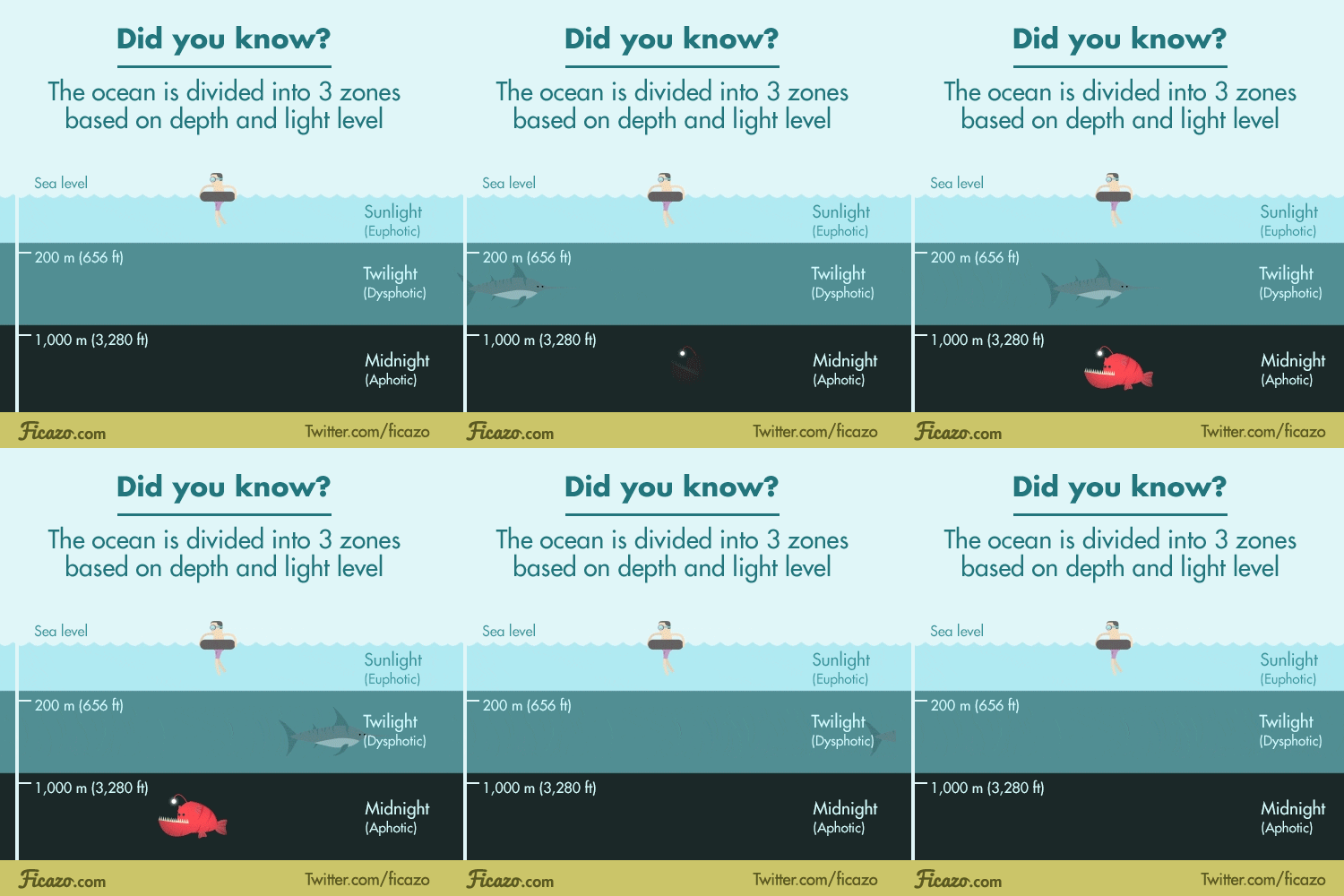
Sunlight can penetrate the ocean to various depths depending on water clarity, sun angle, and cloud coverage.
Generally, there is enough light for photosynthesis only in the top 200 meters (600 or so feet) of the ocean.
Complete darkness generally exists below 1000 meters (3300 feet)
The deep ocean is the least explored region of the ocean.
Cold water, extreme pressure, and complete darkness are constant here.
Nearly 90% of the volume of the oceans is in the deep ocean.
Very few manned vehicles can dive into this region.
The biology of organisms here is among the least understood on Earth.
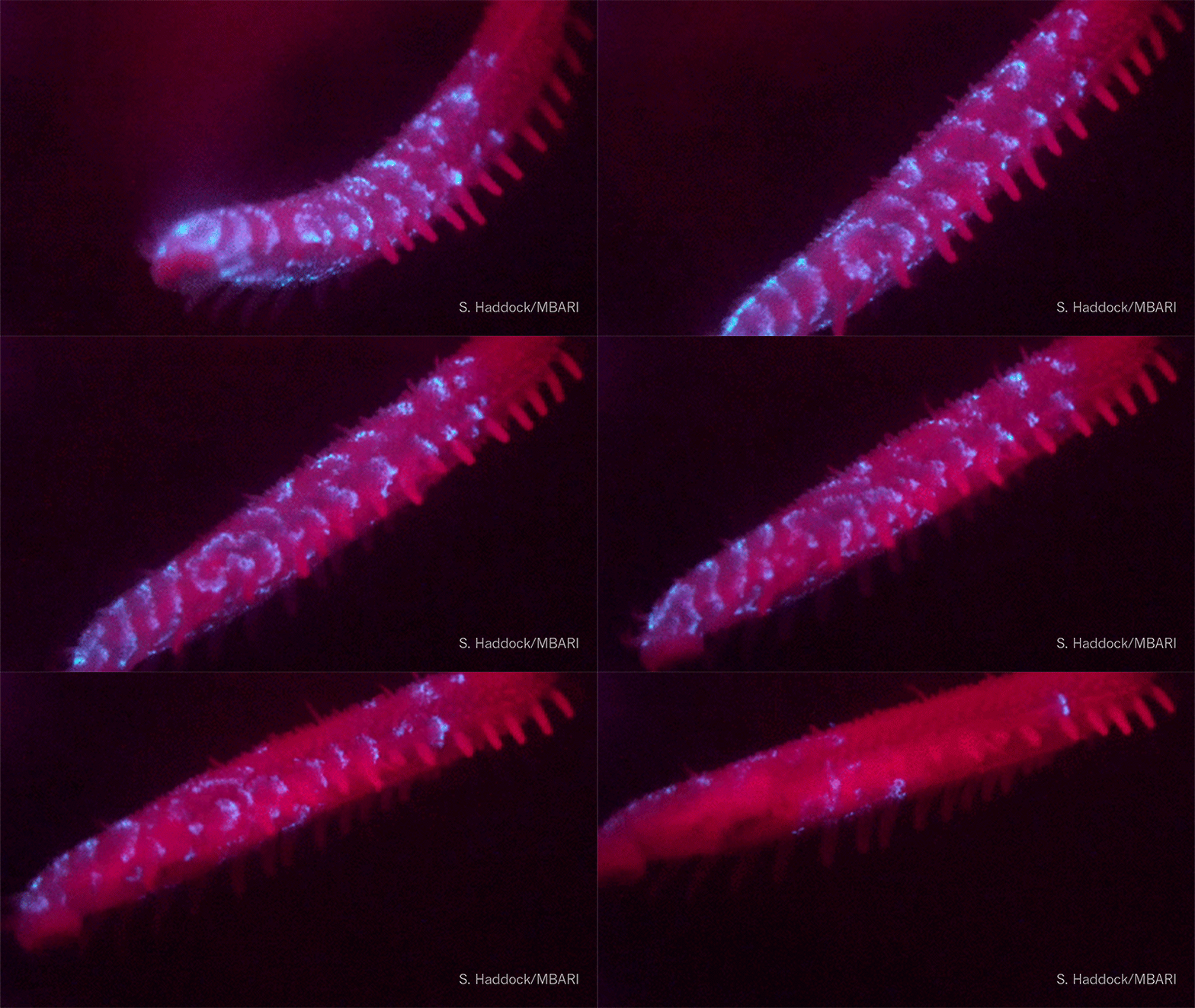
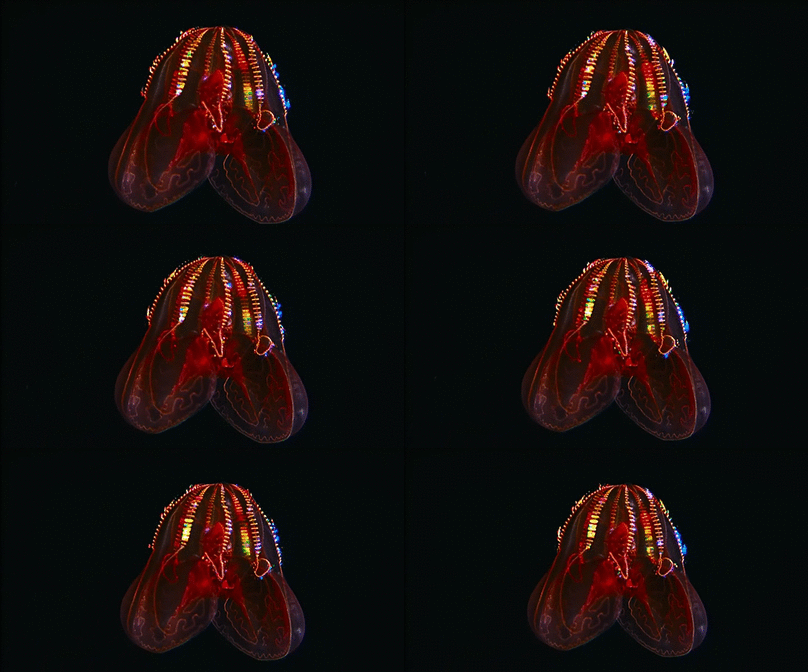
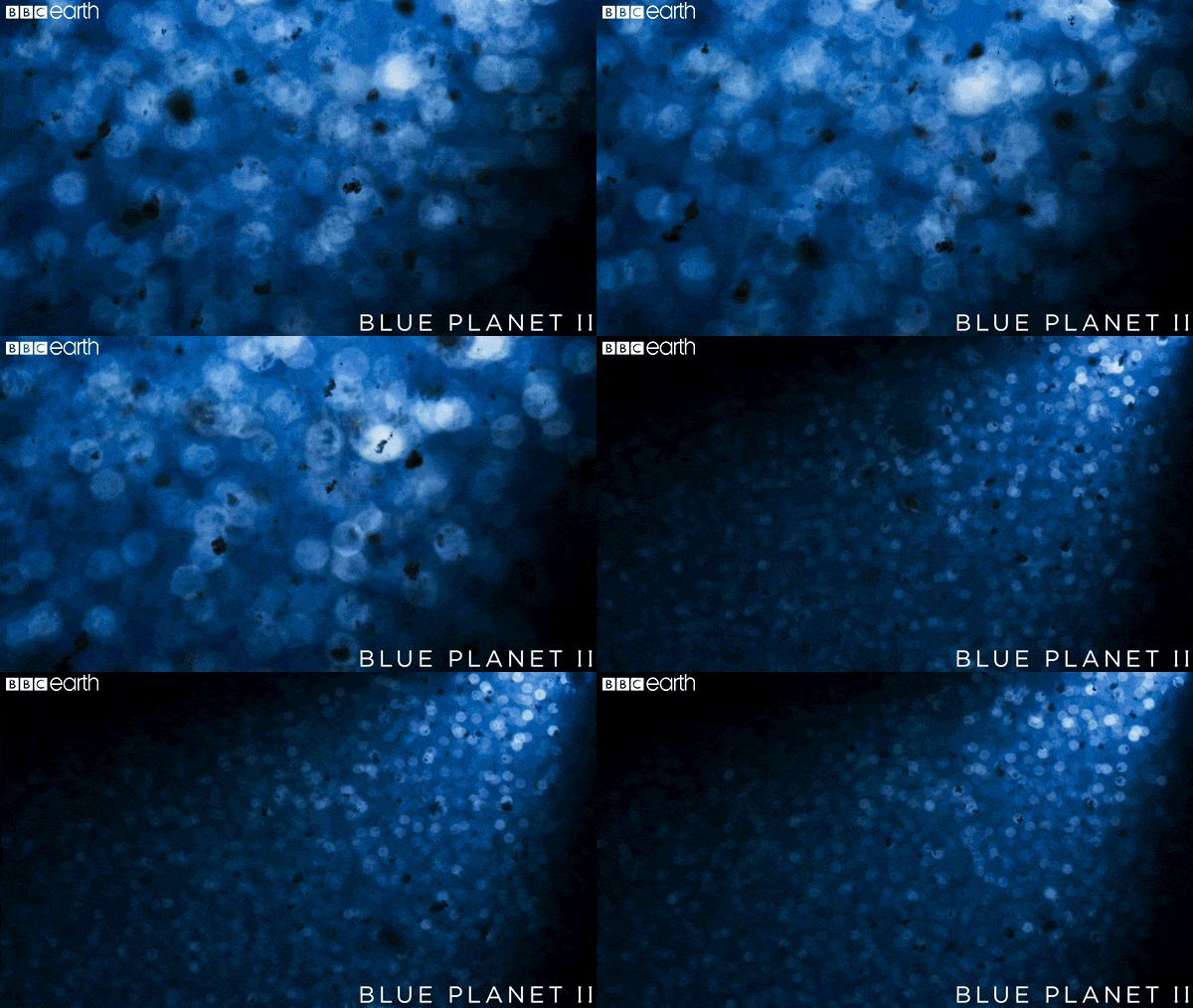
Many species living in the aphotic (bathyl and abyssal) zones are bioluminescent, meaning they can produce and emit light.
Why is it so cold in the abyssal zone?
Why is the pressure so high as you travel down into the water?
Food webs in the benthic zone of the abyss are much different because their source of energy is not sunlight, but dead matter that sinks from above layers.
Also known as “marine snow”.
A whale carcass can feed scavengers for as long as two years.
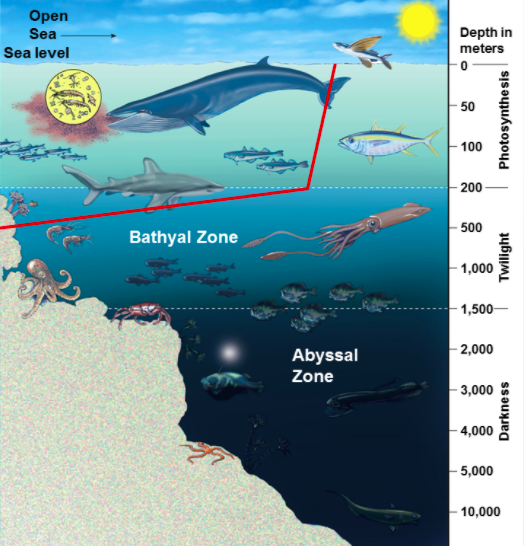
Knowledge check! Match each zone with its characteristics. (some zones are not shown on diagram)
| Draggable item | arrow_right_alt | Corresponding Item |
|---|---|---|
This zone is the floor of any body of water. | arrow_right_alt | Photic zone |
This zone contains sufficient sunlight for photosynthesis. | arrow_right_alt | Bathyal zone |
This zone is cold and dark and populated by red and bioluminescent ccreatures. | arrow_right_alt | Aphotic zone |
This zone is the open ocean in general. | arrow_right_alt | Intertidal zone |
This zone contains little to no sunlight; no photosynthesis can occur. | arrow_right_alt | Pelagic zone |
This zone includes the area between the high and low tide mark. | arrow_right_alt | Benthic zone |
This zone is the "Twilight" Zone. | arrow_right_alt | Abyssal zone |
(We will discuss impacts more in Unit 8)
Major threats to marine systems
Coastal development
Overfishing
Runoff of nonpoint source pollution
Point source pollution
Habitat destruction
Introduction of invasive species
Climate change from human activities
Pollution of coastal wetlands and estuaries
Freshwater ecosystems have a very low salinity level.
Include lakes, ponds, rivers, streams, and inland wetlands.
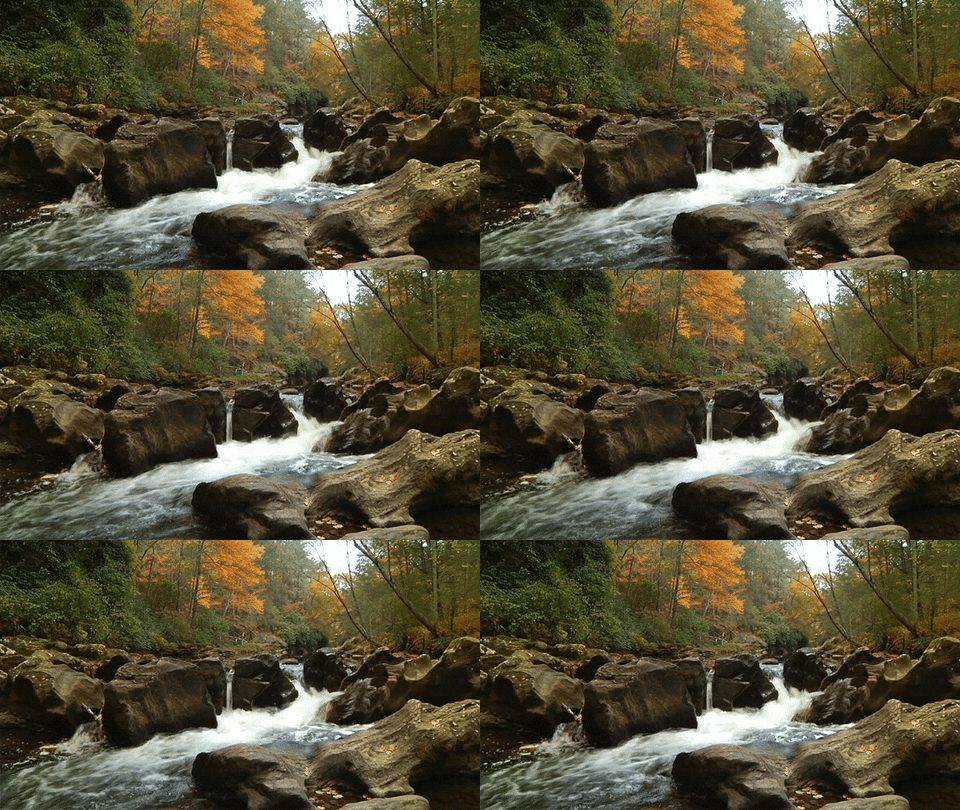
Some freshwater ecosystems are lentic (from the Latin lentus, meaning slow or motionless), refers to standing waters such as lakes. Others are lotic, (from the Latin lotus, meaning washing), meaning they have running water.
Lentic or lotic? Place each of the following water features in the category according to flow.
River
Stream
Lake
Swamp
Bog
Waterfall
Cascade
Pond
Lotic
Lentic
Freshwater lakes and ponds form in depressions made by glaciers, volcanic activity, or movement of the Earth’s plates. They can also be made by humans or beavers damming rivers and streams.
Lakes are normally much deeper than ponds and have a larger surface area. All the water in a pond is in the photic zone, meaning ponds are shallow enough to allow sunlight to reach the bottom. Lakes have aphotic zones, which are deep areas of water that receive no sunlight, preventing plants from growing.
The littoral zone is near the shore and contains shallow, sunlit waters. There is high biological diversity in this zone due to the presence of photosynthetic plants and algae.
The photic zone, also called the euphotic or limnetic zone, is the part of a lake or ocean where the rate of photosynthesis is greater than the rate of respiration by phytoplankton. Most of the photosynthesis in the lake occurs here, producing the majority of the food and oxygen.
Below the euphotic zone is the Profundal Zone or Hypolimnion (cold water region, also called the Aphotic zone). The profundal zone is located below the thermocline where the sunlight does not penetrate. Again, the size of this zone depends on the age and water clarity of the pond or lake. The profundal zone typically has lower fish populations because of the lack of oxygen during many parts of the year.
The benthic zone is the bottom of the lake; the organisms found there depend on the depth at that area. The benthic zone is the pond or lakes digestive system. This is where bacteria decompose organic matter from dead algae, aquatic plants, and fish and animal waste. The benthic zone increases as the pond or lake ages.
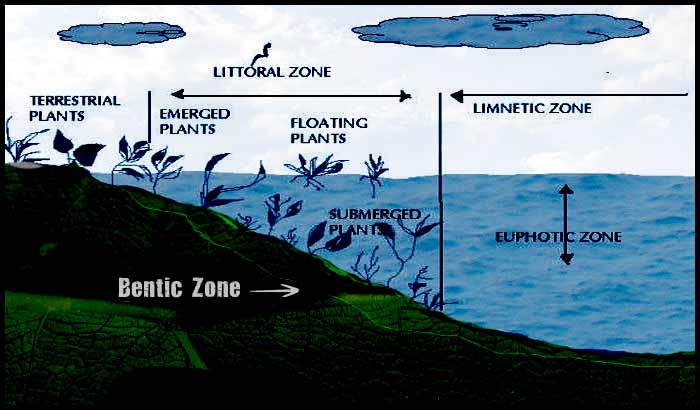
Match the descriptions to the zones. Zones are used more than once.
| Draggable item | arrow_right_alt | Corresponding Item |
|---|---|---|
Open surface water in the middle of the lake | arrow_right_alt | benthic zone |
Decomposers live here | arrow_right_alt | euphotic/limnetic zone |
Zone at the bottom of the lake/pond | arrow_right_alt | euphotic/limnetic zone |
deeper water where sunlight cannot penetrate | arrow_right_alt | benthic zone |
Zone where most of the photosynthesis takes place | arrow_right_alt | littoral zone |
Responsible for generating oxygen | arrow_right_alt | Profundal/aphotic zone |
Where you will find snakes, toads, cattails, and emergent plants | arrow_right_alt | euphotic/limnetic zone |
Ecologists will classify lakes based on their nutrient levels and biological productivity.
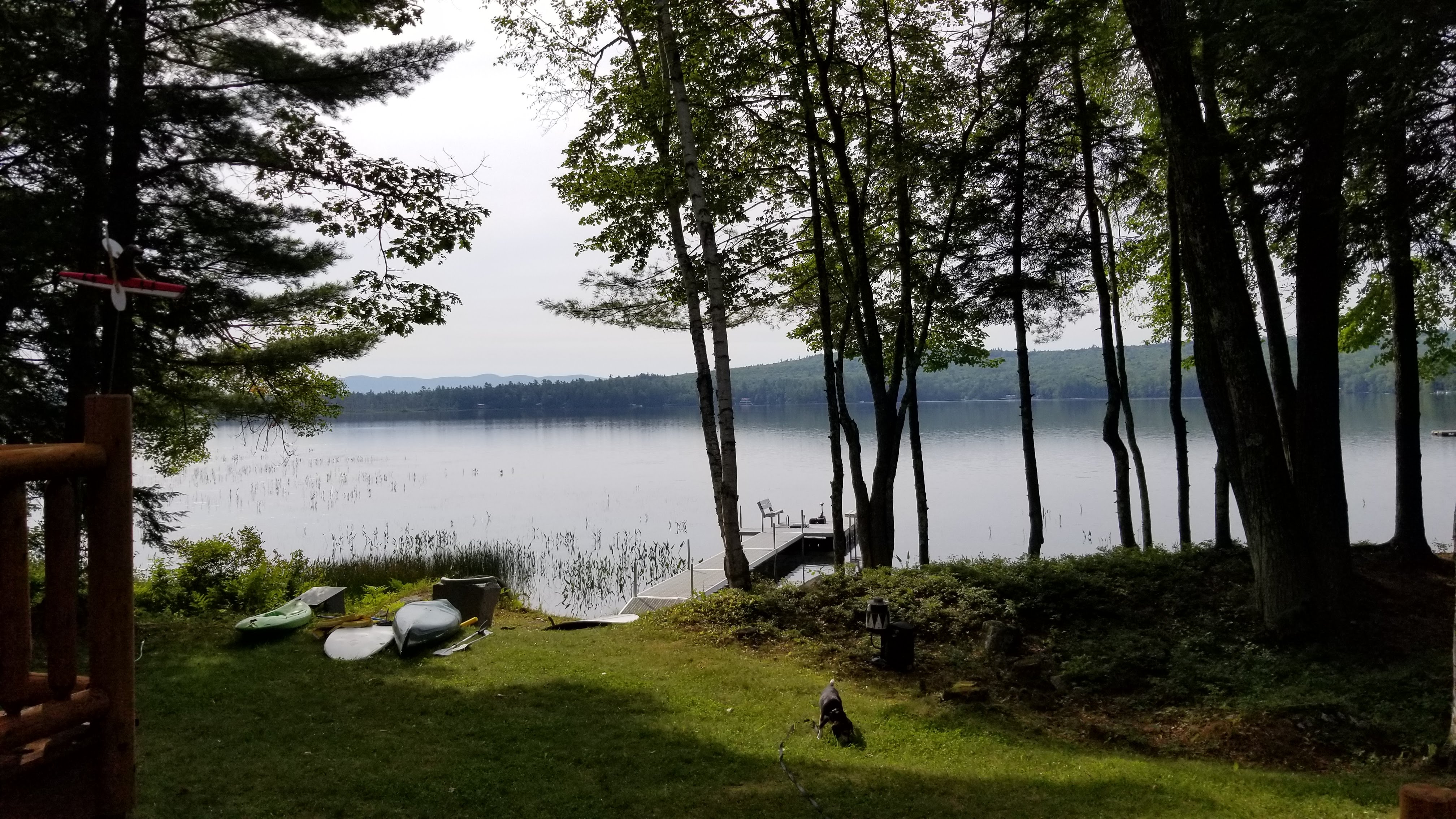
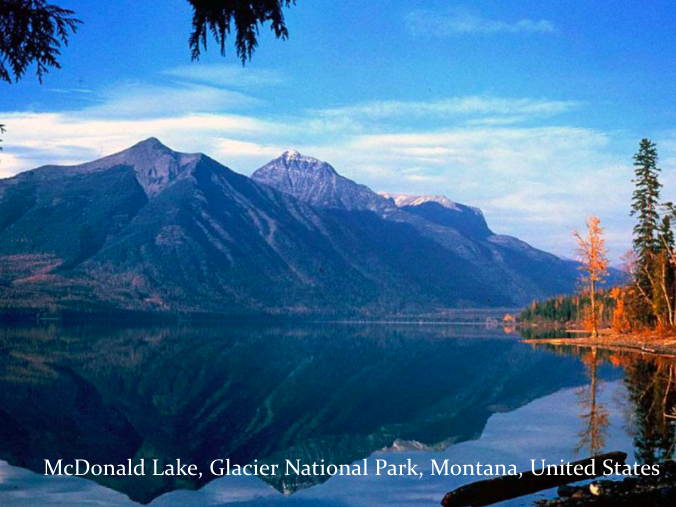
Oligotrophic lakes are generally very clear, deep, and cold. The lake substrate is typically firm and sandy. Nutrient levels are low, so the lake generally does not support large populations of aquatic plants, animals, or algae. The fish that occur in oligotrophic lakes are often low in abundance, but large in size. Many oligotrophic lakes divide into two layers in the summer, a condition known as stratification. The lower layer, called the hypolimnion, is cold and supports cold-water specialist fishes, like lake trout and cisco. These species require cold temperatures and high oxygen levels, so they remain in the lake’s lower level throughout the summer.
Mesotrophic lakes contain moderate amounts of nutrients, and contain healthy, diverse populations of aquatic plants, algae, and fish. Occasional algae blooms may occur. If the lake is deep enough to stratify, the hypolimnion often becomes low in oxygen by the end of summer, and may result in some phosphorus release from the sediments.
Eutrophic lakes are high in nutrients and contain large populations of aquatic plants, algae, and fish. The lake substrate is typically soft and mucky. The aquatic plants and algae often grow to nuisance levels, and the fish species are generally tolerant of warm temperatures and low oxygen conditions. Common fish species include carp, bullheads, and bluegills. If the lake is deep enough to stratify, the hypolimnion is usually very low in oxygen by mid-summer. This results in a release of phosphorus from the sediments, which can fuel algae blooms.
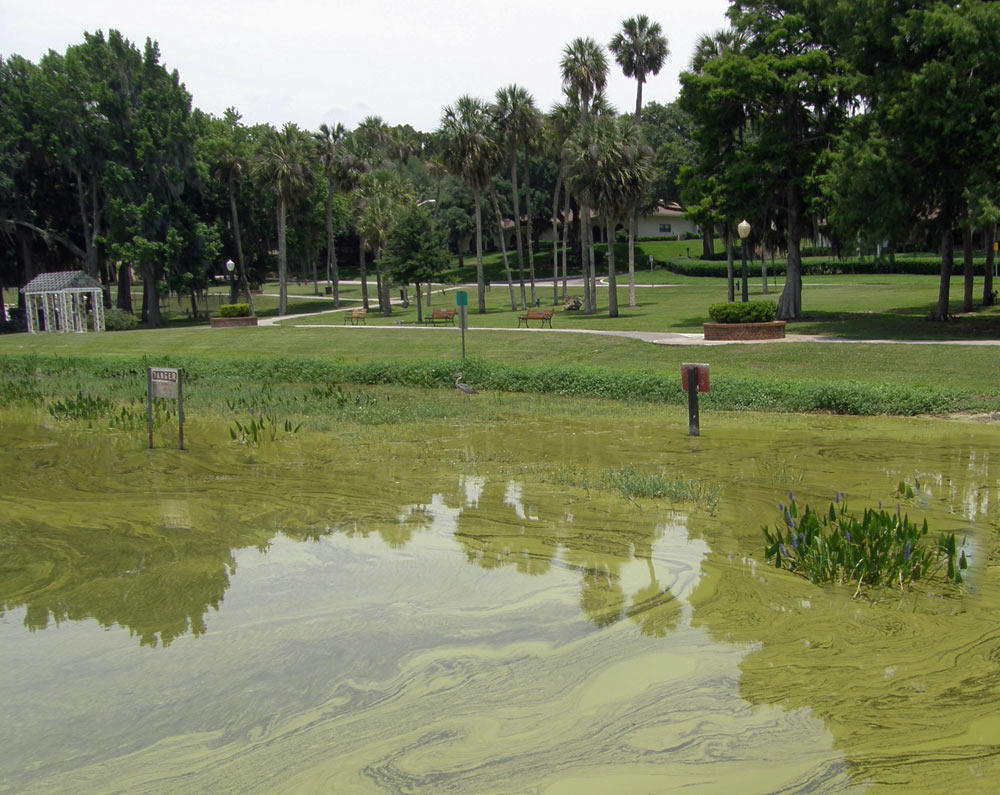
Hyper-eutrophic lakes are very high in nutrients, and often exhibit large algae blooms, which may include dangerous levels of blue-green algae. Fish communities in hyper-eutrophic lakes are dominated by carp and other species that can tolerate warm temperatures and low oxygen conditions. Most hypereutrophic lakes are small impoundments of streams, and fed by large watersheds composed of urban and/or agricultural land uses.
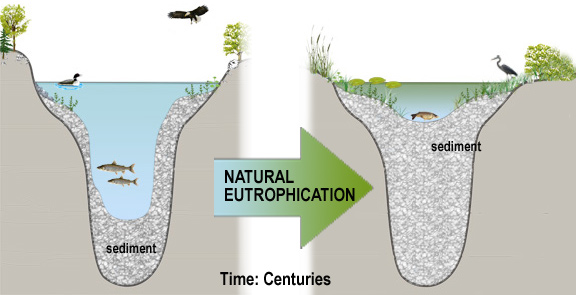
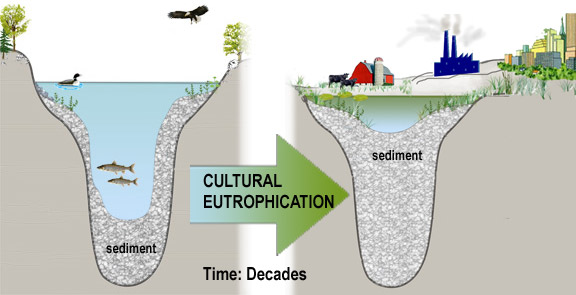
There are two ways that eutrophication occurs. The first is a natural process that results from accumulated sediments over a long period of time (centuries).
Cultural eutrophication is a direct result of human impact, where the nutrients that flow into the lake/pond/ocean originate from human activities (fertilizer/phosphate run-off, in decades).
Flowing water on our planet results from run-off, glacial/snow meltwater, and seeps from groundwater. Typically, creeks are the smallest, streams larger, and rivers the largest flowing bodies of water.
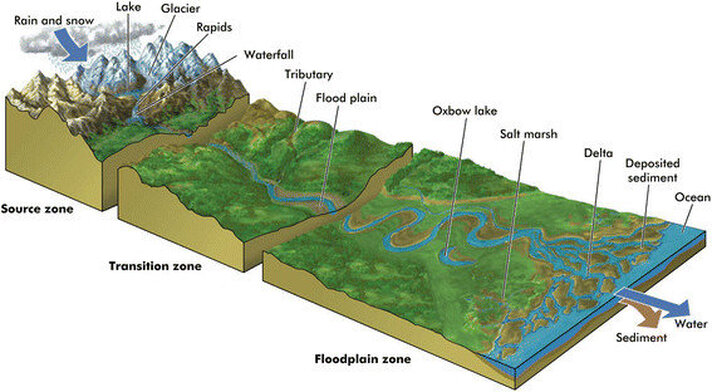
Water in the source zone is generally cold, rich in oxygen, and low in nutrients.
As the water moves through the transition zone, the streams widen, become deeper, and are warmed by the sun.
Oxygen levels decrease, but nutrient levels rise.
Low-lying areas, called the flood plain zone, experience wide, slow-moving rivers that will occasionally flood and deposit material from upstream.
The water continues to warm, oxygen levels decrease. The nutrients continue to increase.
The river eventually ends at a larger body of water. This is called the river mouth.
Freshwater mixes with saltwater, forming brackish water.
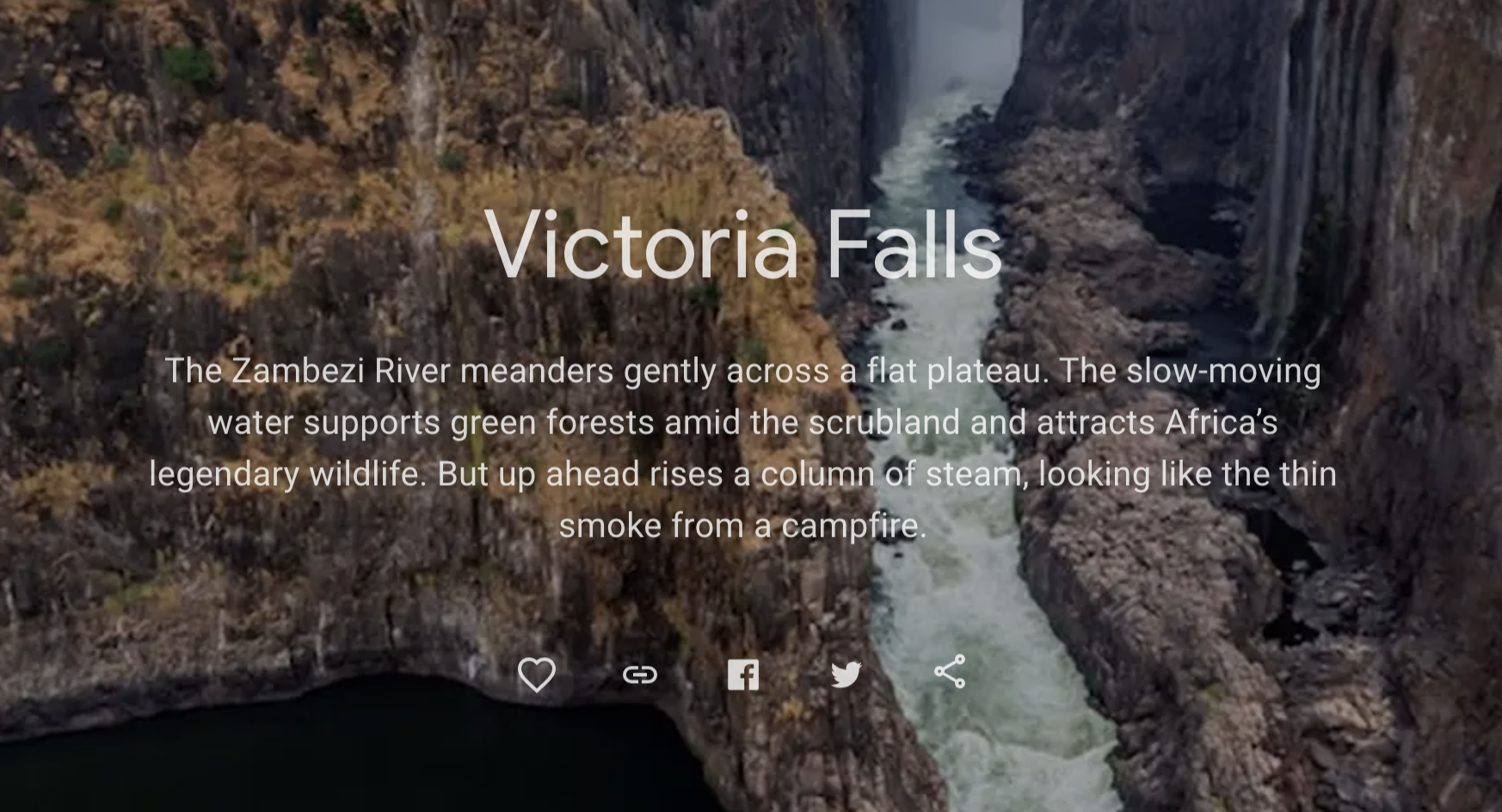
Want to visit or follow a river?
Check out Victoria Falls or the River Forth of Scotland.
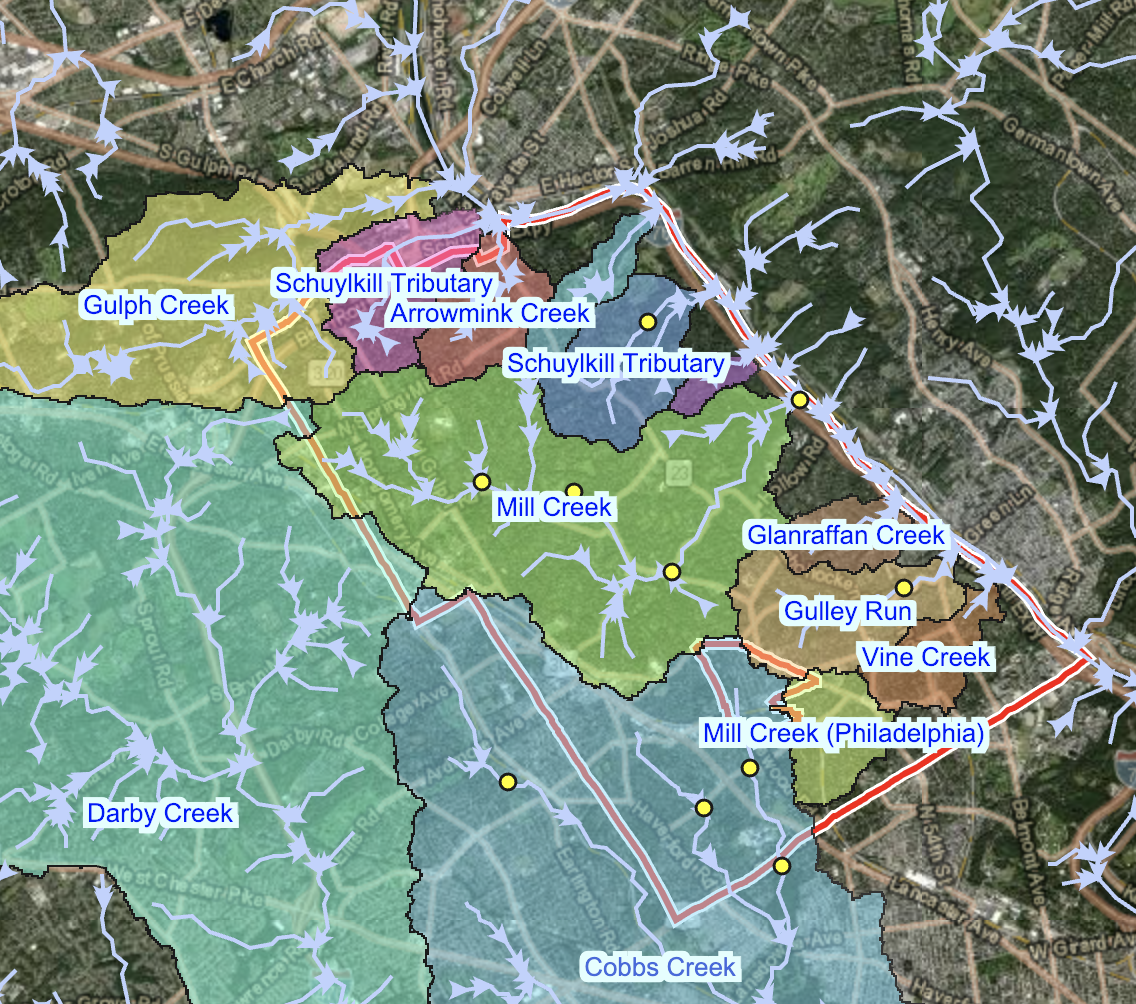
You can also investigate the local watersheds of the streams of Lower Merion Township here.