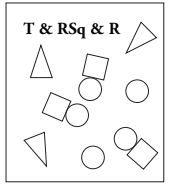
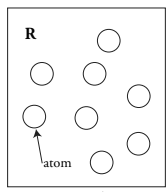
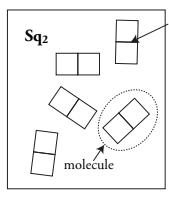
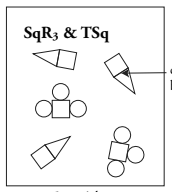
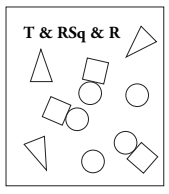
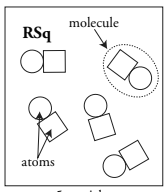
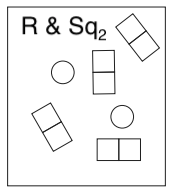
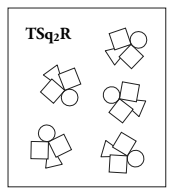
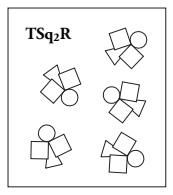
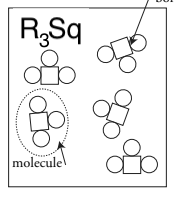
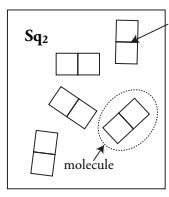
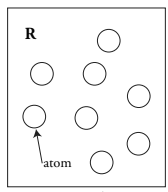
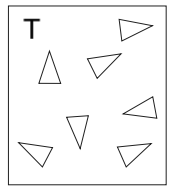
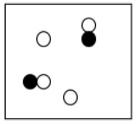
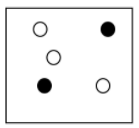
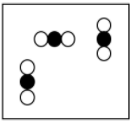
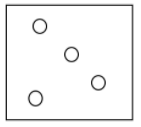
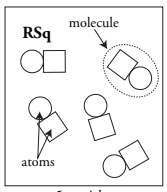
As a group, examine Model 1 below.

Use the diagrams in Model 1 to answer questions 2-13.
Objectives: Students will...
... classify different types of matter within our world using element, compounds, mixtures, atoms, and pure substances
... investigate and discern different examples of matter with peer review and collaboration
What is matter? What are some different ways we might be able to classify matter? You may draw a picture if you like.
Reader - Reads text out loud
Manager - Ensures everyone in the group is on the same question (is also timekeeper in groups of three)
Spokesperson - Shares screen if need be, is ready to share answers with the whole class
Timekeeper - Makes sure you all get back to the main group on time
Focus Question: How do atoms combine to make different types of matter?
Why?
Look at the things in the room. They are all matter. Matter may be a pure substance or it may be a mixture. Can you tell by looking at it? What if you looked under a microscope? Then could you tell? Something that looks pure may not really be pure. It depends on what type of particles an object or substance is mde of. In this activity we will explore how the smallest chemical units of matter determine whether something is classified as an element, a compound, or a mixture.
As a group, examine Model 1 below.
Use the diagrams in Model 1 to answer questions 2-13.
Match the numbers below in order to answer the questions.
2
3
4
How many atoms are in a molecule of RSq?
How many different types of atoms are found in TSq2R ?
How many Sq atoms are in TSq2R ?
How many different types of atoms are found in the sample of SqR3 & TSq?
How many different types of molecules are found in the sample of SqR3 & TSq?
When two atoms are touching in the drawings of Model 1, what is holding the atoms together?
Which of the following statements best describes particles?
How many particles are in the drawing representing T & RSq & R in Model 1 (below)?
Using your answers for 4-5, come up with your own definition for the word "particle."
What do the letters R, Sq, and T codes represent?
| Draggable item | arrow_right_alt | Corresponding Item |
|---|---|---|
Sq | arrow_right_alt | Round |
T | arrow_right_alt | Square |
R | arrow_right_alt | Triangle |
What do the small numbers (subscripts) in the codes represent?
When atoms are held together by a chemical bond, how is that communicated in the code?
What is the common characteristic of the samples in which an '&' is used?
Examine the samples whose codes were missing. Drag and drop the proper code for each. (Note: some diagrams may have more than one correct answer!)
R2 & Sq8
T7
R & Sq2
T
SqR3
RSq2
Sq2 & R
R3Sq
R & Sq
Sq5R15
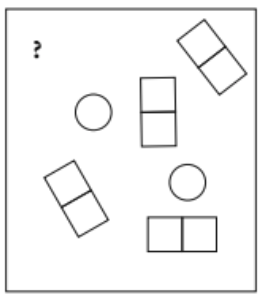
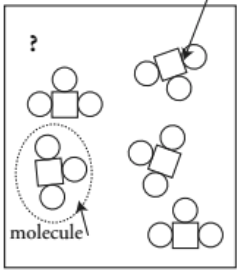
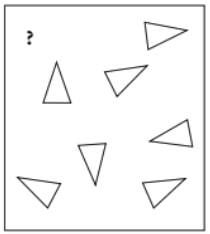

Read This!
Matter is classified as a pure substance when all of the particles are identical. Matter is classified as a mixture if there are different types of particles present.
Identify which diagrams are of pure substances and which are mixtures.
Pure Substance
Mixture
Read This!
Elements are defined as pure substances made from only one type of atom. Compounds are defined as pure substances made from two or more types of atoms.
Identify which diagrams are of elements and which are compounds.
Element
Compound
How are the codes (chemical formulas) for pure substances different from those for mixtures?
How are the codes (chemical formulas) for elements different from those for compounds?
Using what you know about chemical formulas, identify each of the following as an element, a compound, or a mixture.
NaHCO3
Br2
NaCl
C
C6H12O6 & H2O
Al
CO2
NaCl & H2O
Cu & Zn
Element
Compound
Mixture
Explain the difference between an atom and an element.
Explain the difference between a compound and a molecule.
The following diagrams represent two typical answers given by students to explain the atom vs an element. Which drawing is the best representation of an element? Explain.

Categorize the following as elements, compounds, or mixtures
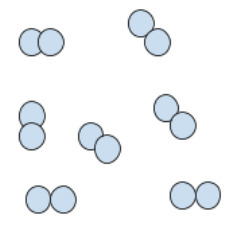
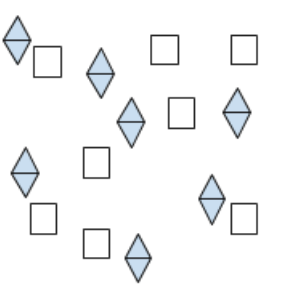
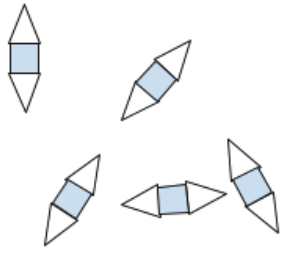
Element
Compound
Mixture
Determine the code (chemical formula) for the particle diagrams. Then classify them as either an element, compound, or mixture. (Note: You will NOT use all of the options!)
R2SqT
Sq
Element
Mixture
Compound
Sq5
R & SqT
R8Sq24
R2 & SqT
RSq3
Sq2 & Sq3
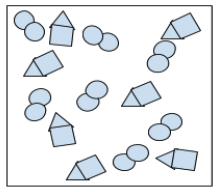
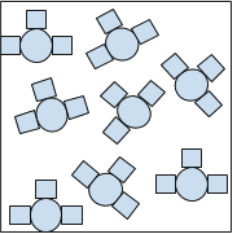
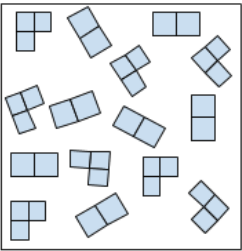

Using shapes, draw a particle diagram and write the code of a mixture of an element and a compound.
Classify the subtances below as an element, compound, or mixture. Then, click on the 'show your work' box and draw a particle diagram of each using the code (chemical formula) provided
| Draggable item | arrow_right_alt | Corresponding Item |
|---|---|---|
Sq2T3 | arrow_right_alt | Mixture of a compound and an element |
T2 & Sq & R3 | arrow_right_alt | Compound |
T & R3Sq | arrow_right_alt | Mixture of different elements |
Identify the correct code for this diagram, and classify the substance as an element, compound, or mixture.
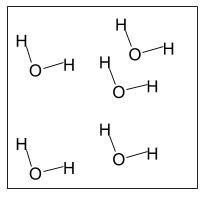
Identify the correct code for this diagram, and classify the substance as an element, compound, or mixture.
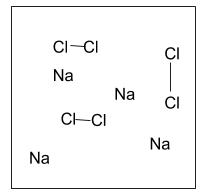
Identify the correct code for this diagram, and classify the substance as an element, compound, or mixture.
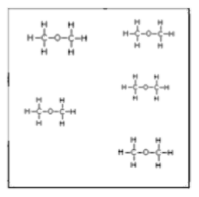
| Draggable item | arrow_right_alt | Corresponding Item |
|---|---|---|
| arrow_right_alt | Element |
| arrow_right_alt | Compound |
| arrow_right_alt | Mixture of two compounds |
| arrow_right_alt | Mixture of two elements |
| arrow_right_alt | Mixture of a compound and an element |
Classify the following substances as elements, compounds, or mixtures. For the things that you're not sure about, think about what substance(s) might make up the matter (ingredients, etc.)
baking soda (NaHCO3)
table salt, NaCl
pure silver ring (Ag)
steam (from cooking), H2O
an OPENED can of coke
100% lead bullets (Pb)
Italian salad dressing
brass (Cu & Zn)
oxygen gas (O2)
glass (SiO2 & Na2CO3 & CaCO3)
carbon dioxide gas (CO2)
E (element)
C (compound)
M (mixture)