What phase of the moon would someone on earth see at position B
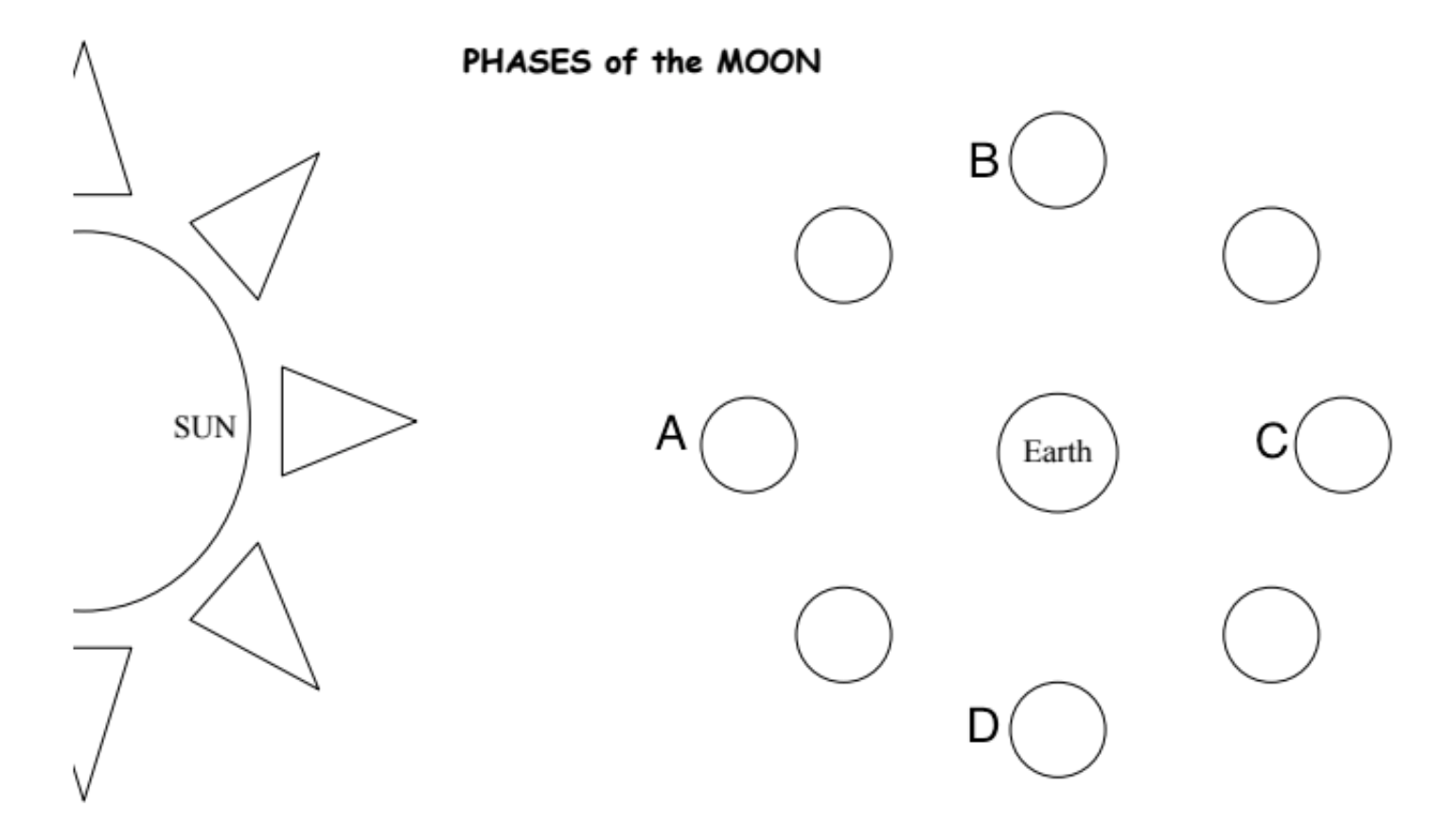
What phase of the moon would someone on earth see at position B
Final unit exam for Astronomy, with review questions from motion & forces.
Put the planets of our solar system in the proper order starting from the closest to the Sun
Earth
Saturn
Venus
Uranus
Mercury
Mars
Jupiter
The rotation of the Earth is responsible for the Earth having _________
Which force is responsible for the formation of galaxies and solar systems?
How many astronomical units is the Earth from the Sun
Check ALL of the characteristics that apply to the INNER Planets
Check ALL of the characteristics that apply to the OUTER Planets
Planets move faster when close to the Sun and slower when further from the Sun. This is known as
If an astronomer observes that an object in the solar system is four times as far from the Sun as Earth is, how far would that object be from the Sun in astronomical units?
A light year is a unit of
Which unit would you use to state the distance between our Sun and the next closest star?
What phase of the moon would someone on earth see at position B
What phase must the moon be in if there were a lunar eclipse? Use the picture as a reference.
Planets orbit around the Sun in a circle
The earth has seasons because
As the water in your bottle rocket is forces out of the bottom of the bottle the rocket itself is pushed upward in the opposite direction. This is described by which law?
Which of the following would correctly give the speed of your bottle rocket if it went 33 meters high in 3.7 seconds?
Which units are correct for acceleration?
Planets further from the Sun have longer years. This is stated by
During a solar eclipse,
Students are using sports equipment to model the relative motion of Earth, the moon and the Sun.
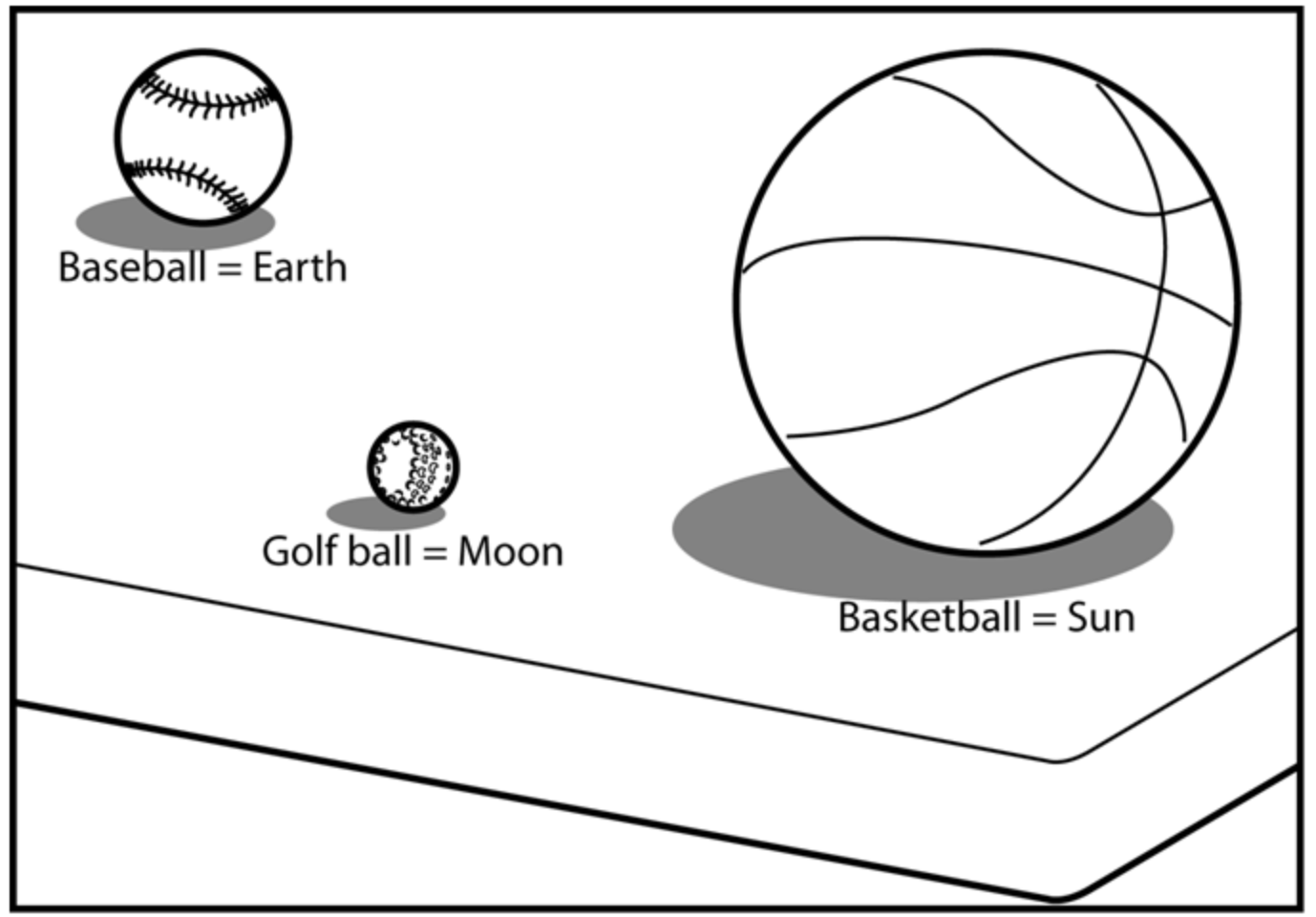
Which of the following will accurately model the relative motions of these bodies?
Some students are using objects to model the earth-sun-moon system. They wish to represent the positions of these objects during a solar eclipse.
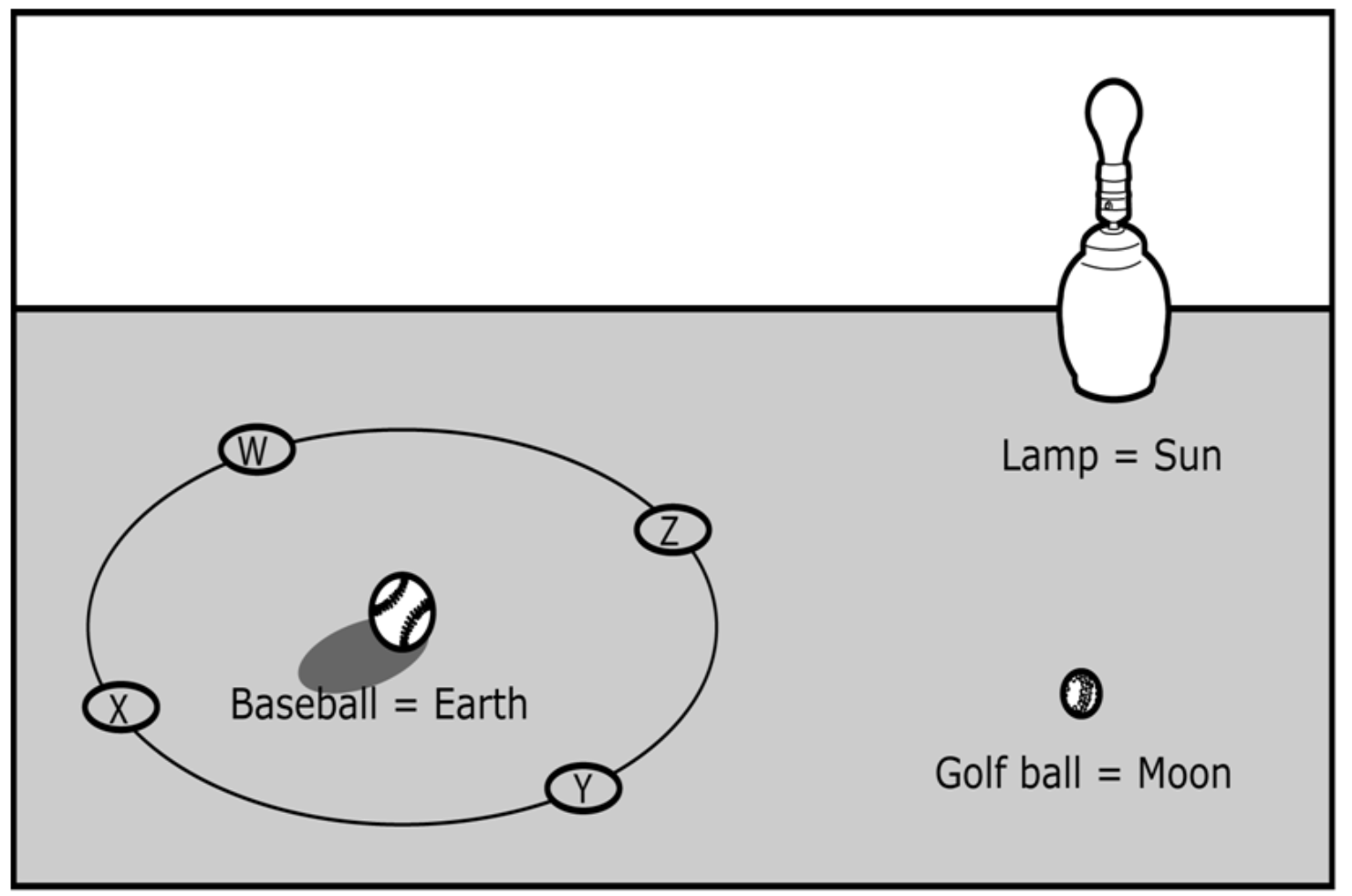
To accurately model the solar eclipse, the golf ball should be placed in which labeled position?
Which of the following describes a lunar eclipse?
The data table provides information on the distance and period of orbit for the inner planets.
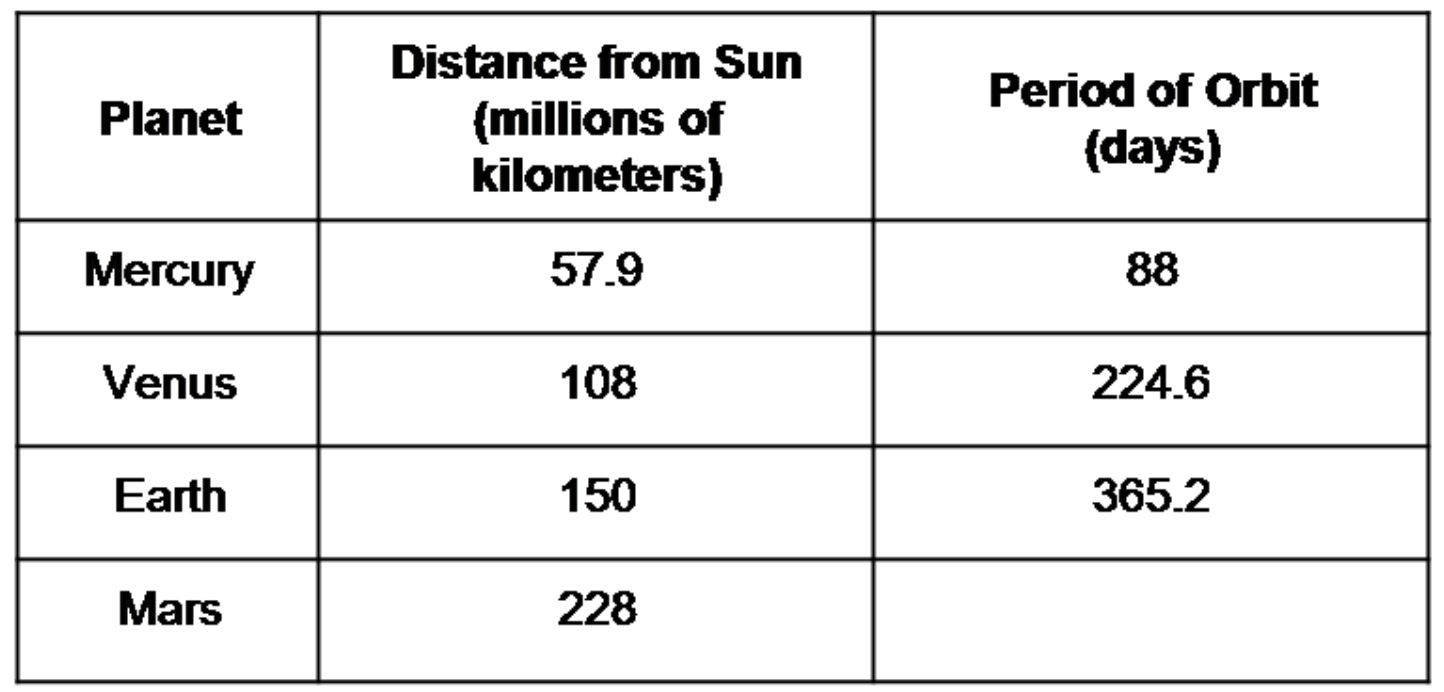
Based on the pattern in the data, we can predict that the period of Mars’ orbit will be–
Gravity is responsible for which of the following characteristics of a galaxy?
Students are planning to build a scale model of the outer planets of the solar system. The table here shows some of the objects the students will use for their scale model.
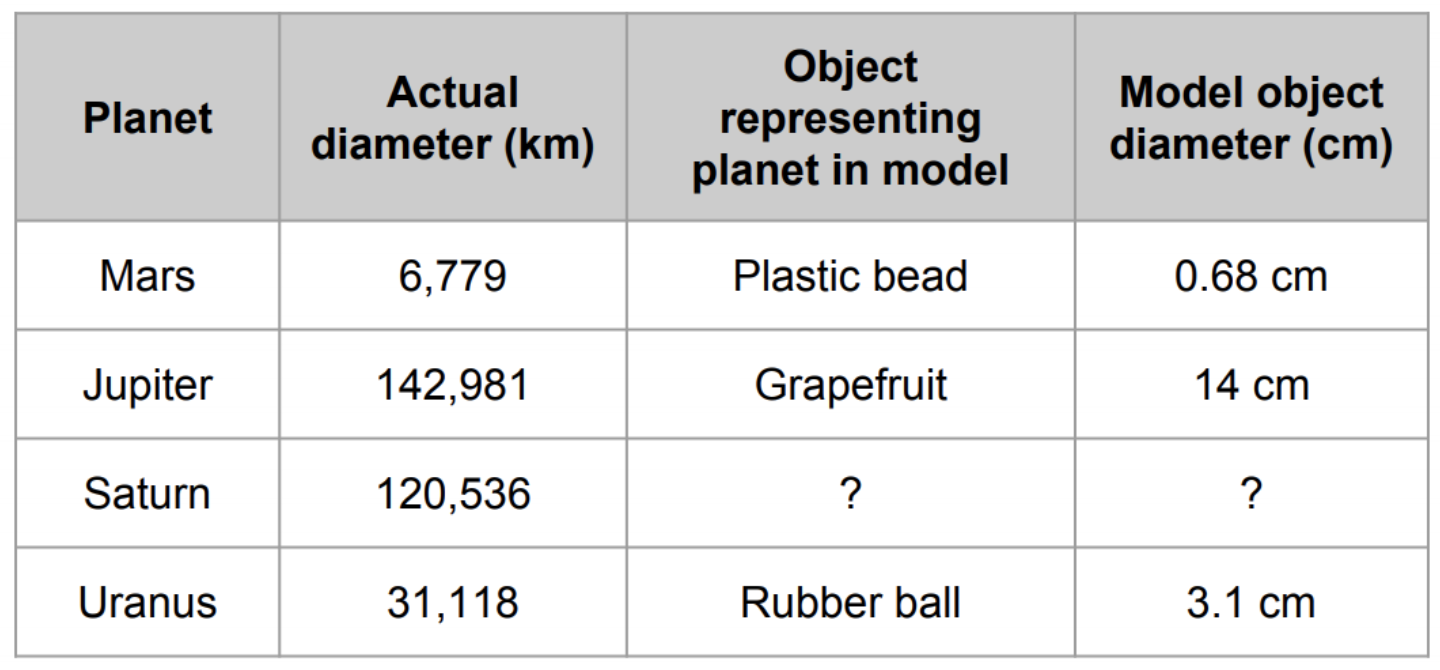
Based on the information in the table provided, which of the following representative objects and scaled diameters should they choose for the planet Saturn?
The orbital motions of the objects in the solar system are the direct result of which of the following features of the Sun?