Log in
Sign up for FREE
arrow_back
Library
Chapter 4 Review
By Michael Garcia
star
star
star
star
star
Share
share
Last updated over 3 years ago
41 questions
Add this activity
1
1
1
1
1
1
1
1
1
1
1
1
1
1
1
1
1
1
1
1
1
1
1
1
1
1
1
1
1
1
1
1
1
1
1
1
1
1
1
1
1
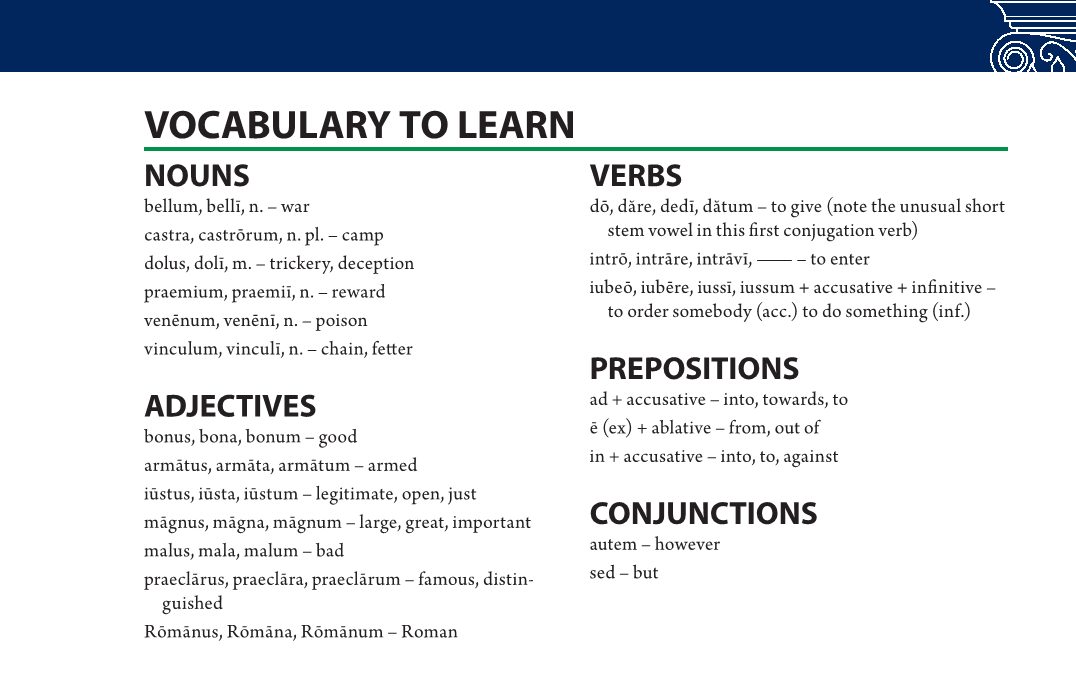
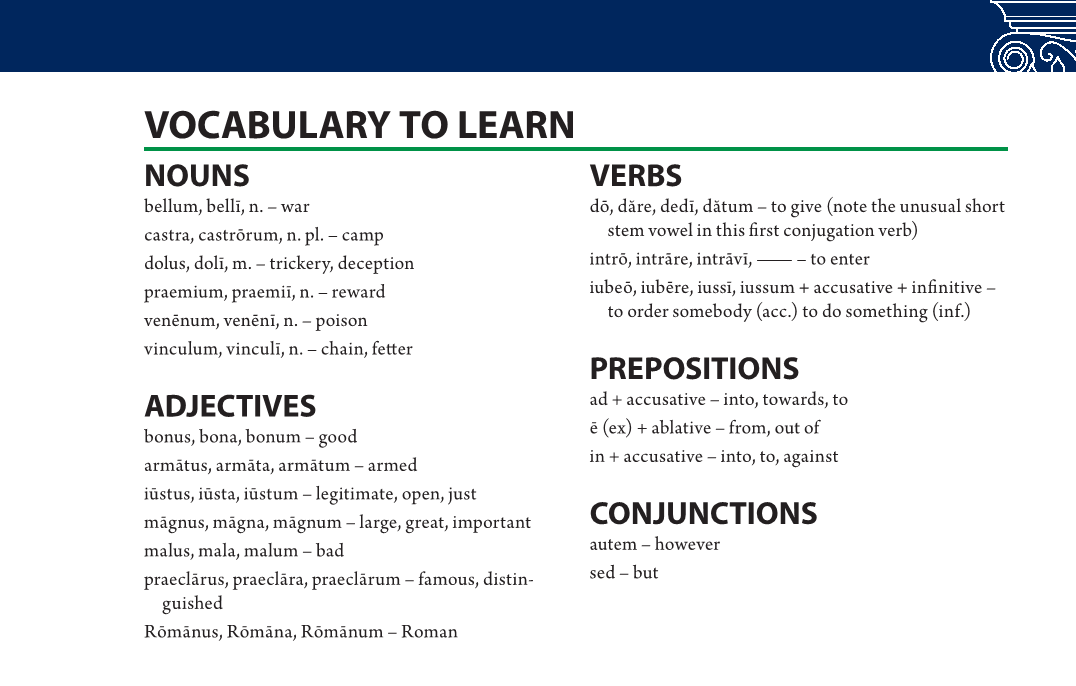
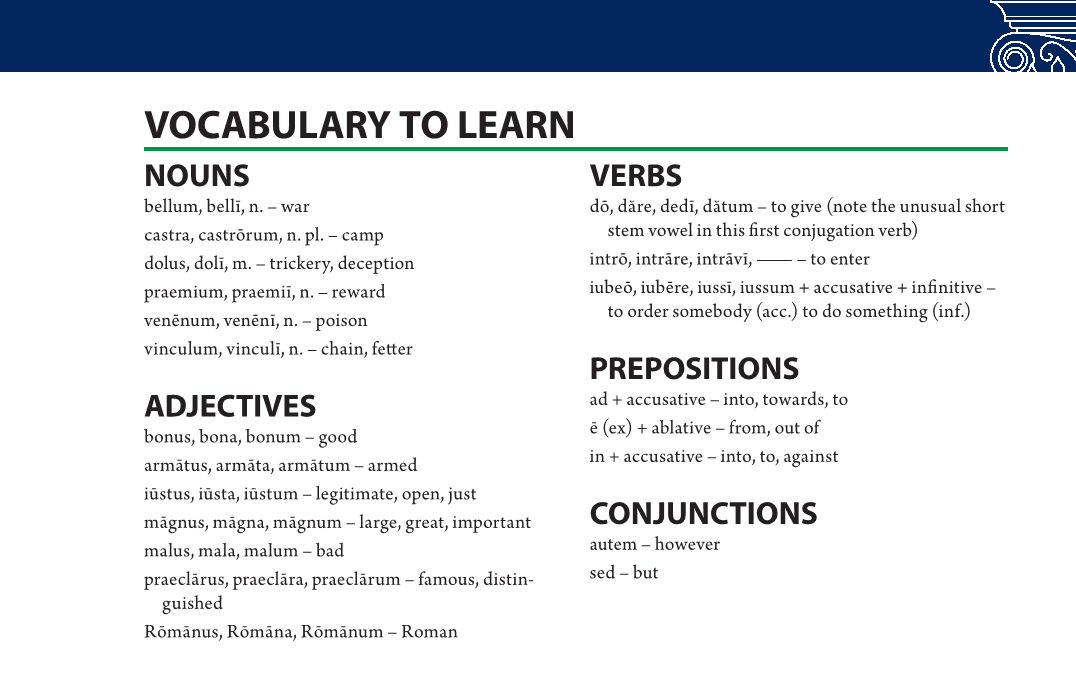
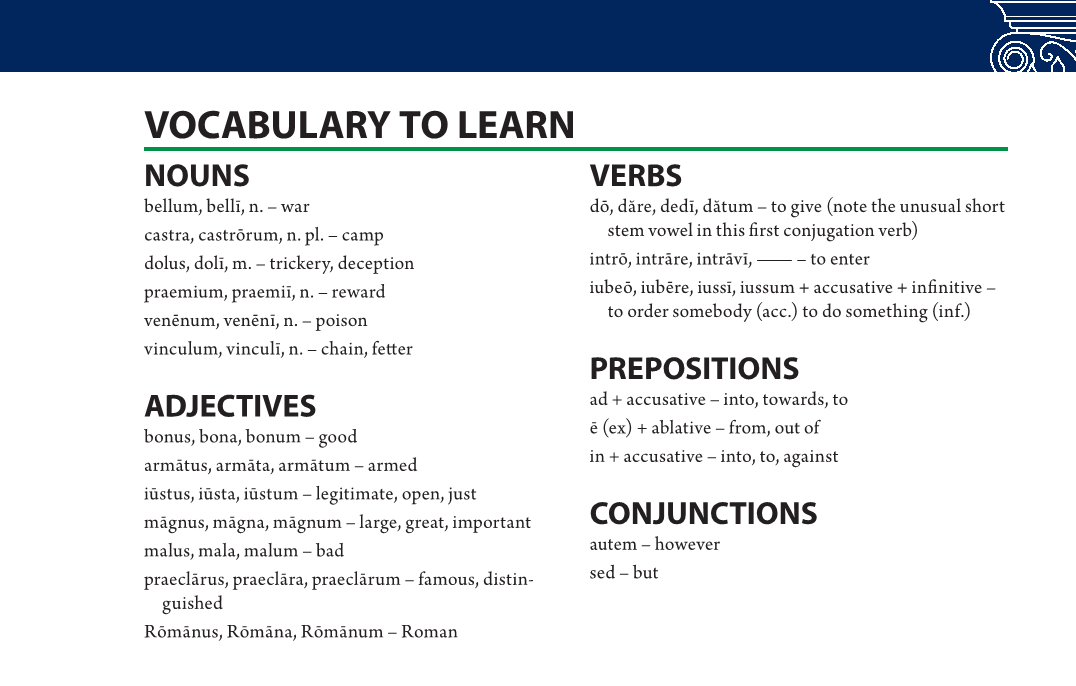
Question 1
1.
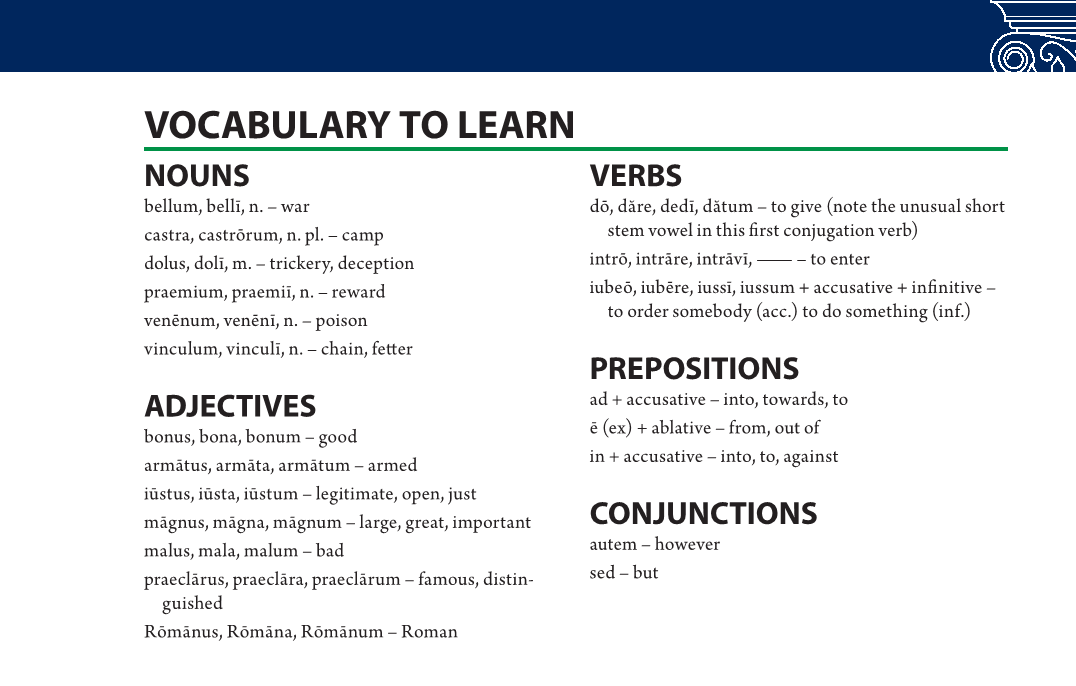
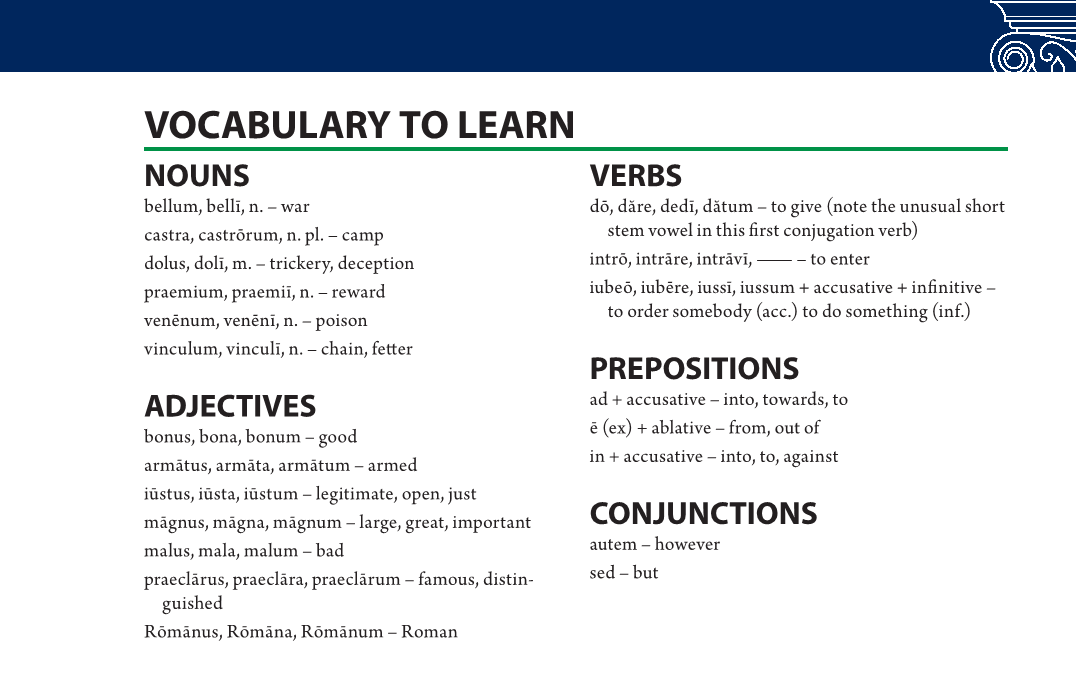
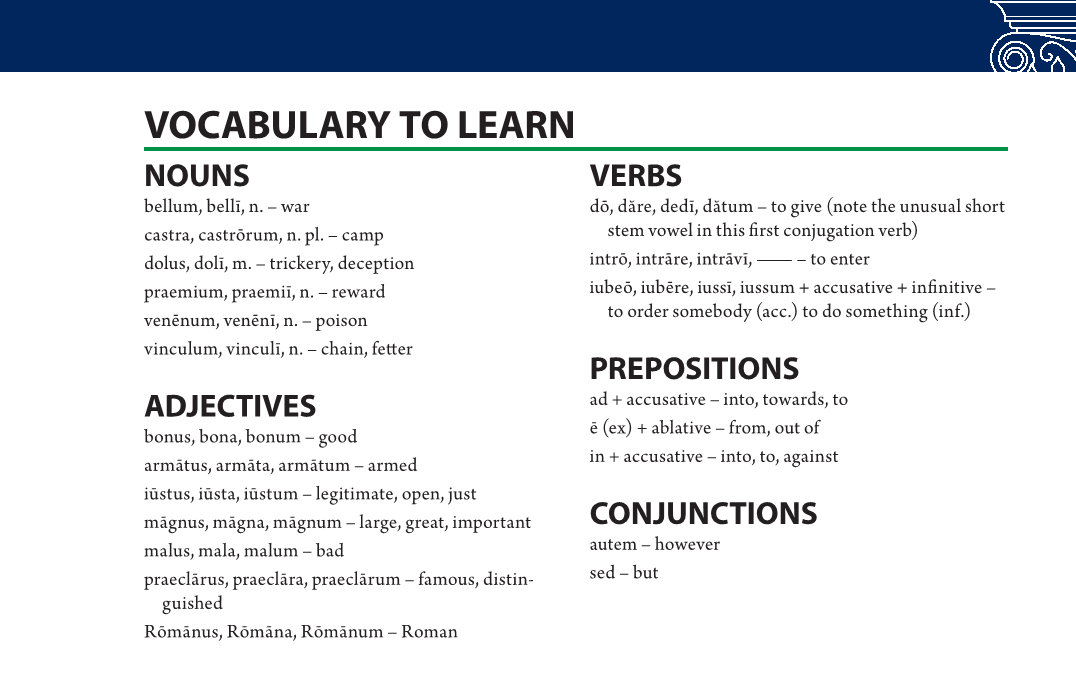
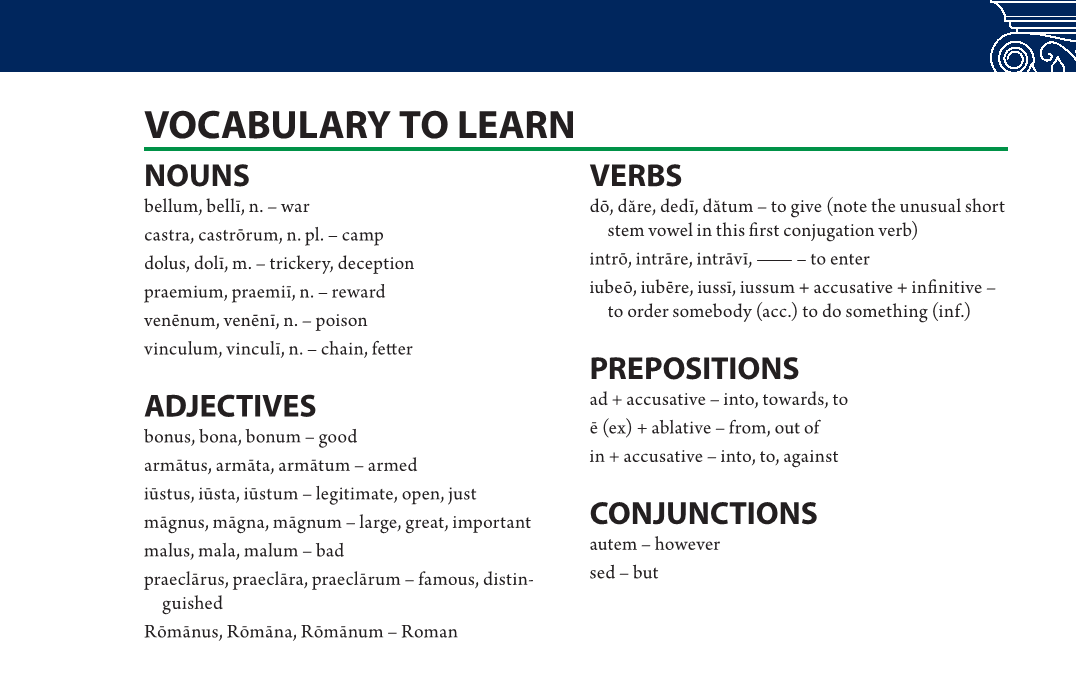
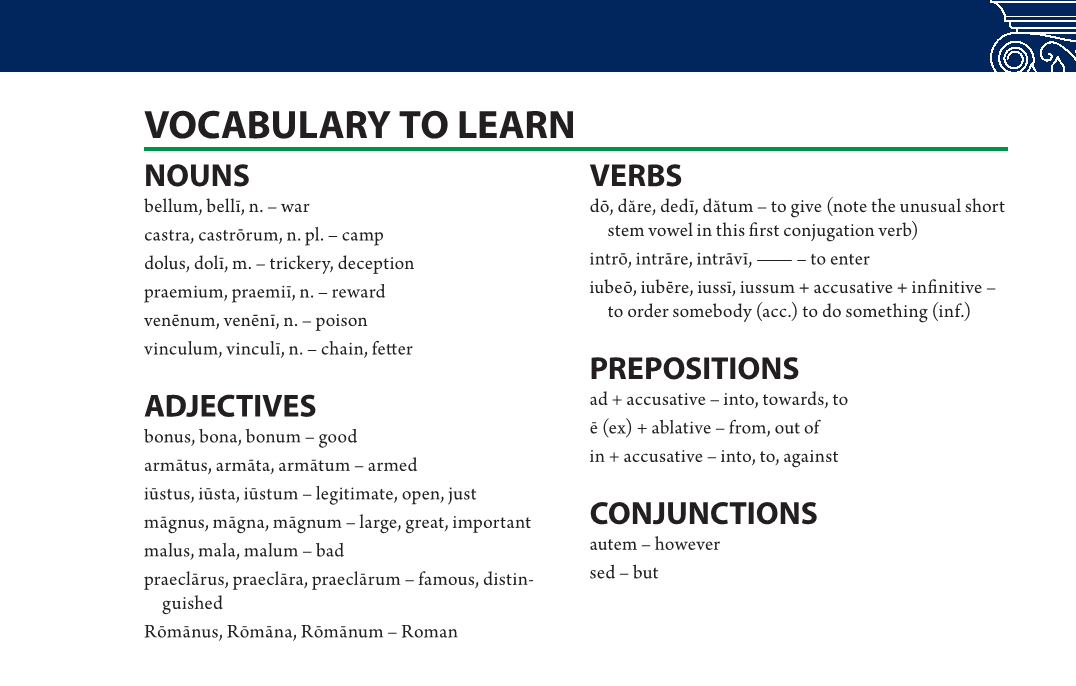
The preposition
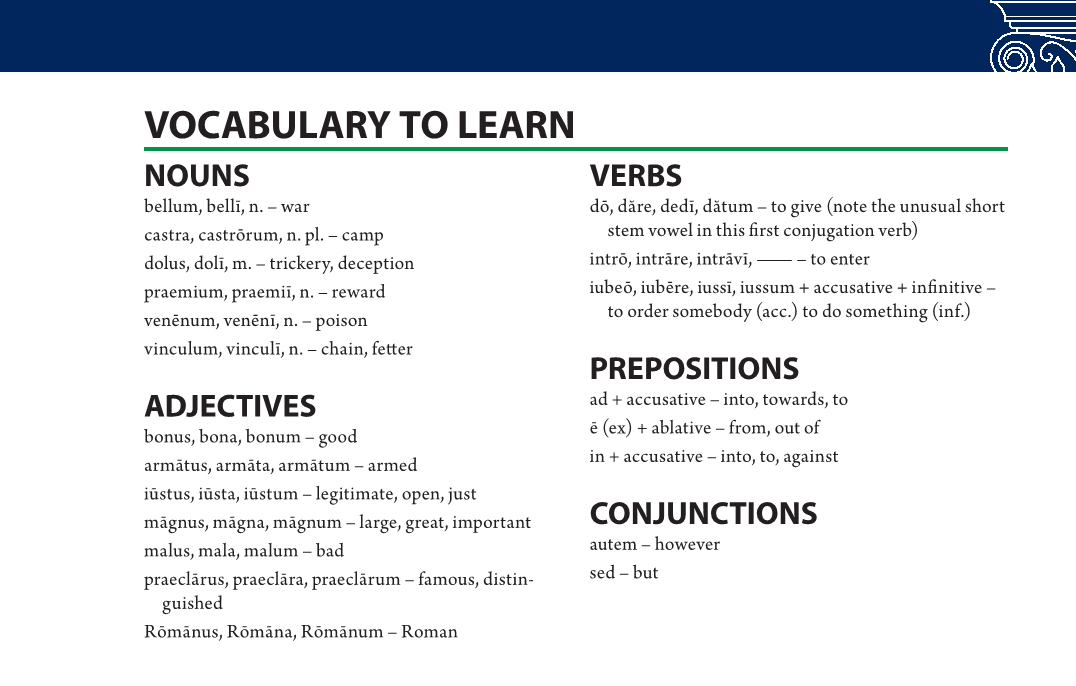
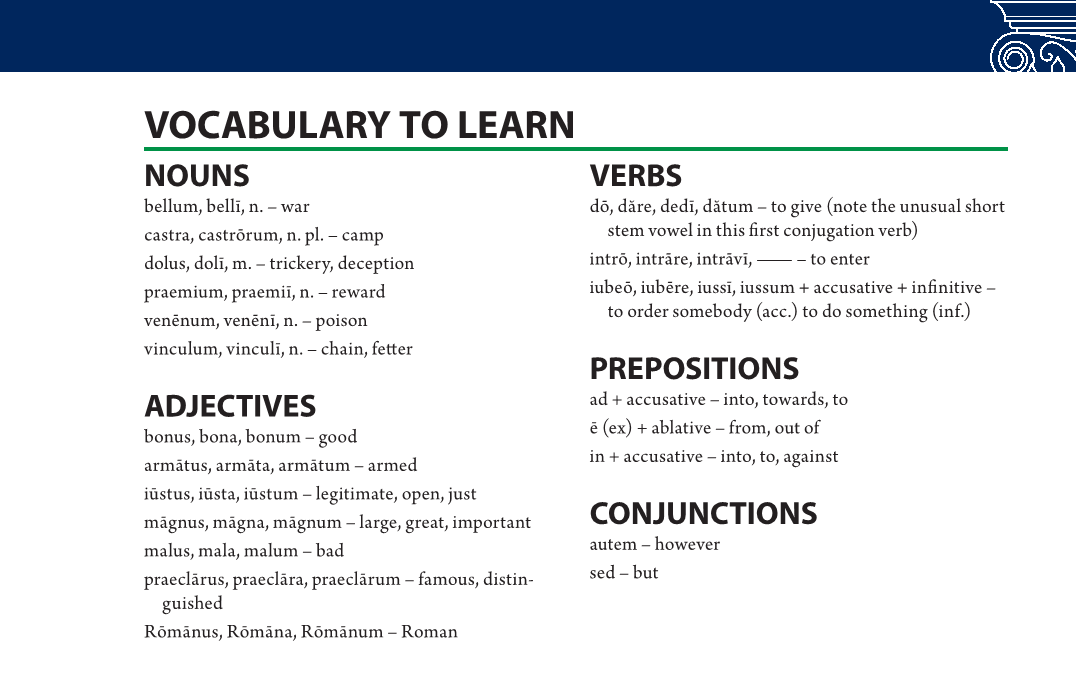
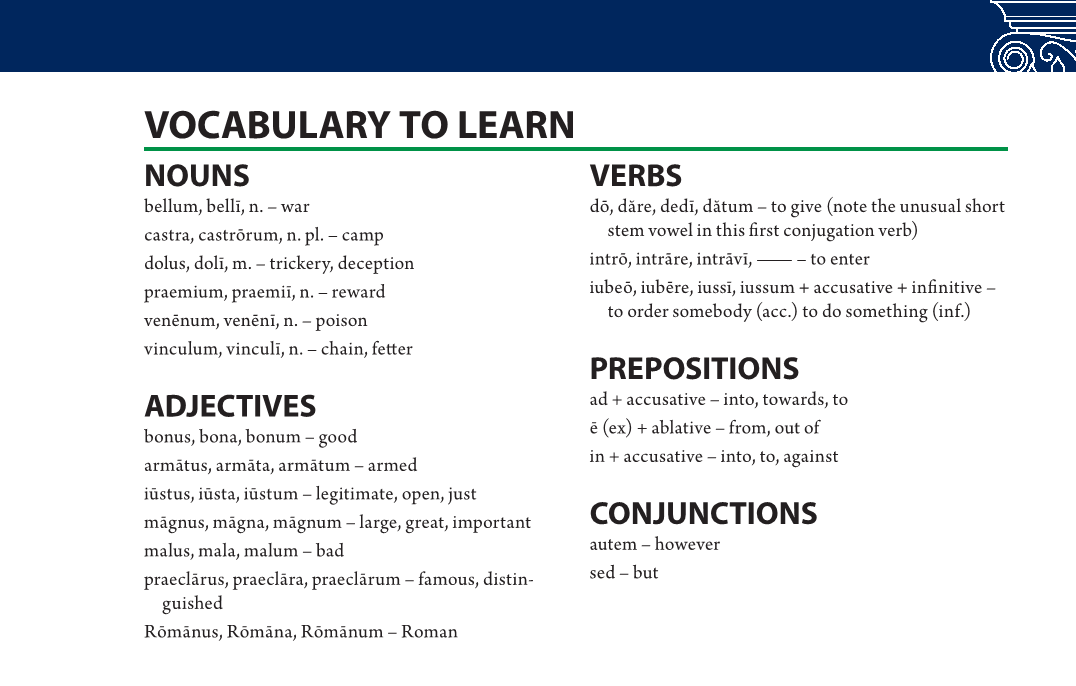
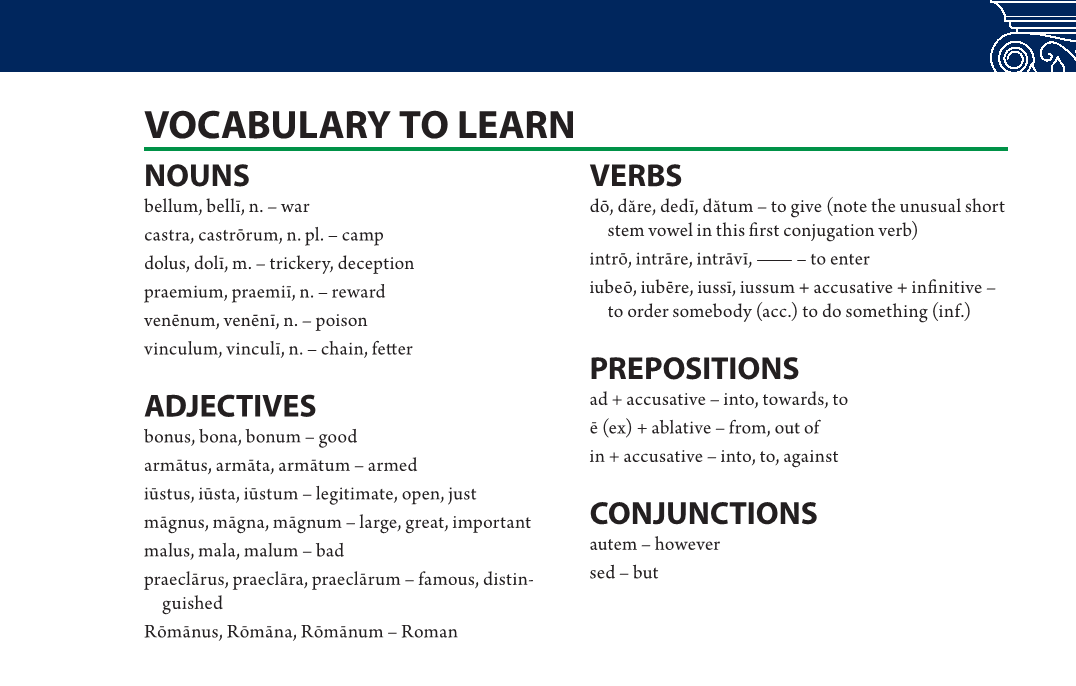
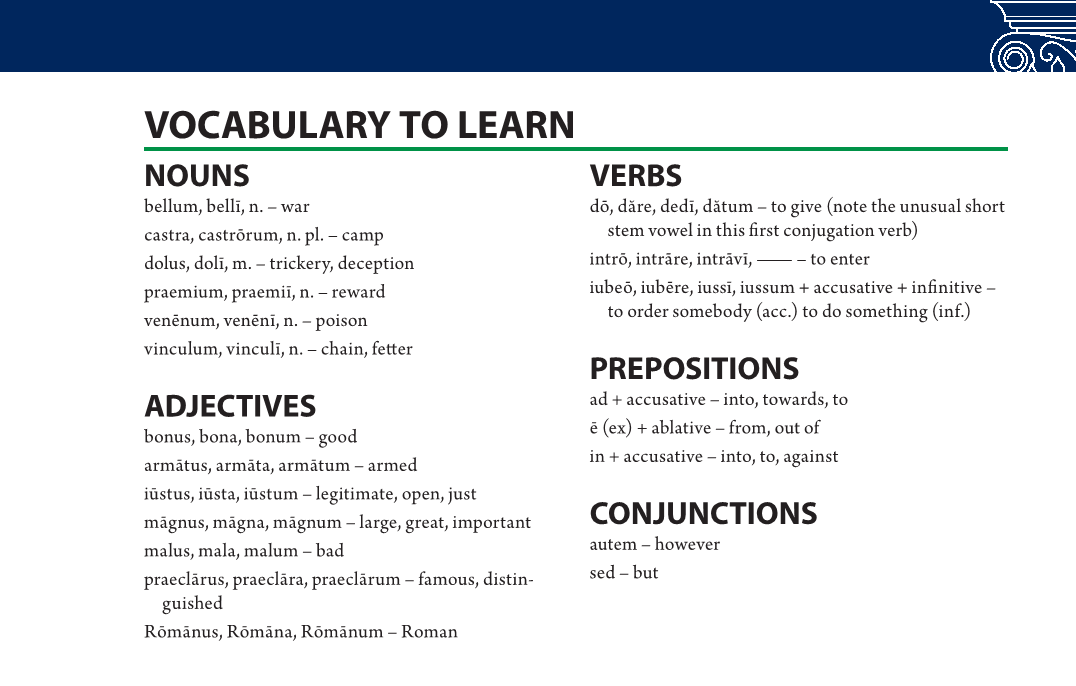
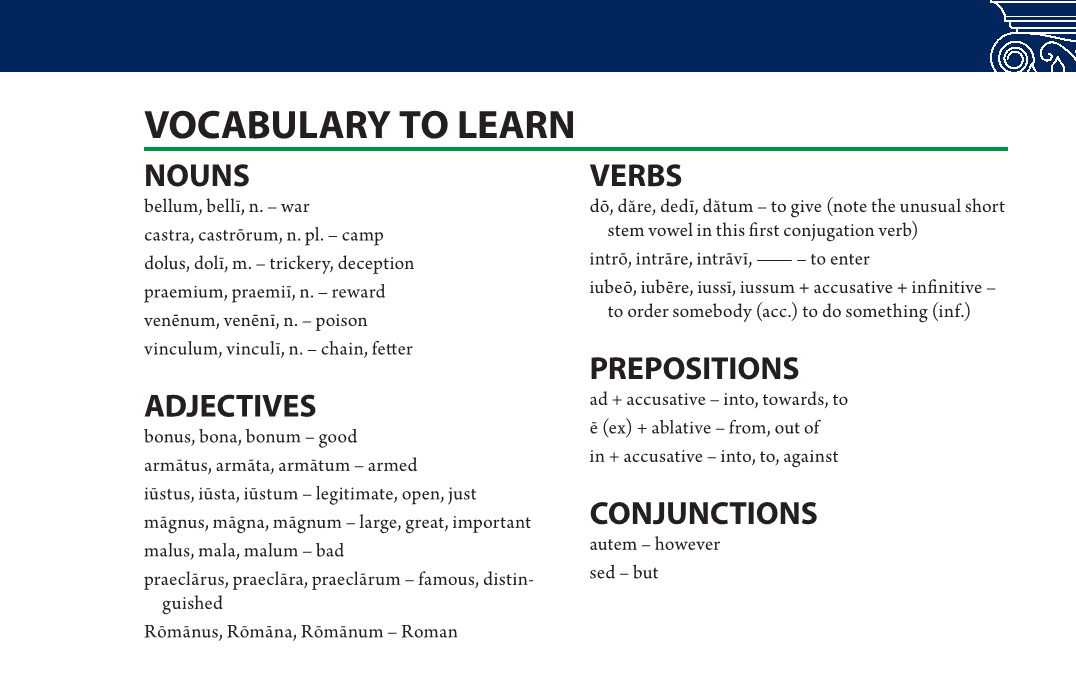
ad
takes the accusative case.
True
False
Question 2
2.
The noun
castra
belongs to the first declension.
True
False
Question 3
3.
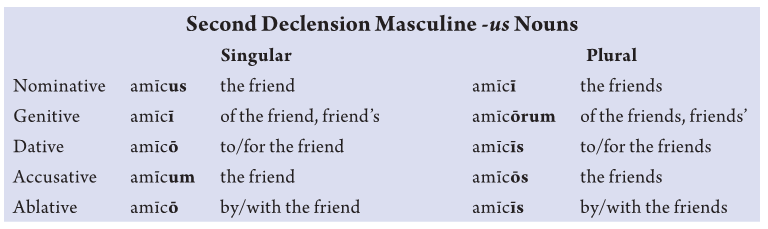
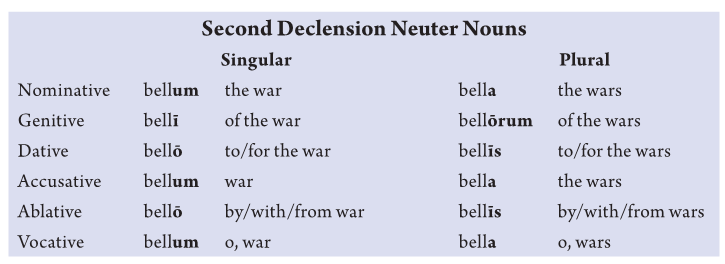
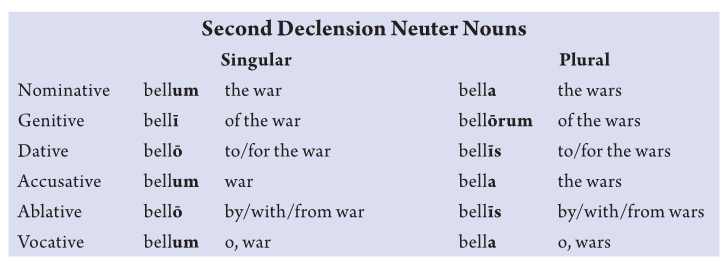
Neuter nominative plural forms always end in –
ī
.
True
False
Question 4
4.
The noun
vinculum
means poison.
True
False
Question 5
5.
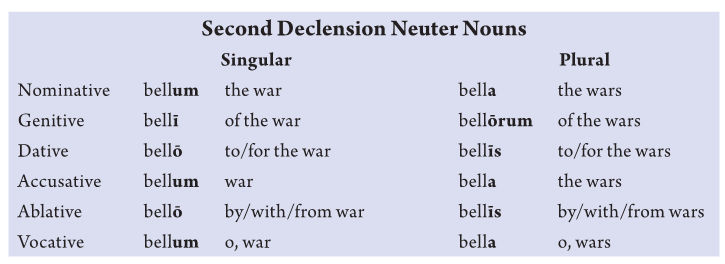
The preposition
in
may take accusative or ablative case.
True
False
Question 6
6.
What neuter forms always end in the letter
a
?
dative and ablative plural
genitive and dative singular
dative and ablative singular
nominative and accusative plural
Question 7
7.
The ending
–um
in the second declension indicates all of the following
EXCEPT
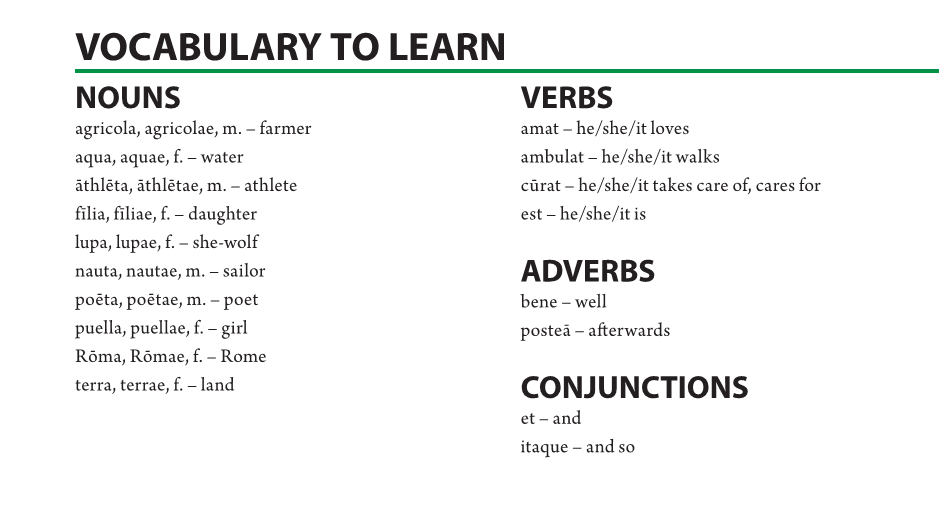
accusative singular neuter
genitive singular masculine
nominative singular neuter
accusative singular masculine
Question 8
8.
Which of the following does
NOT
belong on the basis of gender?
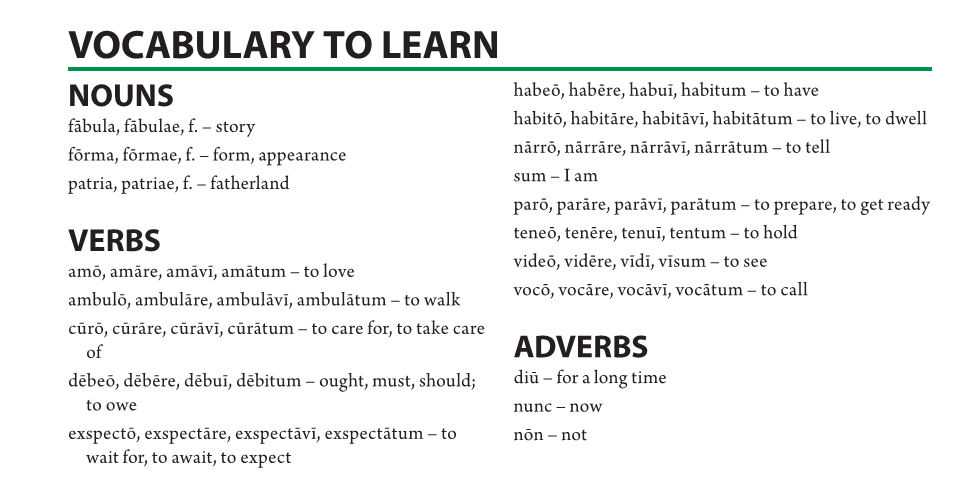
castra
āthlēta
nauta
agricola
Question 9
9.
Which of the following does
NOT
belong on the basis of declension?
bella
patria
venēna
vincula
Question 10
10.
Which of the following does
NOT
belong on the basis of gender?
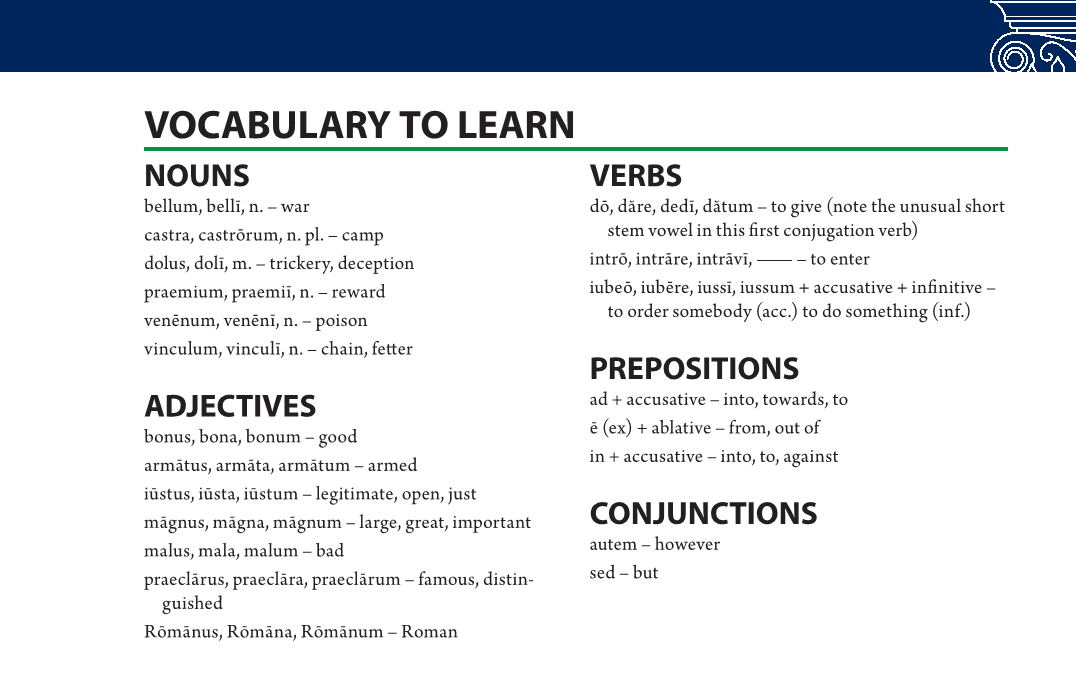
praemium
bellum
dolum
vinculum
Question 11
11.
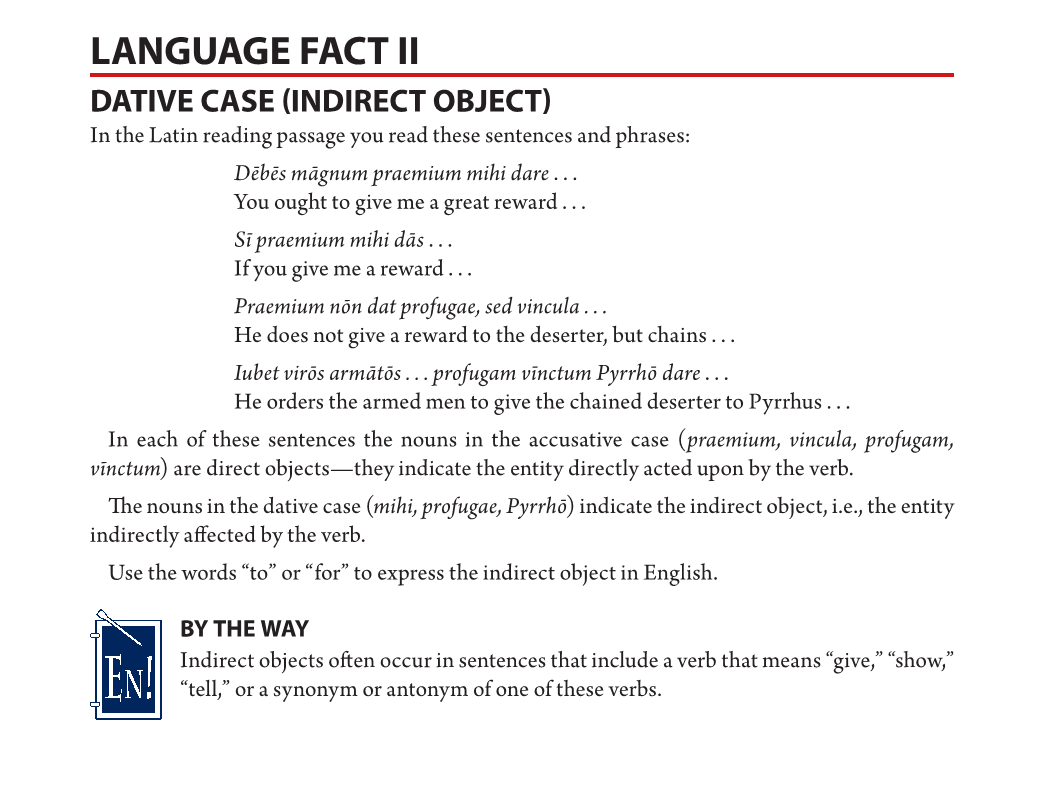
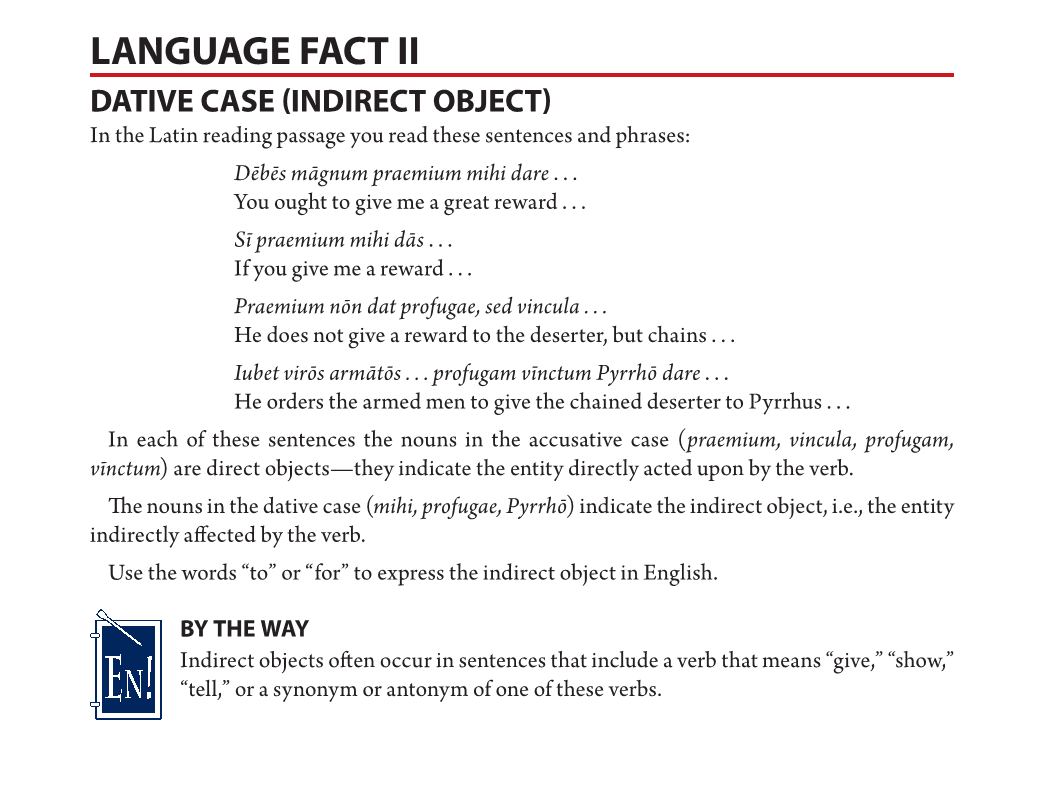
Which case is used for the indirect object?
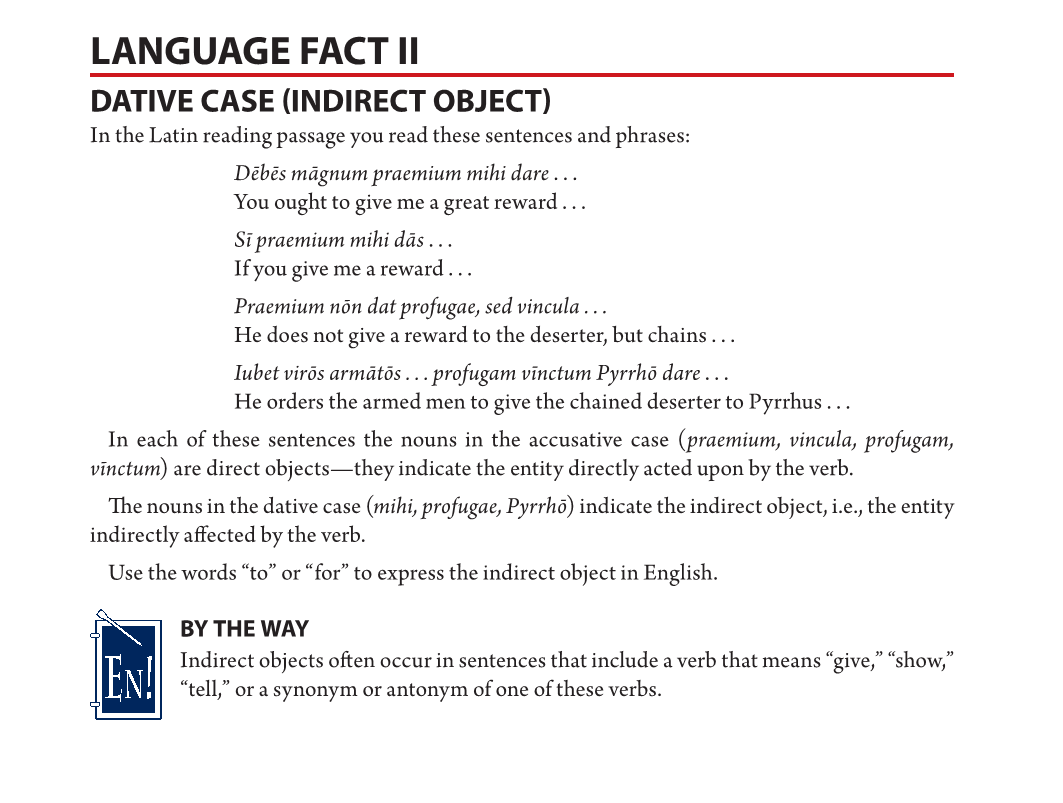
genitive
accusative
ablative
dative
Question 12
12.
An indirect object is most often found in sentences with a verb belonging to all the following categories
EXCEPT
giving
telling
showing
moving
Question 13
13.
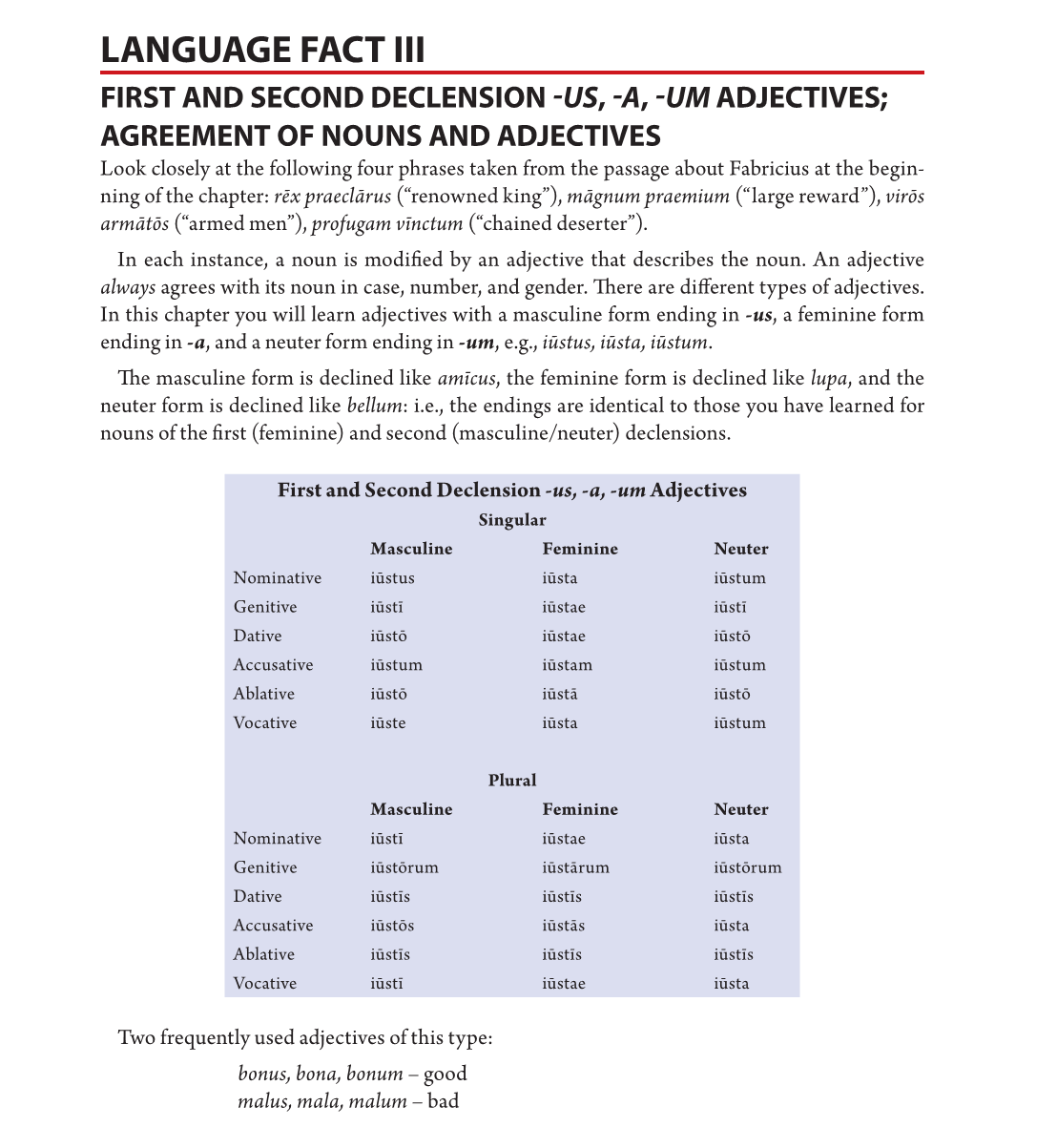
Which of the following sentences, when translated into Latin, would use the dative case?
Did you give the poison or did he?
Clare is entrusting her life to you.
Let’s go to the beach!
I would love to visit them.
Question 14
14.
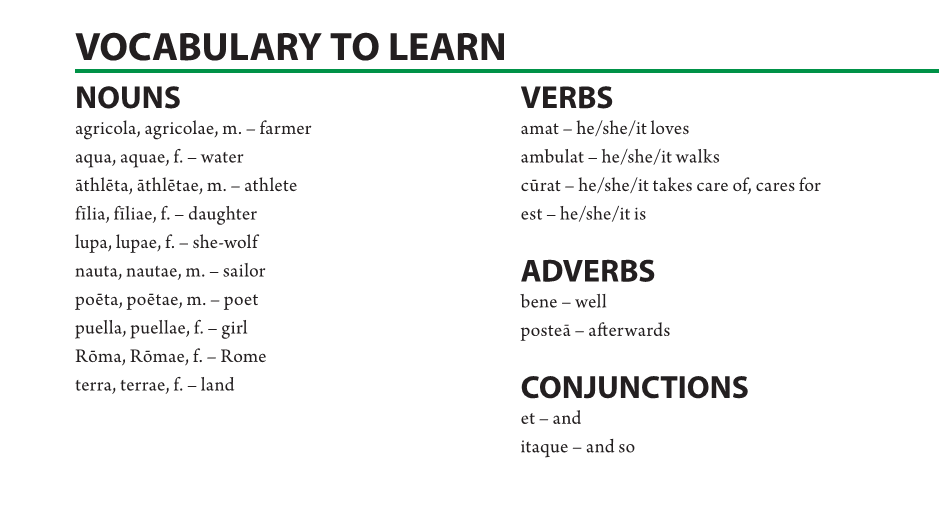
Adjectives must agree with their nouns in all of the following
EXCEPT
case
gender
number
tense
Question 15
15.
The adjective
bonus
will agree with all of the following
EXCEPT
poēta
vir
bellum
fīlius
Question 16
16.
The field of the good farmer is large.
Ager agricolae bonae est magnum
.
Ager agricolae bonae est magna
.
Ager agricolae bonī est magnus
.
Ager agricolae bonī est magnae
.
Question 17
17.
The Romans see the camp of the Greeks.
Castra Rōmānōrum Graeca videt
.
Romani castra Graecōrum vident
.
Graecī castrīs Rōmānus videt
.
Rōmānī castrōrum Graecī vident
.
Question 18
18.
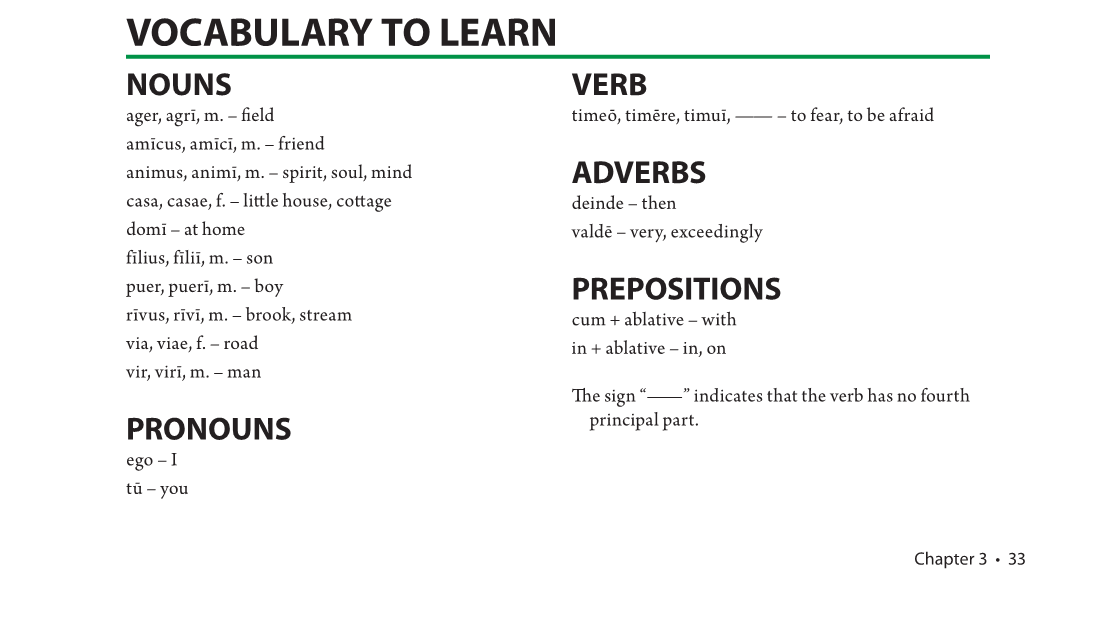
Claudius, are you ordering the men to enter the camp?
Iubēsne, Claudī, virōs in castra intrāre?
Iubēs, Claudī, virīs castra intrāre?
Claudius, iubēs virōs in castrīs intrāre
?
Claudiusne, iubētis virōs castrīs intrāre
?
Question 19
19.
Distinguished Romans should have great rewards.
Rōmānī praeclārī magna praemia habēre dēbent.
Rōmānī praeclārī magnōs praemiōs habēre dēbent
.
Magnōs praemiōs Rōmānī praeclārī habitare dēbet
.
Magna praemia Rōmānī praeclarī habitāre dēbet
.
Question 20
20.
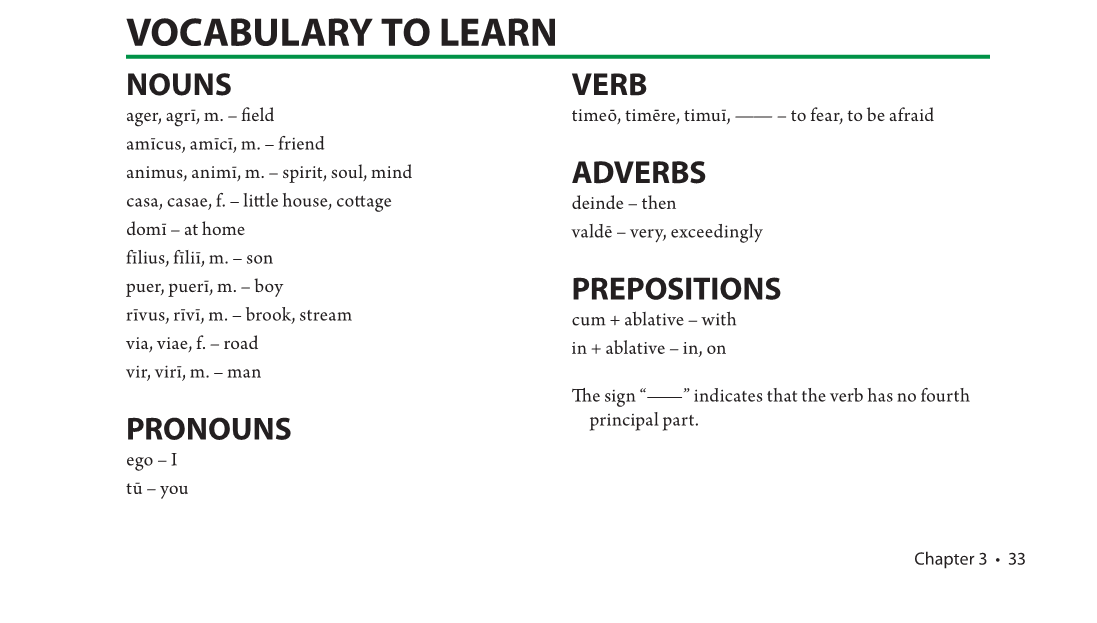
The Romans love to tell stories to (their) sons and daughters.
Fīliō et fīliae fābulīs Rōmānī nārrāre amant
.
Rōmānī ad fīliōs et fīliās fābulās nārrāre amant
.
Rōmānī fīliīs et fīliābus fābulās nārrāre amant
.
Fīliī et fīliae Rōmānīs fābulam nārrāre amant.
Question 21
21.
Which of the following does
NOT
belong grammatically?
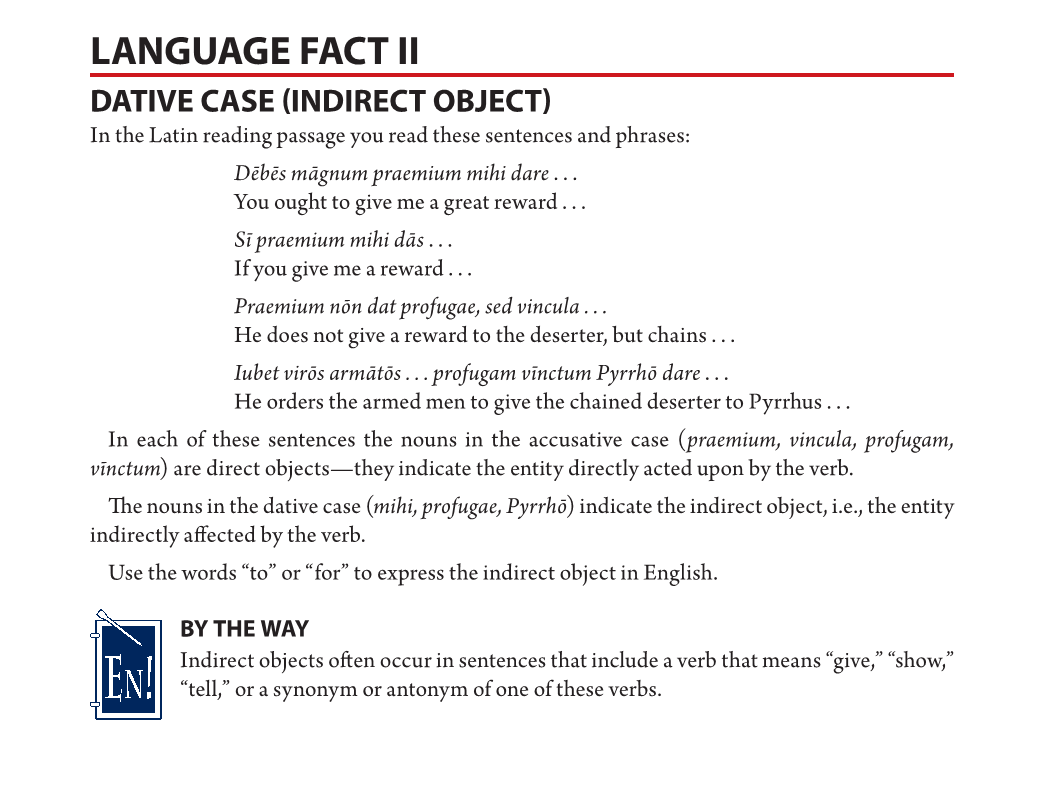
ex
in
cum
ad
Question 22
22.
Caesar gave a reward
to the good poet
.
poētae bonae
ad poētam bonam
ad poētam bonum
poētae bonō
Question 23
23.
Drive the horses
into the water, my friend
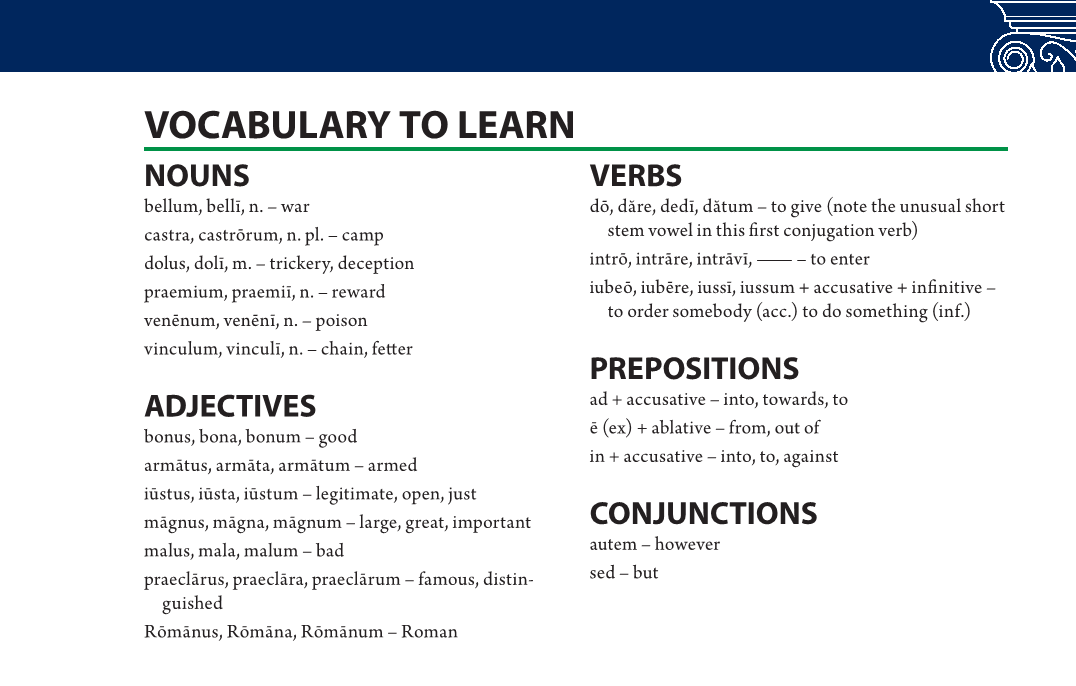
ad aquam, mē amīce
in aquā
in aquam, mī amīce
ad aquā, mē amīce
Question 24
24.
Which verb has an unusual short stem vowel?
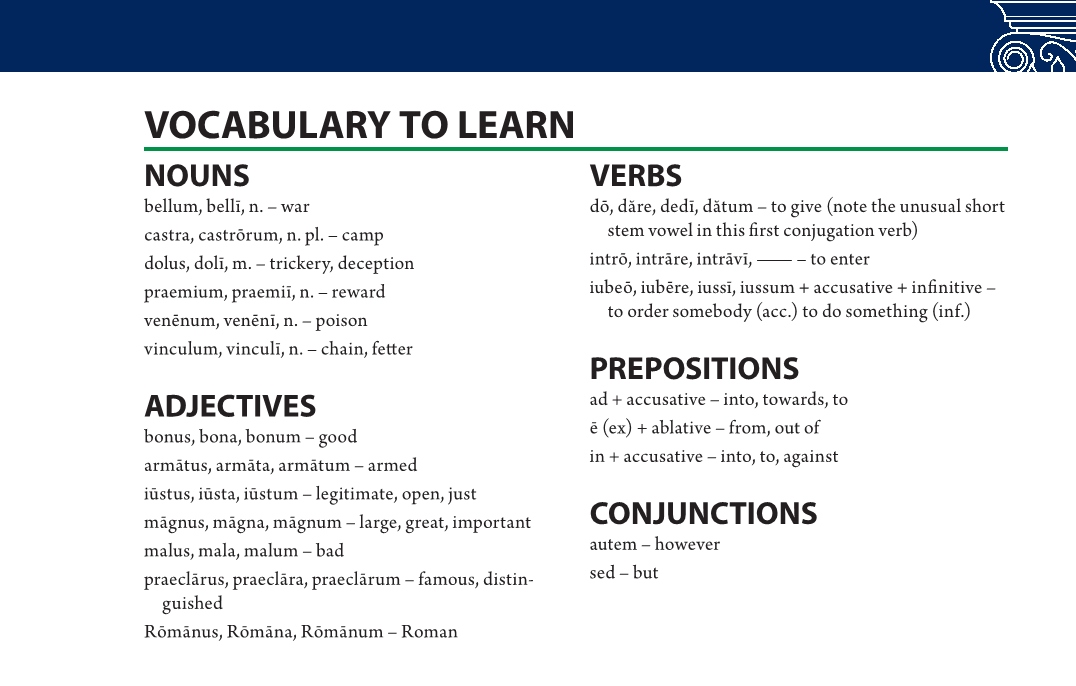
intrō
dō
iubeō
dēbeō
Question 25
25.
Which of the following does
NOT
belong to the group by meaning?
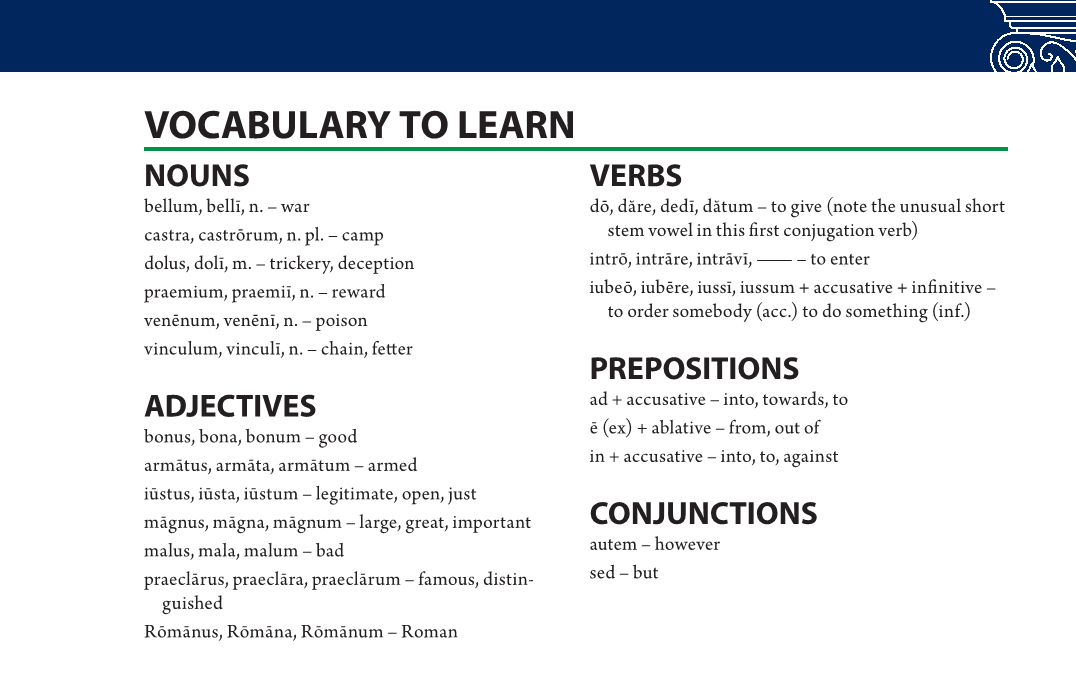
armātus
bellum
rīvus
castra
Question 26
26.
What is the meaning of
dolus
?
appearance
mind
chain
deception
Question 27
27.
Which of the following is
NOT
a meaning for
iūstus
?
young
open
legitimate
just
Question 28
28.
What is the meaning of
autem
?
then
however
strongly
now
Question 29
29.
Choose the
SYNONYM
of
sed
.
autem
deinde
itaque
diū
Question 30
30.
Which of the following could be described as bellicose?
Hitler
Gandhi
Mother Theresa
Quakers
Question 31
31.
The words “castle” and “chateau” are derived from the Latin word meaning
take care of
camp
house
with
Question 32
32.
The word “venom” is derived from the Latin word meaning
chain
man
poison
road
Question 33
33.
A
magnifying
glass makes objects seem
small
pretty
famous
large
Question 34
34.
The word
bonus
is the base of many English words, including all of the following
EXCEPT
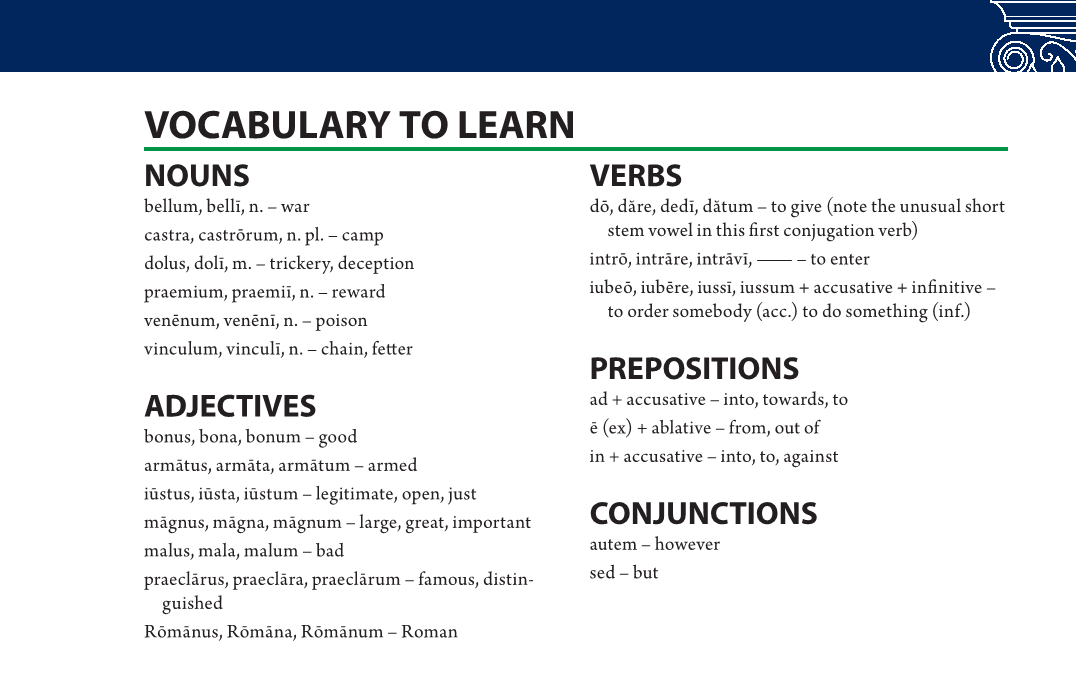
brief
beautiful
benefactor
bonbon
Question 35
35.
The English word “premium” is derived from the Latin word meaning
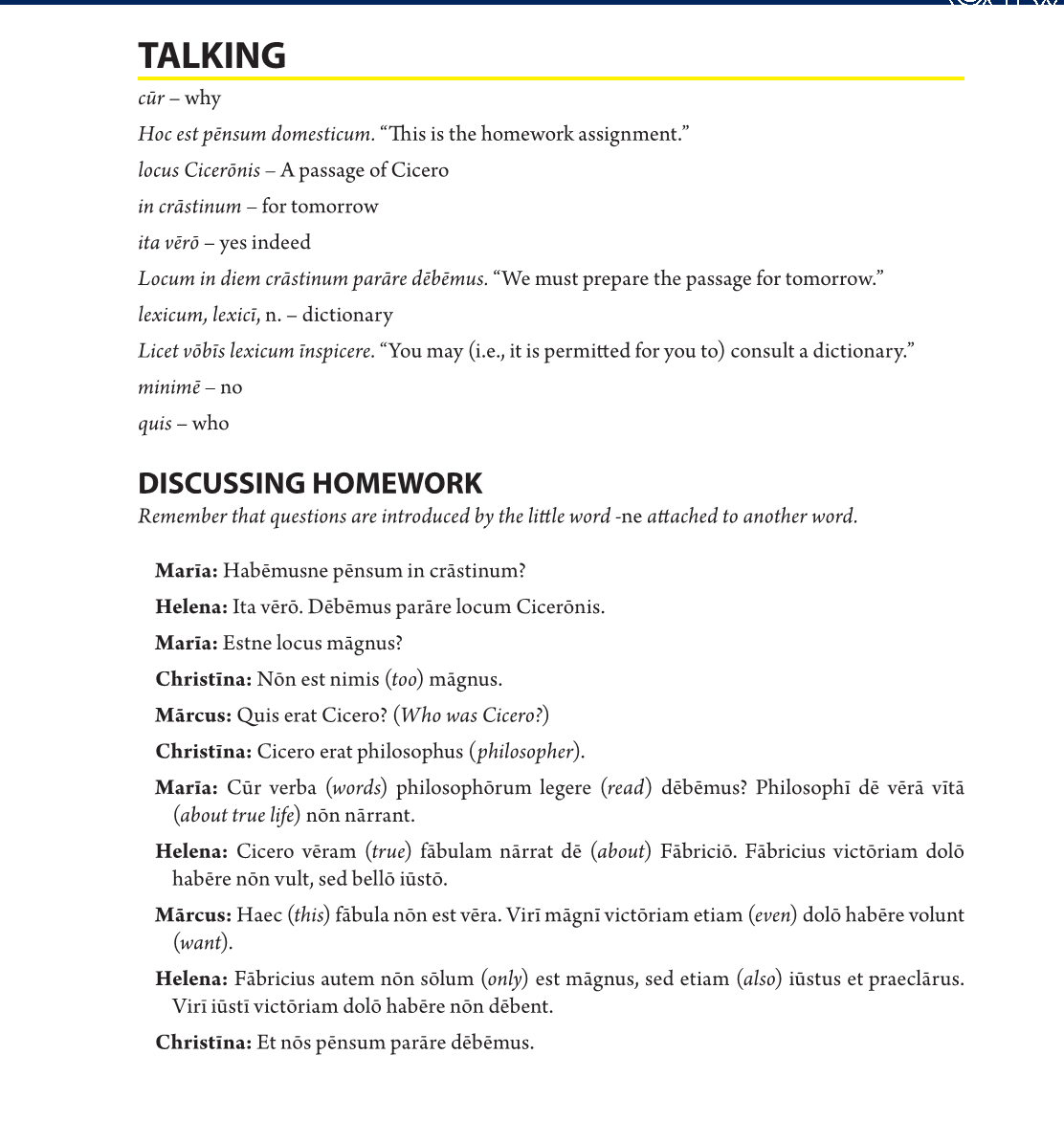
appearance
reward
good
prepare
Question 36
36.
What is a school
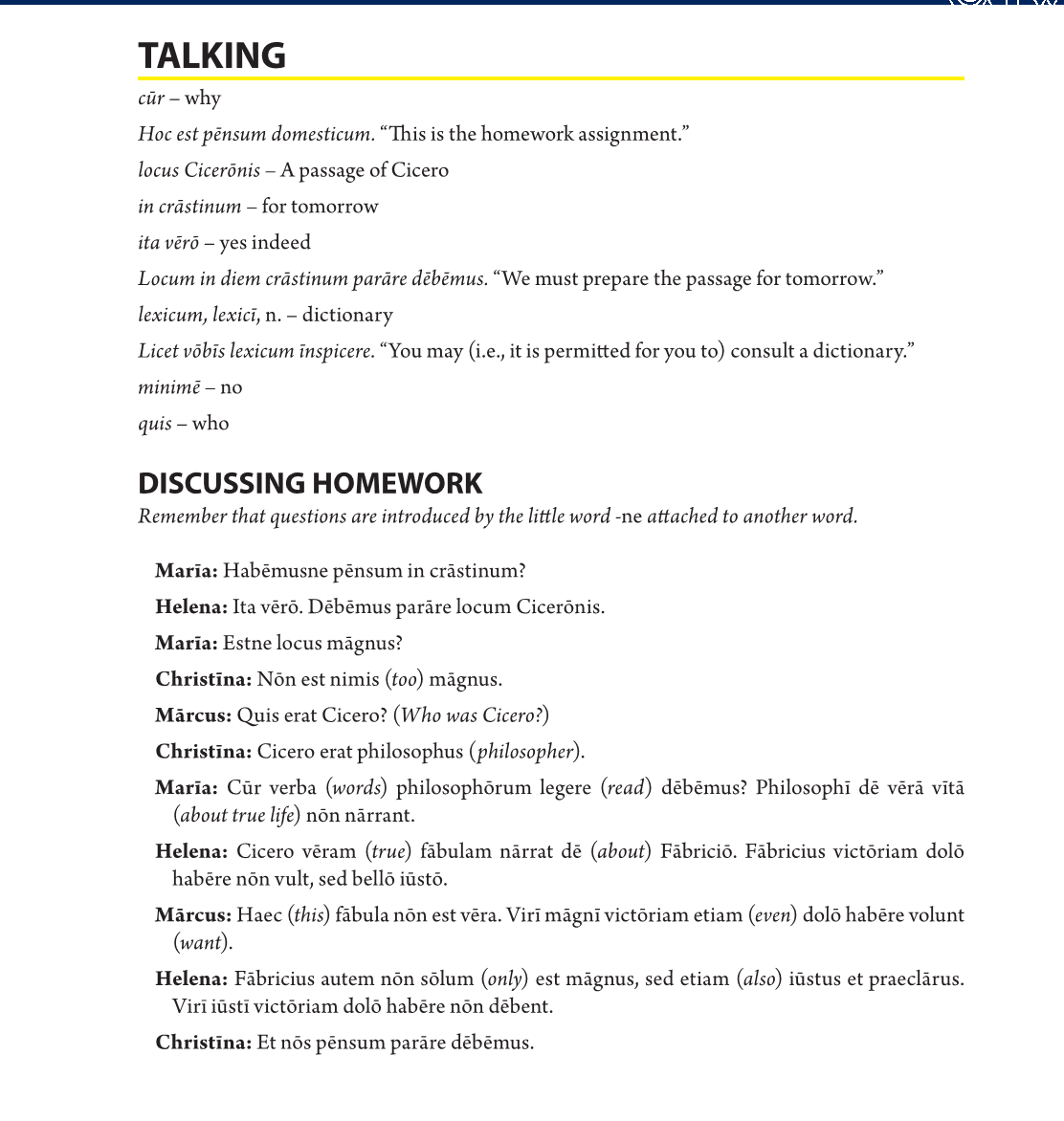
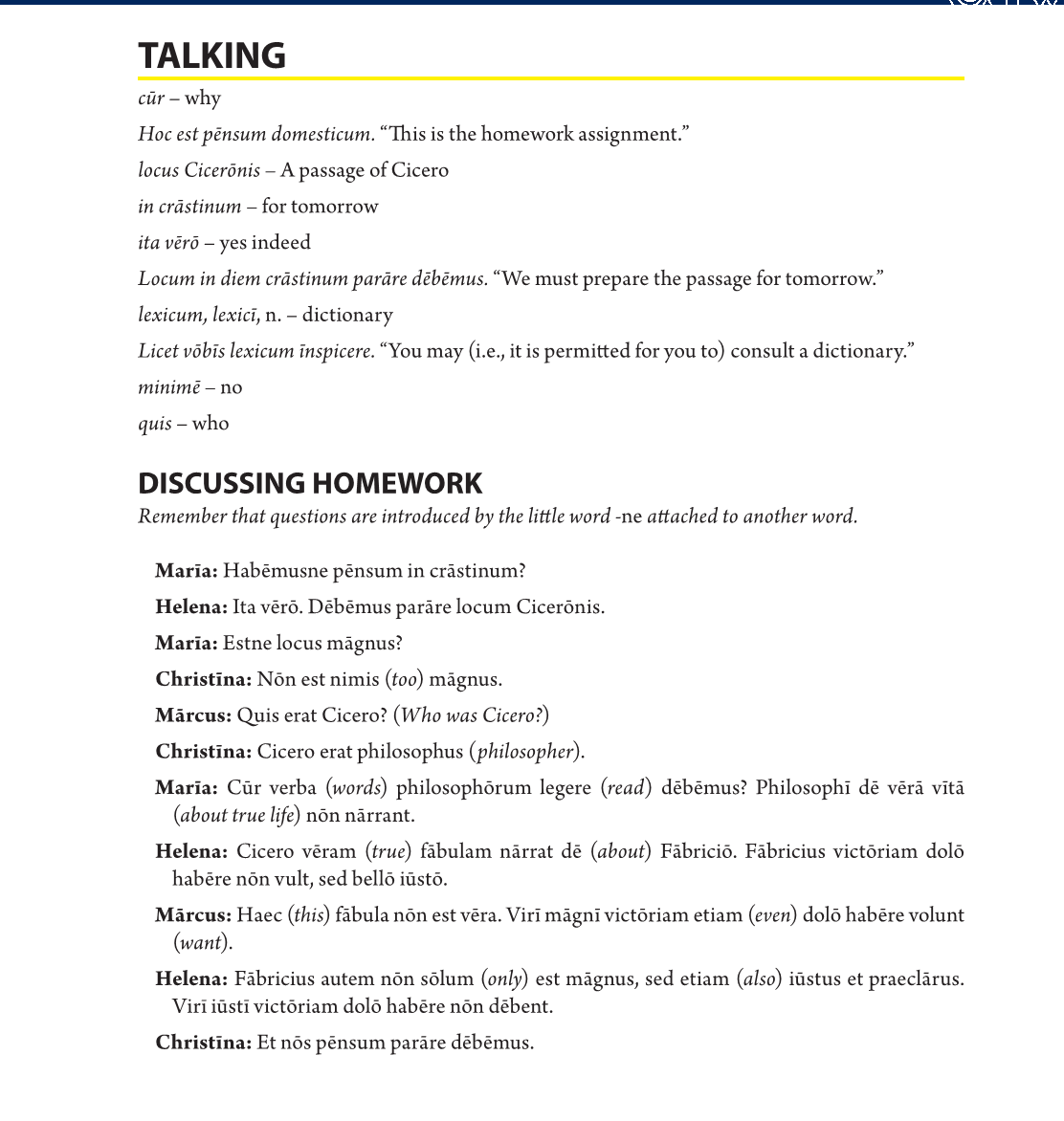
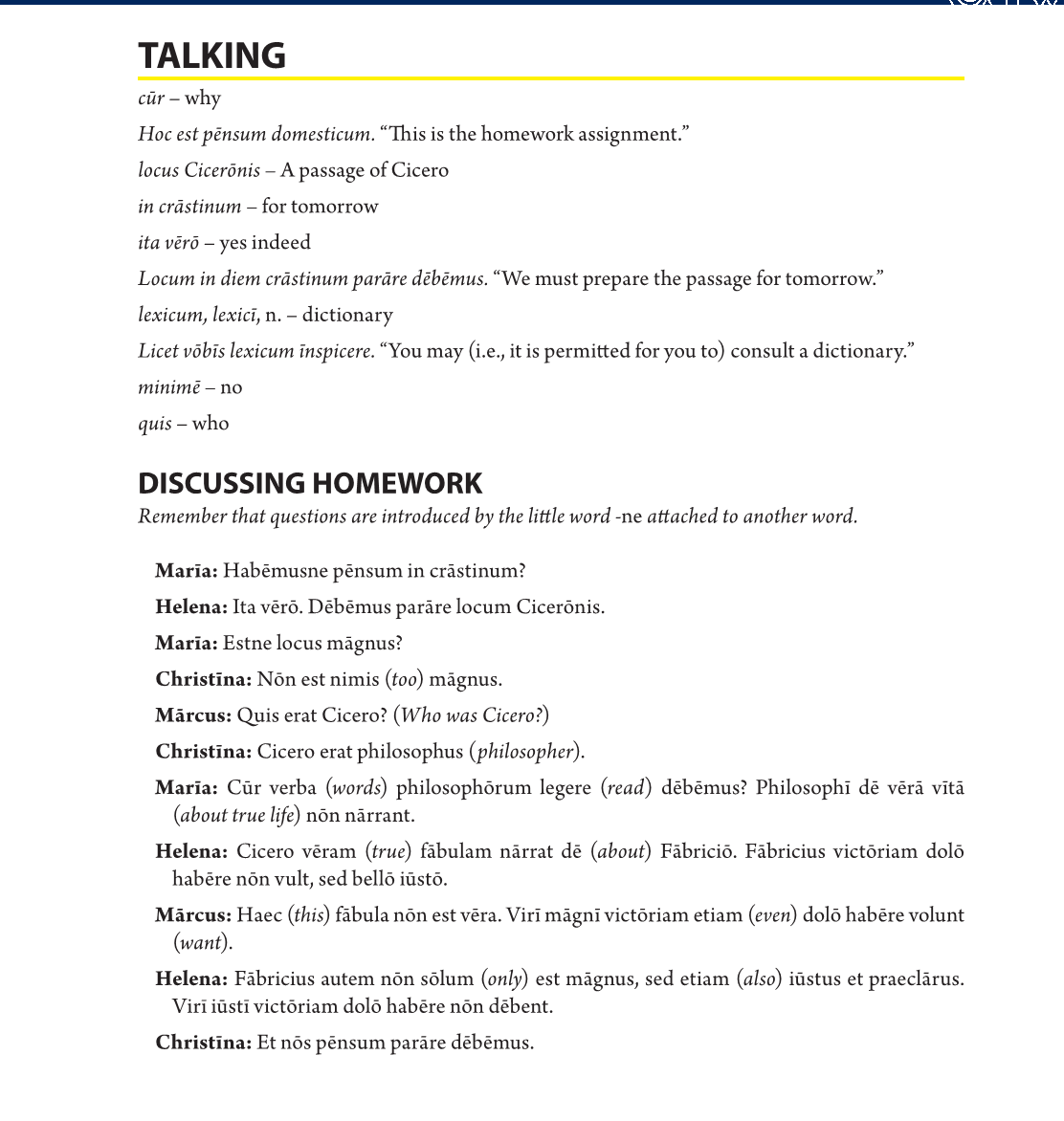
pēnsum
?
a hall pass
a passage of Latin
a class schedule
an assignment
Question 37
37.
What is a
lexicum
?
rules for writing
a dictionary
a philosophical essay
a true story
Question 38
38.
What word can mean “also” or “even”?
etiam
sed
deinde
itaque
Question 39
39.
The speaker was known for his veracity.
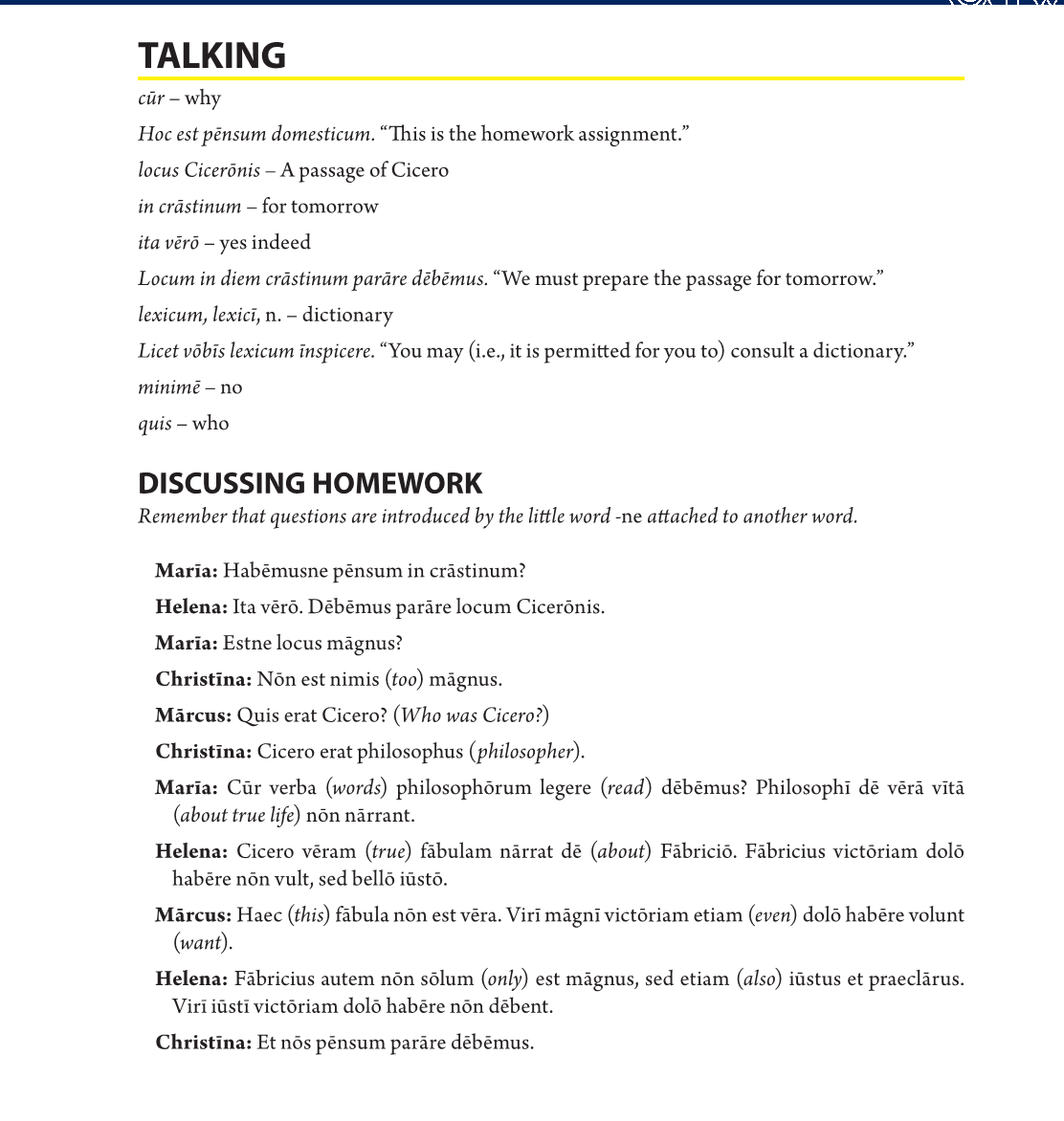
friendliness
truthfulness
humor
bitterness
Question 40
40.
Procrastination, which is derived from the Latin word meaning _____, does not help a student finish an assignment.
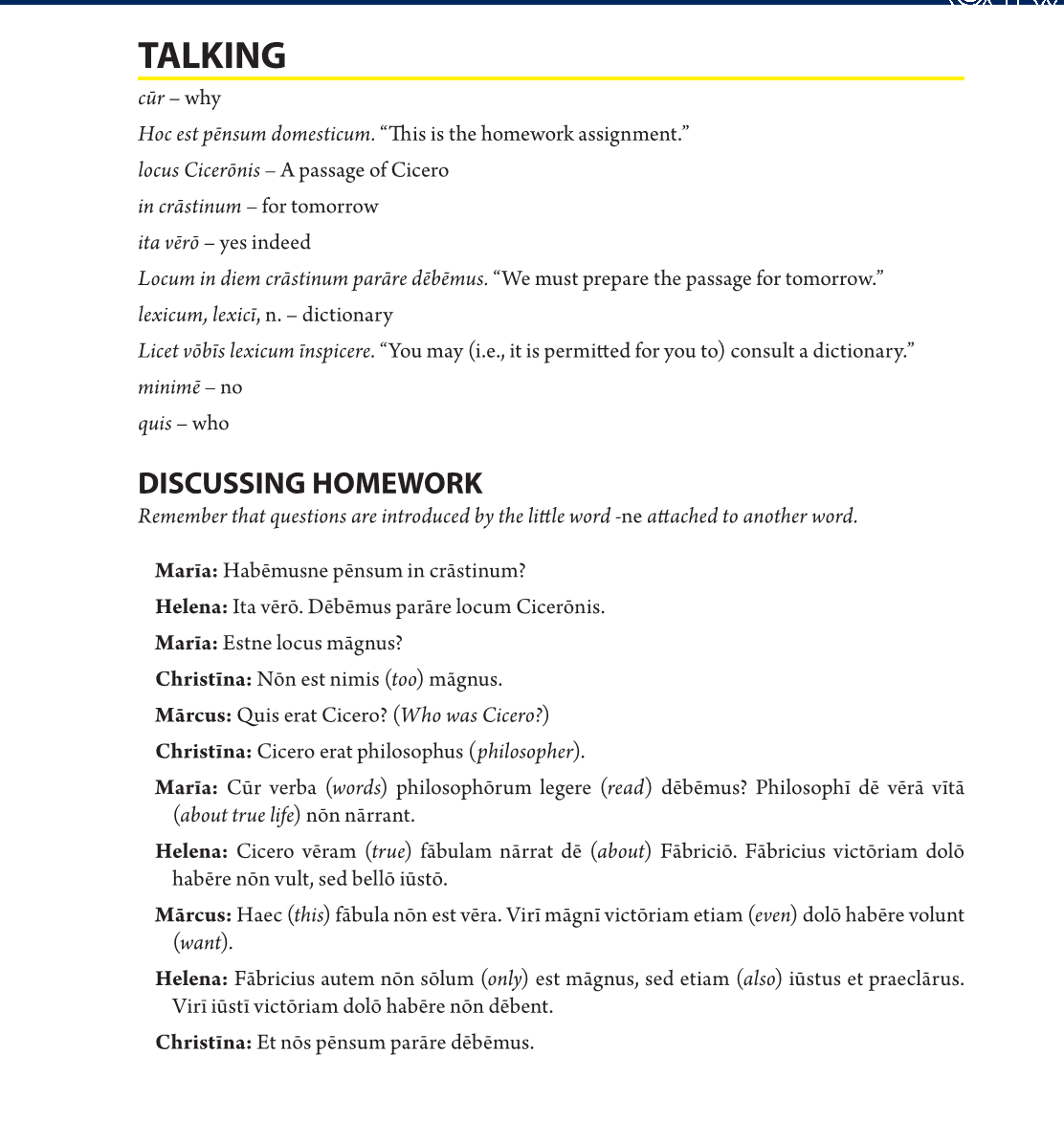
house
run
get ready
tomorrow
Question 41
41.
What is one way Romans indicated questions in Latin?
a verb at the beginning
a question mark at the end
the enclitic;
–ne
attached to the first word
an upside down question mark at the beginning