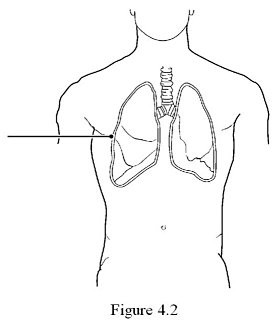
The membrane shown in the figure is a ________.
The membrane shown in the figure is a ________.
What type of membrane provides lubrication to the pleural, pericardial, and peritoneal cavities?
Which cavity would be lined with a mucous membrane?
Place the type of membrane on the left under the correct description on the right.
serous membrane
synovial membrane
mucous membrane
cutaneous membrane
Type of membrane that forms the skin.
Type of membrane that secretes fluids around organs.
Type of membrane that lines open body cavities.
Type of membrane found around joints and ligaments
Place the type of membrane on the left under the correct category on the right.
mucous membrane
serous membrane
cutaneous membrane
synovial membrane
Epithelial membranes
Connective tissue membranes
Which of the following reduces friction in movable joints, such as the knee?
Which membrane is constructed of a visceral and parietal layer?
The only dry membrane is the ________.
Where are mucous membranes found?
The membrane shown in the figure is a ________.
Both serous fluid and synovial fluid serve as lubricants to prevent friction between organs.
Synovial membrane occurs in pairs with a parietal and visceral layer.