What is the cell doing during each of the phases of interphase (G1, S, and G2)?
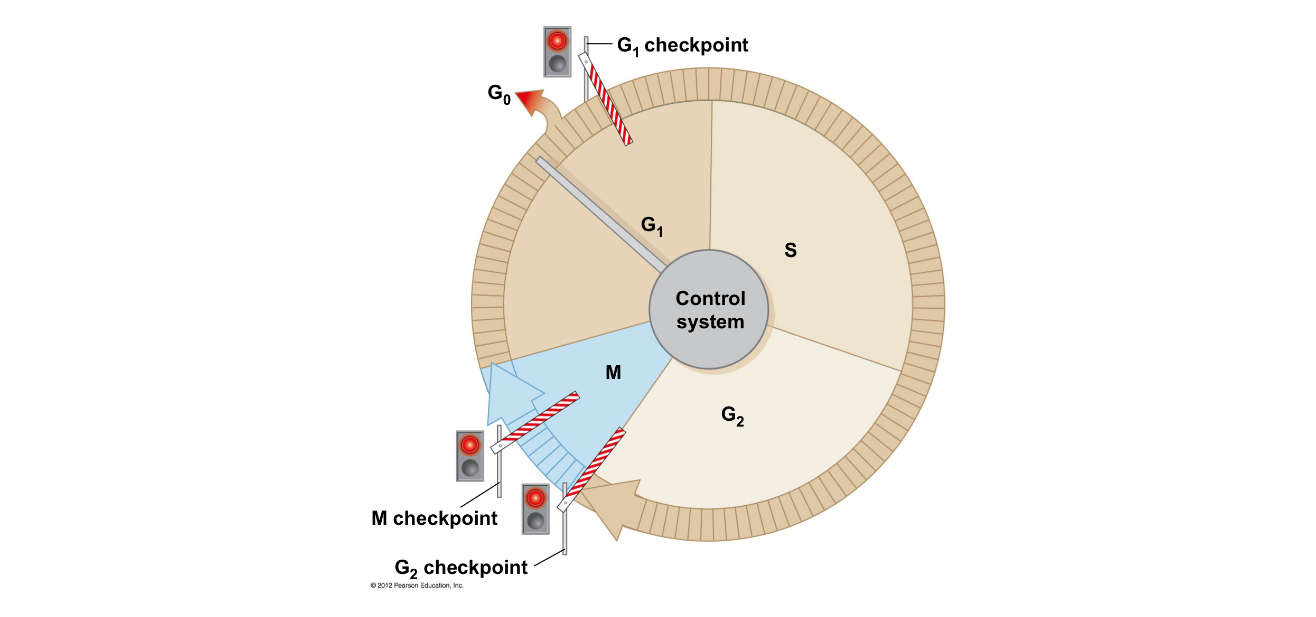
What is the cell doing during each of the phases of interphase (G1, S, and G2)?
First Name
Last Name
Class Period
Put a box around metaphase in the diagram.
Explain what is occurring to the chromosomes during metaphase.
What is the cell doing during each of the phases of interphase (G1, S, and G2)?
Which scientist(s) are incorrectly matched with their contribution to understanding DNA?
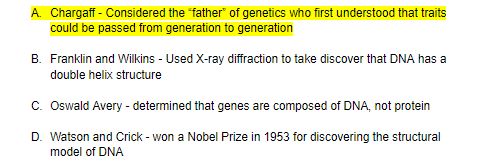
In the question above, the scientist in A (Chargaff) is incorrectly matched with his contribution. Identify what he actually discovered or contributed to our understanding of DNA.
A chef cuts his finger while slicing tomatoes for the night’s signature recipe. Upon injury, the chef’s cells divide....
Scenario 1

Three reasons why cells divide:
1. Too BIG
(surface area to volume ratio is small; inefficient osmosis & diffusion)
2. To replace damaged or dead cells
3. For growth and development (embryo)
Which one of these reasons relates to Scenario 1 and why?
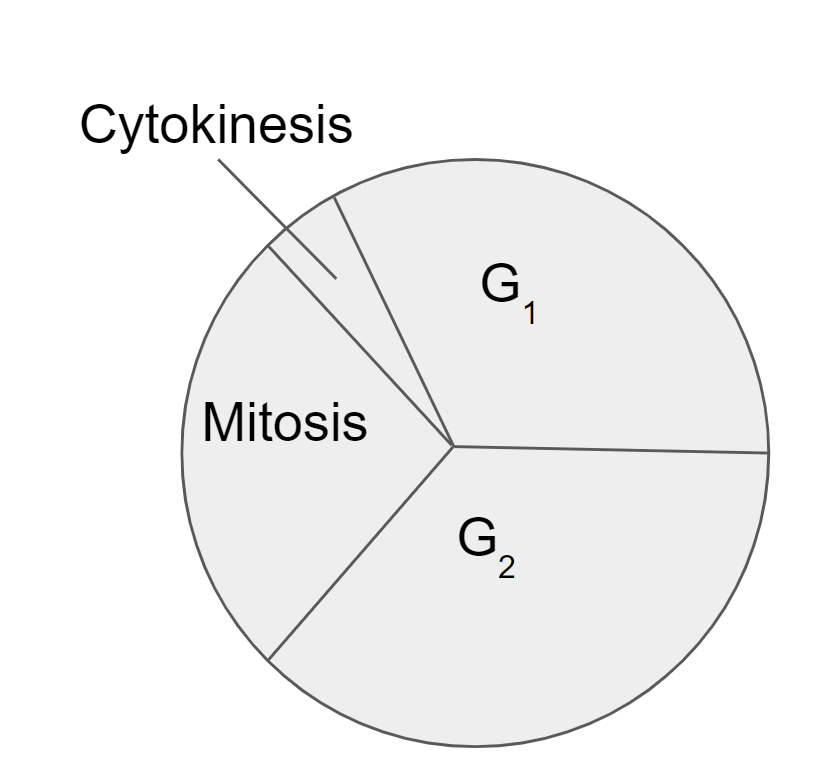
A student has made a critical error in their cell cycle diagram. Explain what important event would happen during the missing phase.
**Make sure to include in your response the name of the missing phase and what happens during that phase.**
If a parent cell begins mitosis with 46 chromosomes, how many chromosomes will be in each daughter cell at the end of mitosis? Write the number of chromosmes in each of the daughter cells.
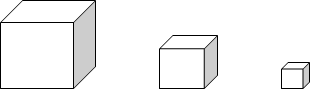
What size cube leads to the most effective transport of nutrients throughout the cell? i.e. has a greater surface area to volume ratio?
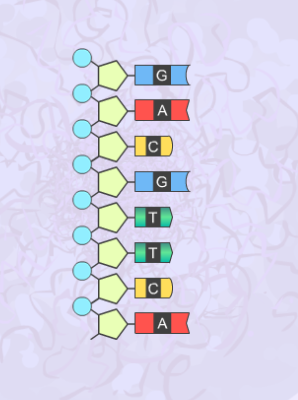
What sequence of bases would be complementary to the model below?
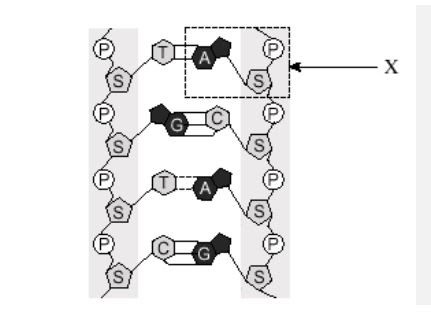
The boxed structure labeled X is a(n)_________________________.
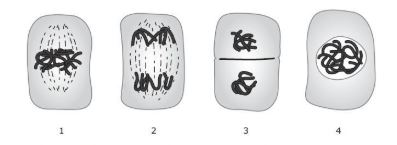
The diagram shows cells in different phases of mitosis. A student is trying to find a cell in a particular phase of mitosis. The student is looking for evidence that spindle fibers are separating the chromosomes to ensure that each new nucleus has one copy of each chromosomes.
Using knowledge gained from Erwin Chargaff, answer the following:
In a sample of DNA , the percentage of adenine equals 31.5%. Therefore,
Oncogenes are mutated forms of genes. Oncogenes can cause cells to form tumors. Some tumors are benign, while others are malignant (cancerous). How does the presence of an oncogene lead to the formation of a tumor?
What process is being shown in the figure below?
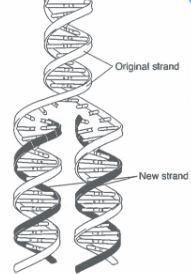
List the steps of DNA replication, include the enzyme primarily involved in each step.