Features of Quadratic Graphs
star
star
star
star
star
Last updated about 4 years ago
11 Nsɛmmisa

1
1
1
1
1
1
1
1
1
1
1
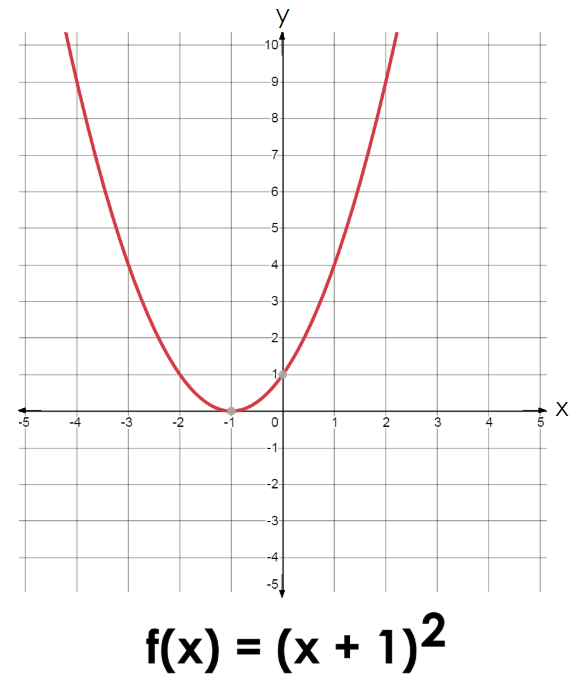
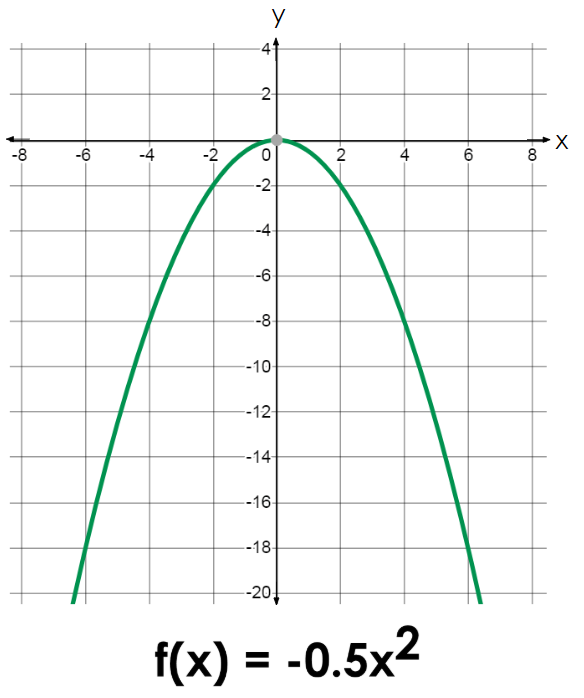
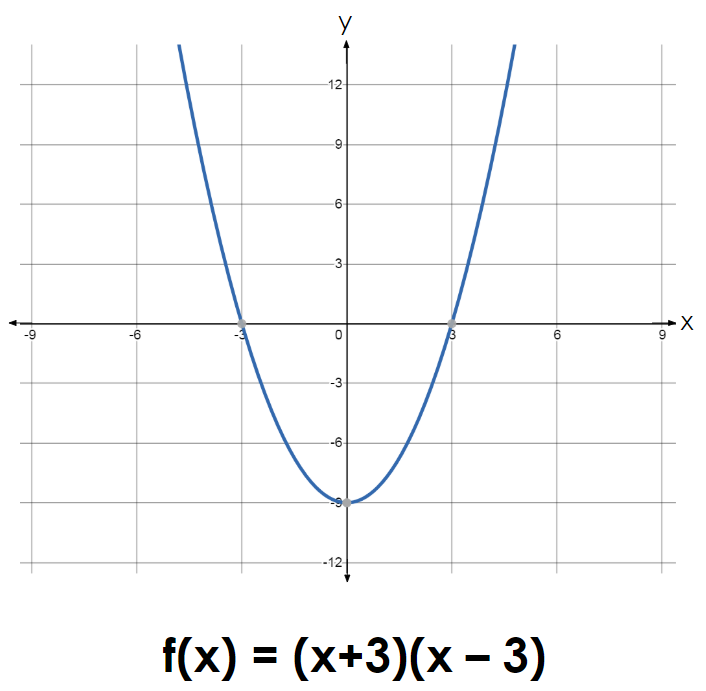
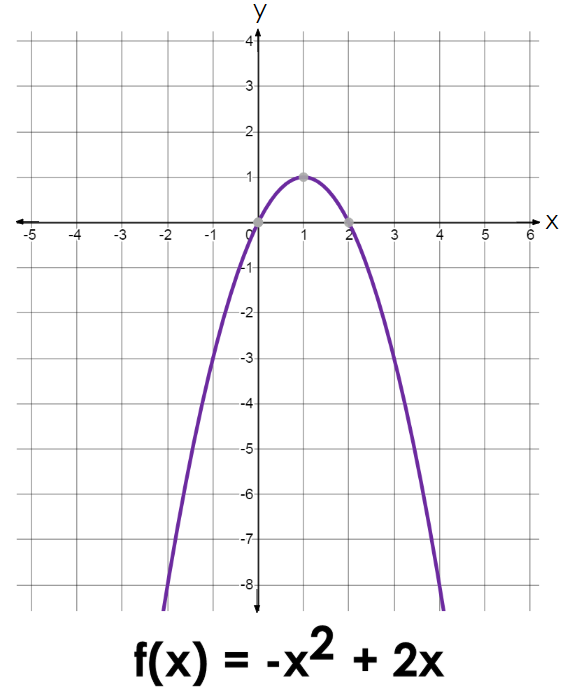
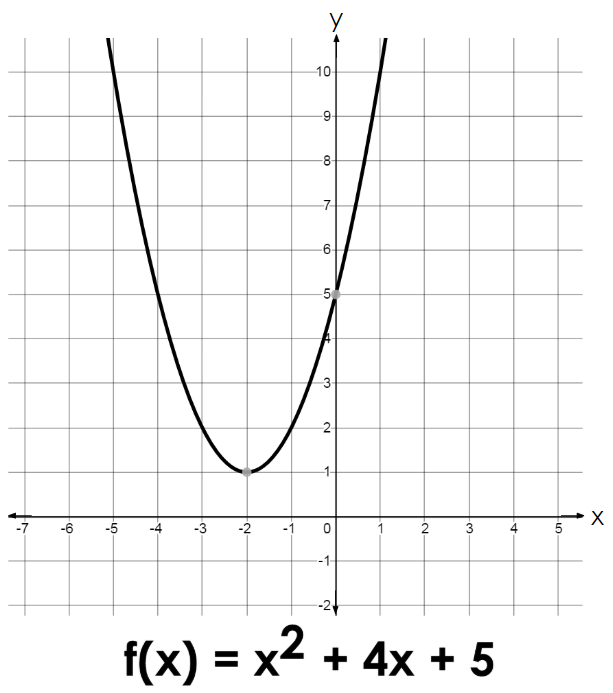
Let’s continue to practice finding intervals of increase, decrease, positive, and negative when analyzing the characteristics of quadratic functions. Look at the functions below. Can you answer each characteristic with the correct intervals or ordered pairs? You may use Desmos to help you.
Over what interval is f(x) increasing?
Over what interval is f(x) decreasing?
What are the x-intercepts of the function f(x)? (WRITE TWO ORDERED PAIRS)
When is f(x) positive?
When is f(x) negative?
What is the vertex for the function f(x)?
Over what interval is f(x) increasing?
Over what interval is f(x) decreasing?
When is f(x) positive?
When is f(x) negative?
If you finished the first ten questions, try this
My function's y-intercept and vertex are the same.
Find my function using the clue below:
f(-1) + f(4) = -11
My function has a vertex that is (0, 0) and an axis of symmetry of x = 0.
The x-intercepts of my parabola are opposites.
My minimum is y=1 and
all the y-values of my function are positive.
My y-intercept is 5
and my vertex is (-2, 1).
For my function, f(x) is negative when
x < 0 and x > 2.
The range of my function is y ≤ 1.
My function is only increasing over the interval x > -1.
I have an axis of symmetry of x = -1.
The zeros of my parabola are (-6, 0) and (-2, 0).
My function is decreasing over the interval (-4, ∞).