Match the following pictures with their body movement.
Match the following pictures with their body movement.
Abduction
Hyperextension
Extension
Rotation or Flexion
In what order are the various types of skeletal muscle fibers recruited when you sprint to make it to the bus stop?
Watch the video below about the different terms given for various movements of the body and take notes. Then, match the term with the proper description below. (Note that two of the terms below are not in the video. Match all of the ones in the video, then think about what the other two might mean!)
The video is also on eCLASS if you have difficulty playing it on campus.
| Draggable item | arrow_right_alt | Corresponding Item |
|---|---|---|
Extension | arrow_right_alt | Decreasing the angle of a joint |
Plantarflexion | arrow_right_alt | Increasing the angle of a joint |
Flexion | arrow_right_alt | Decreasing the angle of the ankle joint |
Pronation | arrow_right_alt | Increasing the angle of the ankle joint |
Dorsiflexion | arrow_right_alt | Rotating the sole of the foot laterally |
Rotation | arrow_right_alt | Rotating the sole of the foot medially |
Supination | arrow_right_alt | Moving a limb away from the midline of the body |
Eversion | arrow_right_alt | Moving a limb towards the midline of the body |
Circumduction | arrow_right_alt | Rotating the lower arm so the palm is facing down |
Inversion | arrow_right_alt | Rotating the lower arm so the palm is facing up |
Abduction | arrow_right_alt | Increasing the angle of a joint beyond its normal range of motion |
Hyperextension | arrow_right_alt | A combination of flexion, adduction, extension, and abduction that results in a cone-like tracing of a limb or digit |
Adduction | arrow_right_alt | Twisting, circular movement |
Match the following pictures with their body movement.
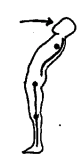
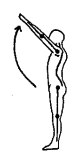
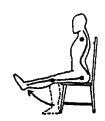
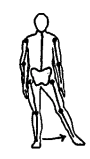
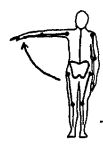
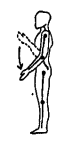
Abduction
Hyperextension
Extension
Rotation or Flexion
Match the following pictures with their body movement.
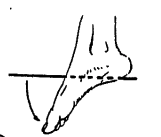
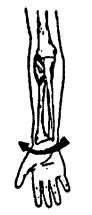
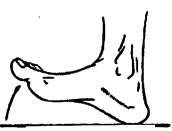
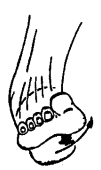
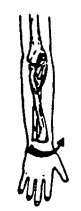
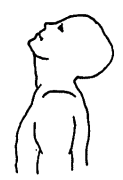
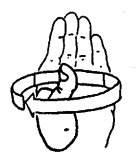
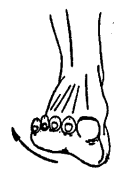
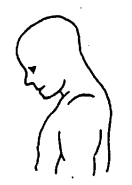
Supination
Hyperextension
Inversion
Pronation
Dorsiflexion
Plantarflexion
Eversion
Circumduction
Flexion
Match the following pictures with their body movement.

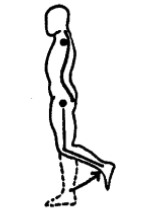
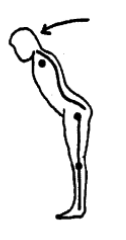
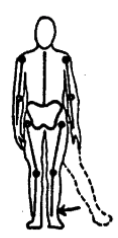

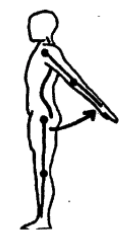
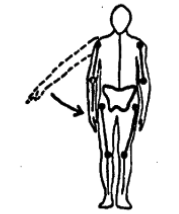
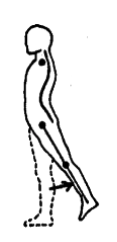
Flexion
Rotation
Adduction
Hyperextension
The joints between the articular processes of adjacent vertebrae can contribute to which movement?
Which motion moves the bottom of the foot away from the midline of the body?
Movement of a body region in a circular movement at a condyloid joint is what type of motion?
Supination is the motion that moves the ________.
Movement at the shoulder joint that moves the upper limb laterally away from the body is called ________.
Discuss the joints involved and movements required for you to cross your arms together in front of your chest.