Directions: Complete the quiz below based on what you've learned in class so far. For any questions that require work to be shown, be sure to either show your work in formative or upload a picture of your work to the question. If you do not show work, your answer will be marked incorrect.
1 point
1
Question 1
1.
Match the key terms from this topic to their appropriate definitions.
Draggable item
arrow_right_alt
Corresponding Item
Electron
arrow_right_alt
The number of protons within an element.
Neutron
arrow_right_alt
The mass of an atom (protons + neutrons).
Atomic Number
arrow_right_alt
A positive particle located inside of the nucleus; has a mass of 1 amu.
Protons
arrow_right_alt
A particle located inside of the nucleus without a charge; has a mass of 1 amu.
Atomic Mass
arrow_right_alt
A negative particle located outside of the nucleus; has a mass of 1 amu.
Isotope
arrow_right_alt
Atoms of the same element with the same number of protons, but different numbers of neutrons.
1 point
1
Question 2
2.
A chemist finds an unknown atom that contains 23 protons, 28 neutrons, and 23 electrons. What element is it?
1 point
1
Question 3
3.
A chemist finds an unknown atom that contains 15 protons, 16 neutrons, and 15 electrons. What element is it?
1 point
1
Question 4
4.
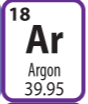
Based on the Periodic Table square shown below, which answer choice below best describes the particles held within an atom of Argon (Ar)?
1 point
1
Question 5
5.
Review the isotope symbol shown below.
Which statement best describes the particles held within the nucleus of this atom?
1 point
1
Question 6
6.
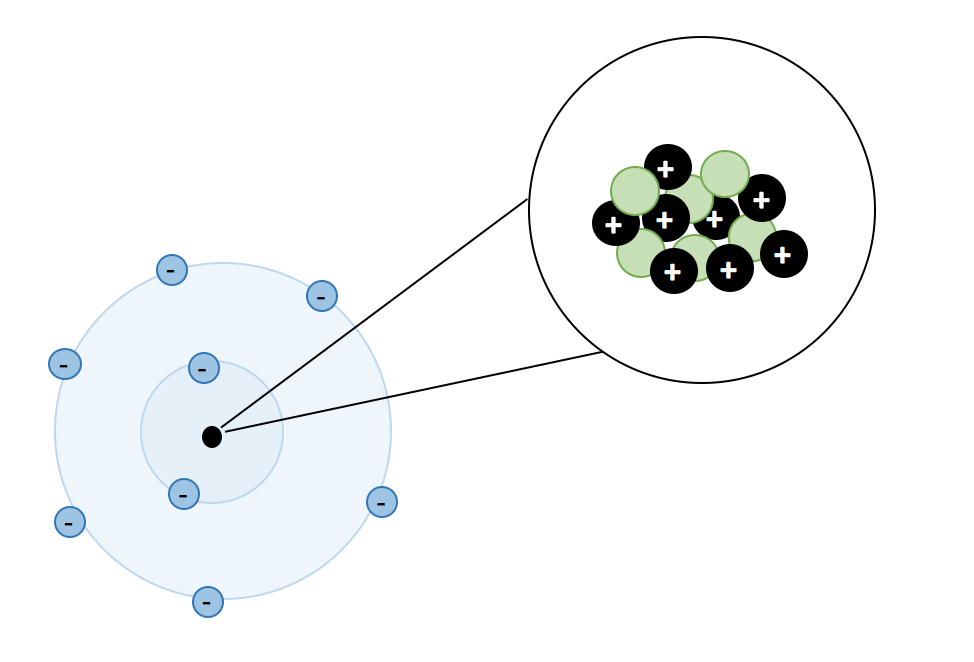
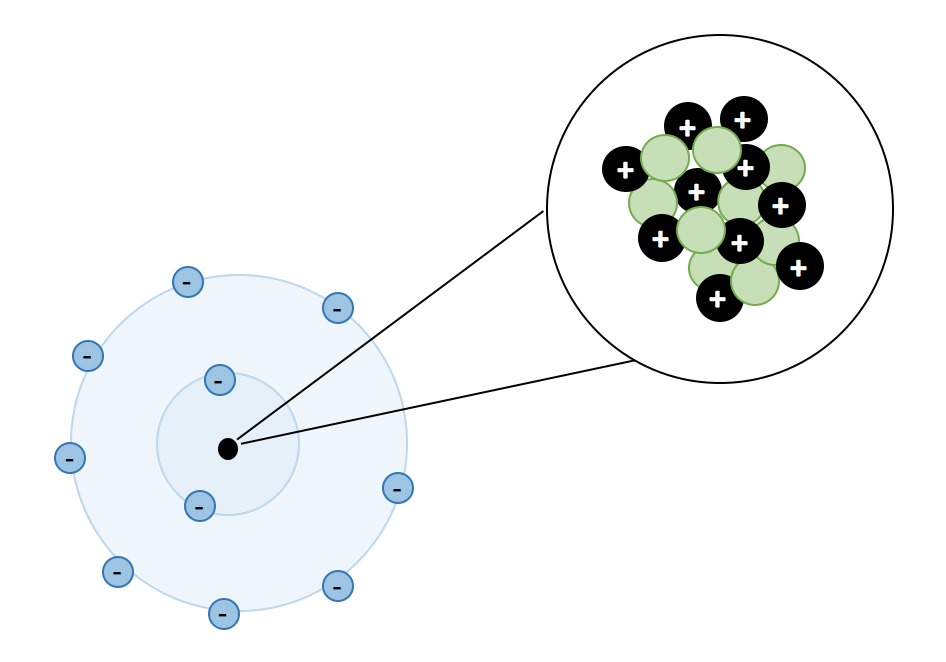
What element is shown in the diagram below? Explain your answer
1 point
1
Question 7
7.
Select all which are true
1 point
1
Question 8
8.
Which of the following best explains why the atomic mass on the Periodic Table is a decimal.
1 point
1
Question 9
9.
A chemist has isolated an atom with 14 protons, 16 neutrons, and 14 electrons. Write the isotope symbol of this atom.
1 point
1
Question 10
10.
4 naturally-occuring isotopes of an unknown element are shown in the table below. Calculate the average atomic mass of this element. Show your work and round your answer to the nearest hundredth place (2 places after the decimal).