Unit 2 Test Review Questions
star
star
star
star
star
Last updated almost 4 years ago
24 Nsɛmmisa
1
1
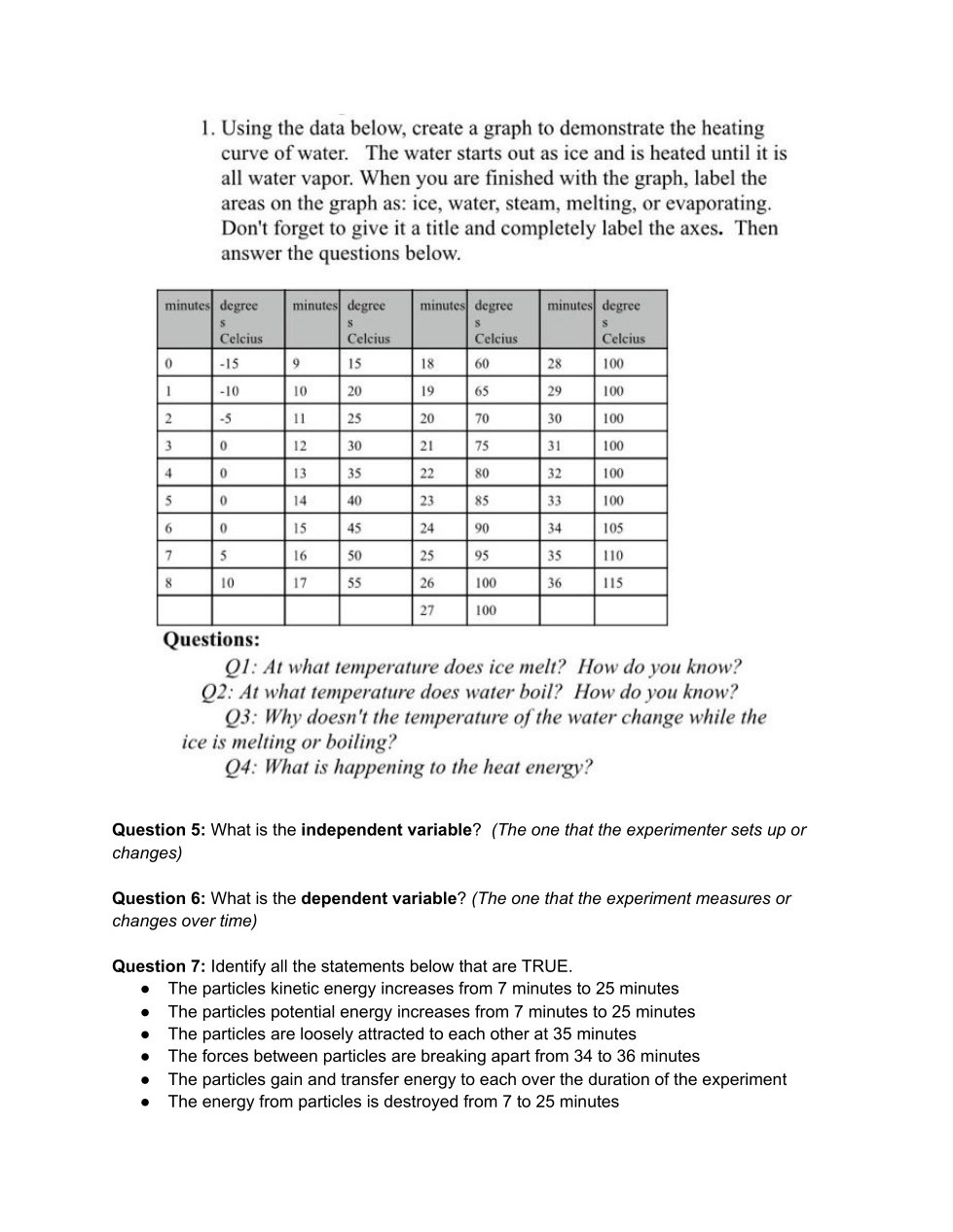
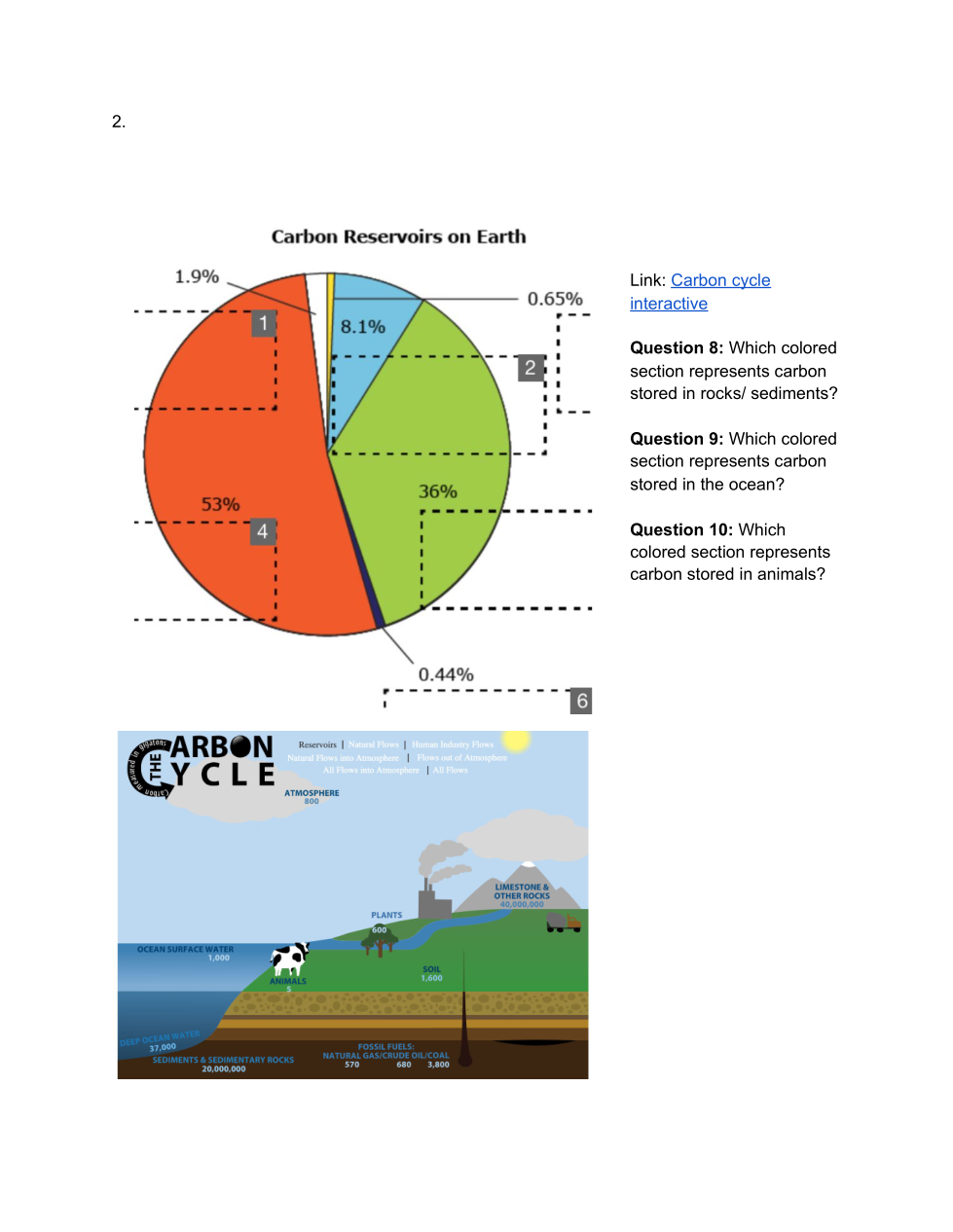
Identify which of earth's spheres exchange carbon the Most? Least? Explain
Which two biochemical processes listed in the table above MOST contribute to seasonal changes in carbon dioxide?
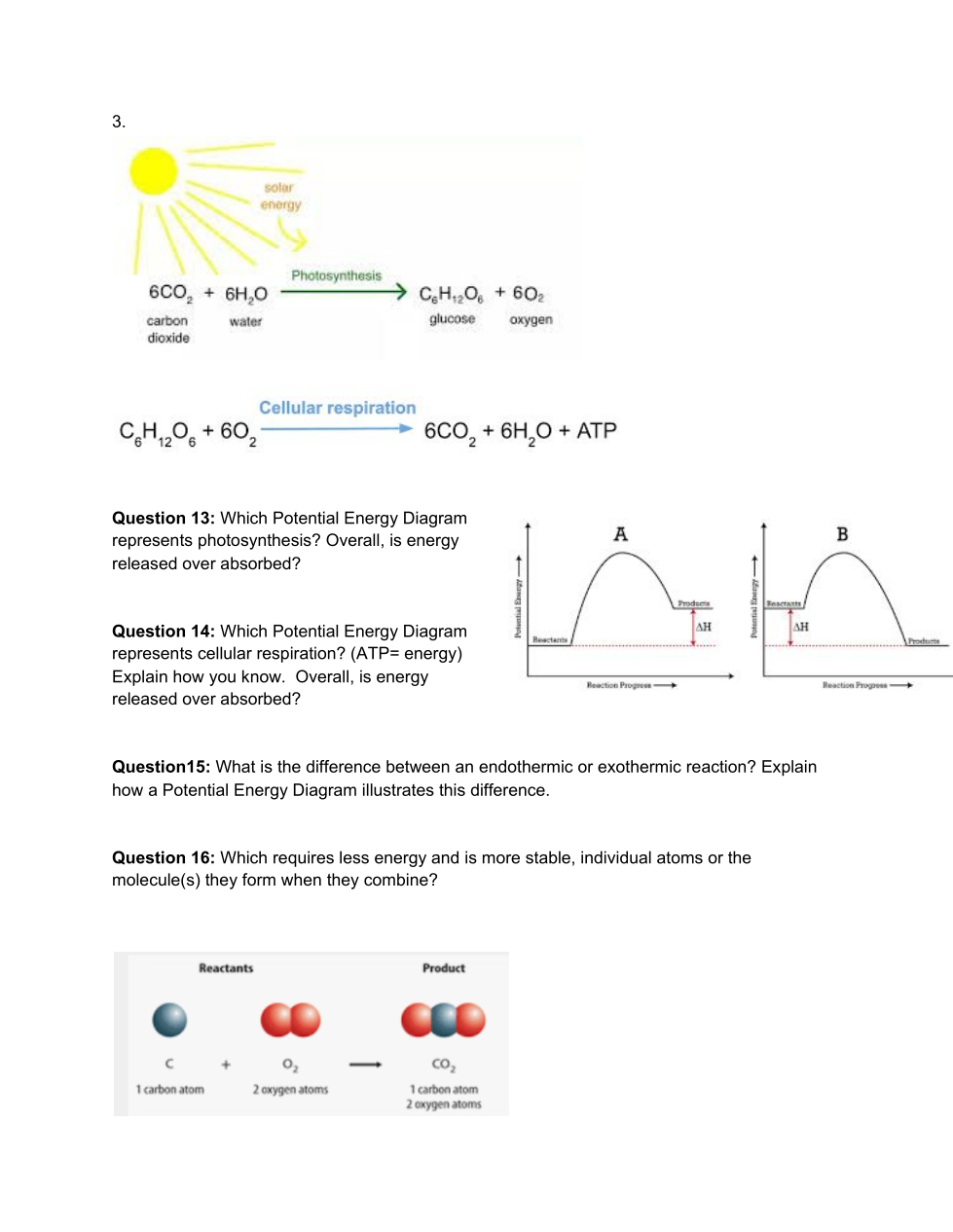
Which Potential Energy Diagram represents photosynthesis? Overall, is energy released or absorbed?
Which Potential Energy Diagram represents celluar respiration? Overall, is energy released or absorbed?
What is the difference between an exothermic and endothermic reaction? Explain how a Potential Energy Diagram illustrates this difference.
Which requires less energy and is more stable, indivdual atoms or the molecule(s) they form when they combine?

Identify the state of matter for each: mantle, crust, outer core, inner core
Which states of matter does thermal energy transfer via conduction? Convection?

Choose all statements below that CORRECTLY explain why convection currents occur in the mantle causing plates on the Earth’s crust to move.
Graph your data for Temperature vs. Time in the data table given. (Time is on the x-axis and Temperature is on the y-axis)
At what temperature does ice melt? How do you know?
At what temperature does water boil? How do you know?
Why doesn't the temperature of the water change while the ice is melting or boiling?
What is happening to the heat energy during melting and boiling?
What is the independent variable?
What is the dependent variable?
Identify all the statements below that are TRUE
Which colored section represents carbon stored in rocks and sediments?
Which colored section represents carbon stored in the ocean?
Which colored section represents carbon stored in animals?
Which parts of Earth’s interior does thermal energy transfer via convection?
Which parts of Earth’s interior does thermal energy transfer via conduction?
Particles transfer energy easily upon collisions because they are packed relatively close together. Which is the most likely part of the Earth where this takes place?
What causes a ridge to form on the Earth’s crust in the picture? A trench to form?