Industrial Revolution Spreads Notes and Questions
star
star
star
star
star
Last updated almost 6 years ago
22 Nsɛmmisa
3
1
1
1
1
1
1
1
1
1
1
1
1
1
4
1
1
1
1
1
1
1
Industrialization - the movement from man-made goods to mass-produced, machine made goods.
In order to become industrialized a country needs 3 things. We call these factors of production.
Land - this includes natural resources; access to waterways for power and trade
Labor - this includes non-skilled workers and skilled workers
Capital- this is money to invest AND a stable government that encourages investment
The Industrial Revolution started in England in the early 1700s.
Land - England’s geography – many rivers crossing the land, close to the sea, many harbors and ports for shipping. Natural resources: coal and firewood
Labor - workers came from the countryside as a result of the Agricultural Revolution; workers also immigrated to English cities to work in the factories
Captial - England had a stable government and a strong banking system. These factors allowed the economy to expand and encouraged people to invest their money for profit.
Match the description for each factor of production
| Draggable item | arrow_right_alt | Corresponding Item |
|---|---|---|
Labor | arrow_right_alt | this includes natural resources; access to waterways for power and trade |
Capital | arrow_right_alt | this includes non-skilled workers and skilled workers |
Land | arrow_right_alt | this is money to invest AND a stable government that encourages investment |
Many countries have land and labor, most do not have capital. Why do you think a country needs to have a stable government in order to industrialize?
Immigration and Industrialization
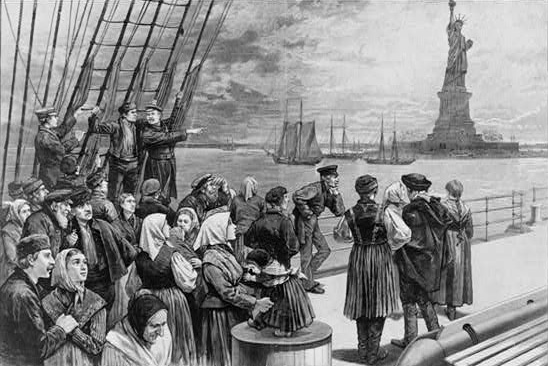
Immigration is the movement of people from one area to an area where they are not considered natives.
People usually immigrate looking for better living conditions, which often include better economic opportunities and freedom from oppressive governments. In England during the Industrial Revolution many people came from poorer parts of England to live in the cities. They also came from other European countries, like Ireland, Italy and France.
When immigrants moved to the cities they would generally live in the same areas of town. This created a situation where you might have an Italian area of town, and Irish section of town. This was not racist or even xeonophobic. People gravitate to people that share their language and customs.
Why were people willing to move from their native countries to industrialized cities in England and the US?
United States
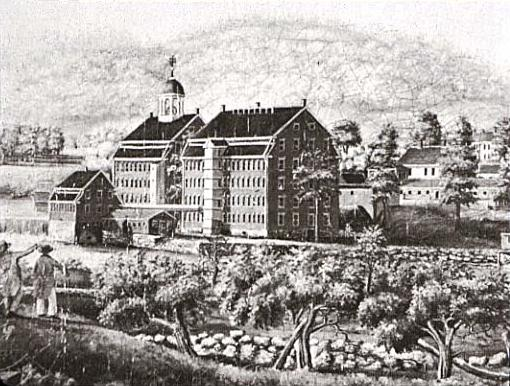
›The Industrial Revolution was brought to the United States by a man named Samuel Slater.
Slater had worked in an English factory as a child. As he grew up he memorized all of the machines in the factory, as well as the layout and structure of the factory.
At the time anyone with significant knowledge of factories was not allowed to leave England. England was trying to keep the details of factories a secret.
Slater was able to leave England because he did not have any information written down, and did not seem to be a threat to the English government.
Once in the US, Slater was able to find investors and help build the first factories in the US.
Factories were primarily located in northern states .
This is because the Northern states had more of the factors of production needed to industrialize.
Who is responsible for bringing factories to the United States?
List and describe 3 jobs from the video "The Worst Jobs in History- Industrial"
Select one of the jobs that you chose from the list of 3. Which job would you actually do out of the 3?
Which one would not do, no matter what you were paid? Why
The American South
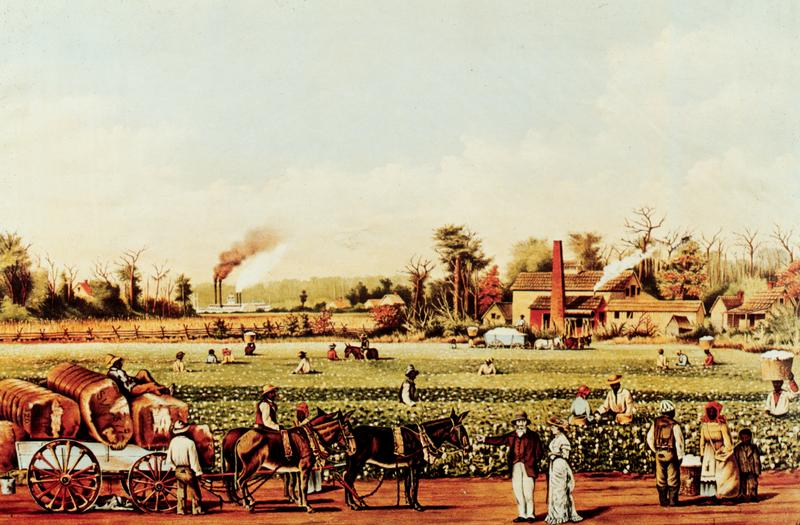
One place that did not industrialize in the 1800s was the American South.
Even though the South had plenty of land and laborers, landowners relied on wealth that came from plantation agriculture.
Political power in the South was dominated by plantation owners and a few other wealthy individuals. Building the infrastructure to support industrial cities was not something they supported.
Why didn't the American South industrialize at the same time as the Northern states?
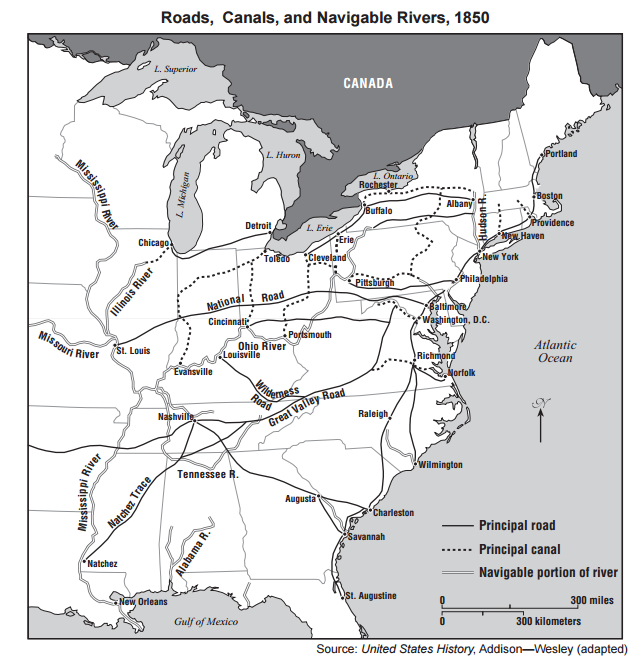
How many canals were located in southern states?
Why do you think the Southern states had fewer roads than Northern states?
Idustrialization Spreads to Europe
Rembember that in order to industrialize a country needs to have land, labor and capital.
Belguim was the first European country to industrialize after England. Like England it had iron, coal and easy to access waterways. It also had people with money to invest and a government that supported industry.
Germany
Germany did not become a country unitl late 1800s.
Like Belgium and England it was rich in coal and iron ore
After the unification of Germany it became an industrial leader
France
In the late 1700s and early 1800s France was going through the French Revolution and then the rule of Napoleon.
This made the French government unstable and prevented people from having capital to invest in industry.
France Industrialized after 1850 when their government became more stable.
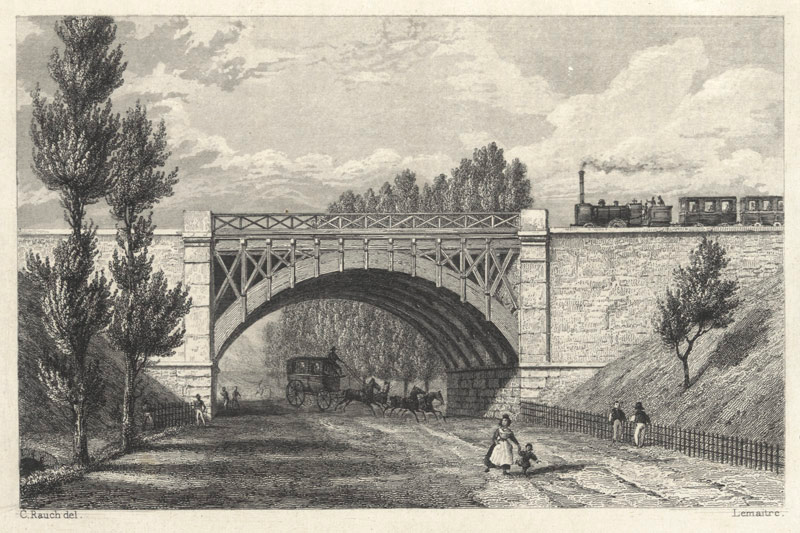
In order to jumpstart French industrialization the government built large network of railroads throughout France.
Other European Nations
Most European nations were slow to industrialize.
Many countries had social systems that were still tied to the fuedal system of the Middle Ages.
The government leaders were not supportive of an economic system that would allow private investors (middle class people) to elevate their position in society.
In many places nobles still owned serfs, and peasants had no rights or property.
In the countries with hereditary monarchies, issues of succession led to political instability. This made it hard for anyone to invest in industrializing their nations.
Why were Germany and Belgium able to industrialize?
What prevented other European countries from industrializing?
How did the French government try to help their country industrialize?
Where did the Industrial Revolution begin?
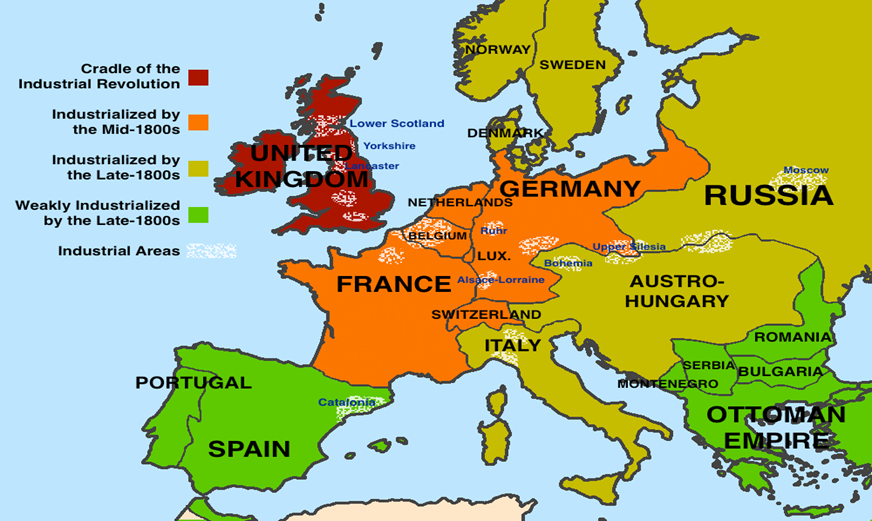
Which of these countries were industrialized by the mid-1800s?
Give me a reason that those countries industrialized by the mid-1800s based on their geography.
Industrialization in Japan
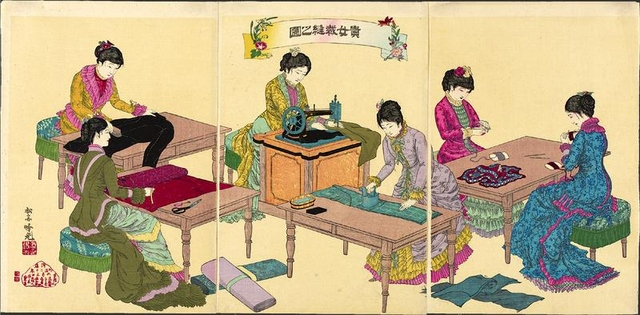
By the late 1800s the Meji government in Japan had ended its isolation from the West.
The government's goal was to modernize and counteract western influence.
The government had a systematic approach to industrializtion.
Transportation and communication systems were modernized by the state.
They trained workers for the tea, silk, weaponry and shipbuilding industries.
Most of the early factory workers were women. They were paid low wages and treated like indentured servants.
They built schools modeled off of the American education system.
To pay for the training and schools the government put high taxes on agriculture.
The government also encouraged powerful families to invest in industry. One example of a buisness started in this time was the Toyoda Loom Works. This business originally made automatic looms. Today this company is known world-wide as Toyota Motor Company.
The Japanese government controlled the process of industrialization Japan. What was their goal?
What modern company started as a factory building looms?
Industrialization in Russia
Russia did not industrialize until after its loss in the Crimean War (1853-1856).
To understand why Russia did not industrialize when other European countries did, you have to look at the factors of production.
In the late 1800s Russia had only 1 of the factors of production needed to industrialize.
Land - Russia is an enourmous country with a variety of landscapes. Even though they did not have direct access to the Mediterranean Sea, they did have access to the Pacific Coast.
Labor- Russia did not abolish serfdom until 1861. After emancipation, the peasant class of Russia owed money to nobles for the land "given" to them through the emancipation decree. This means that the majority of workers available for Russian industry were unskilled. Many were illiterate, and most had no understanding of the new machinary of the Industrial Revolution.
Capital - Few people in Russia had the money to invest in factories and new businesses. Because of this, most of industry was controlled by the government and a small group of wealthy people.
One major railway was built in Russia called the Trans-Siberian Railroad. This was seen as a major acheivement for Russia, as connected the Western part of Russia with the east coast of Russia.
When Russia started to build factories, it focused on coal, iron and steel production. Russia became a leading producer of these items. While this made money for business owners, it did not increase the income of the average worker.
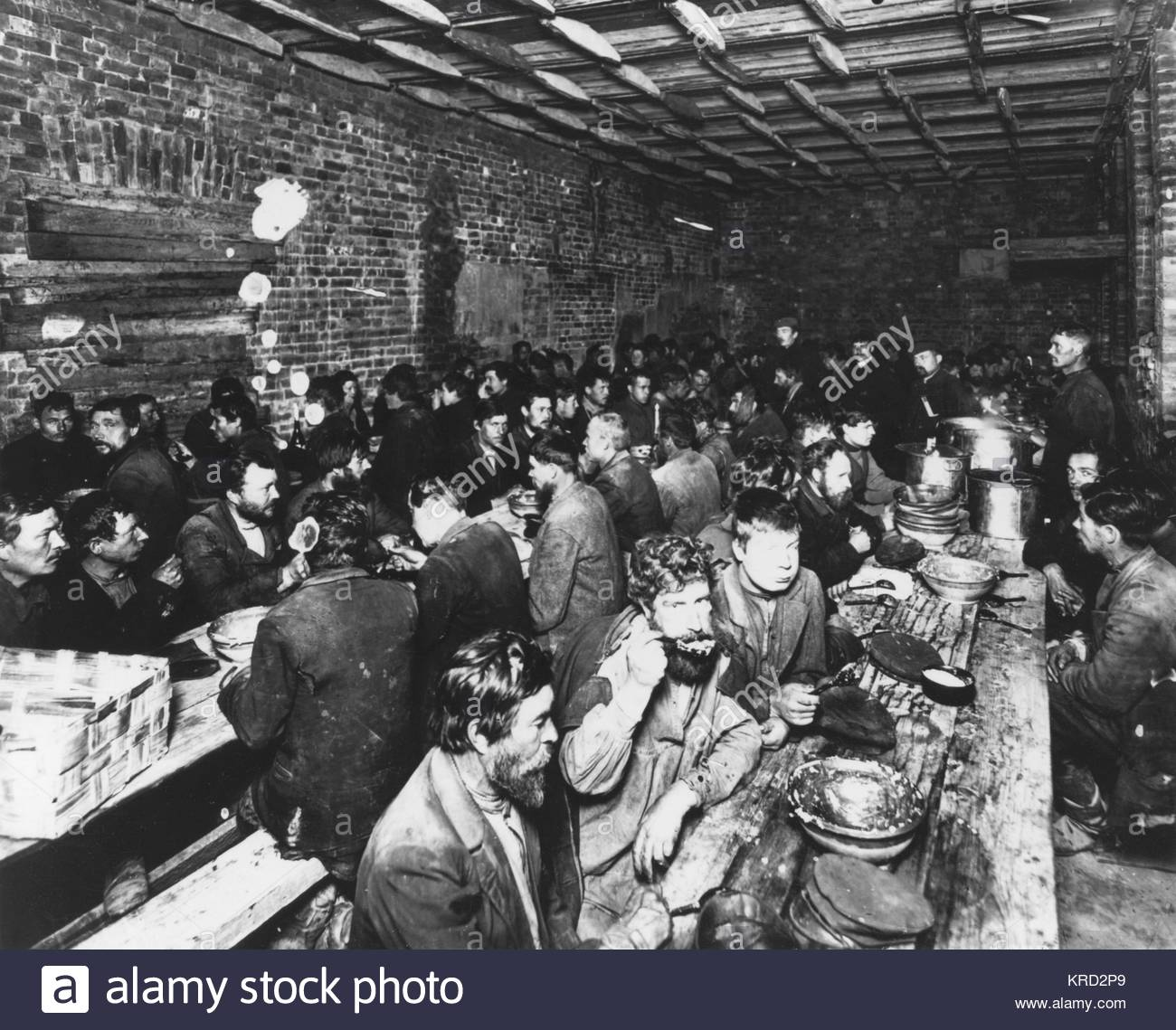
Very few Russian people benefited from industrialization. Conditions in Russian factories mirrored those of early English factories. In many factories workers slept at their work station while the machines were being operated by another worker. Workers were punished for simple, sometimes arbitrary, things.
The growth of middle class was much slower in Russia. This would lead many to support new ideas about government like those of Karl Marx and Frederich Engles in The Communist Manifesto.
When did Russia abolish serfdom?
Who benefited the most from Russian industrialization?
What types of material items did Russian factory production focus on?
What types of things were Russian workers fined for? (You have to listen for this part)