Chapter 4-6 review: Exercises 4 - 6
star
star
star
star
star
Last updated almost 4 years ago
25 Nsɛmmisa
1
1
1
1
1
1
1
1
1
1
1
1
1
1
1
1
1
1
1
1
1
1
1
1
1
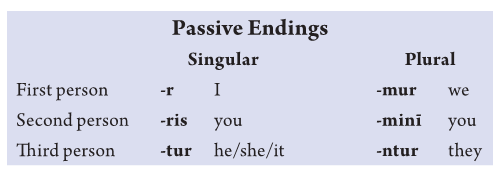
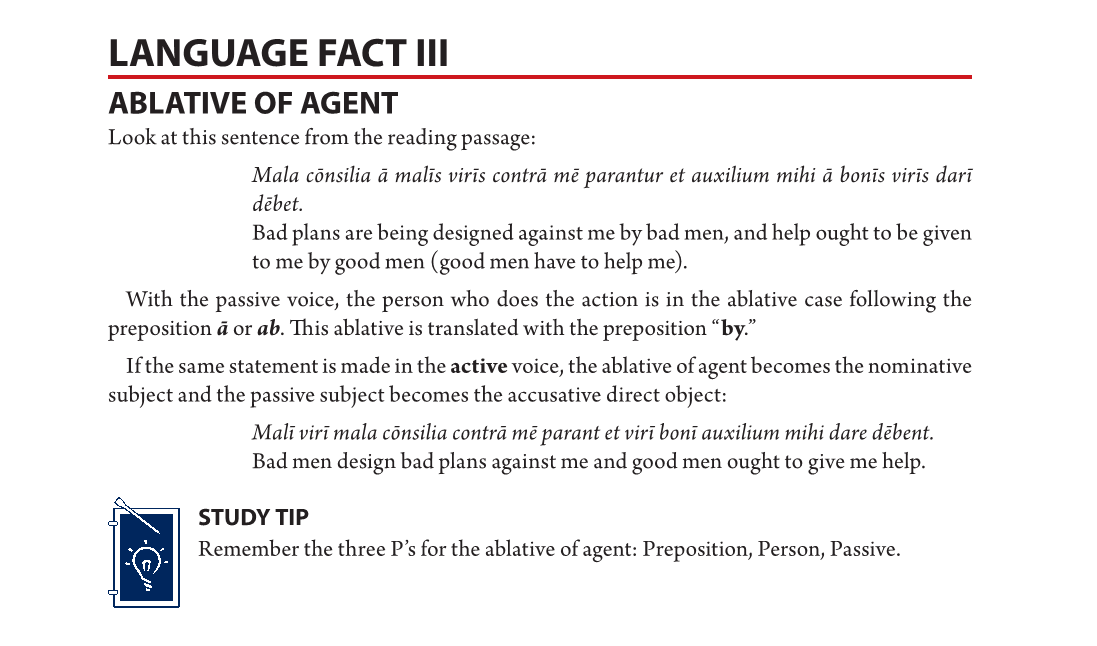
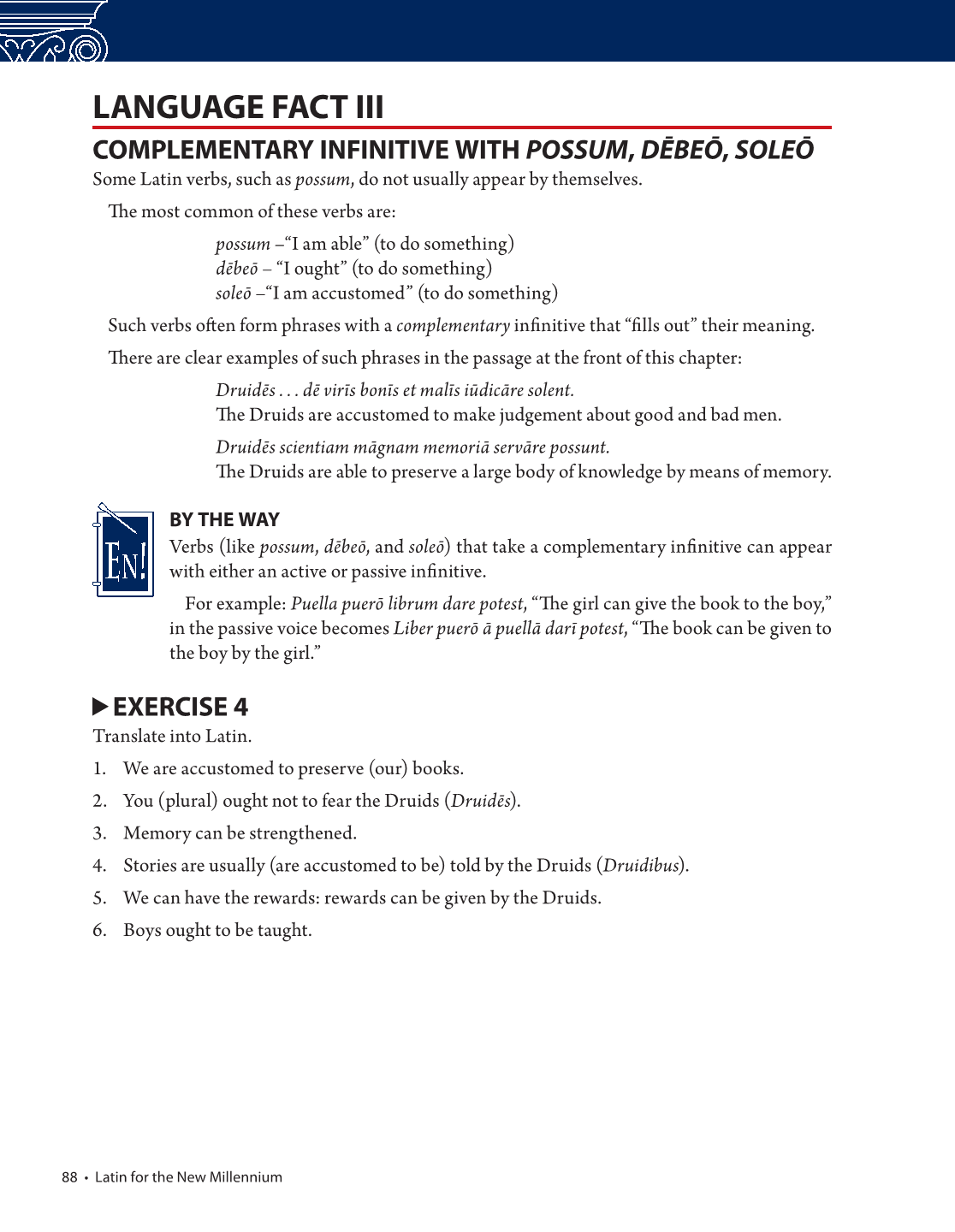
Change the following active sentences into the passive by using the ablative of agent. Translate the changed sentence.
Example: Fābricius virō praemium nōn dat. (Fābricius, Fābriciī, m.)
Virō praemium ā Fābriciō nōn datur. A reward is not being given to the man by Fabricius.
Change this into a passive sentence:
Vir Rōmānus epistulam Terentiae nunc tenet. (Terentia, Terentiae, f.)
Translate the passive sentence from answer to the previous question.
of Terentia
is being held
now
the letter
the Roman man
by
Change this into a passive sentence:
Fābricius virōs armātōs vocat.
Translate the passive sentence from answer to the previous question.
Fabricius
are being called
by
armed
men
Change this into a passive sentence:
Virī malī mala cōnsilia parant.
Translate the passive sentence from answer to the previous question.
bad plans
bad men
are being prepared
by
Change this into a passive sentence:
Puerī memoriam firmant.
Translate the passive sentence from answer to the previous question.
by
is being strengthened
the boys
the memory
Change this into a passive sentence:
Virī praeclārī patriae auxilium dant.
Translate the passive sentence from answer to the previous question.
the homeland
the
distinguished men
by
is being given
to
help
Change this into a passive sentence:
Virī iūstī patriam cūrant.
Translate the passive sentence from answer to the previous question.
the just men
is being cared for
the homeland
by
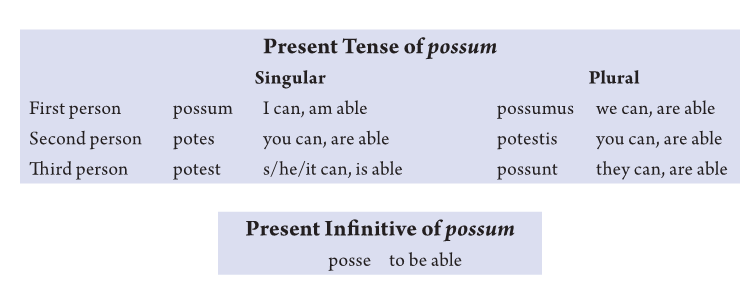
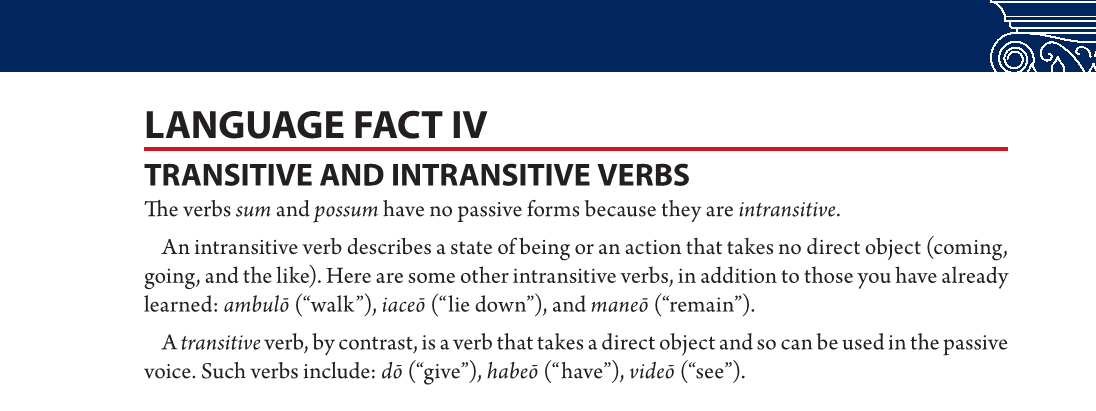
Translate the verbs in parentheses and change the present tense verb to a complementary infinitive.
Translate the changed sentence.
Example: Agrum amīcīs damus. (we can)
Agrum amīcīs dare possumus. We can give the field to (our) friends.
Propter memoriam multa exempla servantur. (they can)
Translate the changed sentence from the previous question:
preserved
of memory
because
can be
many
examples
Exempla animum firmant. (they are accustomed)
Translate the changed sentence from the previous question:
Examples
the spirit
are accustomed
to strengthen
Praemium virō nōn datis. (you [plural] ought)
Translate the changed sentence from the previous question:
to
the reward
the man
to give
you
ought not
Epistulās Terentiae exspectō. (I am accustomed)
Translate the changed sentence from the previous question:
the letters
of
am accustomed
I
Terentia
to await
Poētae praeclārī sumus. (we can)
Translate the changed sentence from the previous question:
poets
can be
we
outstanding
Puerōs docent. (they are accustomed)
Translate the changed sentence from the previous question:
are accustomed
they
the boys
to teach
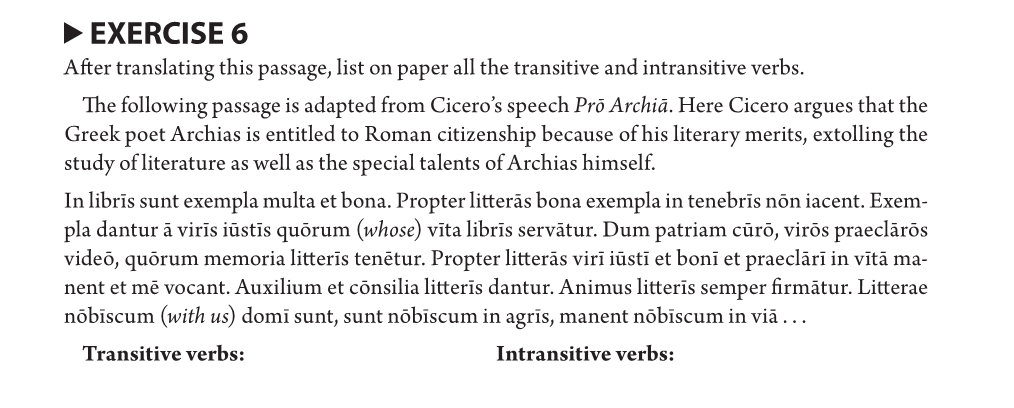
iacent
tenētur
servātur
videō
dantur
manent
sunt
firmātur
cūrō
vocant
Transitive verbs
Intransitive verbs