LNM Chapter 7: DĒ AMŌRE
star
star
star
star
star
Last updated over 3 years ago
60 questions
1
Identify the verb/s:
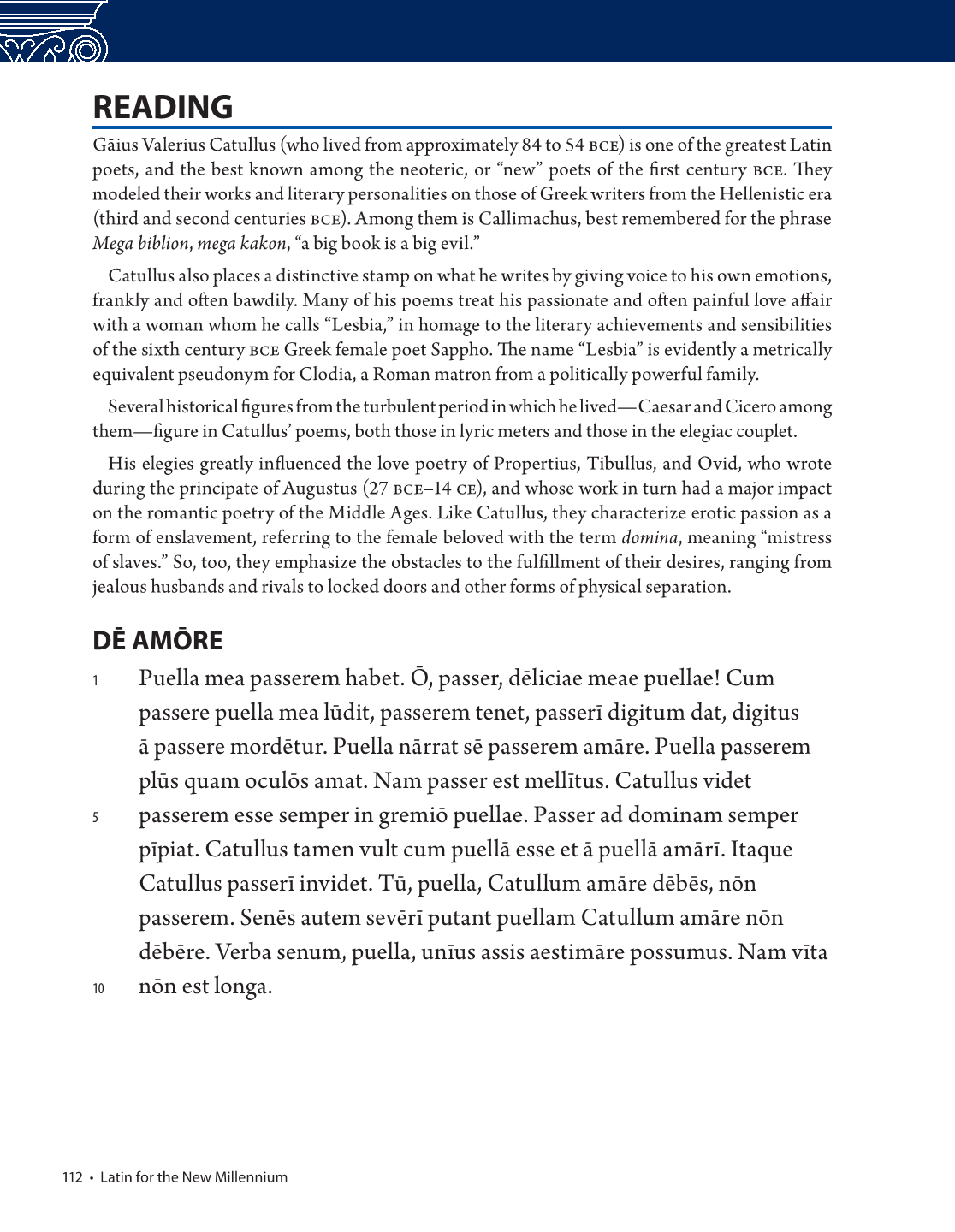
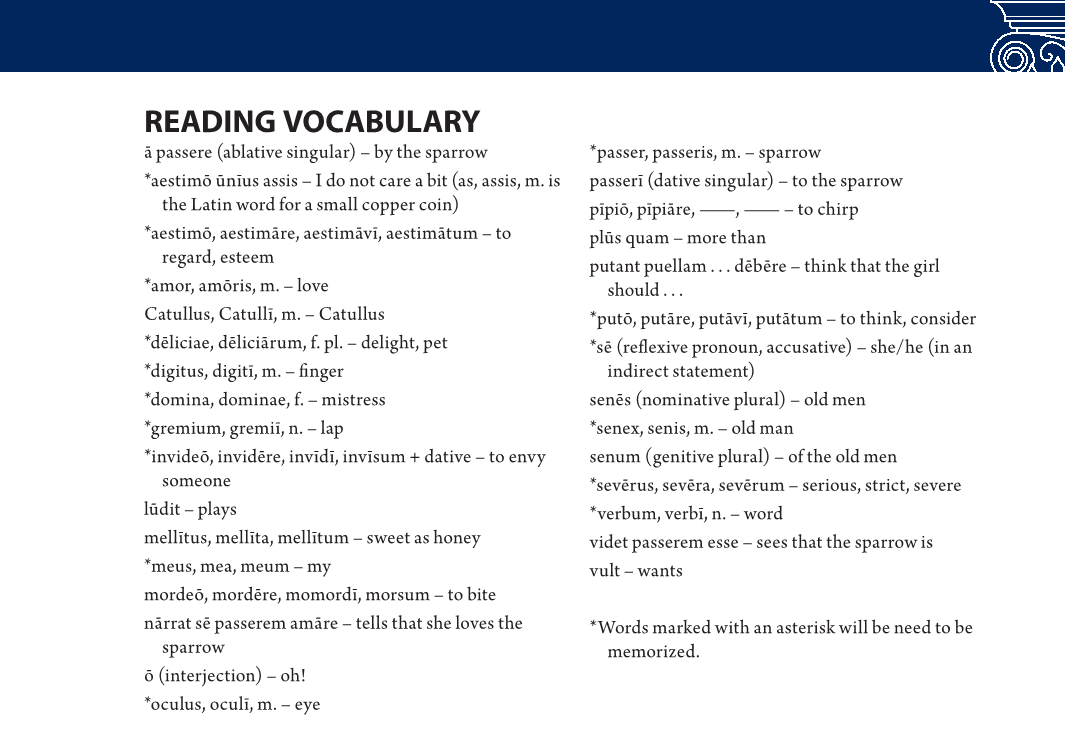
Puella mea passerem habet.
1
Identify the subject/s:
Puella mea passerem habet.
1
Translate: Puella mea passerem habet.
1
Identify the verb/s:
Ō, passer, dēliciae meae puellae!
1
What case and number is puellae?
1
In the sentence "Ō, passer, dēliciae meae puellae!", what case and number is passer?
1
Translate: Ō, passer, dēliciae meae puellae!
4
Identify the verb/s:
Cum passere puella mea lūdit, passerem tenet, passerī digitum dat, digitus ā passere mordētur.
2
Identify the subject/s (nominative case):
Cum passere puella mea lūdit, passerem tenet, passerī digitum dat, digitus ā passere mordētur.
2
Identify the direct objects (accusative case):
Cum passere puella mea lūdit, passerem tenet, passerī digitum dat, digitus ā passere mordētur.
1
Translate this phrase: Cum passere puella mea lūdit
1
Translate this phrase: passerem tenet
1
Translate this phrase: passerī digitum dat
1
Translate this phrase: digitus ā passere mordētur
2
Identify the verb/s:
Puella nārrat sē passerem amāre.
1
Identify the subject/s (nominative case):
Puella nārrat sē passerem amāre.
1
Identify the direct object/s (accusative case):
Puella nārrat sē passerem amāre.
1
Translate this sentence: Puella nārrat sē passerem amāre.
1
Identify the verb/s:
Puella passerem plūs quam oculōs amat.
1
Identify the subject/s (nominative case):
Puella passerem plūs quam oculōs amat.
2
Identify the direct object/s (accusative case):
Puella passerem plūs quam oculōs amat.
1
Translate the sentence: Puella passerem plūs quam oculōs amat.
1
Identify the verb/s:
Nam passer est mellītus.
1
Identify the subjects:
Nam passer est mellītus.
1
Identify the predicate nominative:
Nam passer est mellītus.
1
Translate the sentence: Nam passer est mellītus.
2
Identify the verb/s:
Catullus videt passerem esse semper in gremiō puellae.
1
Identify the subject/s (nominative case):
Catullus videt passerem esse semper in gremiō puellae.
1
Identify the direct object/s (accusative case):
Catullus videt passerem esse semper in gremiō puellae.
1
Identify the indirect objects/s (ablative case - hint: prepositional phrases usually use the ablative case):
Catullus videt passerem esse semper in gremiō puellae.
1
Identify the nouns in the genitive case:
Catullus videt passerem esse semper in gremiō puellae.
1
Translate: Catullus videt passerem esse semper in gremiō puellae.
1
Identify the verb/s:
Passer ad dominam semper pīpiat.
1
Identify the subject/s (nominative case):
Passer ad dominam semper pīpiat.
1
Identify the direct object/s (accusative case):
Passer ad dominam semper pīpiat.
1
Translate: Passer ad dominam semper pīpiat.
3
Identify the verb/s:
Catullus tamen vult cum puellā esse et ā puellā amārī.
1
Identify the subject/s (nominative case):
Catullus tamen vult cum puellā esse et ā puellā amārī.
2
Identify the indirect object/s (ablative case - hint: nouns in prepositional phrases are usually ablative):
Catullus tamen vult cum puellā esse et ā puellā amārī.
1
Translate: Catullus tamen vult cum puellā esse et ā puellā amārī.
1
Identify the verb/s:
Itaque Catullus passerī invidet.
1
Identify the subject/s (nominative case):
Itaque Catullus passerī invidet.
1
Translate the sentence: Itaque Catullus passerī invidet.
2
Identify the verb/s:
Tū, puella, Catullum amāre dēbēs, nōn passerem.
2
Identify the subject/s (nominative case):
Tū, puella, Catullum amāre dēbēs, nōn passerem.
2
Identify the direct object/s (accusative case):
Tū, puella, Catullum amāre dēbēs, nōn passerem.
1
Translate: Tū, puella, Catullum amāre dēbēs, nōn passerem.
3
Identify the verb/s:
Senēs autem sevērī putant puellam Catullum amāre nōn dēbēre.
1
Identify the subject/s (nominative case):
Senēs autem sevērī putant puellam Catullum amāre nōn dēbēre.
2
Identify the direct object/s (accusative case):
Senēs autem sevērī putant puellam Catullum amāre nōn dēbēre.
1
Translate: Senēs autem sevērī putant puellam Catullum amāre nōn dēbēre.
2
Identify the verb/s:
Verba senum, puella, unīus assis aestimāre possumus.
1
Identify the subject/s (nominative case):
Verba senum, puella, unīus assis aestimāre possumus.
1
Translate: Verba senum, puella, unīus assis aestimāre possumus.
1
Identify the verb/s:
Nam vīta nōn est longa.
1
Identify the subject/s:
Nam vīta nōn est longa.
1
Translate: Nam vīta nōn est longa.
1
How does the poet feel about the girl’s pet bird? Why?
1
Who is in the way of the poet’s and the girl’s love?
1
What is the poet’s reason for his impatience to enjoy love?