LNM Ch 8 Ex 4
star
star
star
star
star
Last updated almost 4 years ago
21 Nsɛmmisa
1
1
1
1
1
1
1
1
1
1
1
1
1
1
1
1
1
1
1
1
1
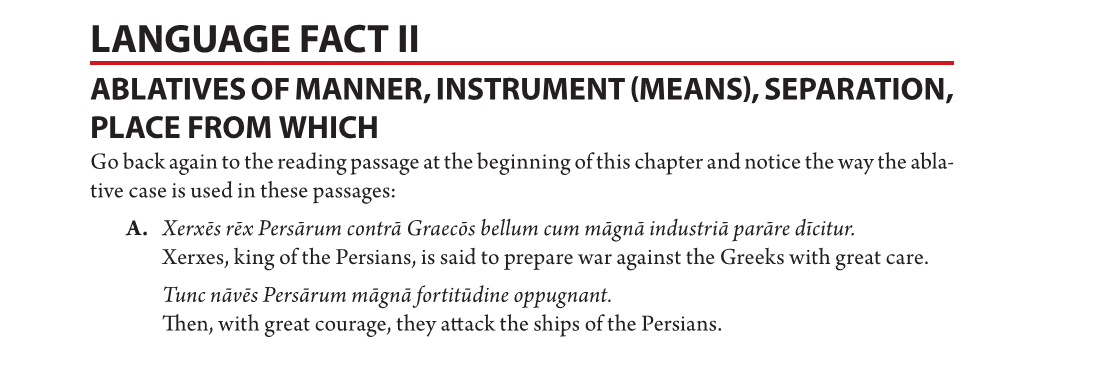
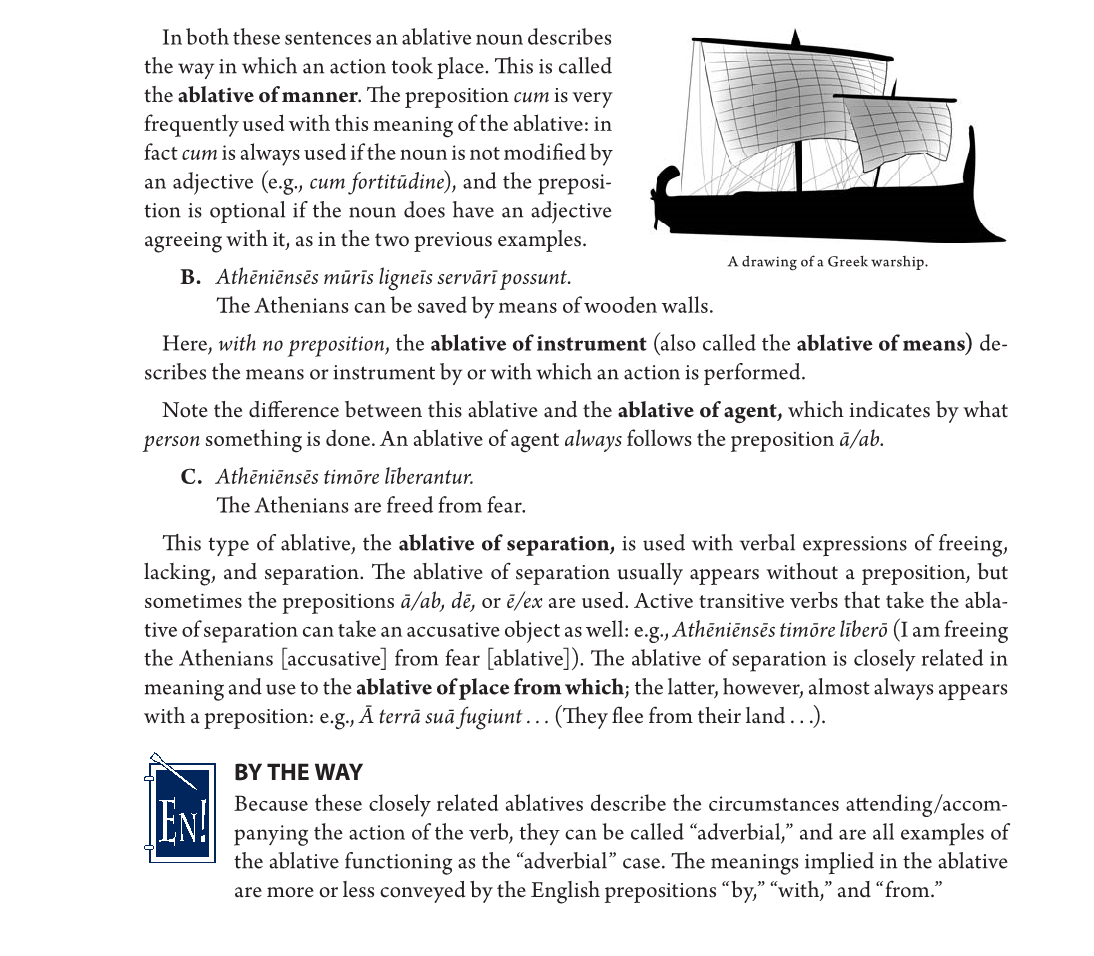
Change each sentence by putting the noun in parentheses into the ablative case, keeping the same number.
A preposition may or may not be needed.
Translate the sentence and identify the type of ablative in each sentence.
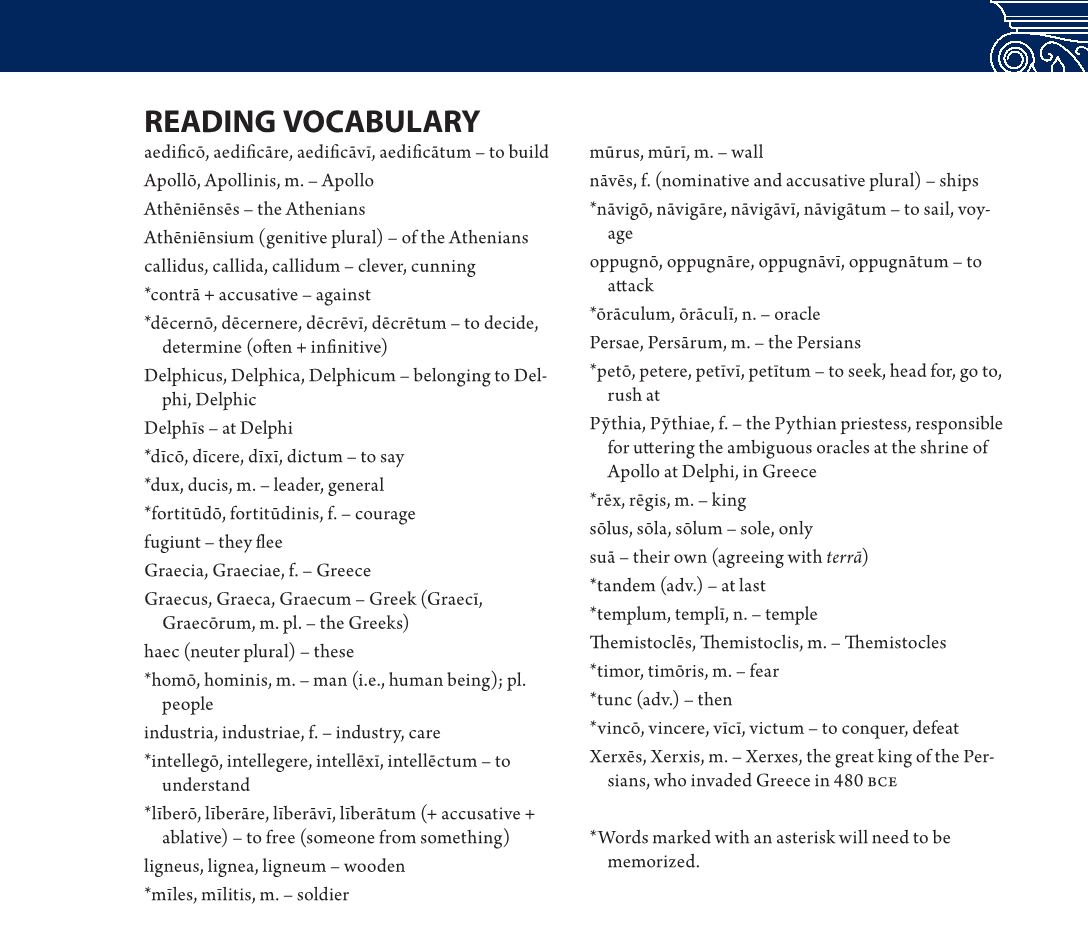
The Reading Vocabulary may be consulted.
Example: Graecī servantur. (dux)
Graecī ā duce servantur. ablative of agent The Greeks are being saved by the general.
Change the noun in parantheses into the ablative case, keeping the number, and add it to the sentence.
Praemium meum exspectō. (gaudium)
Translate the following sentence:
Praemium meum cum gaudiō exspectō.
joy
I await
reward
with
my
What type of ablative is used in the following sentence:
Praemium meum cum gaudiō exspectō.
Change the noun in parantheses into the ablative case, keeping the number, and add it to the sentence.
Multōs miserōs senēs vidēre possum. (oculī meī)
Translate the following sentence:
Multōs miserōs senēs oculīs meīs vidēre possum.
wretched
see
many
old men
my
with
eyes
I can
What type of ablative is used in the following sentence:
Multōs miserōs senēs oculīs meīs vidēre possum.
Change the noun in parantheses into the ablative case, keeping the number, and add it to the sentence.
Nautae fābulam nārrant. (lacrimae multae)
Translate the following sentence:
Nautae fābulam lacrimīs multīs nārrant.
tell
the story
with
tears
many
The sailors
What type of ablative is used in the following sentence:
Nautae fābulam lacrimīs multīs nārrant.
Change the noun in parantheses into the ablative case, keeping the number, and add it to the sentence.
Persās exspectāre possumus. (fortitūdō)
Translate the following sentence:
Persās cum fortitūdine exspectāre possumus.
wait
for the Persians
We can
with
courage
What type of ablative is used in the following sentence:
Persās cum fortitūdine exspectāre possumus.
Change the noun in parantheses into the ablative case, keeping the number, and add it to the sentence.
Animus māgnus nōn vincitur. (tenebrae)
Translate the following sentence:
Animus māgnus tenebrīs nōn vincitur.
mind
is
conquered
A great
not
by shadows
What type of ablative is used in the following sentence:
Animus māgnus tenebrīs nōn vincitur.
Change the noun in parantheses into the ablative case, keeping the number, and add it to the sentence.
Iūstī hominēs līberārī dēbent. (vincula)
Translate the following sentence:
Iūstī hominēs vinculīs līberārī dēbent.
ought
from chains
men
Just
to be freed
What type of ablative is used in the following sentence:
Iūstī hominēs vinculīs līberārī dēbent.
Change the noun in parantheses into the ablative case, keeping the number, and add it to the sentence.
Ad castra ambulāmus. (casa)
Translate the following sentence:
Ad castra ā casā ambulāmus.
We walk
from
the camp
the house
to
What type of ablative is used in the following sentence:
Ad castra ā casā ambulāmus.