LNM1 Ch 10: DĒ EQUŌ TRŌIĀNŌ
star
star
star
star
star
Last updated almost 4 years ago
73 Nsɛmmisa
1
1
1
1
1
1
1
1
1
1
1
1
1
1
1
1
1
1
1
1
1
1
1
1
1
1
1
1
1
1
1
1
1
1
1
1
1
1
1
1
1
1
1
1
1
1
1
1
1
1
1
1
1
1
1
1
1
1
1
1
1
1
1
1
1
1
1
1
1
1
1
1
1
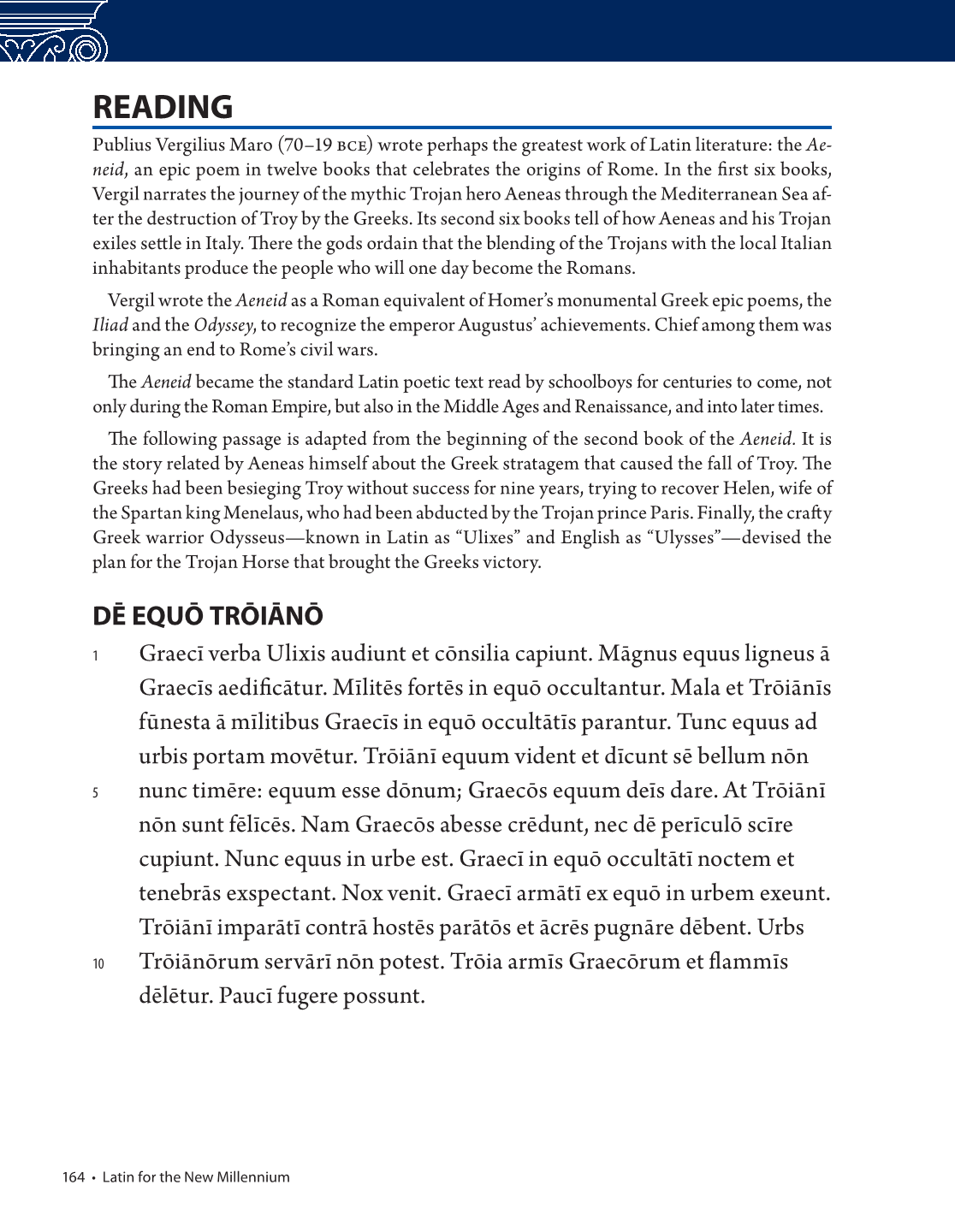
Identify the verb/s in the following sentence: Graecī verba Ulixis audiunt et cōnsilia capiunt.
Identify the nominative noun/s in the following sentence: Graecī verba Ulixis audiunt et cōnsilia capiunt.
Identify the accusative noun/s in the following sentence: Graecī verba Ulixis audiunt et cōnsilia capiunt.
Identify the genitive noun/s in the following sentence: Graecī verba Ulixis audiunt et cōnsilia capiunt.
Translate the following sentence: Graecī verba Ulixis audiunt et cōnsilia capiunt.
plans
make
listen to
of
Ulysses
the Greeks
the words
and
Identify the verb/s in the following sentence: Māgnus equus ligneus ā Graecīs aedificātur.
Identify the nominative noun/s in the following sentence: Māgnus equus ligneus ā Graecīs aedificātur.
Identify the nominative adjective/s in the following sentence: Māgnus equus ligneus ā Graecīs aedificātur.
Identify the ablative noun/s in the following sentence: Māgnus equus ligneus ā Graecīs aedificātur.
Translate the following sentence: Māgnus equus ligneus ā Graecīs aedificātur.
the Greeks
by
is built
a great wooden horse
Identify the verb/s in the following sentence: Mīlitēs fortēs in equō occultantur.
Identify the nominative noun/s in the following sentence: Mīlitēs fortēs in equō occultantur.
Identify the nominative adjective/s in the following sentence: Mīlitēs fortēs in equō occultantur.
Identify the ablative noun/s in the following sentence: Mīlitēs fortēs in equō occultantur.
Translate the following sentence: Mīlitēs fortēs in equō occultantur.
are hidden
the horse
in
brave soldiers
Identify the verb/s in the following sentence: Mala et Trōiānīs fūnesta ā mīlitibus Graecīs in equō occultātīs parantur.
Identify the nominative noun/s in the following sentence: Mala et Trōiānīs fūnesta ā mīlitibus Graecīs in equō occultātīs parantur.
Identify the dative noun/s in the following sentence: Mala et Trōiānīs fūnesta ā mīlitibus Graecīs in equō occultātīs parantur.
Identify the ablative noun/s in the following sentence: Mala et Trōiānīs fūnesta ā mīlitibus Graecīs in equō occultātīs parantur.
Translate the following sentence: Mala et Trōiānīs fūnesta ā mīlitibus Graecīs in equō occultātīs parantur.
are prepared
bad things
in
by
things
the Greek soldiers
the horse
deadly
the Trojans
hidden
and
for
Identify the verb/s in the following sentence: Tunc equus ad urbis portam movētur.
Identify the nominative noun/s in the following sentence: Tunc equus ad urbis portam movētur.
Identify the accusative noun/s in the following sentence: Tunc equus ad urbis portam movētur.
Identify the genitive noun/s in the following sentence: Tunc equus ad urbis portam movētur.
Translate the following sentence: Tunc equus ad urbis portam movētur.
to
is moved
then
of
the gate
the horse
the city
Identify the verb/s in the following sentence: Trōiānī equum vident et dīcunt sē bellum nōn nunc timēre.
Identify the nominative noun/s in the following sentence: Trōiānī equum vident et dīcunt sē bellum nōn nunc timēre.
Identify the accusative noun/s in the following sentence: Trōiānī equum vident et dīcunt sē bellum nōn nunc timēre.
Translate the following sentence: Trōiānī equum vident et dīcunt sē bellum nōn nunc timēre.
now
they
say that
do not
the horse
the Trojans
and
see
war
fear
Translate the following sentence: equum esse dōnum
Identify the verb/s in the following sentence:: Graecōs equum deīs dare
Translate the following sentence: Graecōs equum deīs dare
are giving
the Greeks
to the gods
the horse
Identify the verb/s in the following sentence: At Trōiānī nōn sunt fēlīcēs.
Identify the nominative noun/s in the following sentence: At Trōiānī nōn sunt fēlīcēs.
Translate the following sentence: At Trōiānī nōn sunt fēlīcēs.
fortunate
are not
the Trojans
but
Identify the verb/s in the following sentence: Nam Graecōs abesse crēdunt, nec dē perīculō scīre cupiunt.
Identify the accusative noun/s in the following sentence: Nam Graecōs abesse crēdunt, nec dē perīculō scīre cupiunt.
Identify the ablative noun/s in the following sentence: Nam Graecōs abesse crēdunt, nec dē perīculō scīre cupiunt.
Translate the following sentence: Nam Graecōs abesse crēdunt, nec dē perīculō scīre cupiunt.
about
nor
they believe that
to know
the danger
are absent
For
the Greeks
do they wish
Identify the verb/s in the following sentence: Nunc equus in urbe est.
Identify the nominative noun/s in the following sentence: Nunc equus in urbe est.
Identify the ablative noun/s in the following sentence: Nunc equus in urbe est.
Translate the following sentence: Nunc equus in urbe est.
in
the city
is
Now
the horse
Identify the verb/s in the following sentence: Graecī in equō occultātī noctem et tenebrās exspectant.
Identify the nominative noun/s in the following sentence: Graecī in equō occultātī noctem et tenebrās exspectant.
Identify the accusative noun/s in the following sentence: Graecī in equō occultātī noctem et tenebrās exspectant.
Identify the ablative noun/s in the following sentence: Graecī in equō occultātī noctem et tenebrās exspectant.
Translate the following sentence: Graecī in equō occultātī noctem et tenebrās exspectant.
night
and
shadows/darkness
the horse
wait for
in
hidden
the Greeks
Translate the following sentence: Nox venit.
Identify the verb/s in the following sentence: Graecī armātī ex equō in urbem exeunt.
Identify the nominative noun/s in the following sentence: Graecī armātī ex equō in urbem exeunt.
Identify the nominative adjective/s in the following sentence: Graecī armātī ex equō in urbem exeunt.
Identify the accusative noun/s in the following sentence: Graecī armātī ex equō in urbem exeunt.
Identify the ablative noun/s in the following sentence: Graecī armātī ex equō in urbem exeunt.
Translate the following sentence: Graecī armātī ex equō in urbem exeunt.
into
the city
the armed Greeks
the horse
go out
from
Identify the verb/s in the following sentence: Trōiānī imparātī contrā hostēs parātōs et ācrēs pugnāre dēbent.
Identify the nominative noun/s in the following sentence: Trōiānī imparātī contrā hostēs parātōs et ācrēs pugnāre dēbent.
Identify the adjective/s in the following sentence: Trōiānī imparātī contrā hostēs parātōs et ācrēs pugnāre dēbent.
Identify the accusative noun/s in the following sentence: Trōiānī imparātī contrā hostēs parātōs et ācrēs pugnāre dēbent.
Translate the following sentence: Trōiānī imparātī contrā hostēs parātōs et ācrēs pugnāre dēbent.
Identify the verb/s in the following sentence: Urbs Trōiānōrum servārī nōn potest.
Identify the nominative noun/s in the following sentence: Urbs Trōiānōrum servārī nōn potest.
Identify the genitive noun/s in the following sentence: Urbs Trōiānōrum servārī nōn potest.
Translate the following sentence: Urbs Trōiānōrum servārī nōn potest.
the city
the Trojans
cannot
of
be saved
Identify the verb/s in the following sentence: Trōia armīs Graecōrum et flammīs dēlētur.
Identify the nominative noun/s in the following sentence: Trōia armīs Graecōrum et flammīs dēlētur.
Identify the ablative noun/s in the following sentence: Trōia armīs Graecōrum et flammīs dēlētur.
Identify the genitive noun/s in the following sentence: Trōia armīs Graecōrum et flammīs dēlētur.
Translate the following sentence: Trōia armīs Graecōrum et flammīs dēlētur.
the weapons
flames
the Greeks
is destroyed
by
of
Troy
and
Translate the following sentence: Paucī fugere possunt.
What was Odysseus’ plan?
What did the Trojans think about the horse?
What happened during the night?