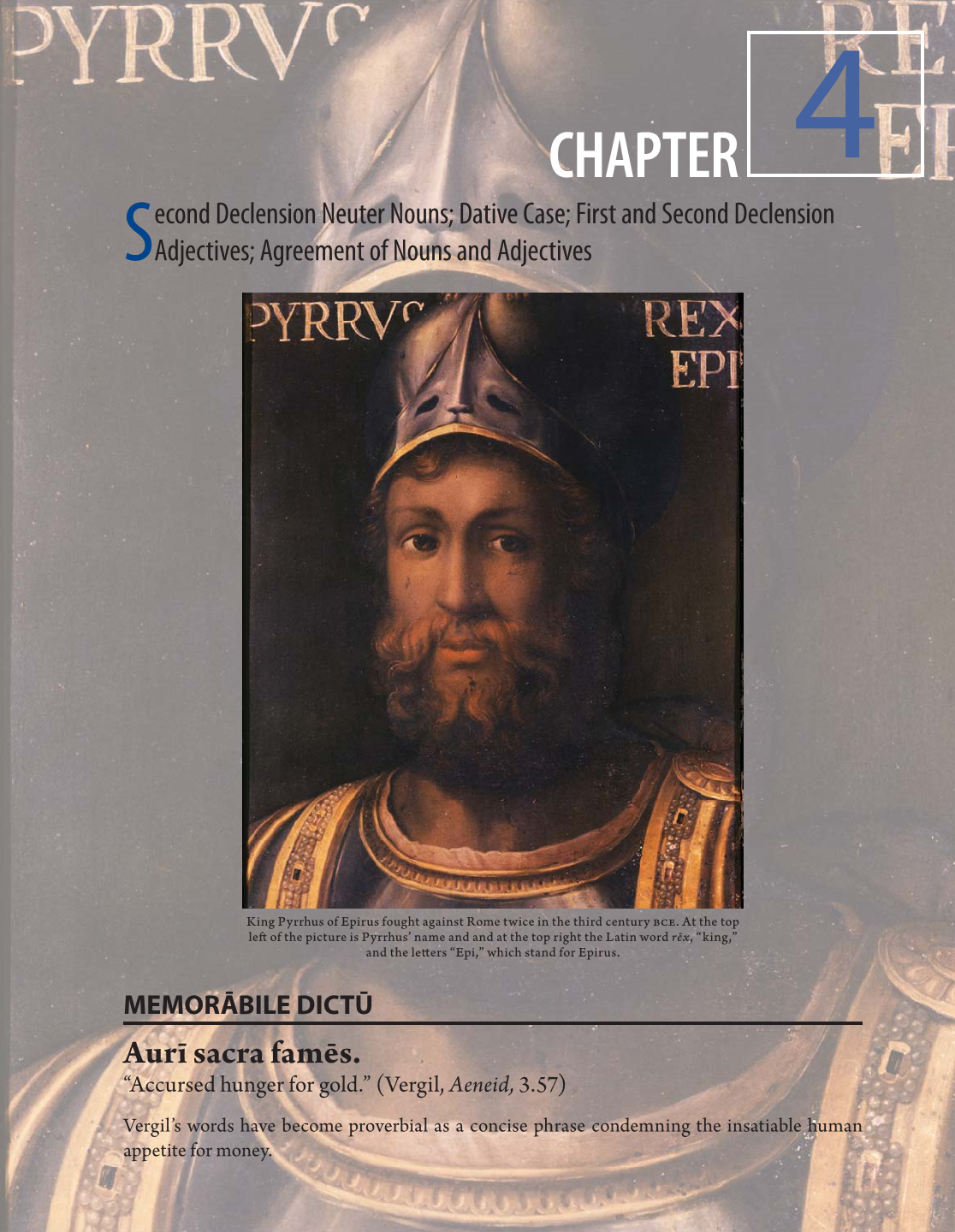
The quotation aurī sacra famēs refers to
The author of the quotation aurī sacra famēs:
The quotation aurī sacra famēs can be found in
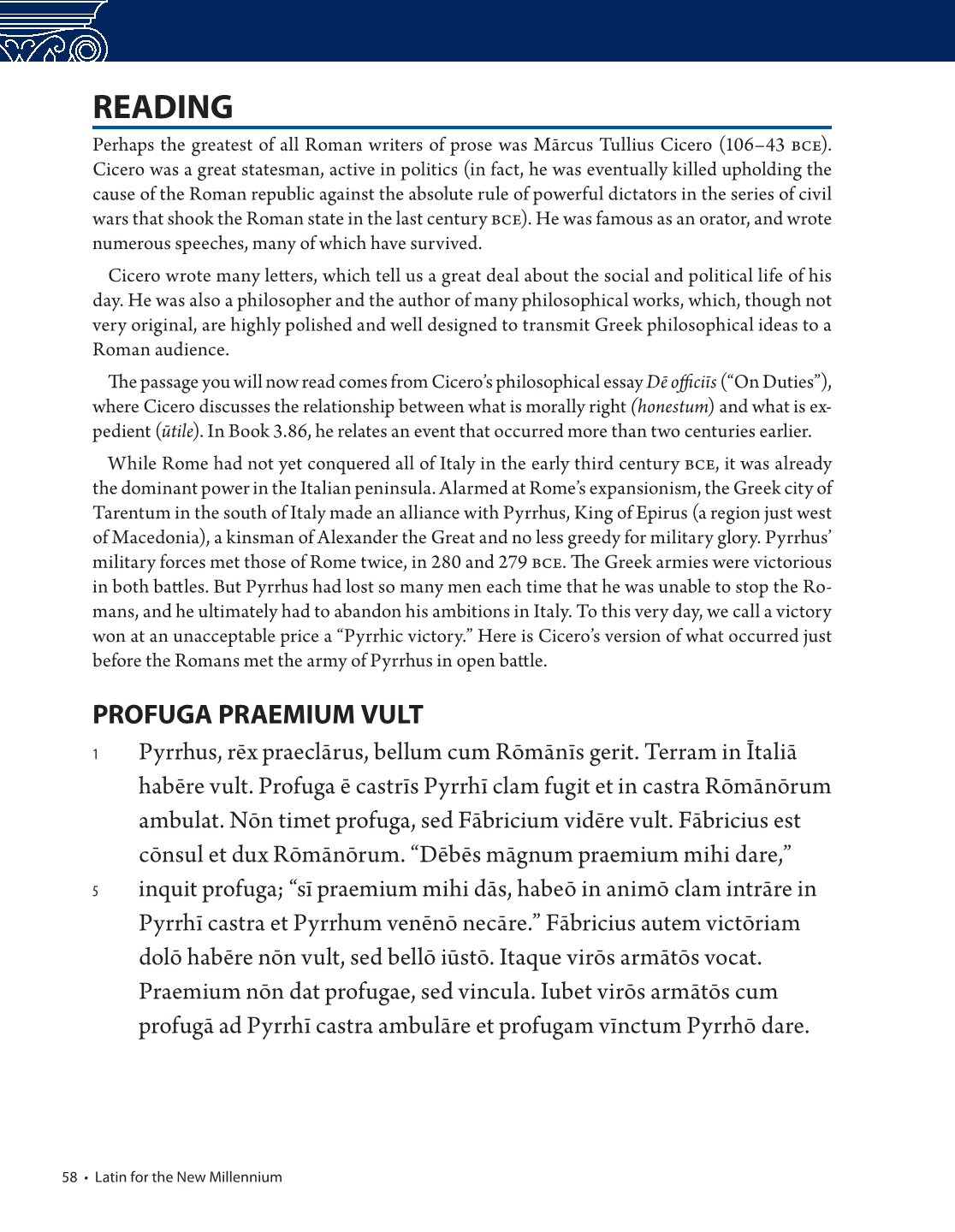
Cicero wrote many speeches and letters but played no role in Roman politics.
Pyrrhus defeated the Roman army two times.
Fabricius was a Roman traitor.
Tarentum in the South of Italy was a Greek city.
Cicero was all of the following EXCEPT
What is a Pyrrhic victory?
Pyrrhus was king of Epirus, which was located in
According to the story, the profugus
According to the story, the profugus received
Match the Latin to the English translation.
| Draggable item | arrow_right_alt | Corresponding Item |
|---|---|---|
āthlētārum bonōrum | arrow_right_alt | into the camp |
Quālis poēta | arrow_right_alt | of the good farmer |
in castra | arrow_right_alt | What kind of poet? |
ad Italiam | arrow_right_alt | of the good athletes |
puer magnus | arrow_right_alt | in the great war |
ex aquā | arrow_right_alt | for just men |
in magnō bellō | arrow_right_alt | in the camp |
in castrīs | arrow_right_alt | to Italy |
virīs iūstīs | arrow_right_alt | a big boy |
agricolae bonī | arrow_right_alt | out of the water |
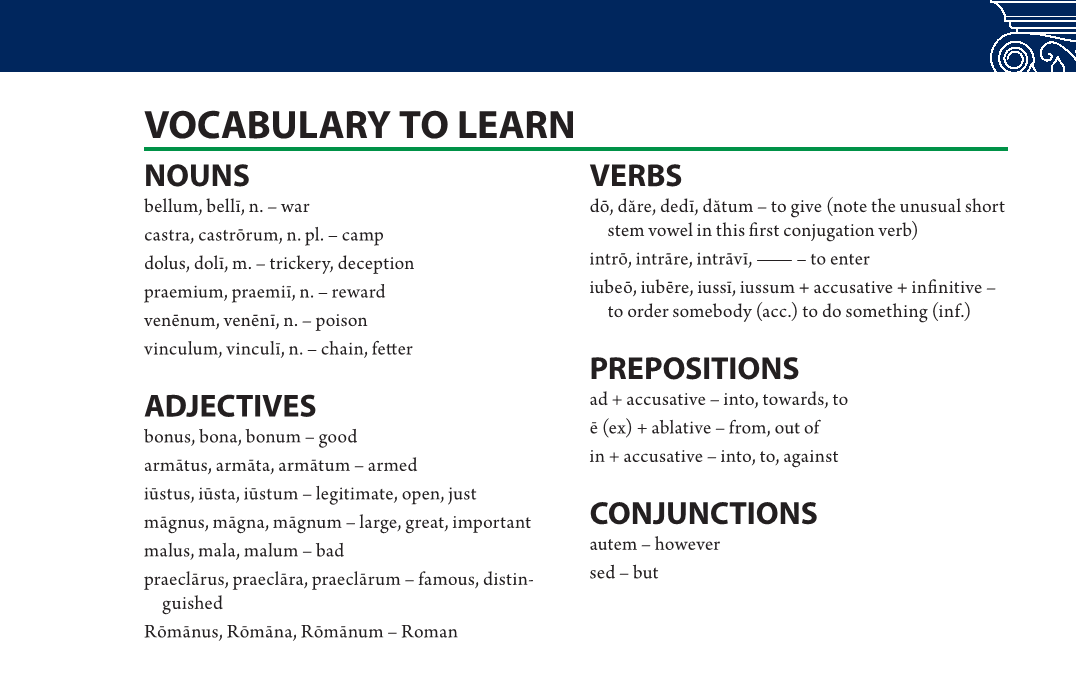
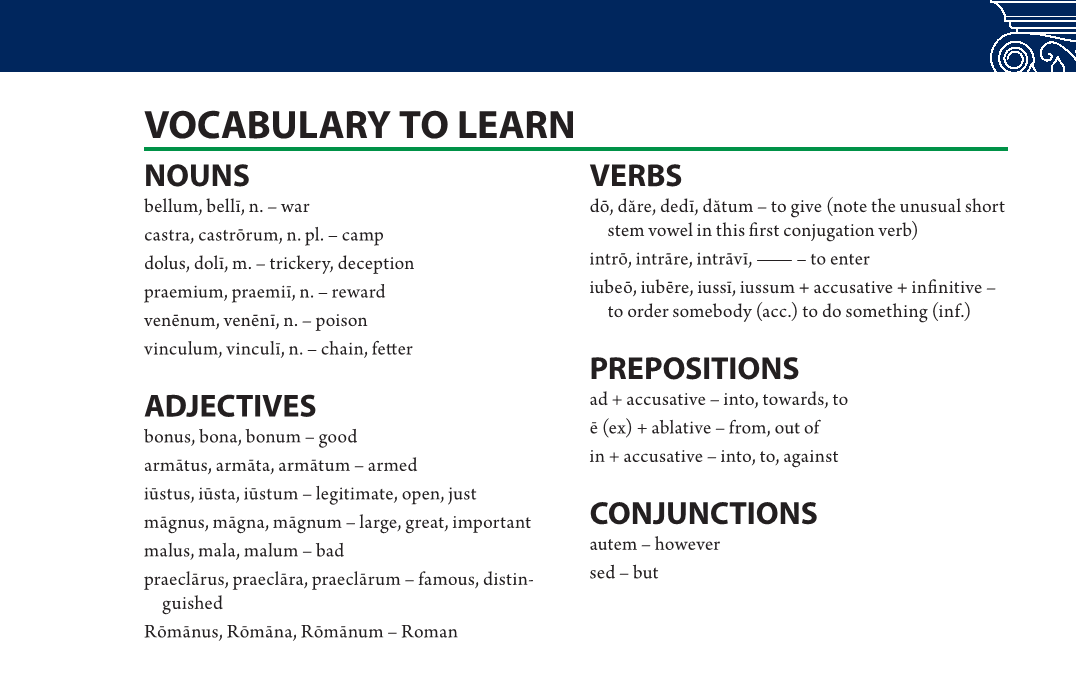
The preposition ad takes the accusative case.
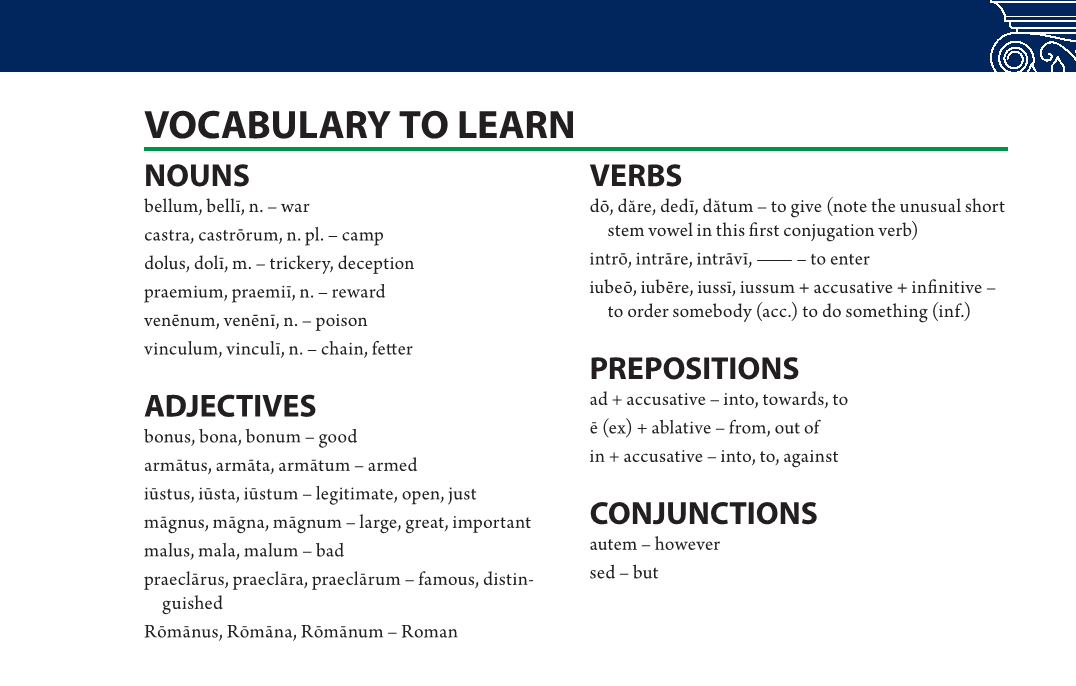
The noun castra belongs to the first declension.
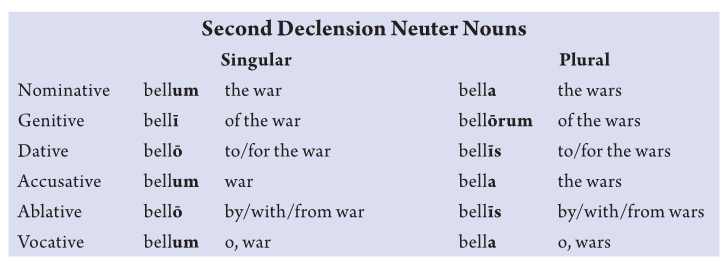
Neuter nominative plural forms always end in –ī.
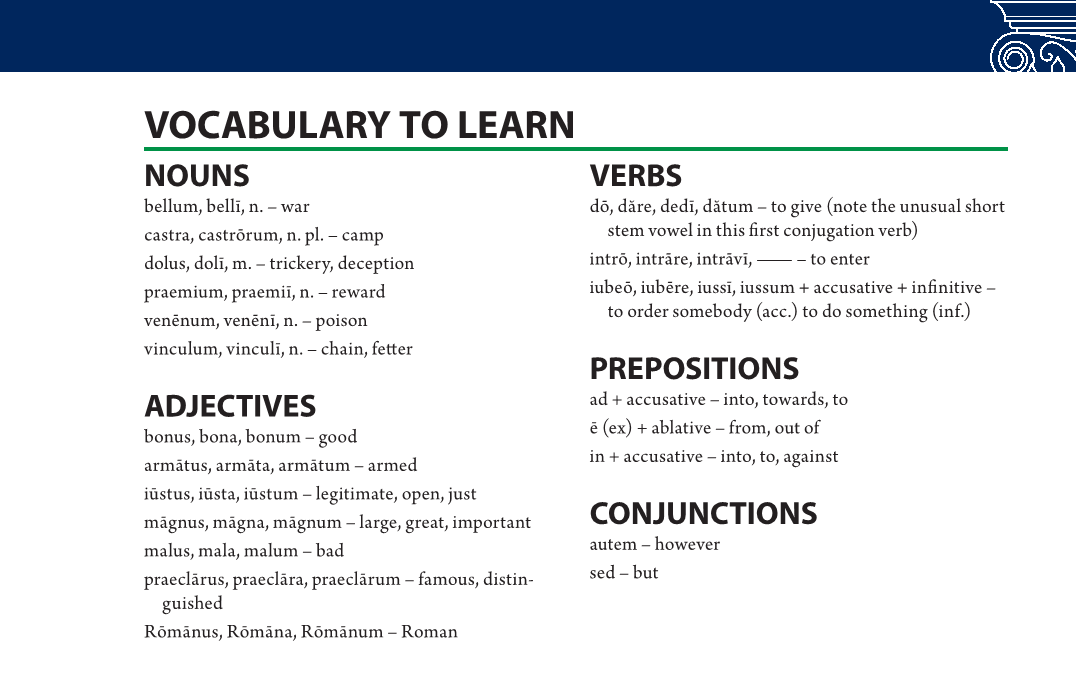
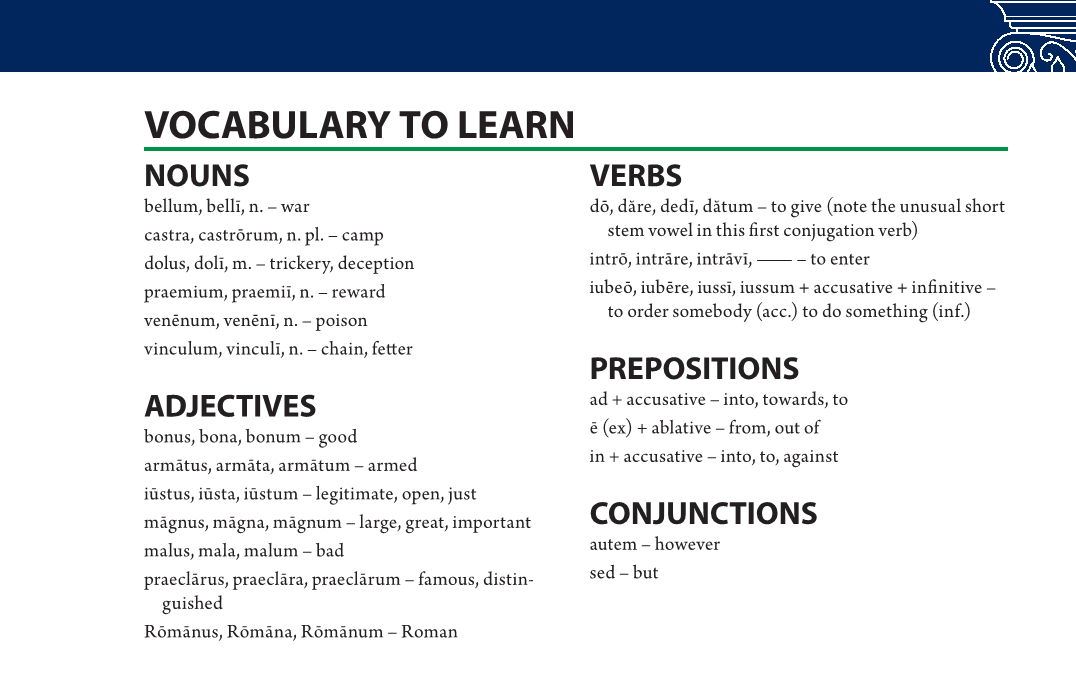
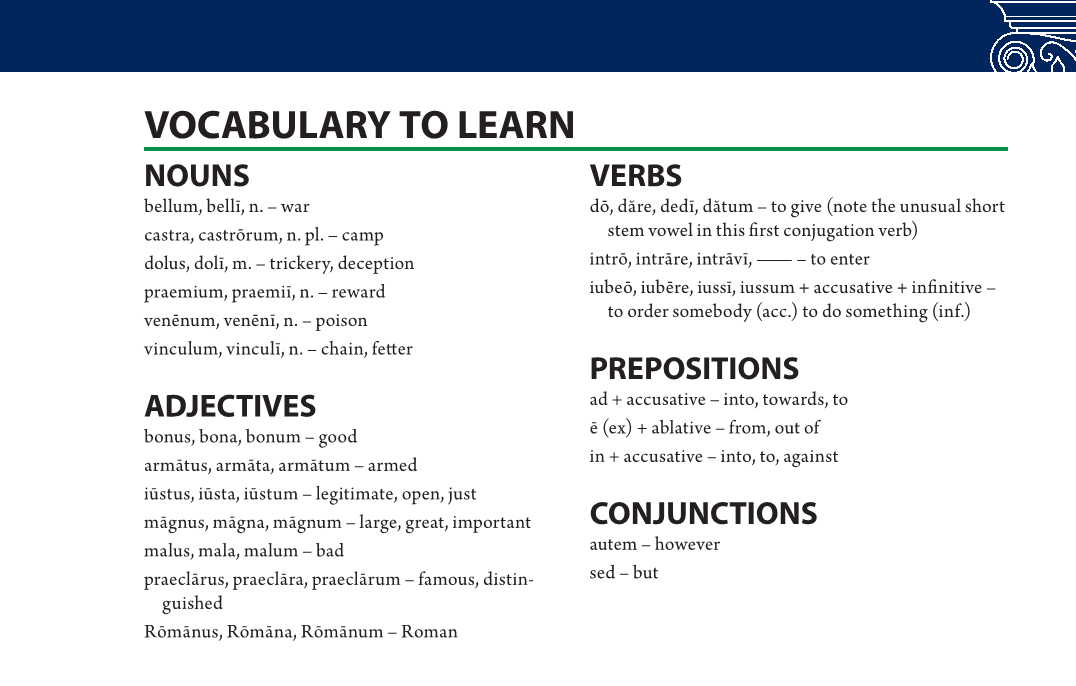
The noun vinculum means poison.
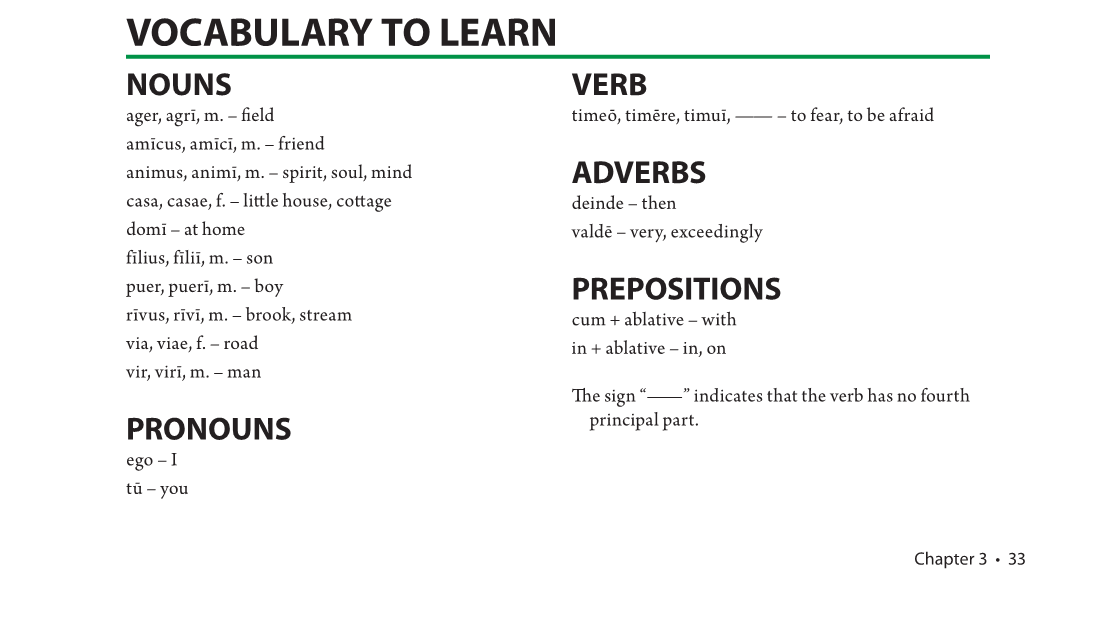
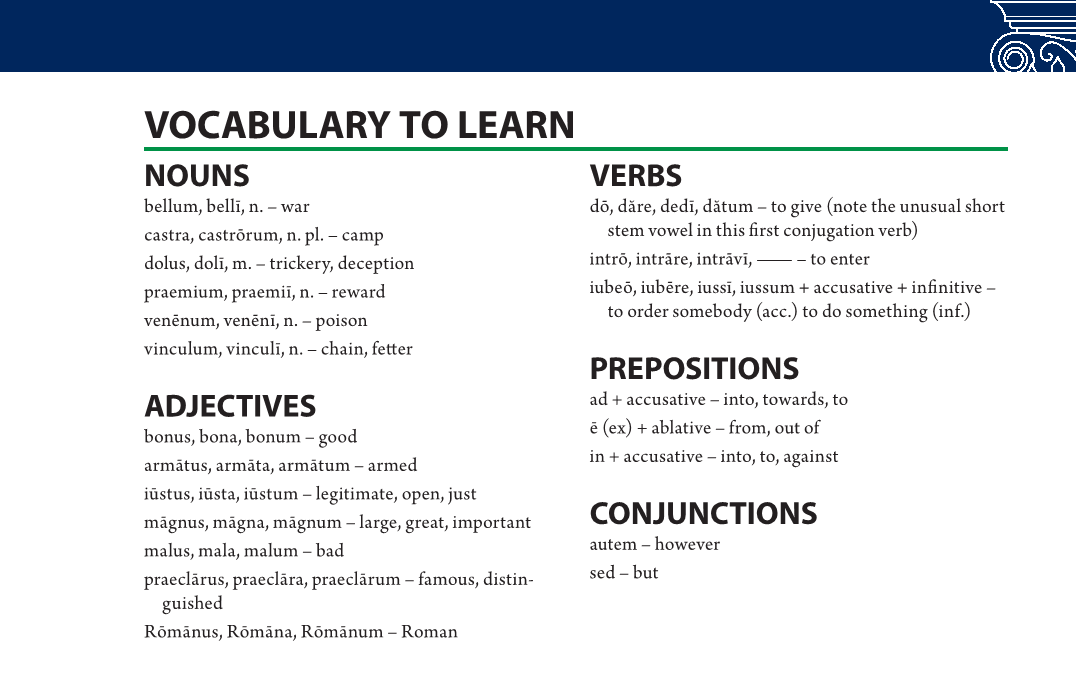
The preposition in may take accusative or ablative case.
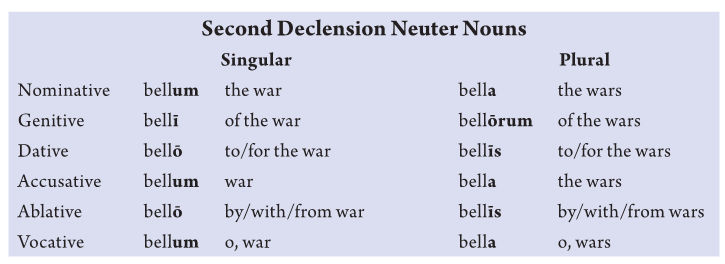
What neuter forms always end in the letter a?
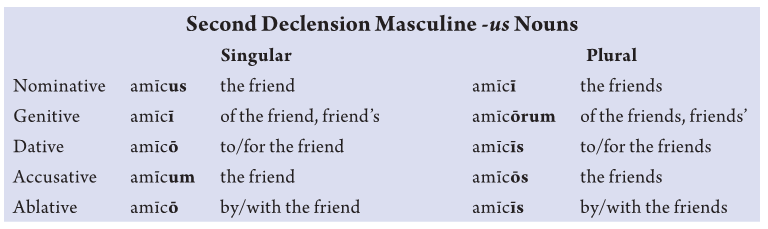
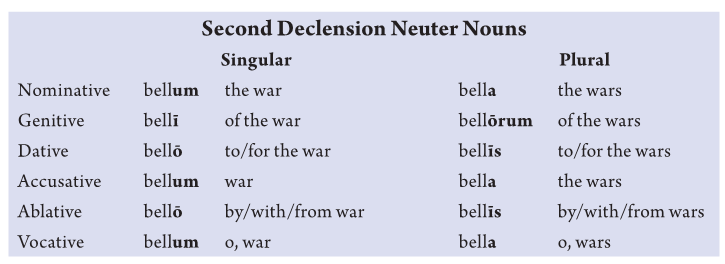
The ending –um in the second declension indicates all of the following EXCEPT
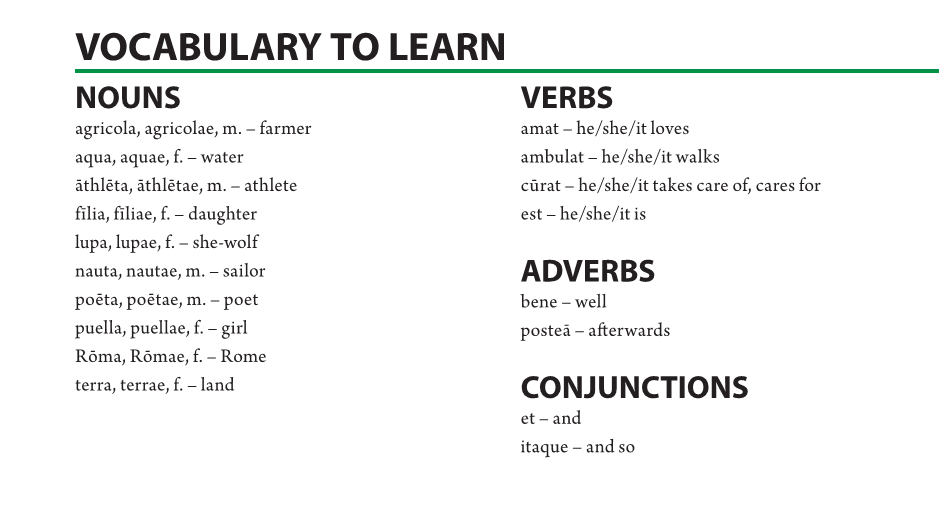
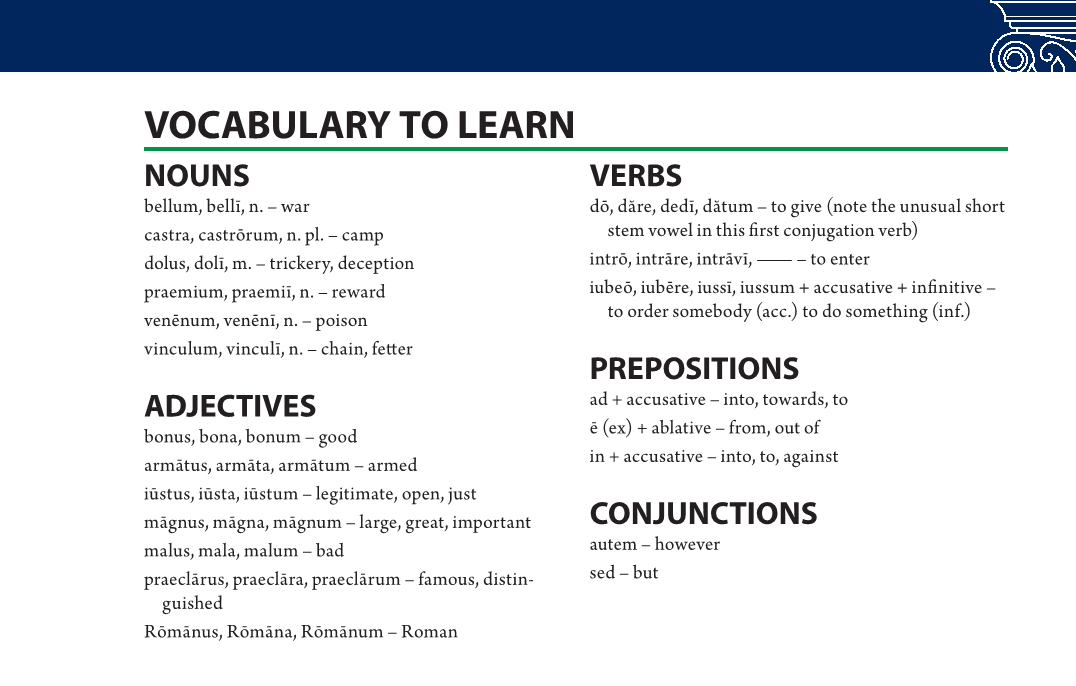
Which of the following does NOT belong on the basis of gender?
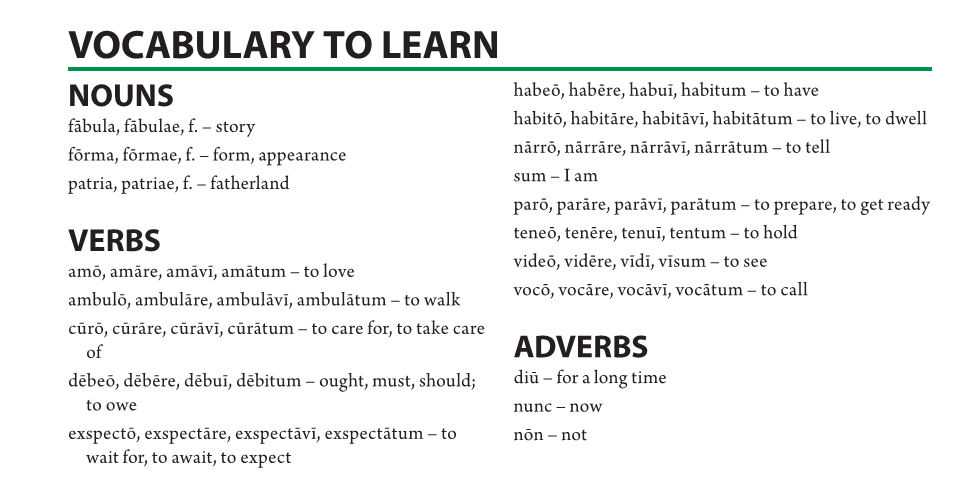
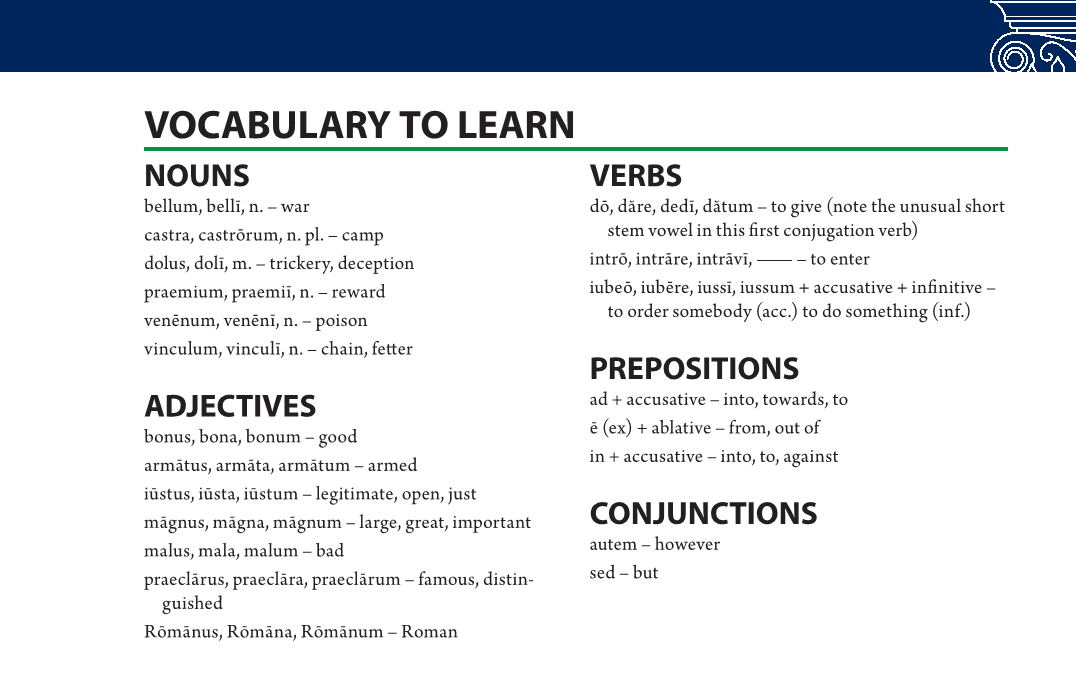
Which of the following does NOTbelong on the basis of declension?
Which of the following does NOTbelong on the basis of gender?
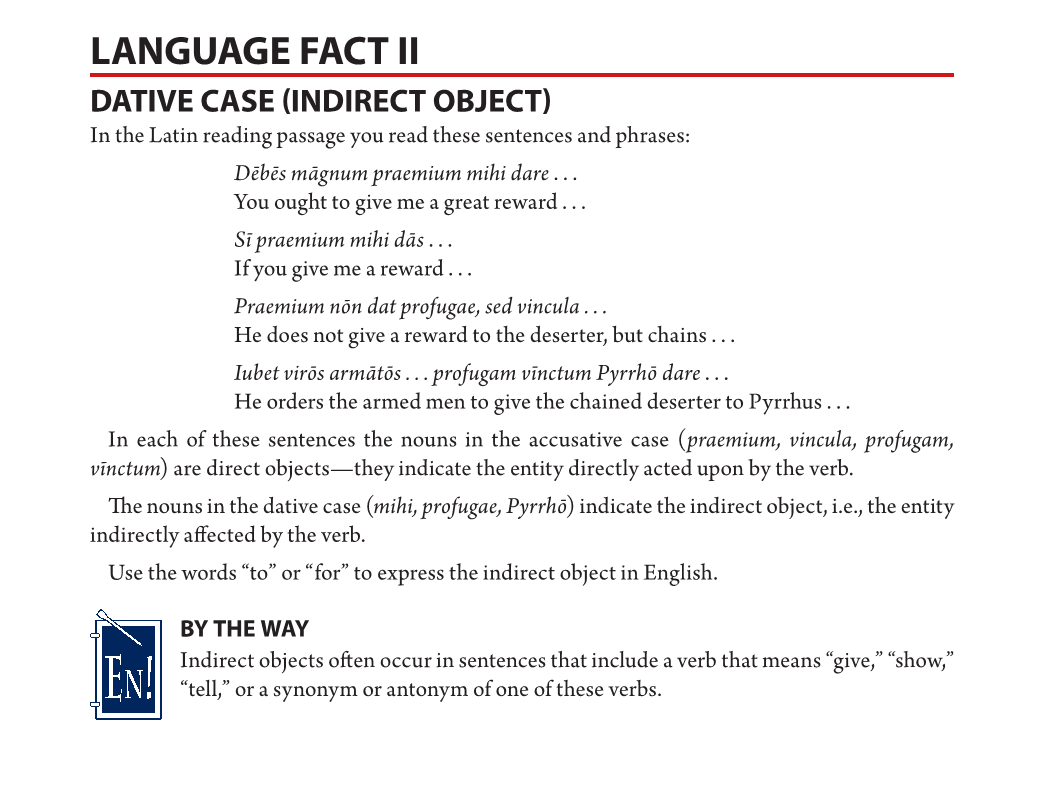
Which case is used for the indirect object?
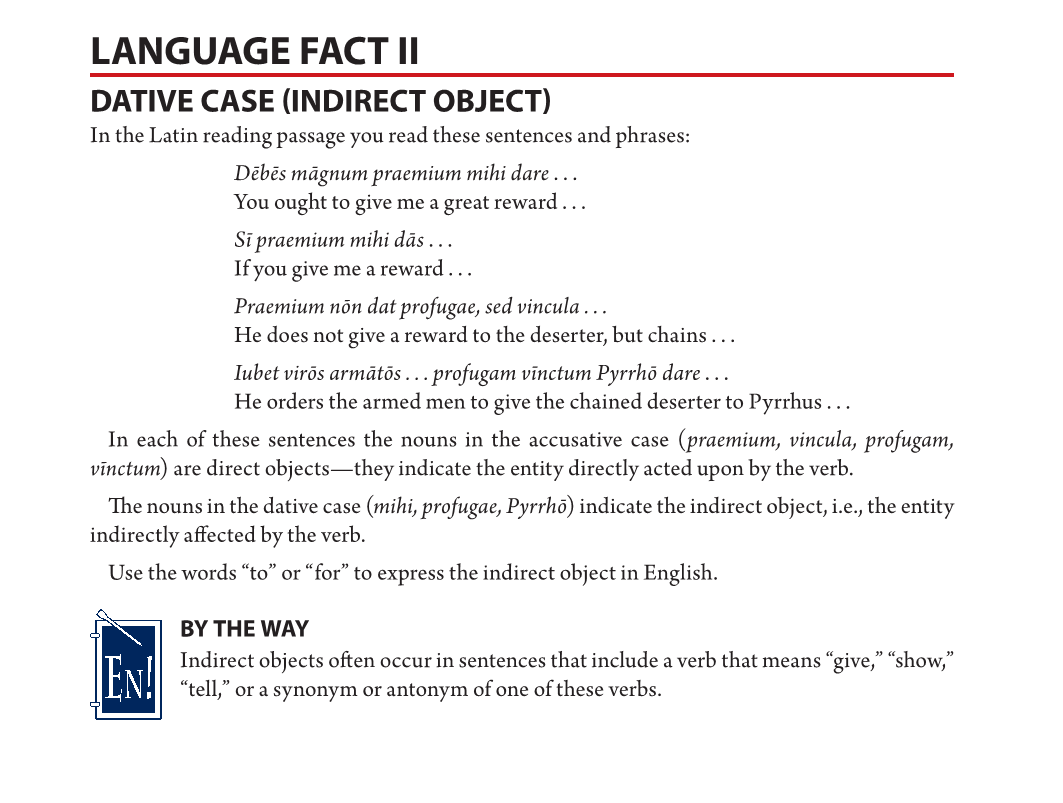
An indirect object is most often found in sentences with a verb belonging to all the following categories EXCEPT
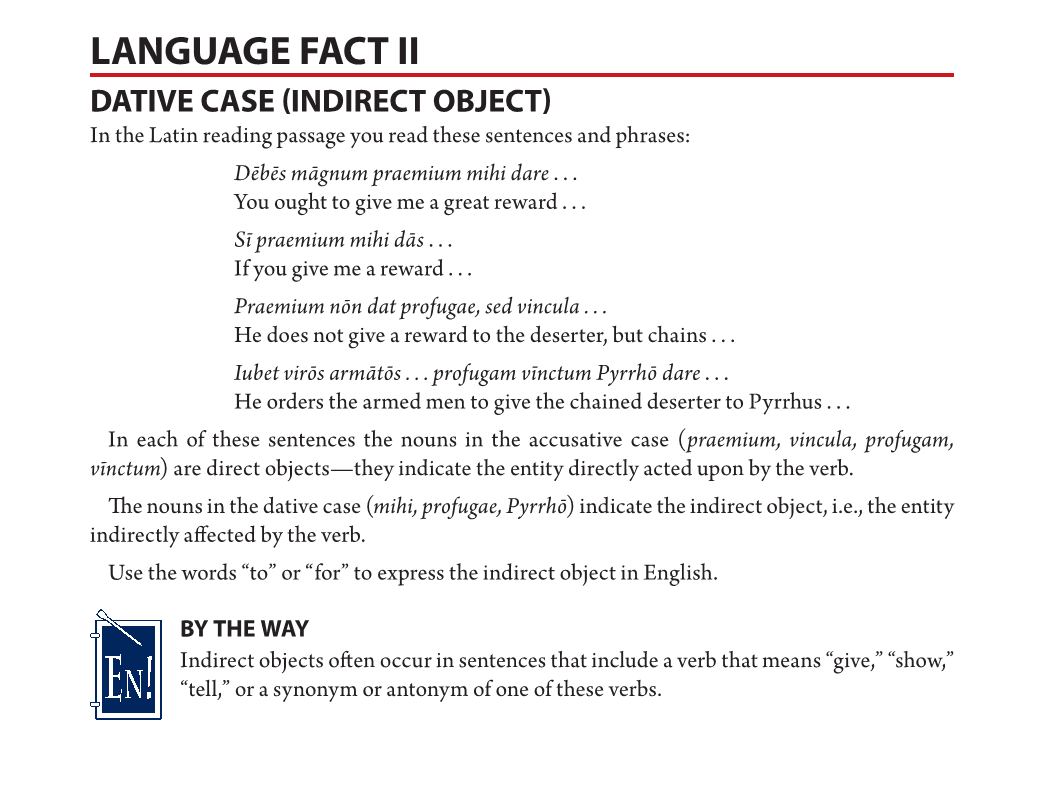
Which of the following sentences, when translated into Latin, would use the dative case?
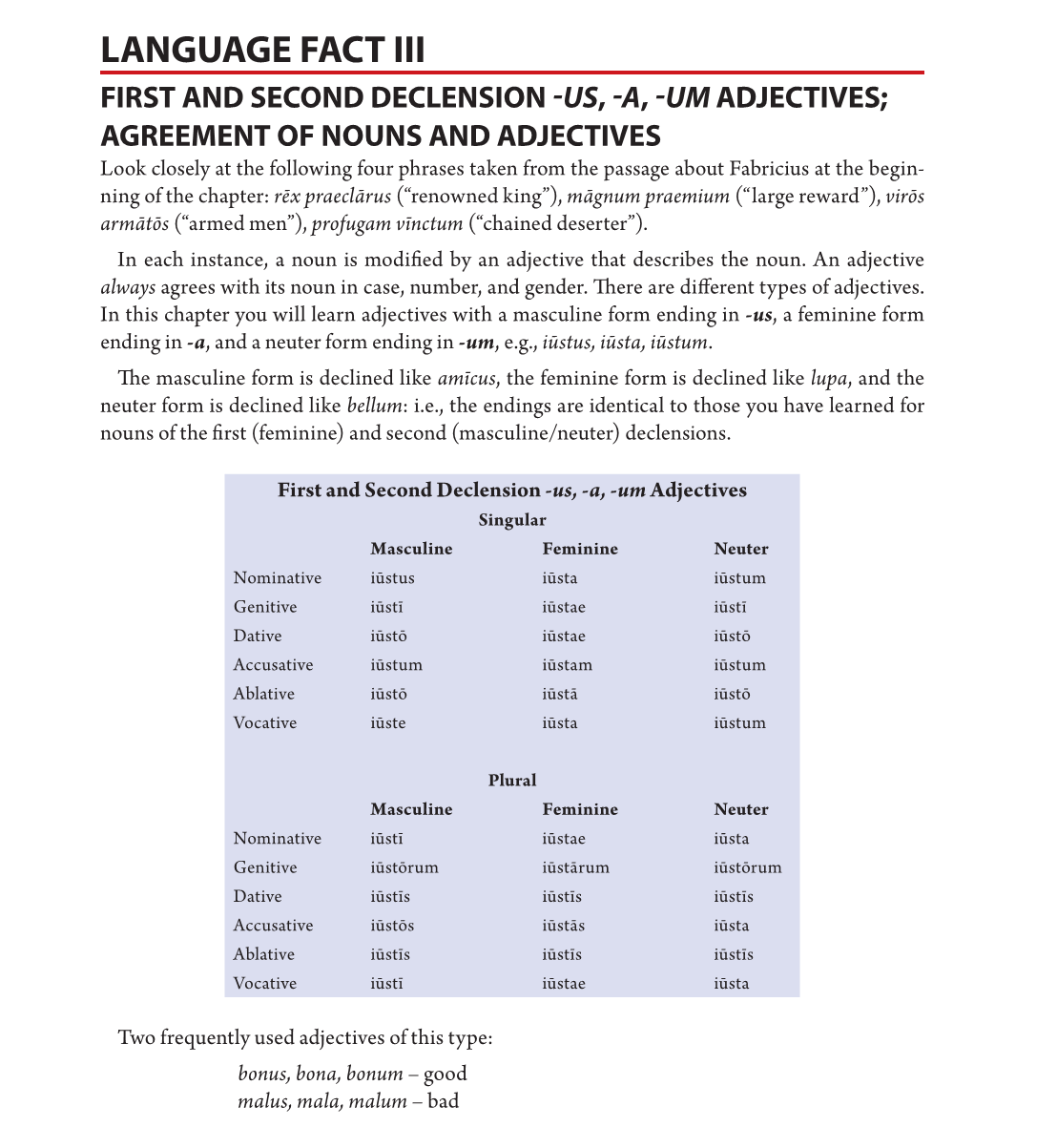
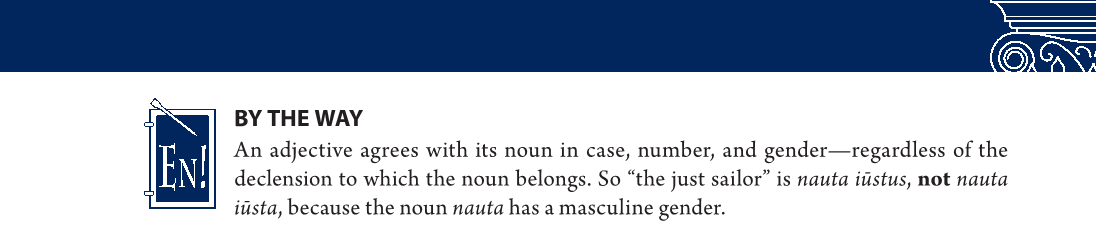
Adjectives must agree with their nouns in all of the following EXCEPT
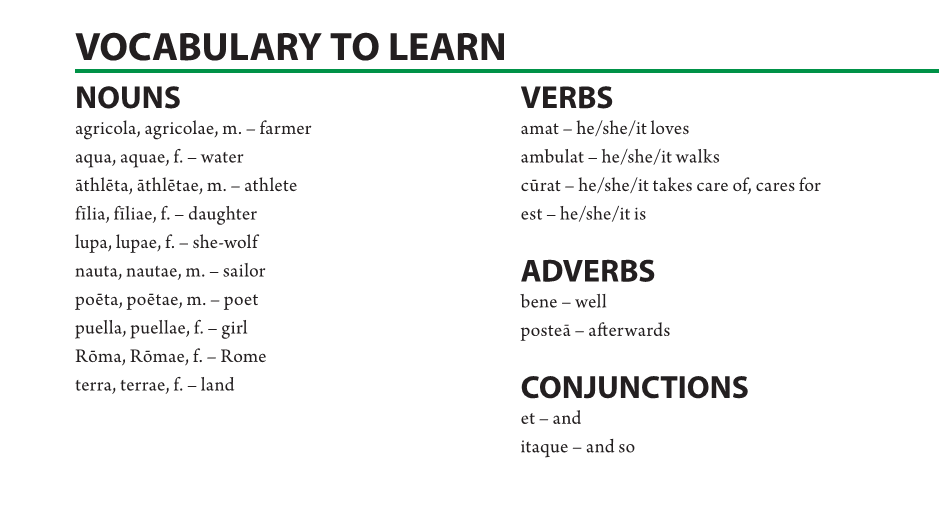
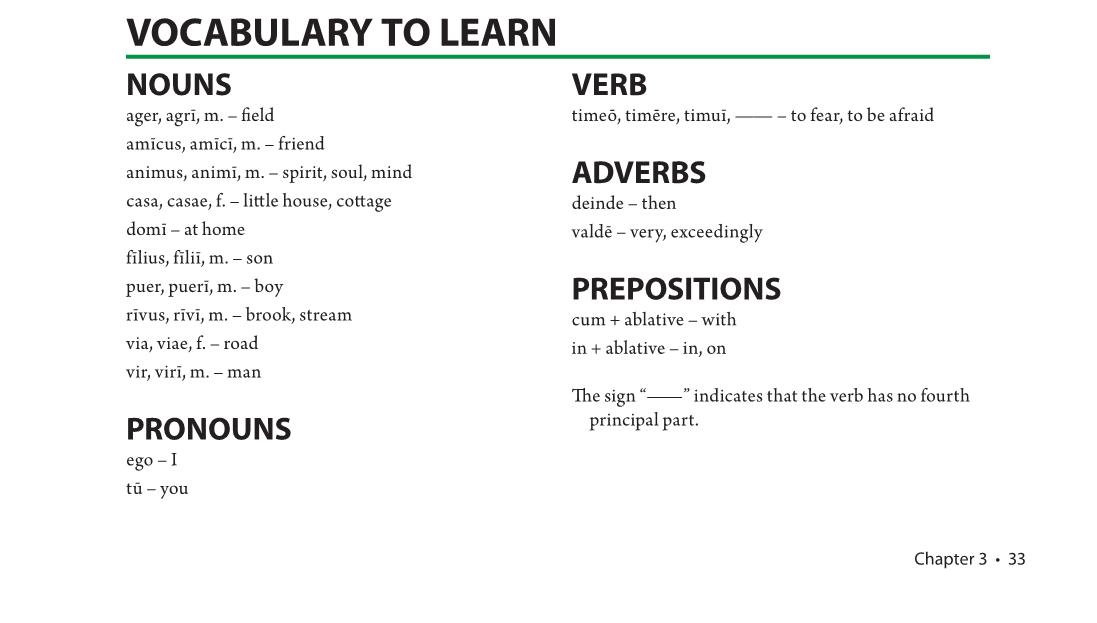
The adjective bonus will agree with all of the following EXCEPT
The field of the good farmer is large.
The Romans see the camp of the Greeks.
Claudius, are you ordering the men to enter the camp?
Distinguished Romans should have great rewards.
The Romans love to tell stories to (their) sons and daughters.
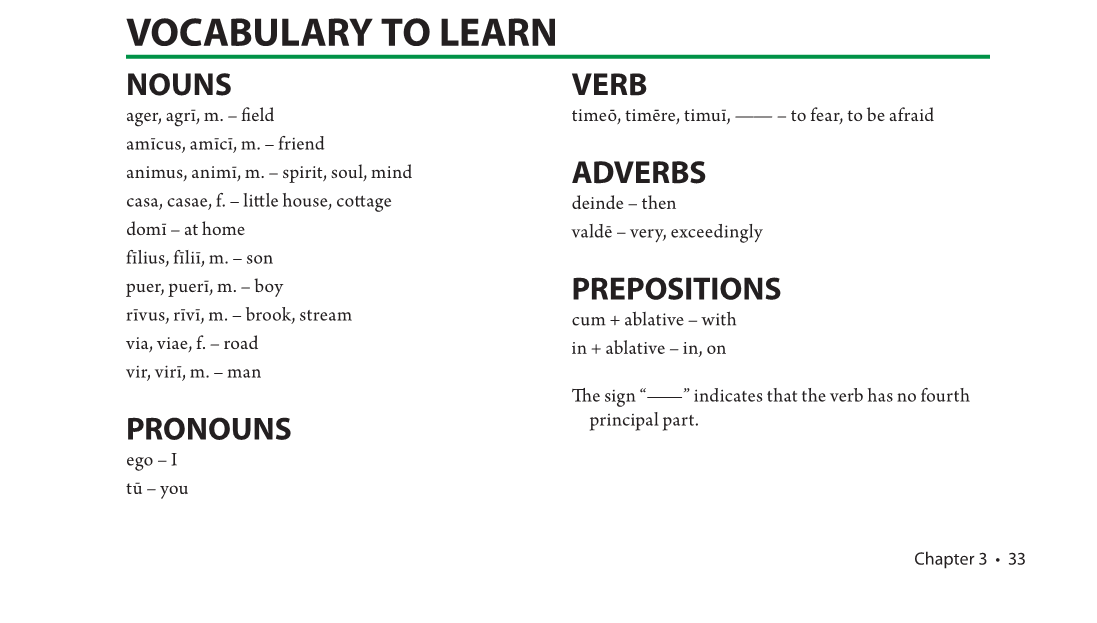
Which of the following does NOT belong grammatically?
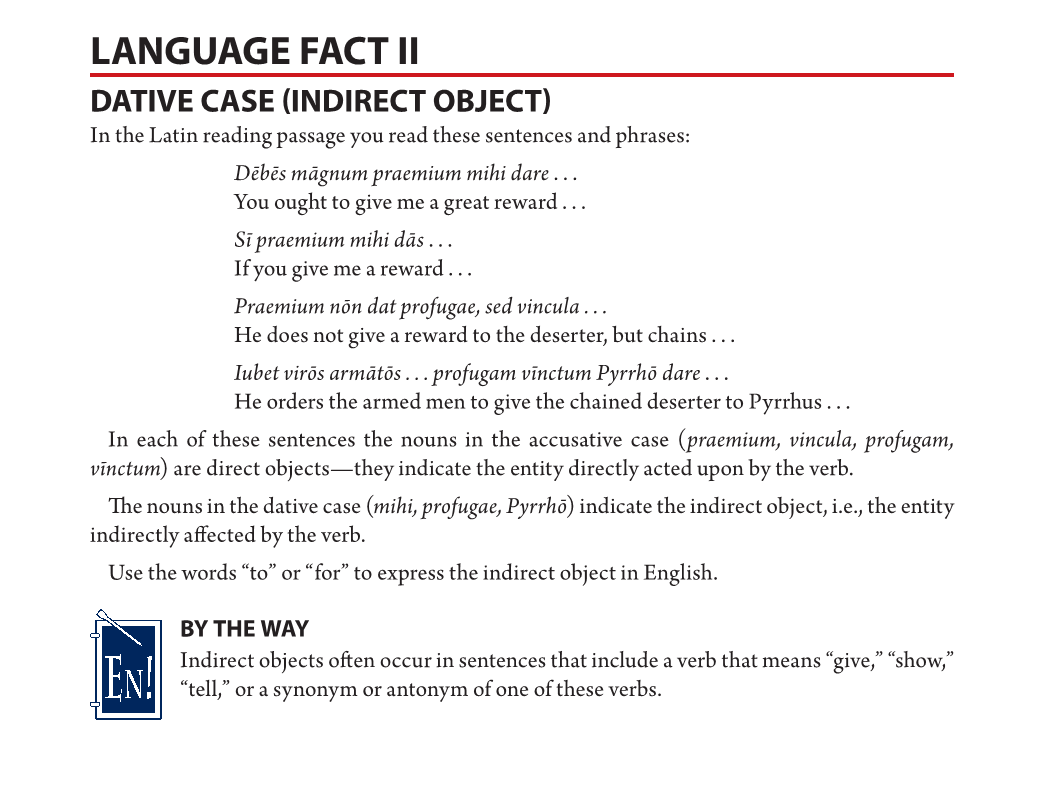
Caesar gave a reward to the good poet.
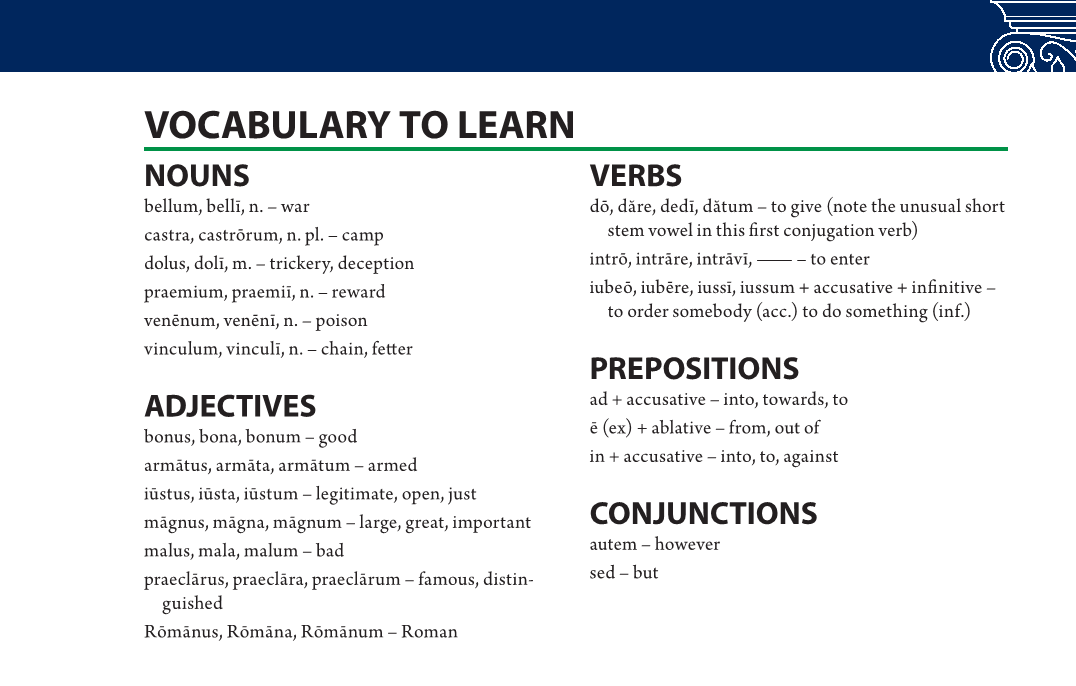
Drive the horses into the water, my friend
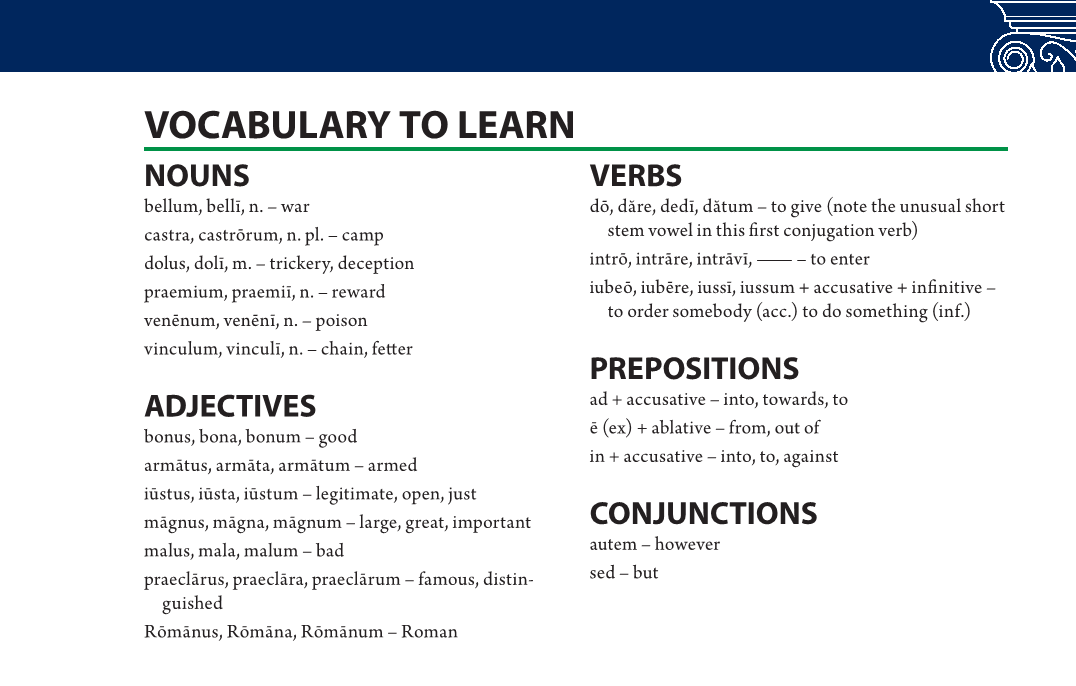
Which verb has an unusual short stem vowel?
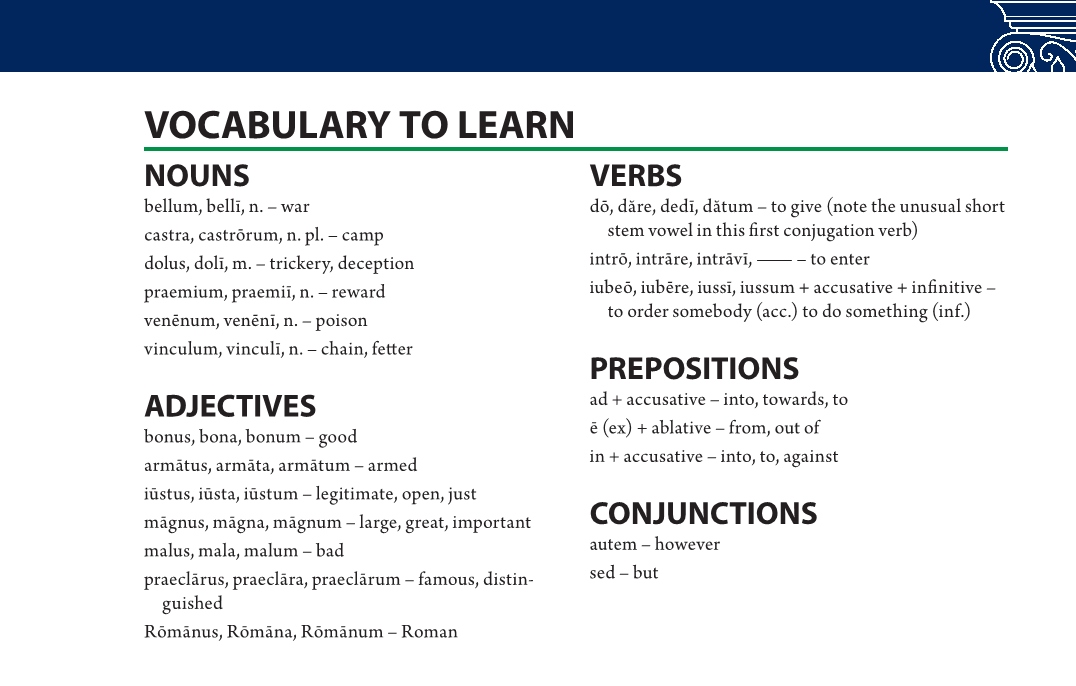
Which of the following does NOT belong to the group by meaning?
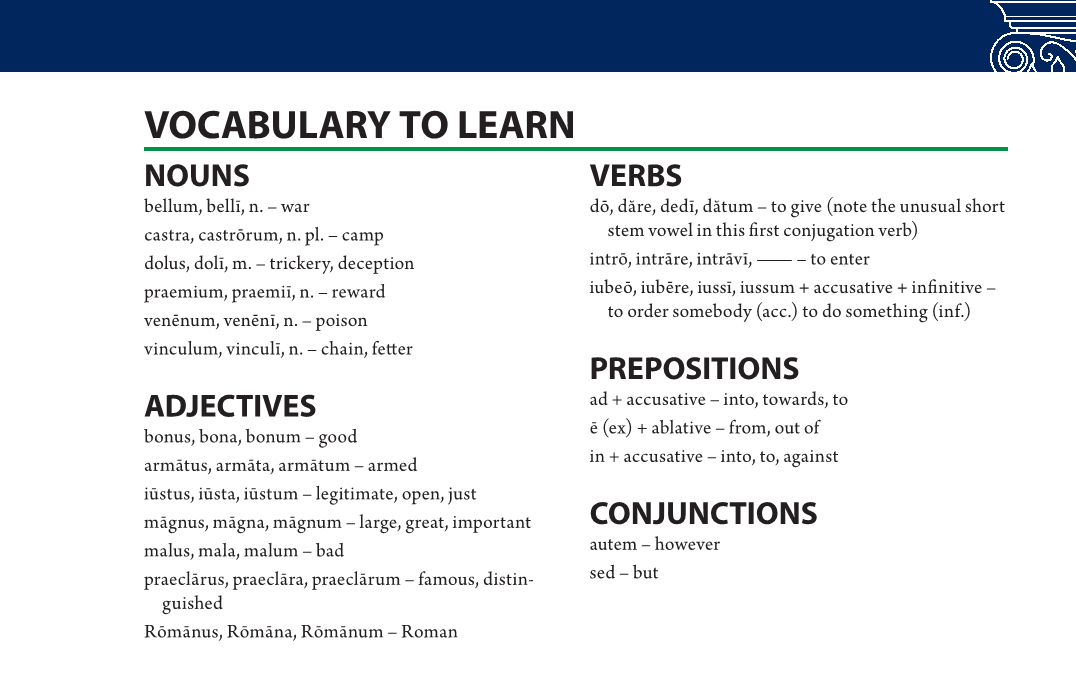
What is the meaning of dolus?
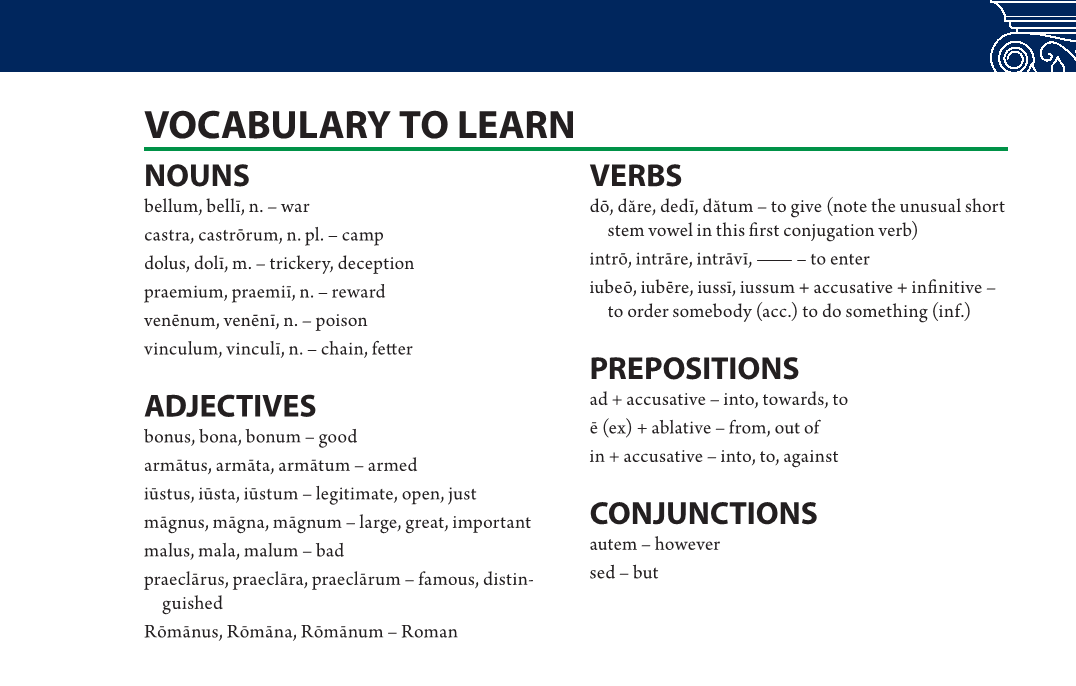
Which of the following is NOT a meaning for iūstus?
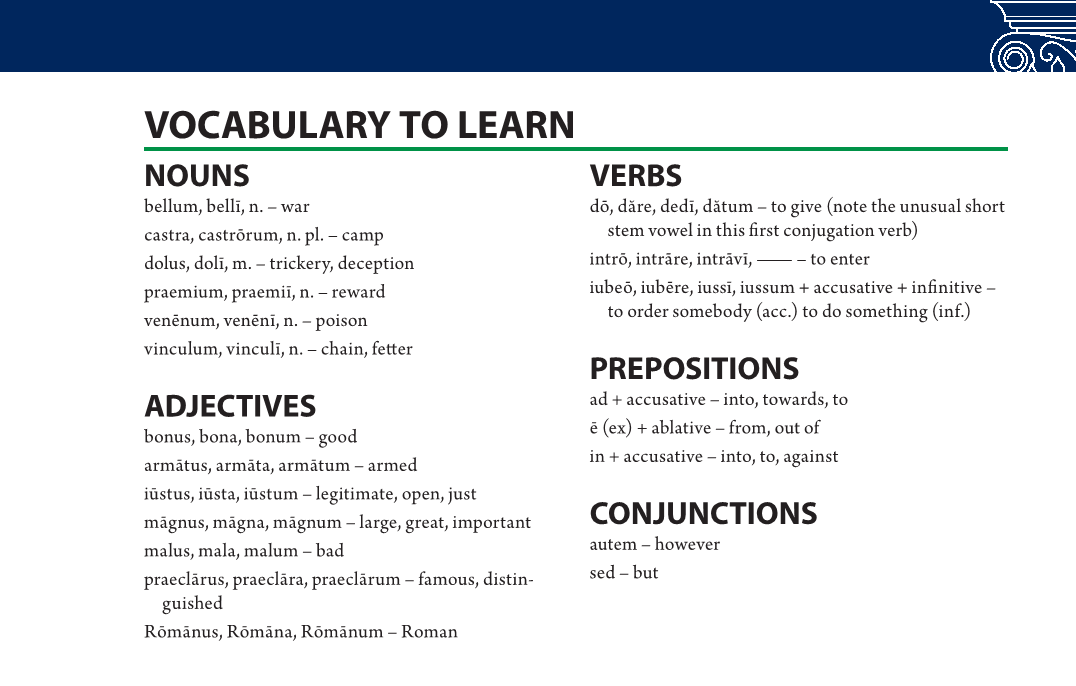
What is the meaning of autem?
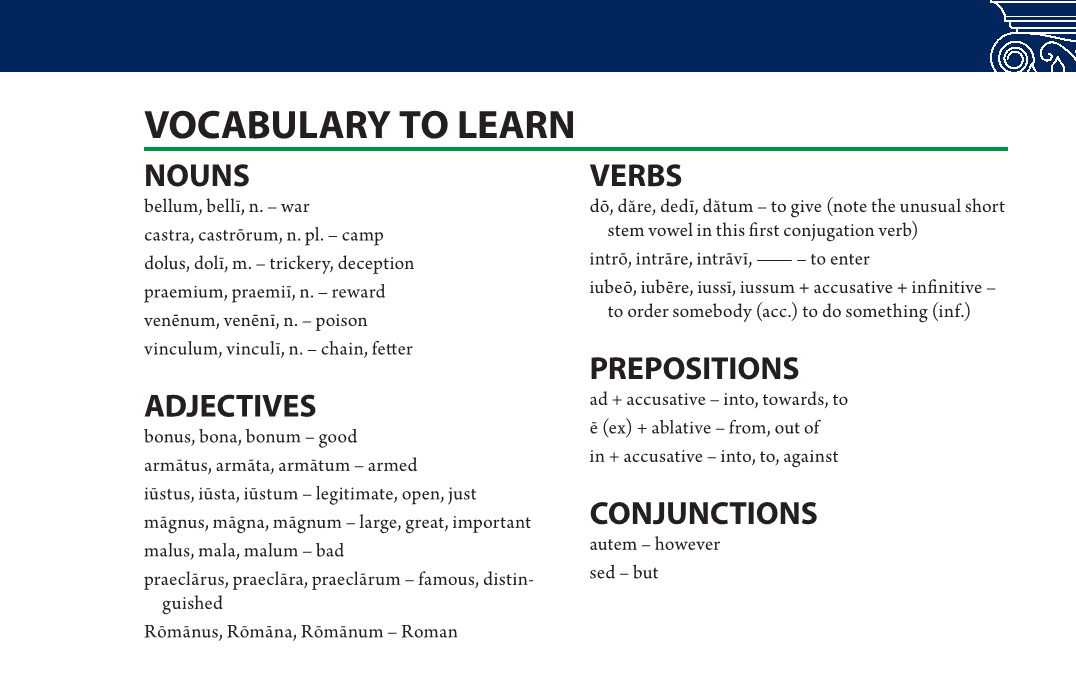
Choose the SYNONYM of sed.
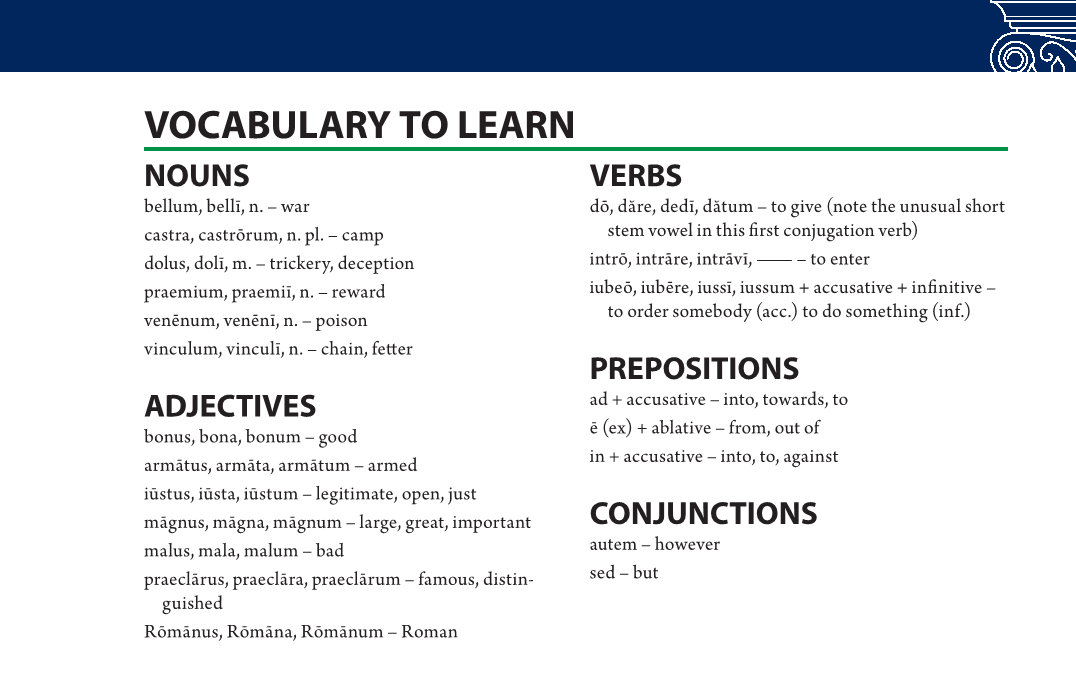
Which of the following could be described as bellicose?
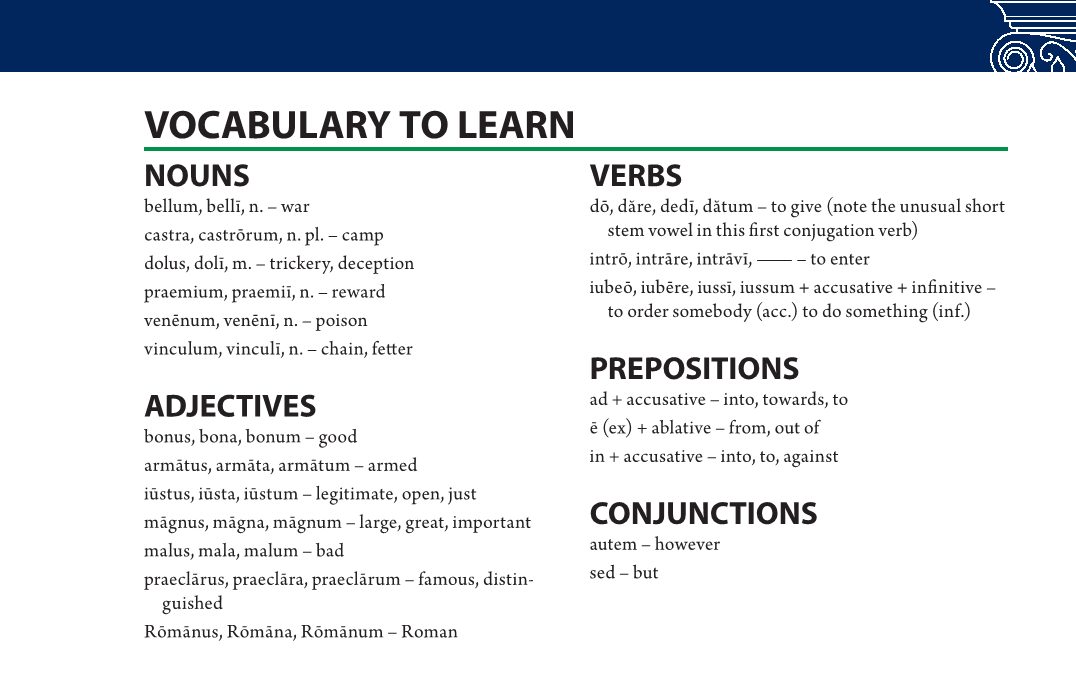
The words “castle” and “chateau” are derived from the Latin word meaning
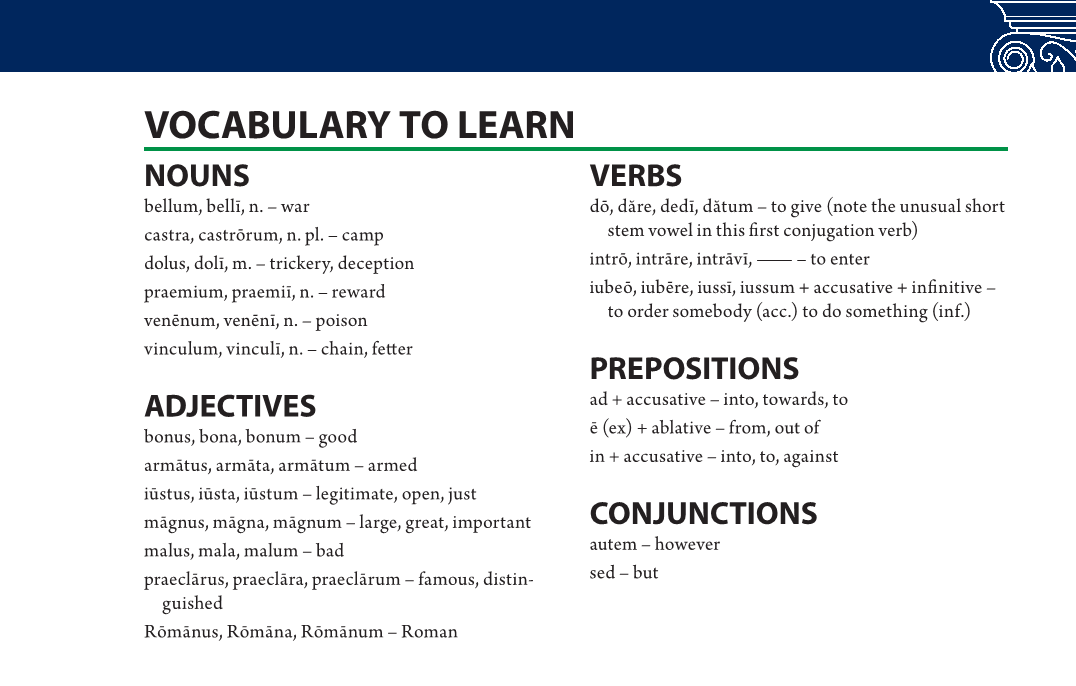
The word “venom” is derived from the Latin word meaning
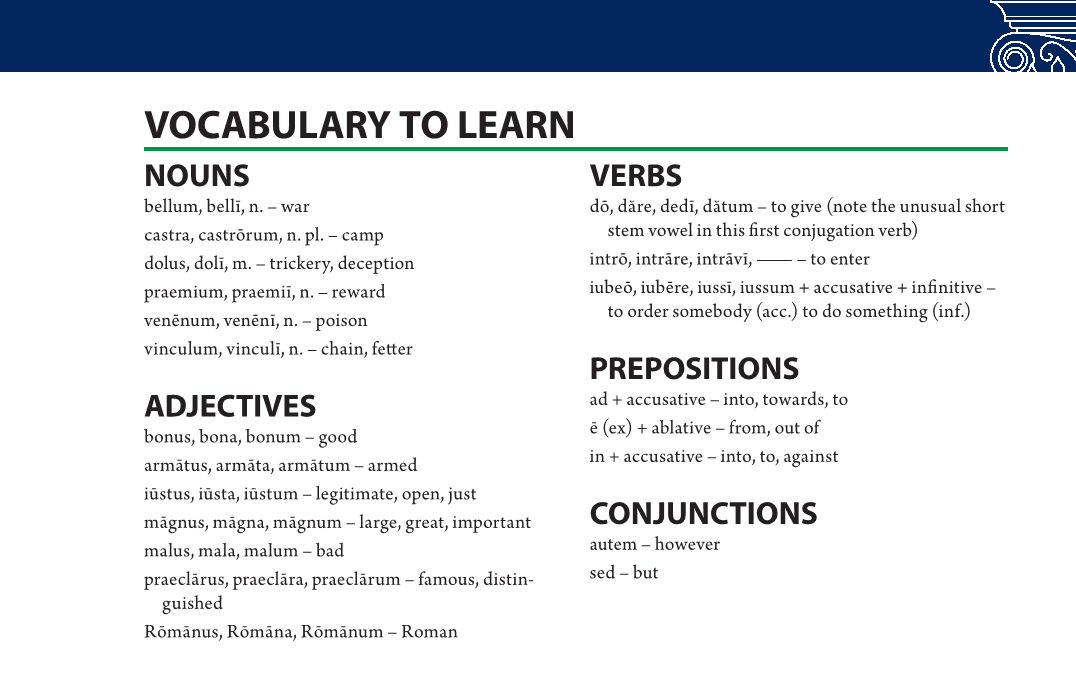
A magnifying glass makes objects seem
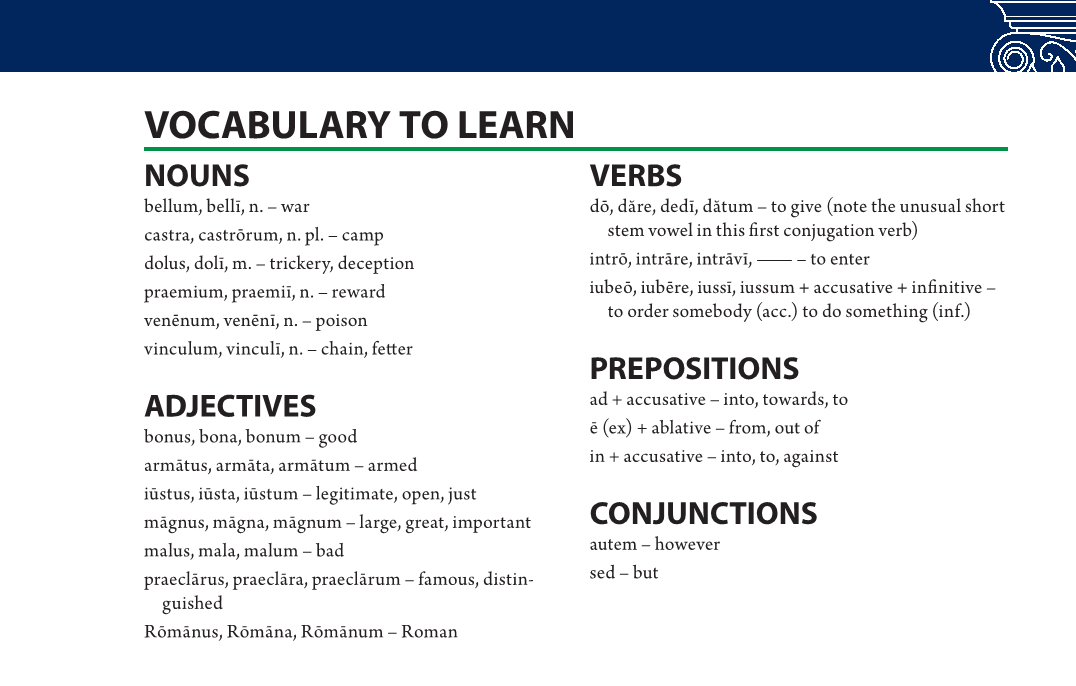
The word bonus is the base of many English words, including all of the following EXCEPT
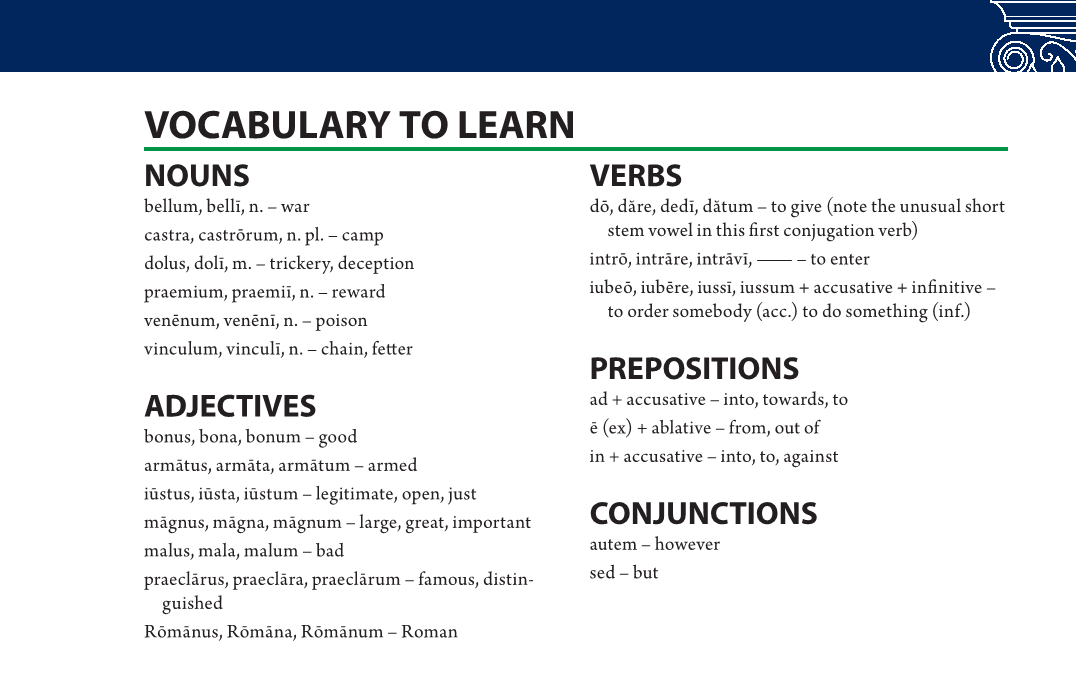
The English word “premium” is derived from the Latin word meaning
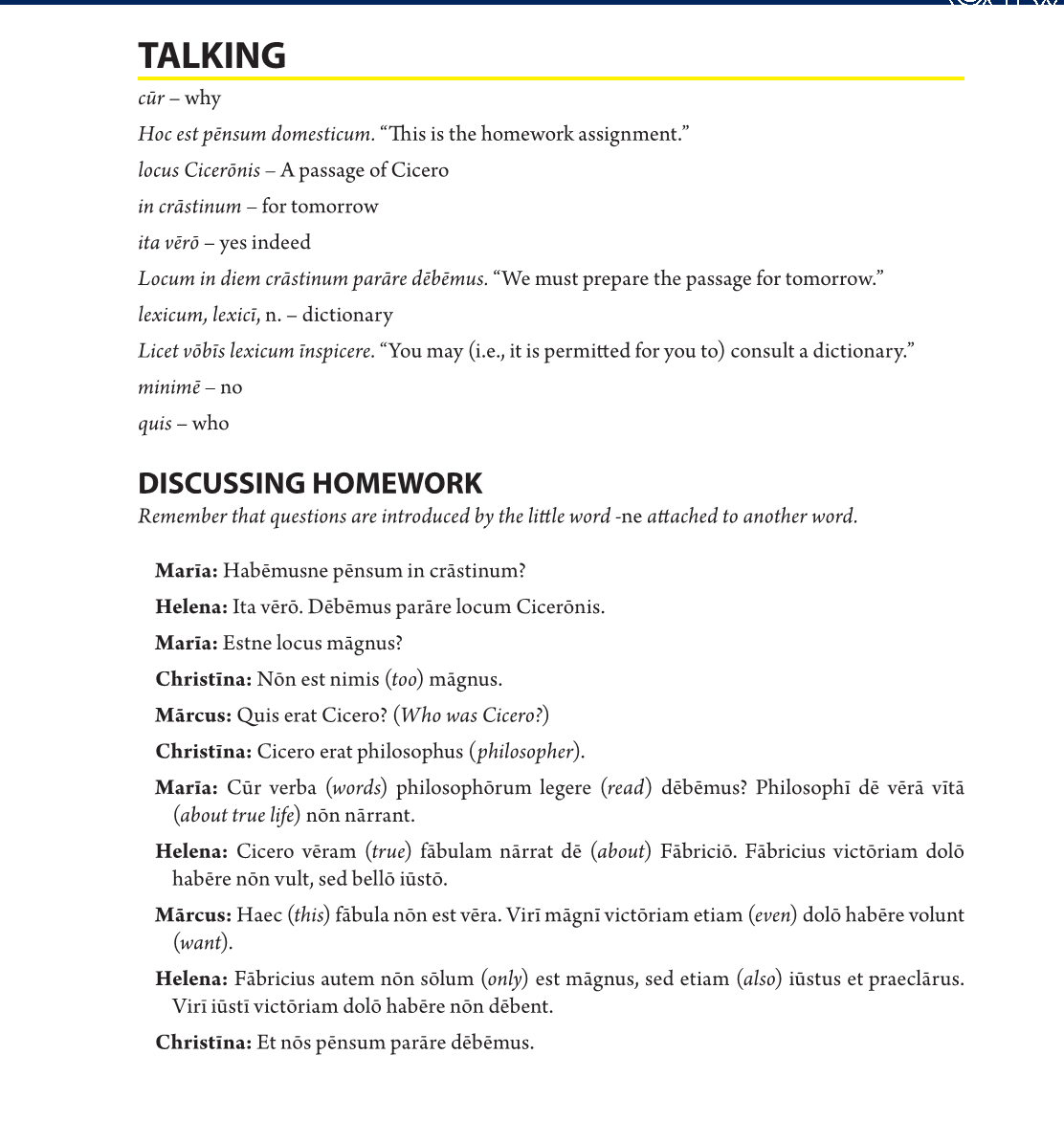
What is a school pēnsum?
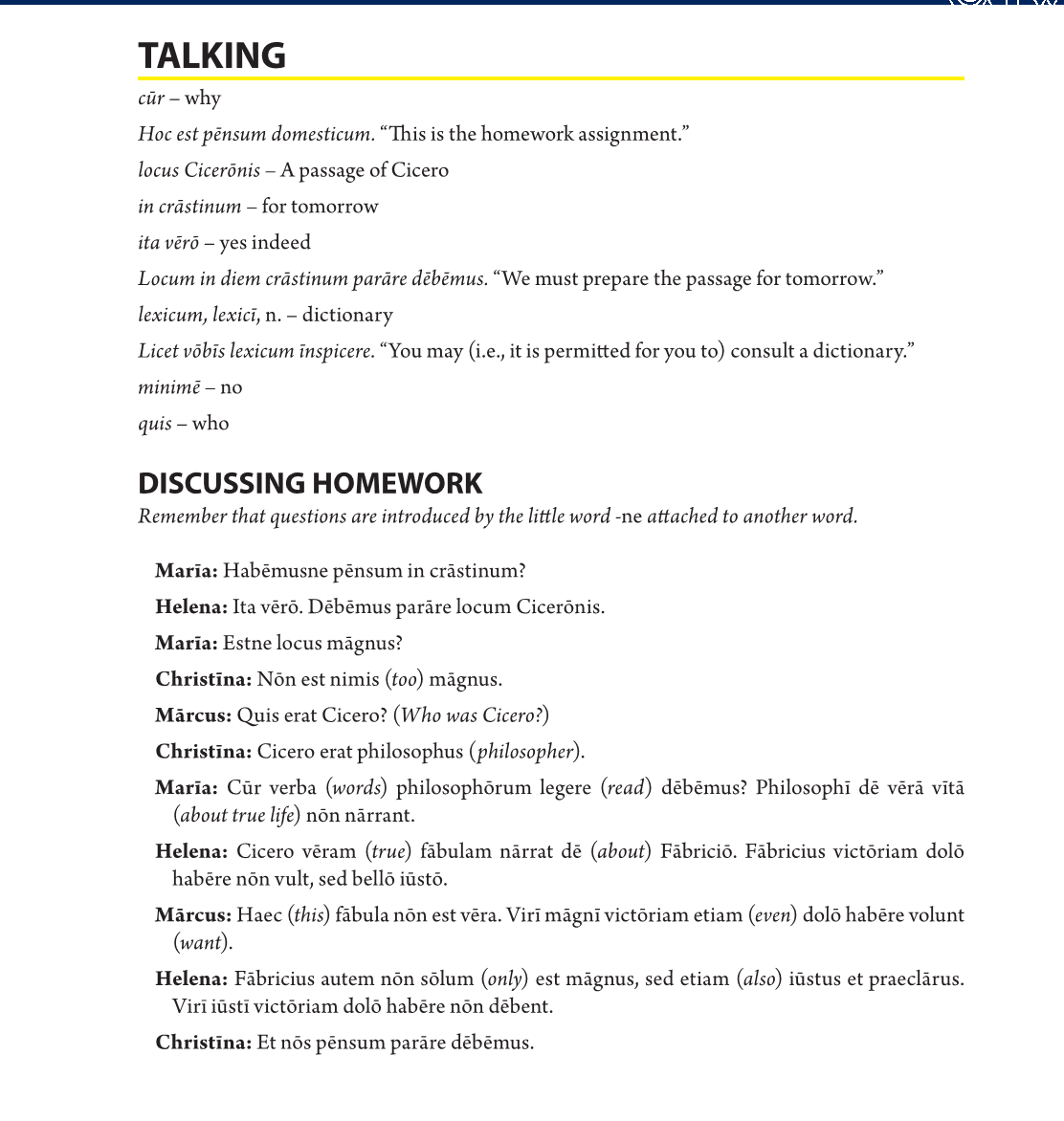
What is a lexicum?
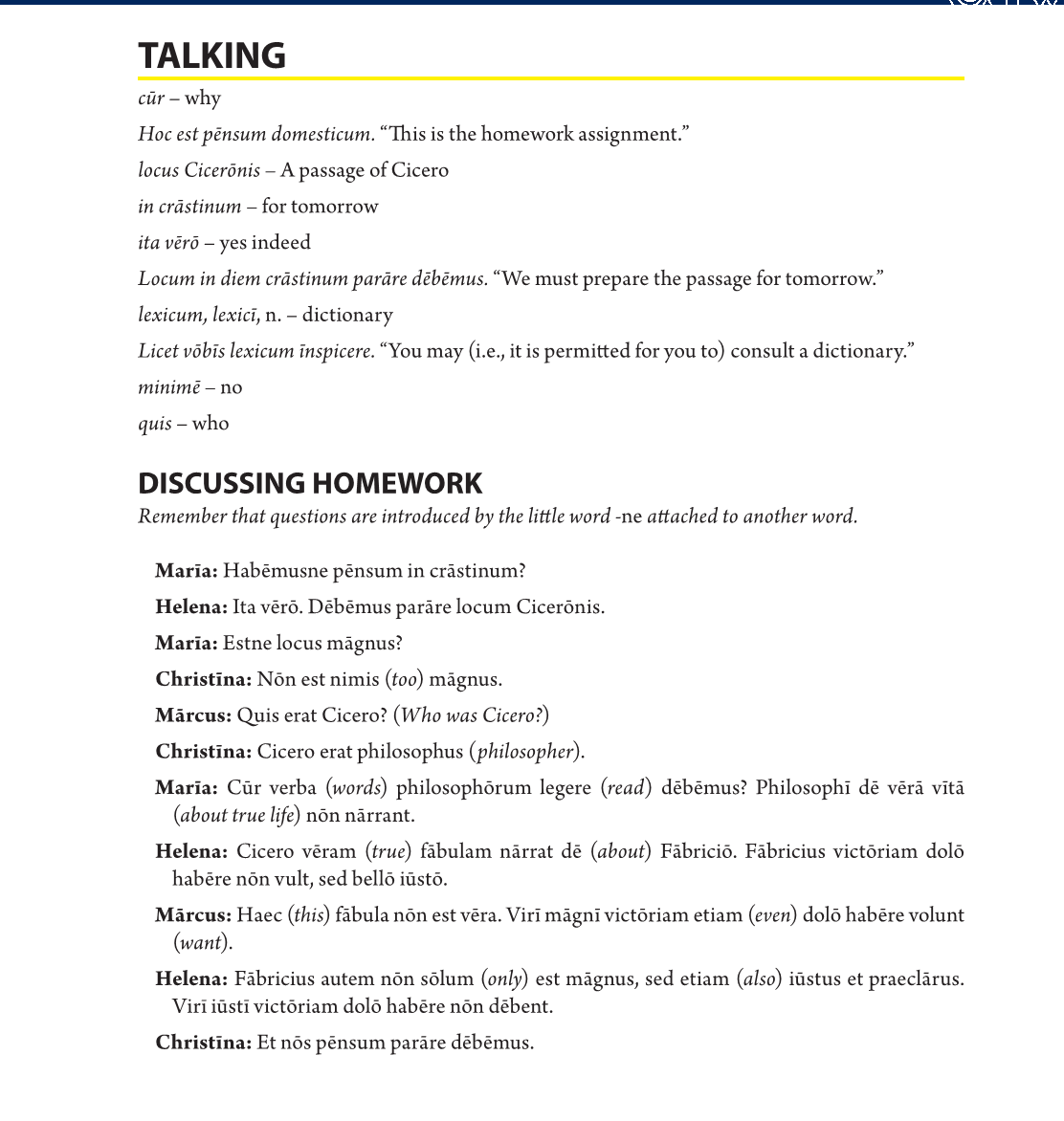
What word can mean “also” or “even”?
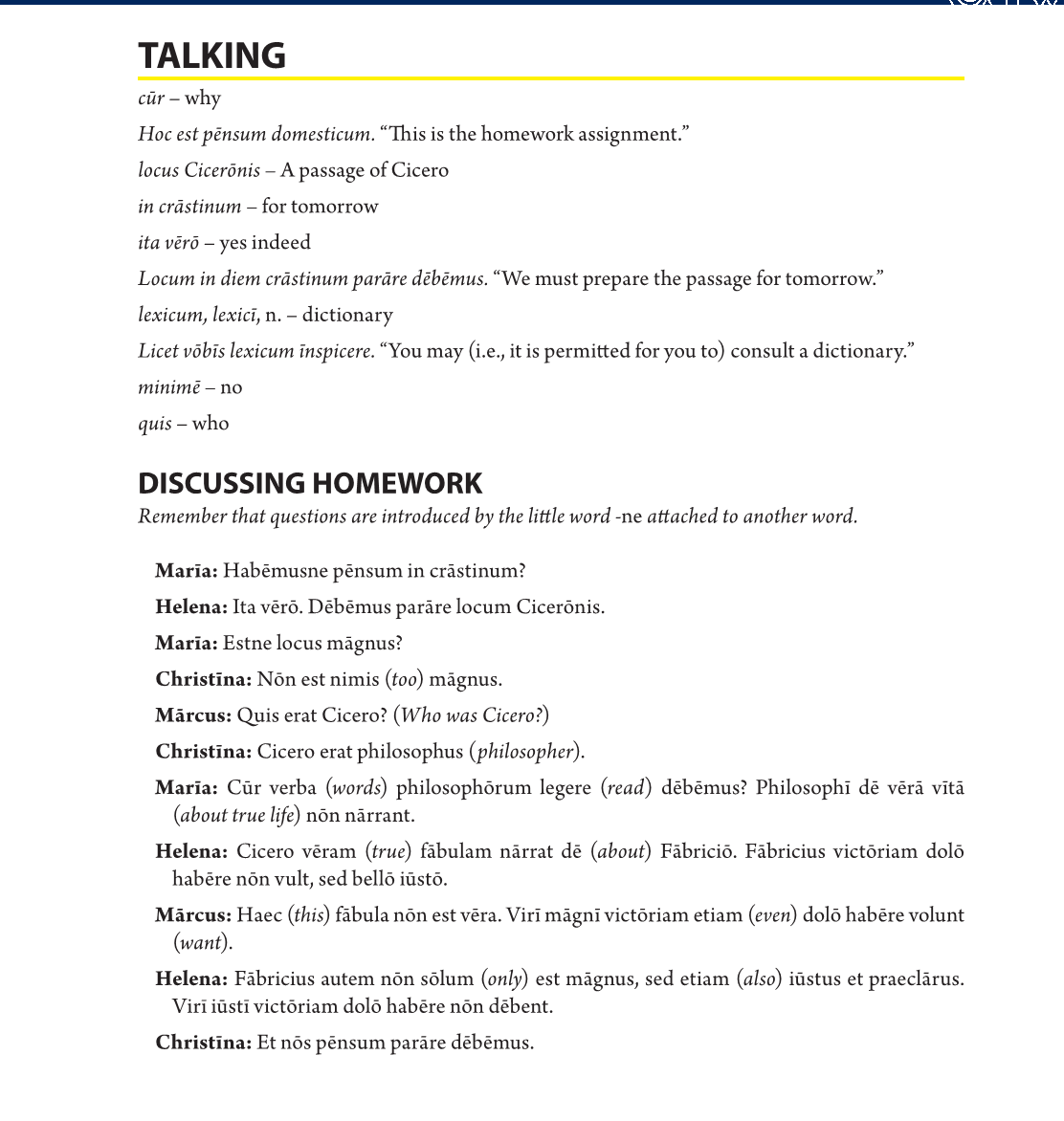
The speaker was known for his veracity.
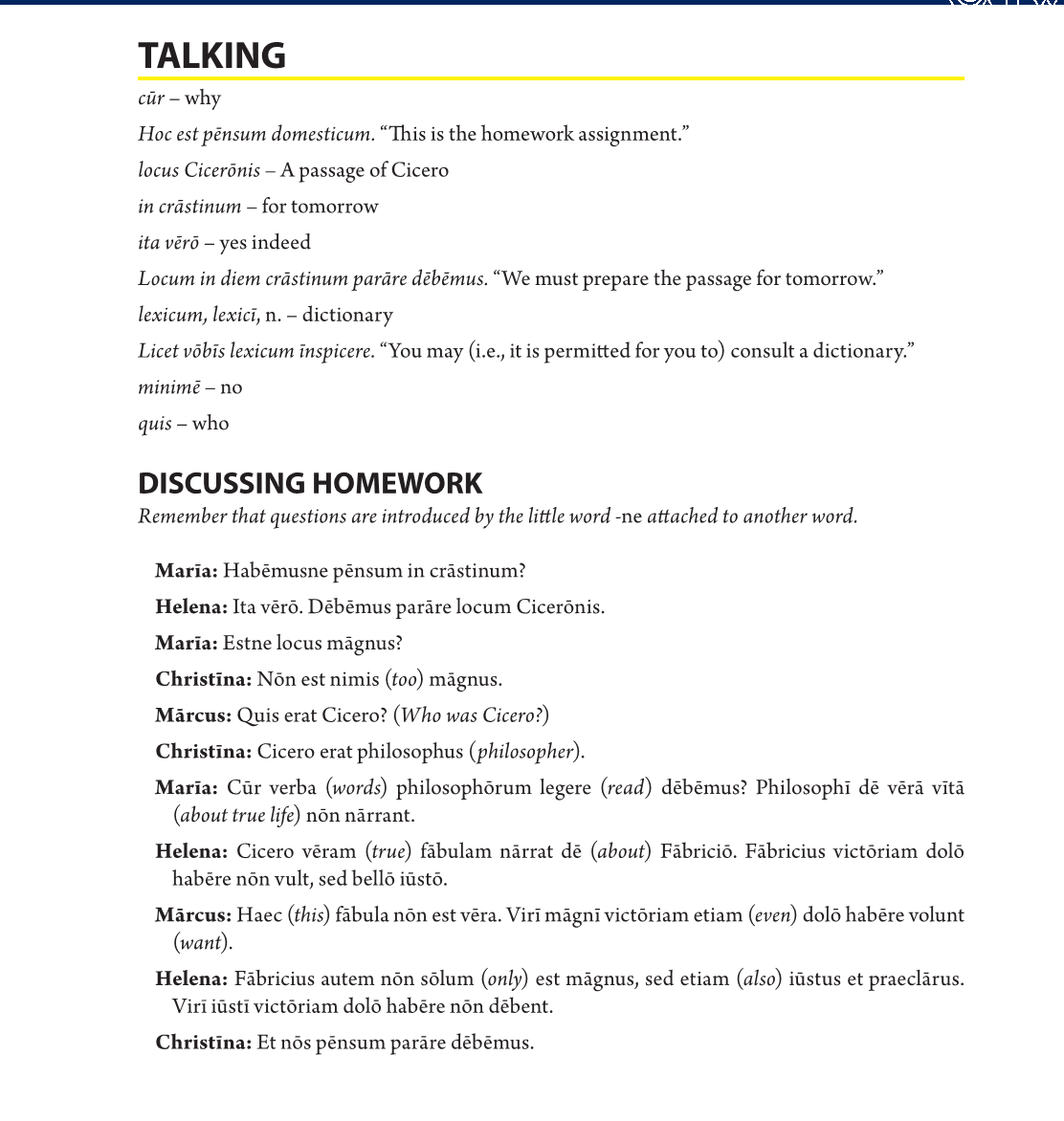
Procrastination, which is derived from the Latin word meaning _____, does not help a student finish an assignment.
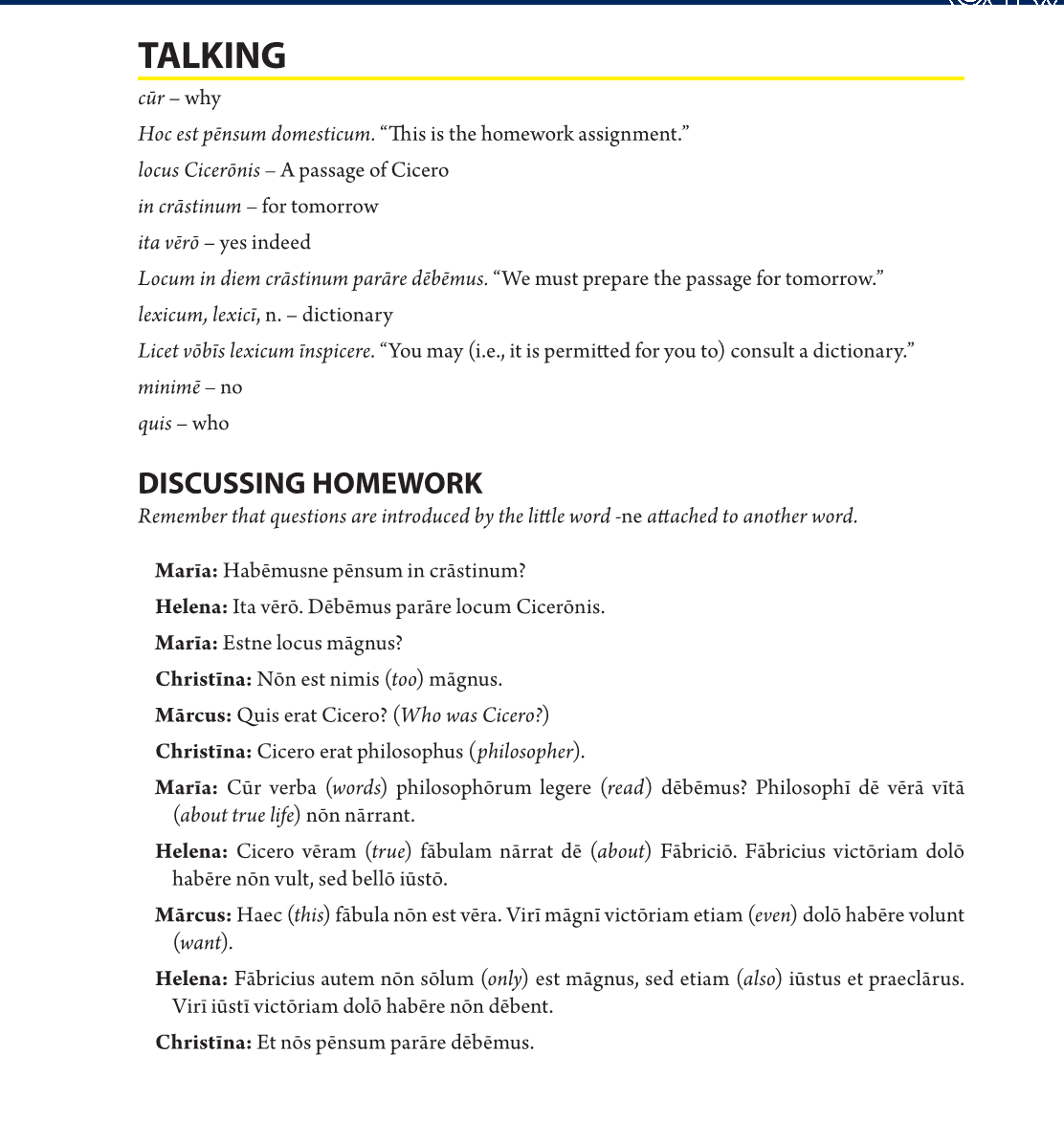
What is one way Romans indicated questions in Latin?