LNM1 Ch 7 Talking and In the Cafeteria
star
star
star
star
star
Last updated almost 4 years ago
3 Nsɛmmisa
12
19
1
Match the Latin term to the English translation:
| Draggable item | arrow_right_alt | Corresponding Item |
|---|---|---|
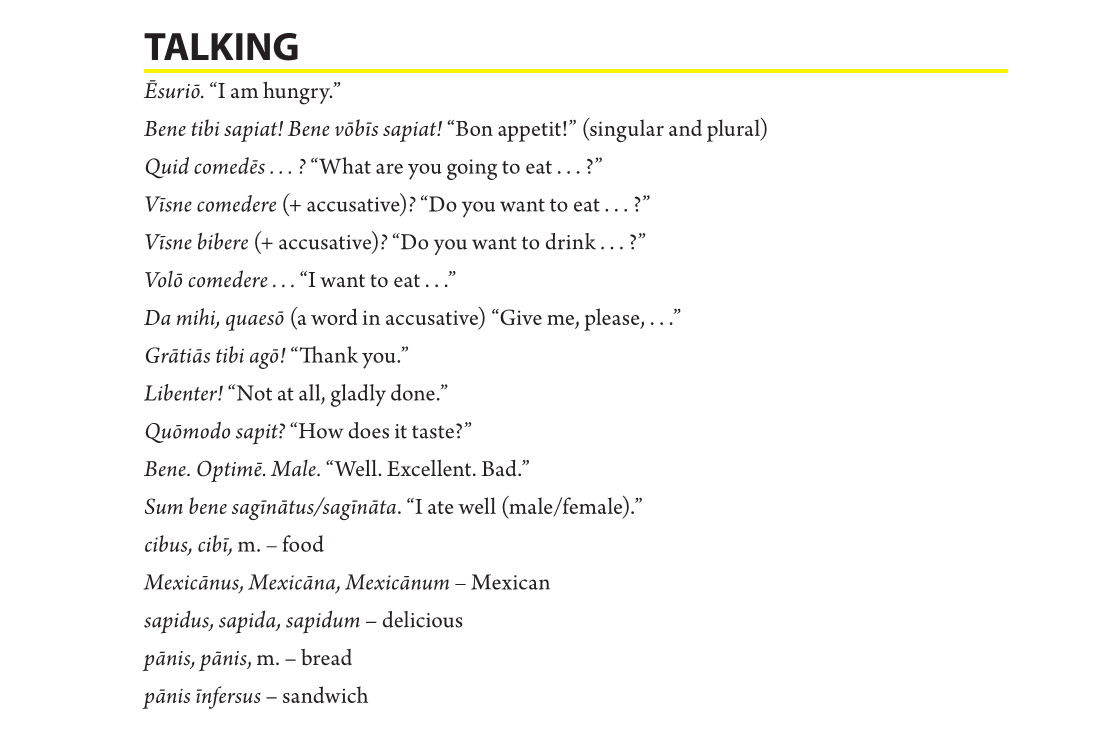
Quōmodo sapit? | arrow_right_alt | “I am hungry.” |
Vīsne bibere (+ accusative)? | arrow_right_alt | “Bon appetit!” (singular and plural) |
Ēsuriō. | arrow_right_alt | “What are you going to eat . . . ?” |
Libenter! | arrow_right_alt | “Do you want to eat . . . ?” |
Da mihi, quaesō (a word in accusative) | arrow_right_alt | “Do you want to drink . . . ?” |
Grātiās tibi agō! | arrow_right_alt | “I want to eat . . .” |
Quid comedēs . . . ? | arrow_right_alt | “Give me, please, . . .” |
Bene tibi sapiat! Bene vōbīs sapiat! | arrow_right_alt | “Thank you.” |
Bene. Optimē. Male. | arrow_right_alt | “Not at all, gladly done.” |
Sum bene sagīnātus/sagīnāta. | arrow_right_alt | “How does it taste?” |
Volō comedere . . . | arrow_right_alt | “Well. Excellent. Bad.” |
Vīsne comedere (+ accusative)? | arrow_right_alt | “I ate well (male/female).” |
Match the Latin term to the English translation:
| Draggable item | arrow_right_alt | Corresponding Item |
|---|---|---|
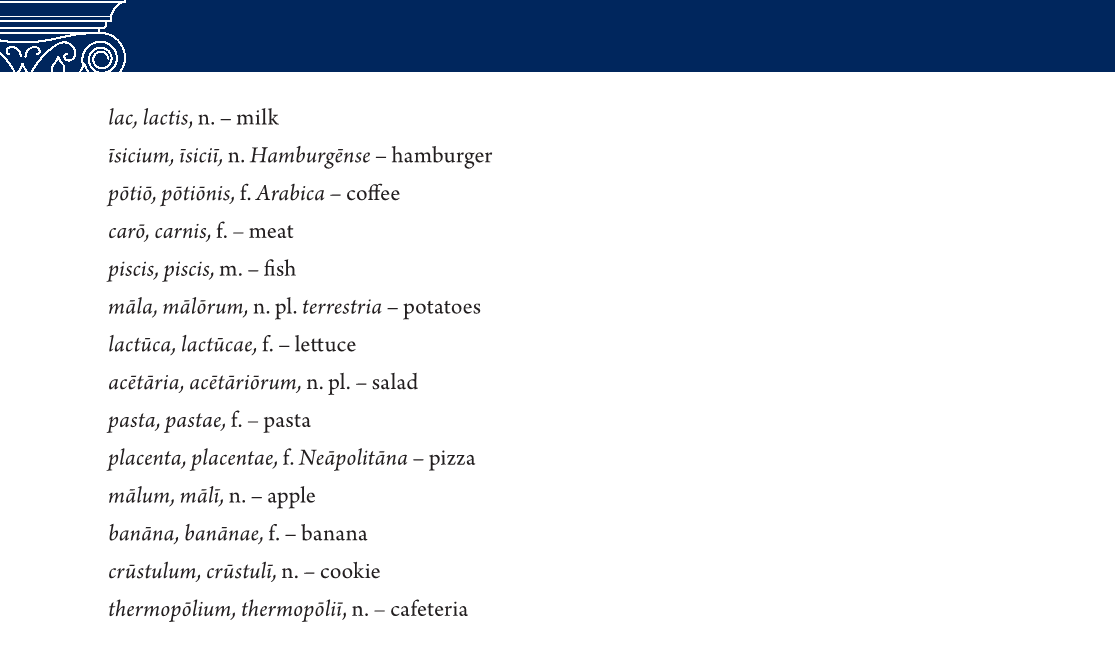
mālum, mālī, n. | arrow_right_alt | food |
cibus, cibī, m. | arrow_right_alt | Mexican |
piscis, piscis, m. | arrow_right_alt | delicious |
crūstulum, crūstulī, n. | arrow_right_alt | bread |
acētāria, acētāriōrum, n. pl. | arrow_right_alt | sandwich |
pānis īnfersus | arrow_right_alt | milk |
lac, lactis, n. | arrow_right_alt | hamburger |
īsicium, īsiciī, n. Hamburgēnse | arrow_right_alt | coffee |
sapidus, sapida, sapidum | arrow_right_alt | meat |
lactūca, lactūcae, f. | arrow_right_alt | fish |
banāna, banānae, f. | arrow_right_alt | potatoes |
māla, mālōrum, n. pl. terrestria | arrow_right_alt | lettuce |
Mexicānus, Mexicāna, Mexicānum | arrow_right_alt | salad |
pānis, pānis, m. | arrow_right_alt | pasta |
pōtiō, pōtiōnis, f. Arabica | arrow_right_alt | pizza |
pasta, pastae, f. | arrow_right_alt | apple |
thermopōlium, thermopōliī, n. | arrow_right_alt | banana |
carō, carnis, f. | arrow_right_alt | cookie |
placenta, placentae, f. Neāpolitāna – | arrow_right_alt | cafeteria |
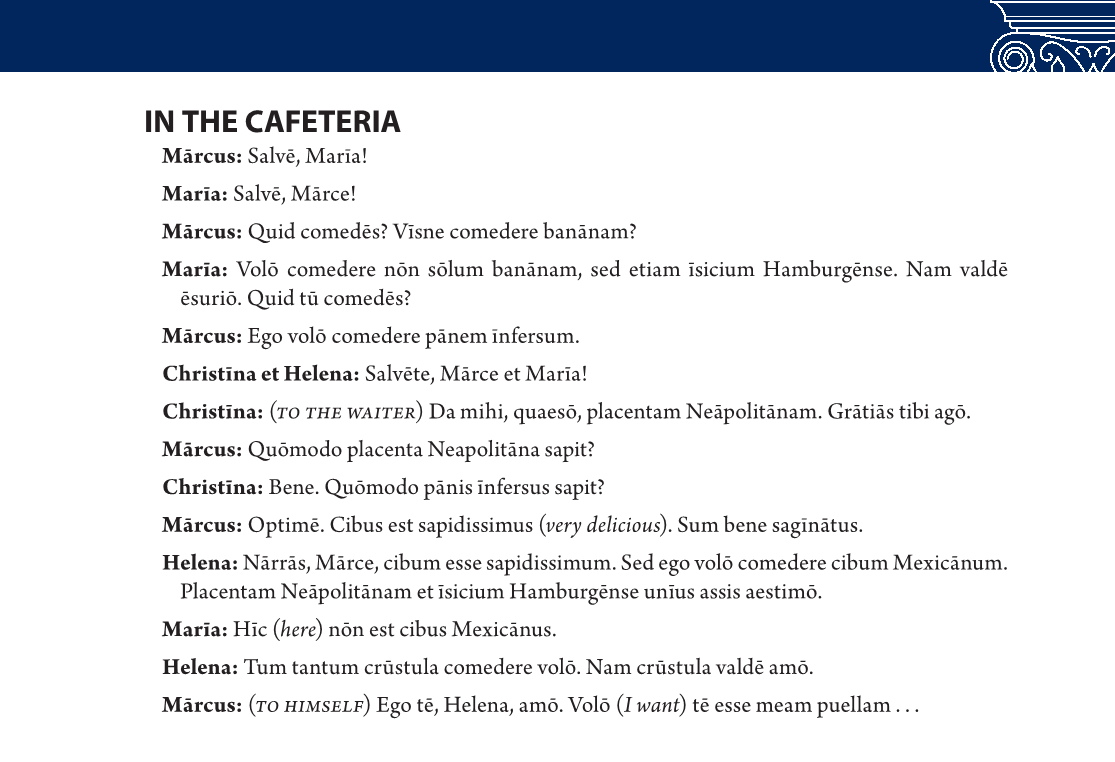
Mārcus: Salvē, Marīa!
Marīa: Salvē, Mārce!
Mārcus: Quid comedēs? Vīsne comedere
Marīa: Volō comedere nōn sōlum
Mārcus: Ego volō comedere
Christīna et Helena: Salvēte, Mārce et Marīa!
Christīna: (to the waiter) Da mihi, quaeso ,
Mārcus: Quōmodo
Christīna: Bene. Quōmodo
Mārcus: Optimē. Cibus est sapidissimus (very delicious). Sum bene sagīnātus.
Helena: Nārrās, Mārce, cibum esse sapidissimum. Sed ego volō comedere
Marīa: Hīc (here) nōn est
Helena: Tum tantum
Mārcus: (to himself) Ego tē, Helena, amō. Volō (I want) tē esse meam puellam . . .