Log in
Sign up for FREE
arrow_back
Library

Grade 8: Section 1.1 WHMIS Symbols & Safety

star
star
star
star
star
Last updated 20 days ago
30 questions
Required
1
Required
1
Required
1
Required
1
Required
1
Required
1
Required
1
Required
1
Required
1
Required
1
Required
1
Required
1
Required
1
Required
1
Required
1
Required
1
Required
1
Required
1
Required
3
Required
10
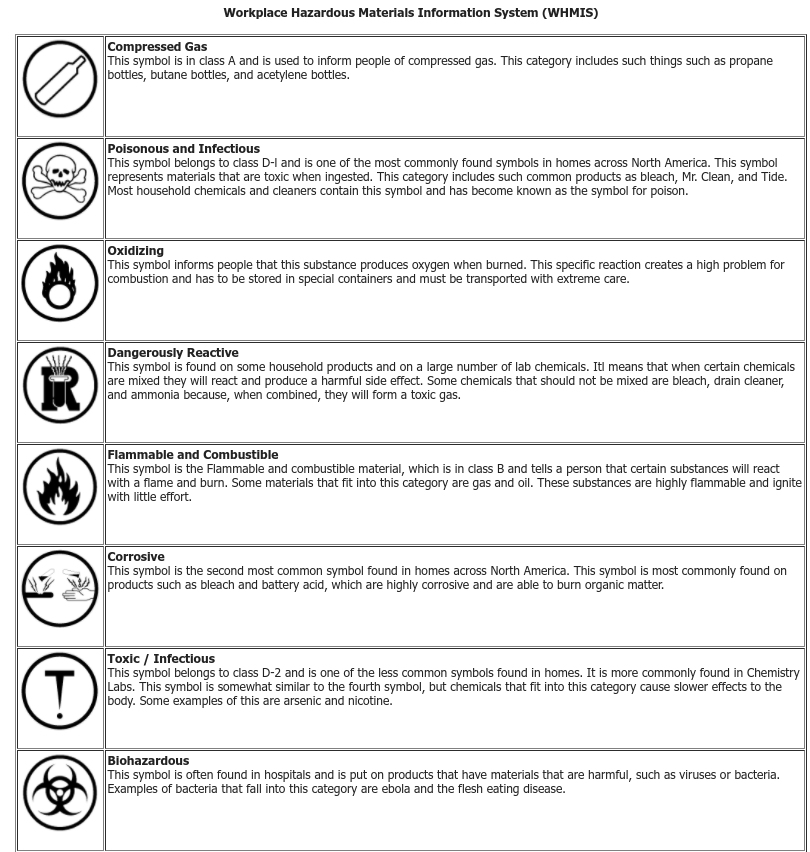
Canada has aligned the Workplace Hazardous Materials Information System (WHMIS) with the Globally Harmonized System of Classification and Labeling of Chemicals (GHS).
https://www.ccohs.ca/oshanswers/chemicals/whmis_ghs/pictograms.html
Use this link for a detailed list of the newer WHMIS symbols.
Old Symbols
WHMIS
Required
1
Required
1
Required
1
Required
1
Required
1
Required
1
Required
1
Required
1
Required
1
Required
1

Lab Safety Rules

Question 11
11.

Question 12
12.

Question 13
13.

Question 14
14.

Question 15
15.

Question 16
16.

Question 17
17.

Question 18
18.

Question 19
19.

Question 20
20.

Question 21
21.

Question 22
22.

Question 23
23.

Question 24
24.

Question 25
25.

Question 26
26.

Question 27
27.

Question 28
28.

Question 29
29.

Why should materials/substances have hazard labels on them? Give a specific example from a product you viewed in class or one you know of from your house.

Question 30
30.

Some of the students are not following proper safety procedures in the picture below. Identify and list the problems in a table. Then suggest a better, safer way to perform each action.

Question 1
1.

Question 2
2.

Question 3
3.

Question 4
4.

Question 5
5.

Question 6
6.

Question 7
7.

Question 8
8.

Question 9
9.

Question 10
10.

The first thing you should do if you break something during a lab is:
cover it up
pretend you didn't do it
clean it up
tell the teacher
Which of the following is NOT a lab rule
remove clutter from lab station (no extra books, binders)
tie long hair up during labs
finish labs as quickly and carelessly as possible
never eat or drink during a lab
What should you do with chemicals once you’ve completed the lab?
take them home
pour them back into the chemical container they came from to save materials
pour them into the designated waste container that your teacher told you about before the lab started
pour them down the drain carefully with water
During an experiment you are instructed to smell a chemical. What is the correct procedure?
Heat the chemical and then smell it.
Stick your nose close to the container and breathe deeply.
Point the container away from your face while you use your hand to fan the air above the test tube toward your nose (waft it).
The following footwear is best in the laboratory:
sandals
shoes appropriate for the weather
shoes that cover the whole foot
When you finish working with chemicals, biological specimens, and other lab substances, always
lick your fingers
wipe your hands on your clothes
wash your hands thoroughly with soap and water
Before you touch an electrical switch, plug, or outlet
your hands must be dry
the cord must be frayed (wires exposed)
ask the custodian
To prevent accidents during lab you should:
hurry ahead of others
ask someone else to do the work
follow your teacher's directions
use shortcuts
The most important thing in laboratory experiments is:
getting the answer right
finishing first
safety
You have been injured in the laboratory (cut, burn, etc.). First you should
go to the bathroom
ignore it until after school
tell the teacher
snap chat it
In order to find out all the information about a chemical you should refer to:
the safety data sheet (SDS) / material safety data sheet (MSDS)
your friend
A good way to identify an unknown substance is to taste it.
True
False
Loose clothing is preferable during labs because you can get out of them faster.
True
False
When collecting your chemicals, you should take only what is needed and leave the original container at the front of the class.
True
False
Anytime you are working with Chemicals you must wear safety goggles.
True
False
It is the students responsibility to clean up their lab area after an experiment
True
False
Playing around during a science experiment is ok to do.
True
False
For our purposes, safety symbols can be divided into two categories: hazardous household product symbols (HHPS) and workplace hazardous materials information system (WHMIS) symbols.
True
False
This WHMIS Symbol represents:
Oxidizing hazard.
May cause less serious health effects or damage the ozone layer.
Corrosive damage to metals, skin and eyes.
May cause damage to the aquatic environment.
May cause or suspected of causing serious health effects.
Fire hazard.
Explosion or reactivity hazard.
Can cause death or toxicity with short exposure to small amounts.
Gases under pressure.
Biohazardous Infectious Materials - for organisms or toxins that can cause diseases in people or animals.
This WHMIS Symbol represents:
Oxidizing hazard.
Explosion or reactivity hazard.
May cause damage to the aquatic environment.
Biohazardous Infectious Materials - for organisms or toxins that can cause diseases in people or animals.
Fire hazard.
Can cause death or toxicity with short exposure to small amounts.
Gases under pressure.
May cause less serious health effects or damage the ozone layer.
Corrosive damage to metals, skin and eyes.
May cause or suspected of causing serious health effects.
This WHMIS Symbol represents:
Explosion or reactivity hazard.
May cause less serious health effects or damage the ozone layer.
Fire hazard.
May cause or suspected of causing serious health effects.
May cause damage to the aquatic environment.
Oxidizing hazard.
Biohazardous Infectious Materials - for organisms or toxins that can cause diseases in people or animals.
Corrosive damage to metals, skin and eyes.
Gases under pressure.
Can cause death or toxicity with short exposure to small amounts.
This WHMIS Symbol represents:
May cause damage to the aquatic environment.
Explosion or reactivity hazard.
Can cause death or toxicity with short exposure to small amounts.
May cause less serious health effects or damage the ozone layer.
Fire hazard.
Gases under pressure.
Corrosive damage to metals, skin and eyes.
May cause or suspected of causing serious health effects.
Oxidizing hazard.
Biohazardous Infectious Materials - for organisms or toxins that can cause diseases in people or animals.
This WHMIS Symbol represents:
May cause less serious health effects or damage the ozone layer.
May cause or suspected of causing serious health effects.
Fire hazard.
Can cause death or toxicity with short exposure to small amounts.
Explosion or reactivity hazard.
Gases under pressure.
May cause damage to the aquatic environment.
Oxidizing hazard.
Corrosive damage to metals, skin and eyes.
Biohazardous Infectious Materials - for organisms or toxins that can cause diseases in people or animals.
This WHMIS Symbol represents:
Can cause death or toxicity with short exposure to small amounts.
May cause or suspected of causing serious health effects.
Gases under pressure.
Biohazardous Infectious Materials - for organisms or toxins that can cause diseases in people or animals.
Oxidizing hazard.
May cause damage to the aquatic environment.
Corrosive damage to metals, skin and eyes.
Explosion or reactivity hazard.
May cause less serious health effects or damage the ozone layer.
Fire hazard.
This WHMIS Symbol represents:
Corrosive damage to metals, skin and eyes.
Can cause death or toxicity with short exposure to small amounts.
Gases under pressure.
May cause or suspected of causing serious health effects.
Biohazardous Infectious Materials - for organisms or toxins that can cause diseases in people or animals.
Explosion or reactivity hazard.
May cause less serious health effects or damage the ozone layer.
Oxidizing hazard.
Fire hazard.
May cause damage to the aquatic environment.
This WHMIS Symbol represents:
May cause damage to the aquatic environment.
May cause or suspected of causing serious health effects.
Fire hazard.
Oxidizing hazard.
Explosion or reactivity hazard.
Corrosive damage to metals, skin and eyes.
Can cause death or toxicity with short exposure to small amounts.
May cause less serious health effects or damage the ozone layer.
Biohazardous Infectious Materials - for organisms or toxins that can cause diseases in people or animals.
Gases under pressure.
This WHMIS Symbol represents:
Explosion or reactivity hazard.
May cause less serious health effects or damage the ozone layer.
Oxidizing hazard.
Gases under pressure.
Corrosive damage to metals, skin and eyes.
May cause damage to the aquatic environment.
Can cause death or toxicity with short exposure to small amounts.
Biohazardous Infectious Materials - for organisms or toxins that can cause diseases in people or animals.
Fire hazard.
May cause or suspected of causing serious health effects.
This WHMIS Symbol represents:
Corrosive damage to metals, skin and eyes.
Explosion or reactivity hazard.
Fire hazard.
May cause damage to the aquatic environment.
Biohazardous Infectious Materials - for organisms or toxins that can cause diseases in people or animals.
Gases under pressure.
Oxidizing hazard.
May cause less serious health effects or damage the ozone layer.
May cause or suspected of causing serious health effects.
Can cause death or toxicity with short exposure to small amounts.