Recycling Copper Lab
star
star
star
star
star
Last updated almost 6 years ago
9 Nsɛmmisa
1
1
1
1
1
1
1
1
1
Purpose: The purpose of this lab is to perform a sequence of chemical reactions illustrating the properties of copper and its compounds. Copper (II) nitrate will undergo a series of reactions including decomposition, single replacement, and double replacement. At the completion of the lab, elemental copper will produced.
Decomposition: A + B -> AB
Single Replacement: element + compound -> element compound (A + BC -> AC + B)
Double Replacement: compound + compound -> compound + compound (AB + CD -> AD + CB)
Procedure
Part 1
1) Add 2 mL of 0.5 M copper (II) nitrate solution to the test tube
2) Add 2 mL of 0.5 M sodium hydroxide solution to the same test tube
3) Mix the combined solution with the stirring rod. Rinse the stirring rod thoroughly with water before setting it down on the table.
Record Observations
Part 2
1) Obtain a 100 mL beaker and fill halfway with tap water.
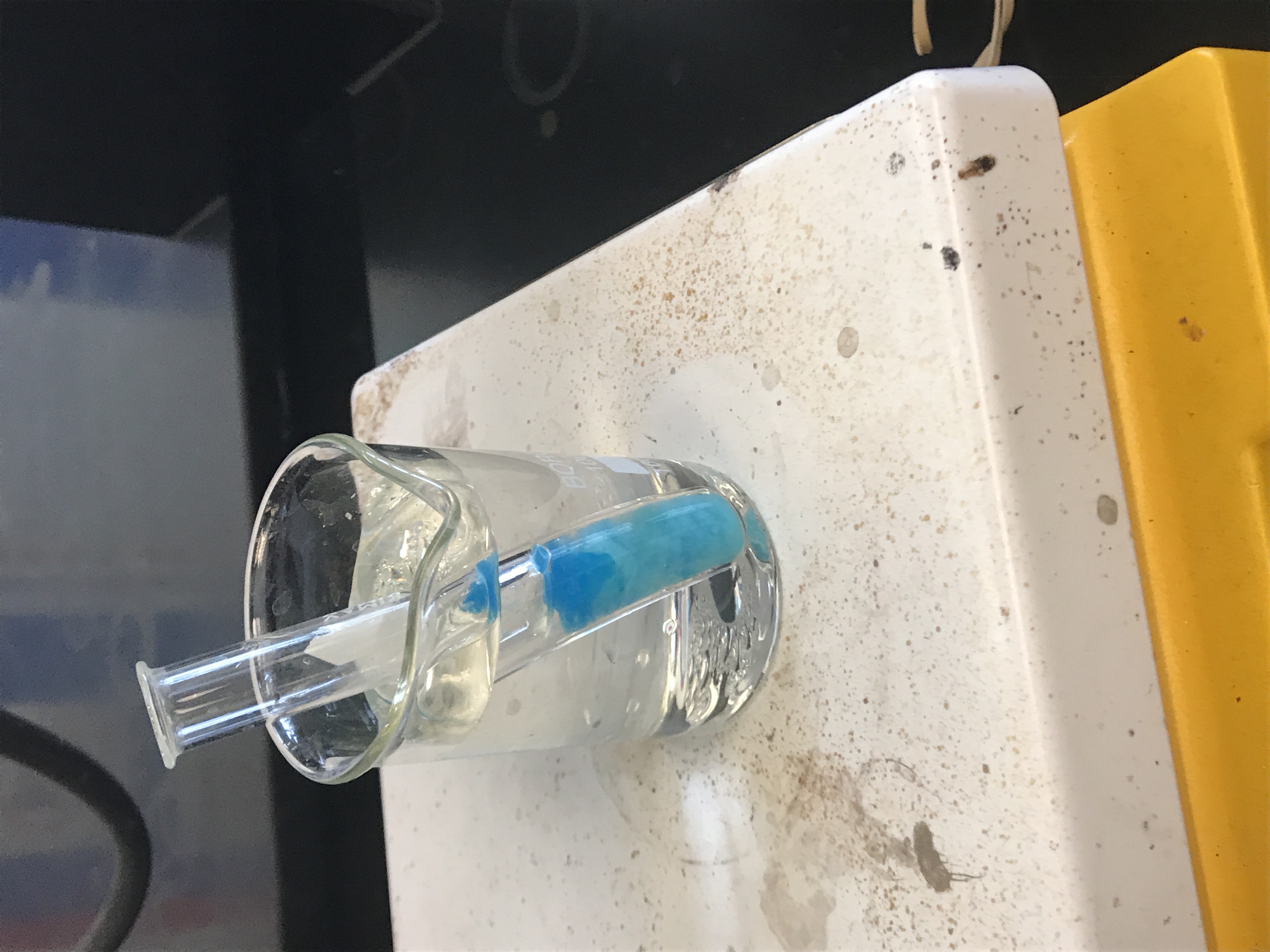
2) Place the test tube from part 1 into the water bath. Place the beaker with the test tube on the hot plate. Heat the water until boiling or until no more changes occurs in the test tube.
(There should be a distinct color change – be patient)
Record Observations
Part 3
1) Obtain a 100 mL beaker and fill halfway with room temperature tap water.
2) Using test tube tongs, remove the test tube from the hot water bath. Turn off the hot plate. Cool the test tube and its contents for 2 minutes by placing it in the room temperature water bath.
3) Take the test tube out of the room temperature water bath. Place the test tube in the test tube rack.
4) Add 2 mL of 1.0 M hydrochloric acid to the test tube.
5) Mix with stirring rod. Rinse stirring rod with water after using
Record Observations
Record Observations
Analysis and Conclusions
Part 1
Reaction that took place in Part 1 is as follows:
copper (II) nitrate (aq) + sodium hydroxide (aq) -> copper (II) hydroxide (s) + sodium nitrate (aq)
a) Write the balanced chemical equation include phases.
b) Identify the type of reaction.
c) What color is the copper (II) hydroxide?
Part 2
Reaction that took place in Part 2 is as follows:
copper (II) hydroxide (s) -> copper (II) oxide (s) + water
a) Write the balanced chemical equation include phases.
b) Identify the type of reaction.
c) What color is the copper (II) oxide?
Part 3
Reaction that took place in Part 3 is as follows:
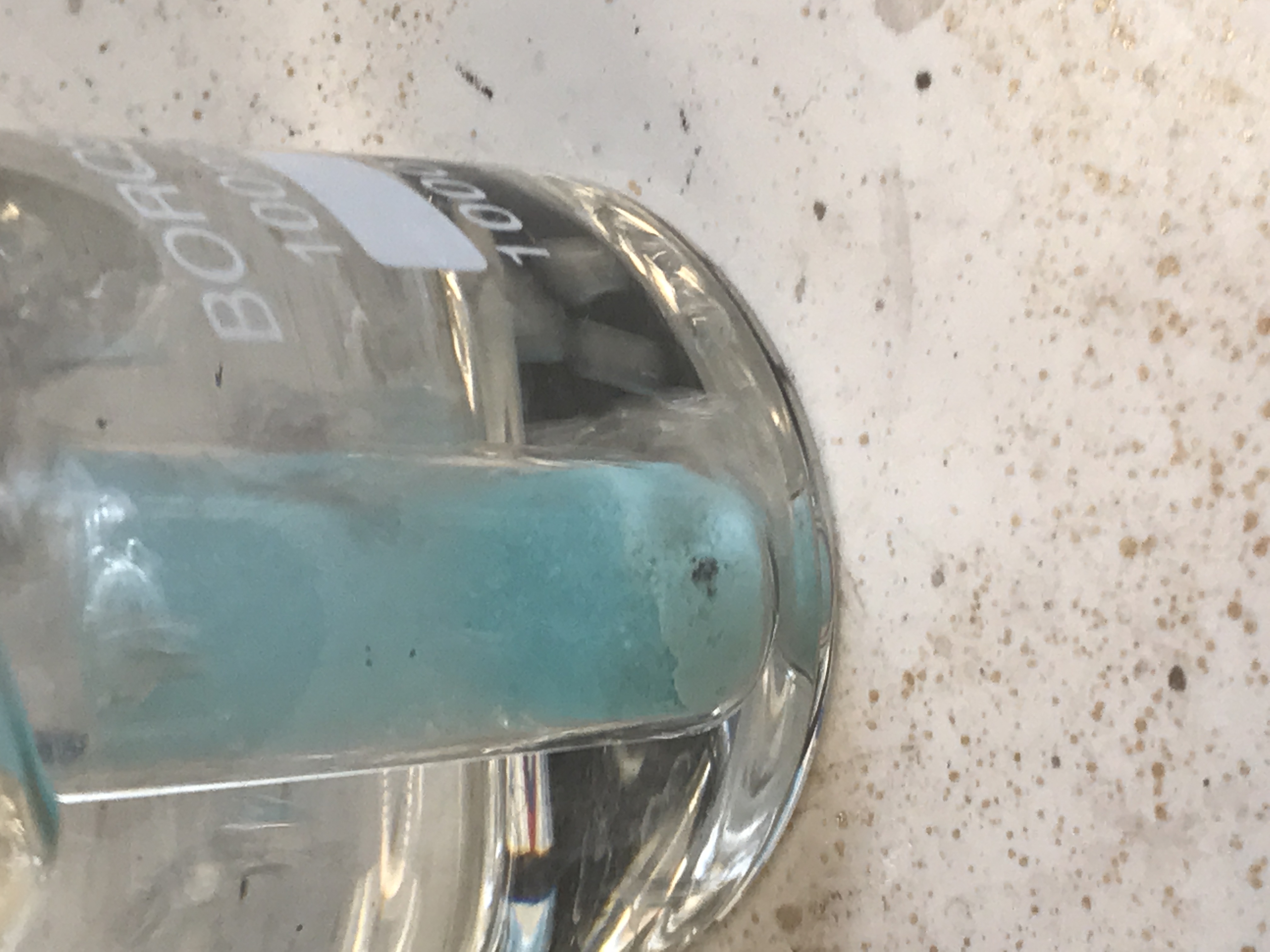
Copper (II) oxide(s) + hydrochloric acid(aq) -> copper (II) chloride (aq) + water
a) Write the balanced chemical equation include phases.
b) Identify the type of reaction.
c) What color is the copper (II) chloride?
Part 4
There are two reactions taking place in part 4.
First one:
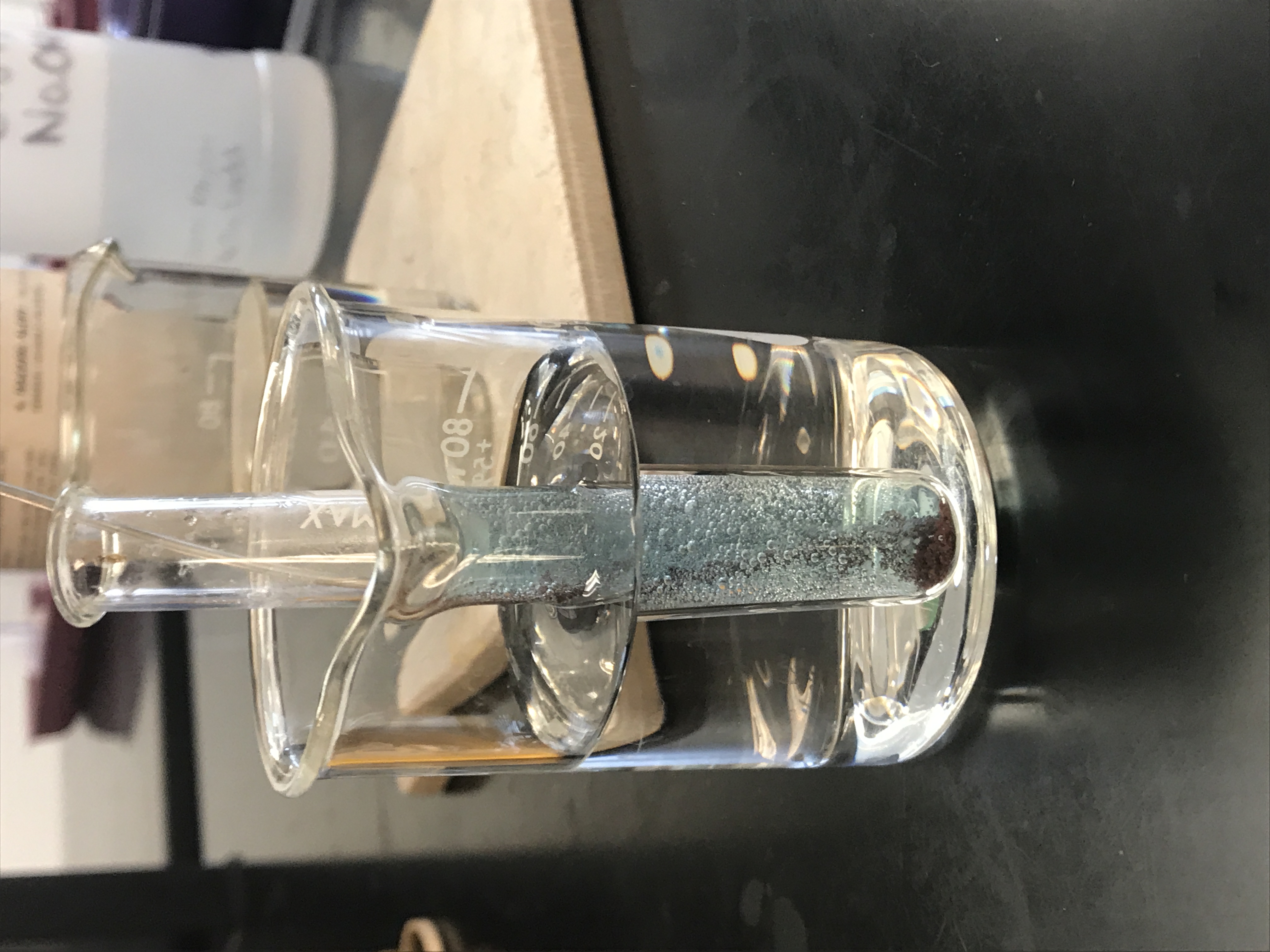
Copper (II) chloride (aq) + aluminum (s) -> copper (s) + aluminum chloride (aq)
a) Write the balanced chemical equation include phases.
b) Identify the type of reaction.
c) What color is the copper?
Second one:
Aluminum (s) + hydrochloric acid(aq) -> aluminum chloride (aq) + hydrogen gas
a) Write the balanced chemical equation include phases.
b) Identify the type of reaction.