Log in
Sign up for FREE
arrow_back
Library
Unit 1 Classification Assessment 22/23
By Joseph Ravenell
star
star
star
star
star
Share
share
Last updated over 3 years ago
19 questions
Add this activity
1
1
1
1
1
1
1
1
1
1
1
1
1
1
1
1
1
1
1
Question 1
1.
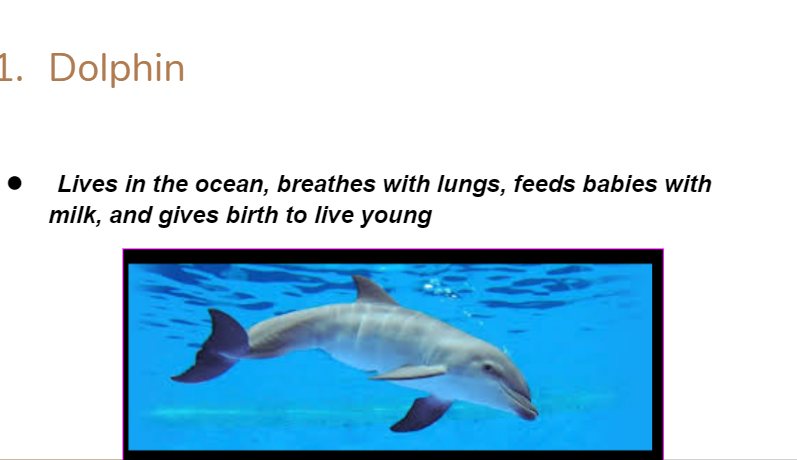
The dolphin is...
A. an invertebrate
B. a vertebrate
Question 2
2.
The dolphin belongs to the ________ class.
A. amphibian
B. bird
C. fish
D. mammal
E. reptile
Question 3
3.
What is your reason that the dolphin belongs in *** class?
Question 4
4.
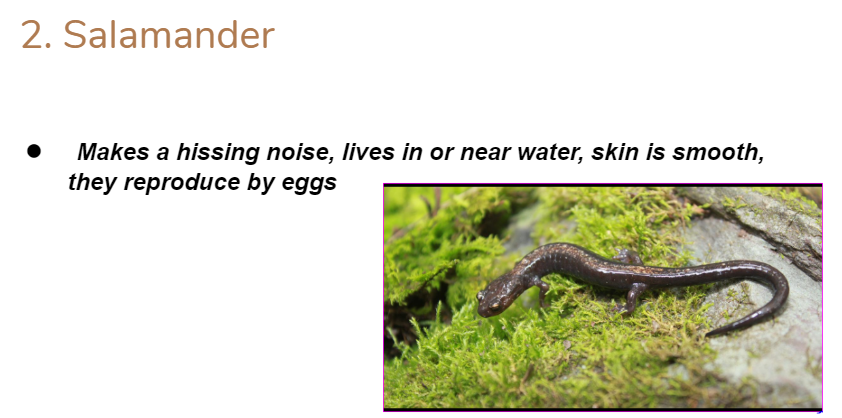
The salamander is...
A. an invertebrate
B. a vertebrate
Question 5
5.
The salamander belongs to the ________ class.
A. amphibian
B. bird
C. fish
D. mammal
E. reptile
Question 6
6.
What is your reason that the salamander belongs in *** class?
Question 7
7.
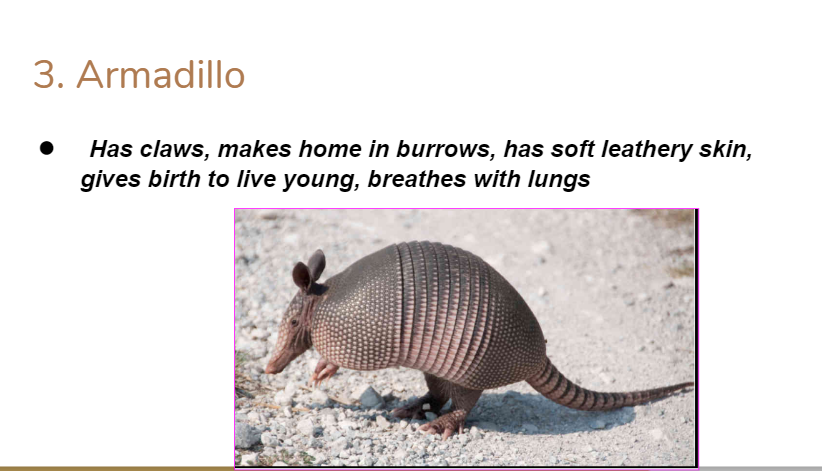
The armadillo is...
A. an invertebrate
B. a vertebrate
Question 8
8.
The armadillo belongs to the ________ class.
A. amphibian
B. bird
C. fish
D. mammal
E. reptile
Question 9
9.
What is your reason that the armadillo belongs in *** class?
Question 10
10.
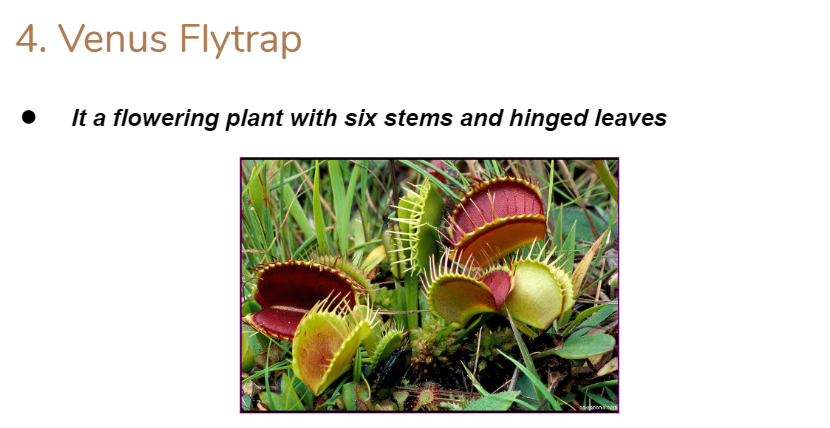
What type of plant is the Venus Flytrap?
A. Nonvascular
B. Vascular
Question 11
11.
What is your reason that the Venus flytrap belongs in *** class?
Question 12
12.
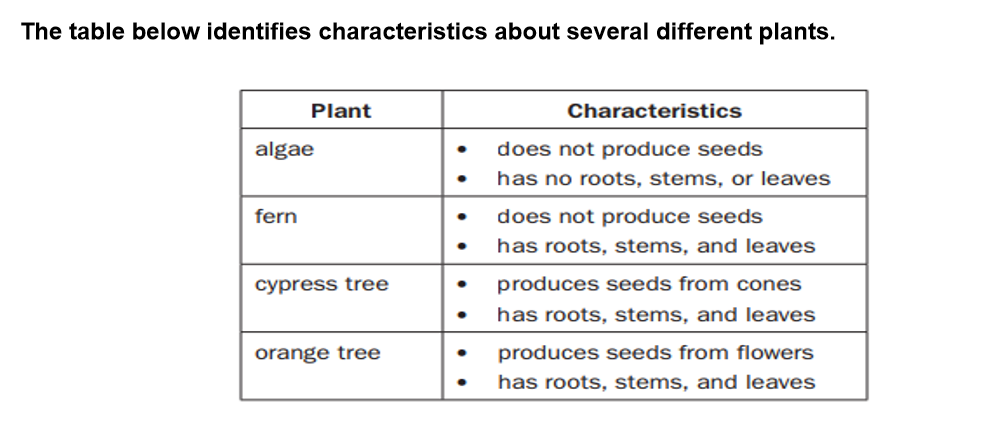
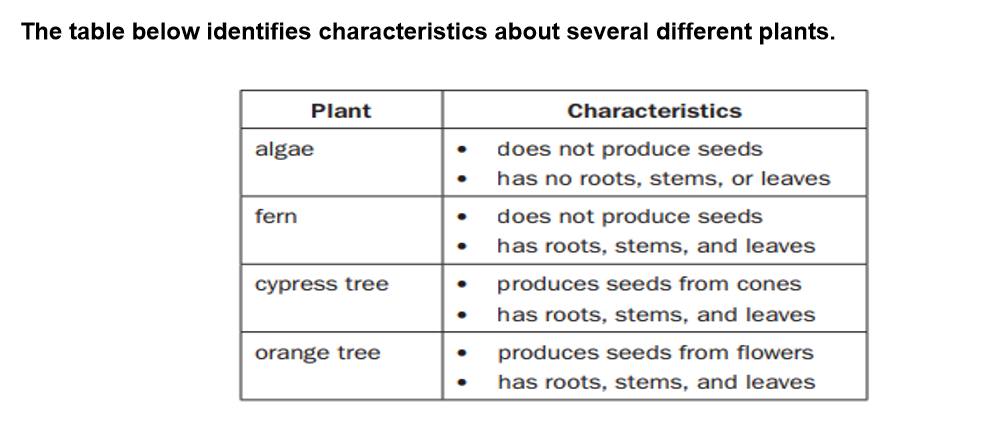
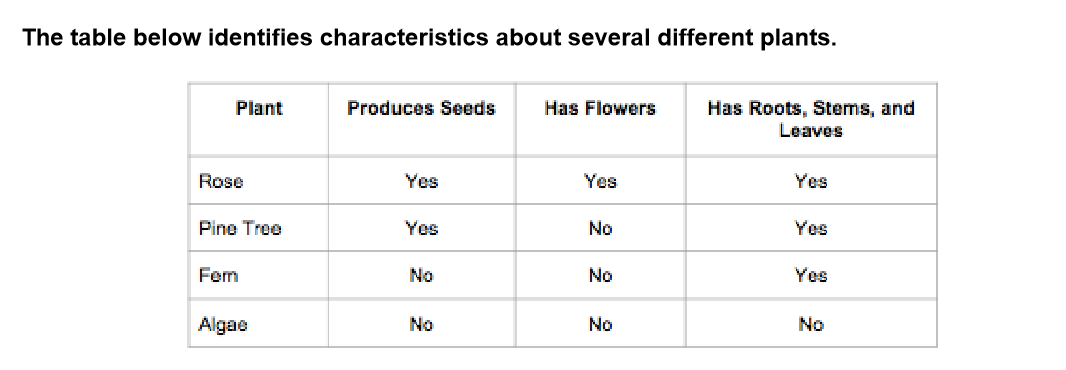
Which plant is a nonvascular plant?
A algae
B fern
C cypress tree
D orange tree
Question 13
13.
An apple tree has flowers and seeds. Which plant, in the above table, is most like the apple tree?
A algae
B fern
C cypress tree
D orange tree
Question 14
14.
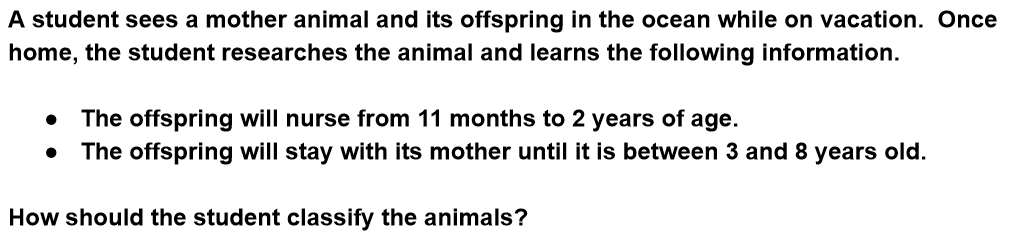
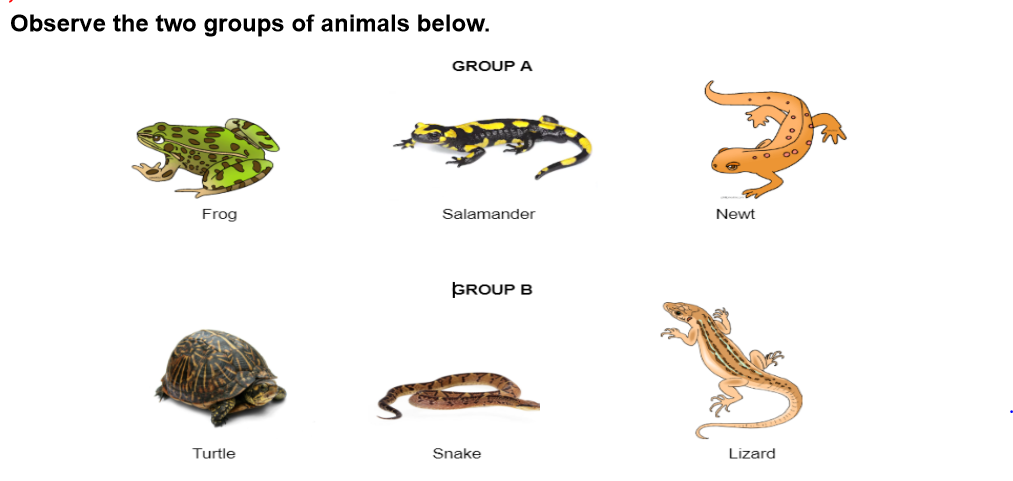
How should the student classify the animals?
A mammals
B fish
C reptiles
D birds
Question 15
15.
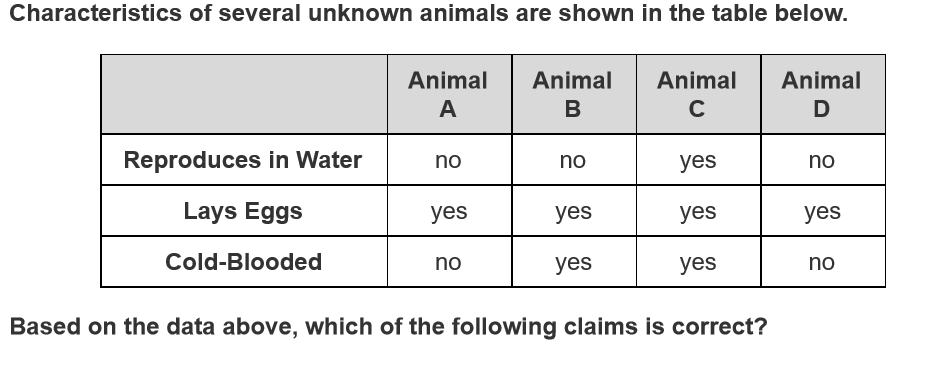
Based on the data above, which of the following claims is correct?
A Animal A is a fish.
B Animal B is an amphibian.
C Animal C is a fish.
D Animal D is an amphibian.
Question 16
16.
Which phrase below best explains how the animals are sorted into groups.
A. The animals in GROUP A are cold-blooded. The animals in GROUP B are warm-blooded.
B. The animals in GROUP A are mammals. The animals in GROUP B are reptiles.
C. The animals in GROUP A are vertebrates. The animals in GROUP B are invertebrates.
D. The animals in GROUP A have soft, moist outer skin. The animals in GROUP B have outer skin made up of scales, bony plates, or a combination of both.
Question 17
17.
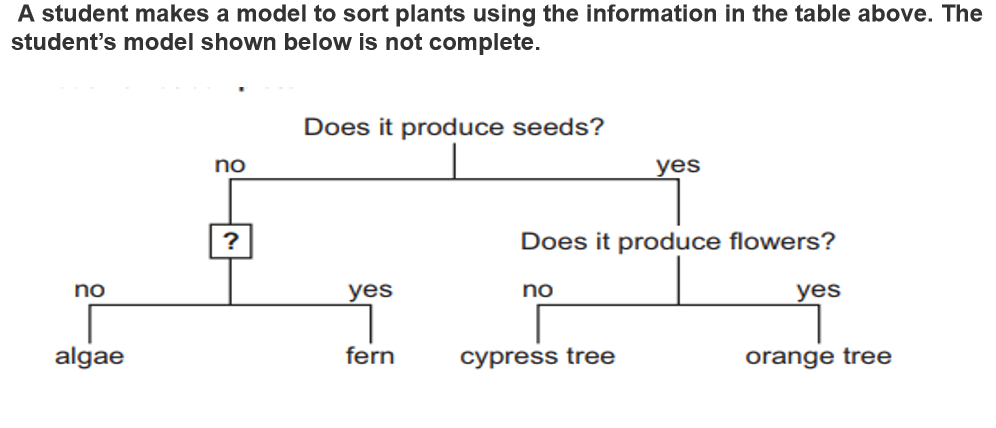
Which question should the student put in the box to correctly complete the model?
A Does it produce cones?
B Does it grow into a tree?
C Does it produce flowers?
D Does it have roots, stems, or leaves?
Question 18
18.
According to the information in the table, which of the following arguments is true?
A Pine trees and roses are similar because they both produce seeds and flowers.
B Roses, pine trees, and ferns are similar because they all have roots, stems, and leaves.
C Algae and pine trees are similar because they both produce seeds.
D Ferns and algae are similar because they both have roots, stems, and leaves.
Question 19
19.
Which
two
plants described below could be classified in the same group as one of the plants in the table?
A Plant A: Does not produce seeds; has roots, stems, and flowers, but no leaves.
B Plant B: Produces seeds; has roots, stems, and leaves but no flowers.
C Plant C: Does not produce seeds; has roots, stems, and leaves but no flowers.
D Plant D: Produces seeds; has no roots, stems, leaves, or flowers.