Space Systems Assessment
star
star
star
star
star
Last updated almost 6 years ago
36 Nsɛmmisa
Hyɛ no nsow a efi ɔkyerɛwfo no hɔ:
End of Unit Assessment
1
1
1
1
1
1
1
1
1
1
1
1
1
1
8
3
1
1
1
1
1
1
1
1
1
1
1
1
1
1
1
1
1
1
1
1
End of Unit Assessment
Take a moment to reflect on your work and circle the emoji(s) that you feel.
Why did you circle the emoji(s) you did
When it is summer in the northen hemisphere, it is winter in the southern hemisphere
Which of these are reasons why summer months are hotter than winter months? Select all that apply:
On Earth, day and night are caused by______________.
What causes night and day?
Earth's orbit around the Sun and its 23.5 degree tilt on its axis cause __________?
Which statement about orbits is correct?
Why does a person on Earth always see the same side of the Moon?
The Moon causes tides on Earth by producing ________.
A Spring Tide occurs when ____________.
The seasons change as the earth orbits around the sun.
When one side of the world is having daytime, the other side is having nighttime.
completed in 24 hours
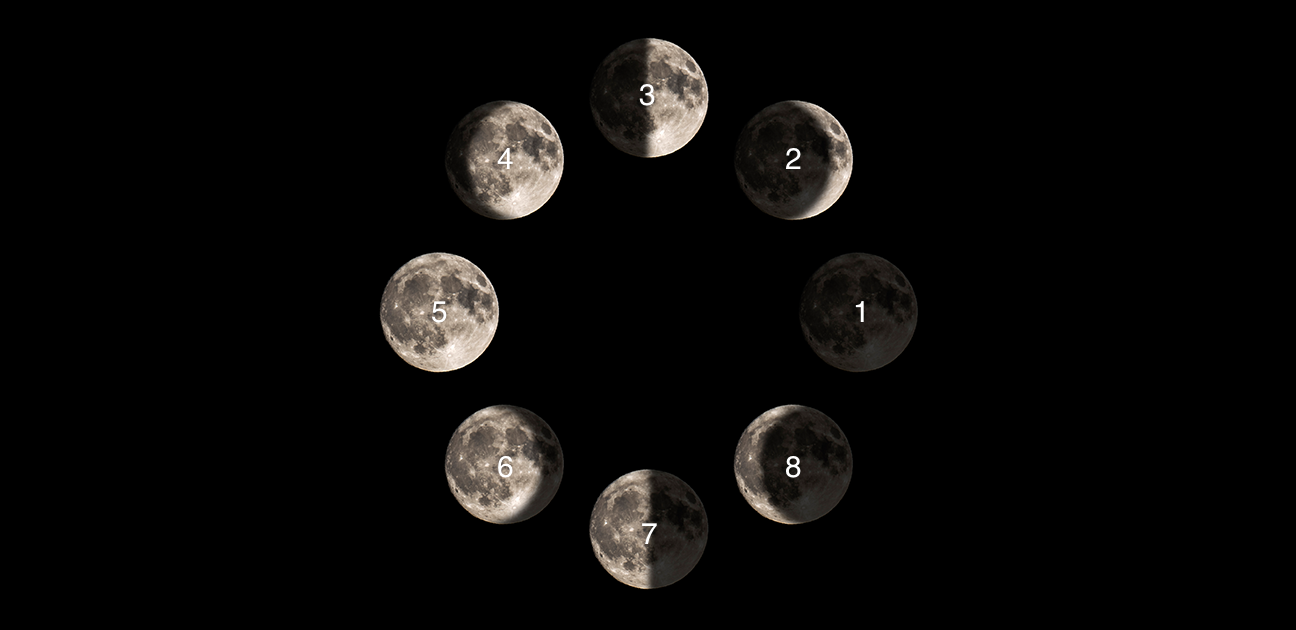
The images of the Moon Phases above are numbered IN ORDER from beginning to end. Drag the correct title from the left to match the right phase based on the numbers above.
First Quarter
Full Moon
New Moon
Third Quarter
Waning Crescent
Waning Gibbous
Waxing Crescent
Waxing Gibbous
1
2
3
4
5
6
7
8
What is an eclipse? What is the difference between a lunar eclipse and a solar eclipse?
What is included in the Universe?
What do scientists call the big expansion that started the universe?
What is the name of the teeny, tiny, super hot and dense particle that the whole universe expanded from during the Big Bang?
Which of the following best defines a galaxy?
What is the name of the galaxy we live in?
What type of galaxy is the Milky Way
What is an Astronomical Unit (AU)? How big is 1 AU?
Which unit would be best for measuring the distance between the planets Venus and Jupiter?
Which unit of distance would be best for measuring the distance between the Sun and other stars in the Milky Way Galaxy?
Why don‘t we see a lunar eclipse every time the moon is in full moon phase?
Why do we only ever see the same side of the moon?
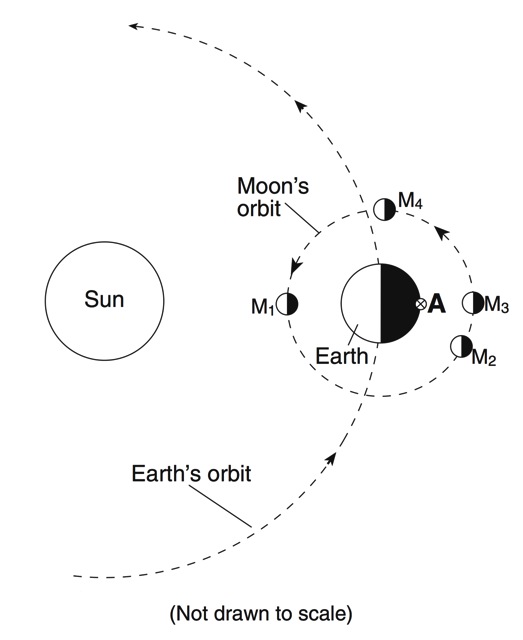
The highest high tides and the lowest low tides will occur when the moon is in position
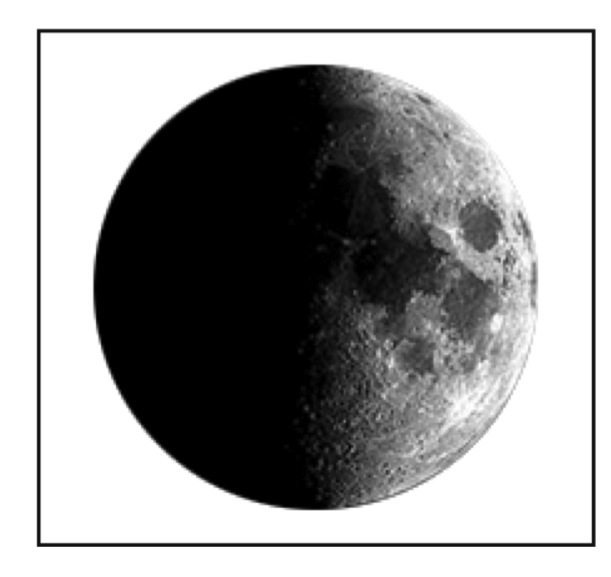
How do you know this moon is waxing?
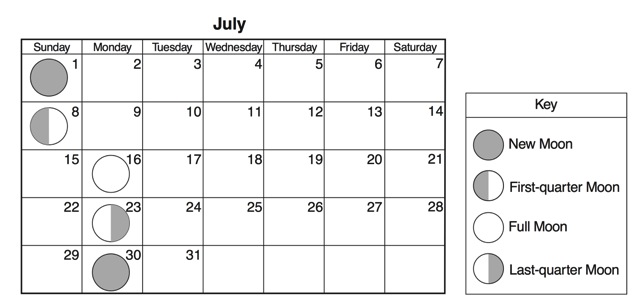
The next full moon will most likely be on
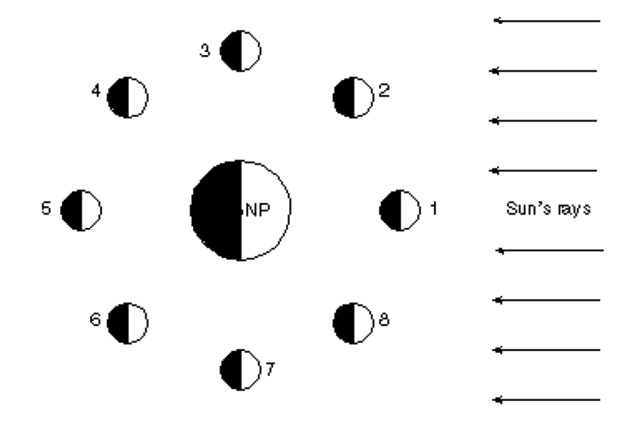
Draw what the moon would look like from Earth when it is in position 1. Remember to ignore the part of the moon we cannot see from Earth.
Draw what the moon would look like from Earth when it is in position 4. Remember to ignore the part of the moon we cannot see from Earth.
Which position is the moon in during a lunar eclipse?
Which position is the moon in during a solar eclipse?
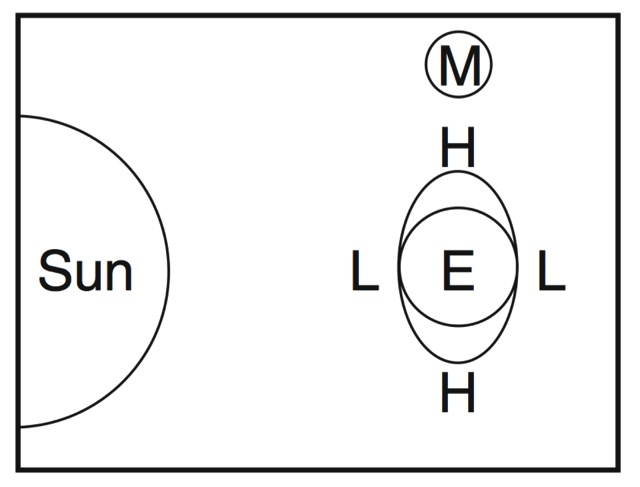
What causes the tidal bulge seen in the diagram (H=high L=low)?
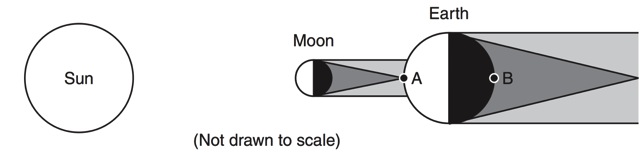
Which location is experiencing a solar eclipse?