G3 M2 End of Module
star
star
star
star
star
Last updated almost 6 years ago
13 Nsɛmmisa
Hyɛ no nsow a efi ɔkyerɛwfo no hɔ:
Eureka Module 2 End of Module assessment
4
4
Eureka Module 2 End of Module assessment
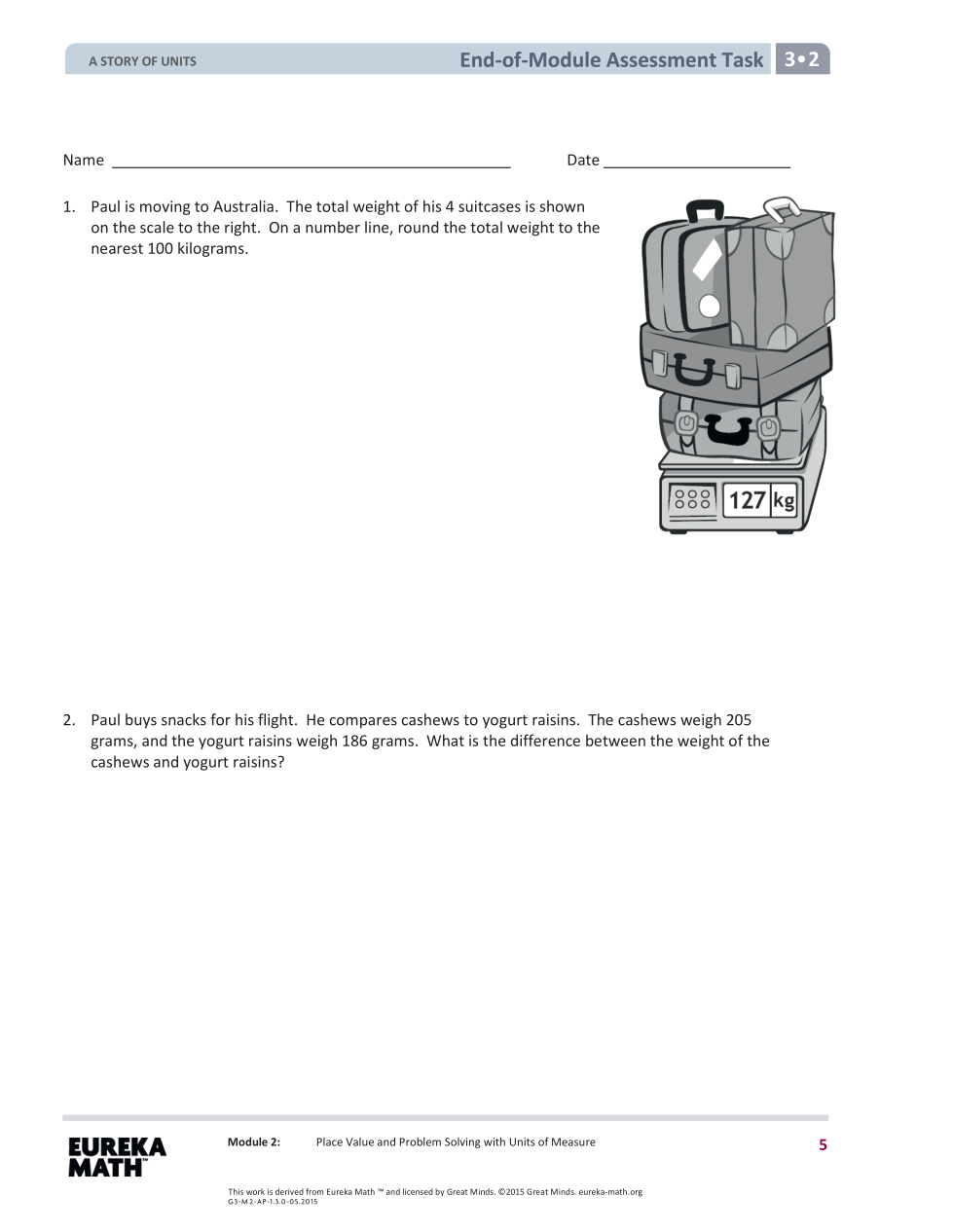
The total weight of Paul's 4 suitcases is shown on the scale. USE A NUMBER LINE to round the total weight to the nearest 100 kg.
What is the difference between the weight of the cashews and the weight of the yogurt raisins? Be sure to label your units!
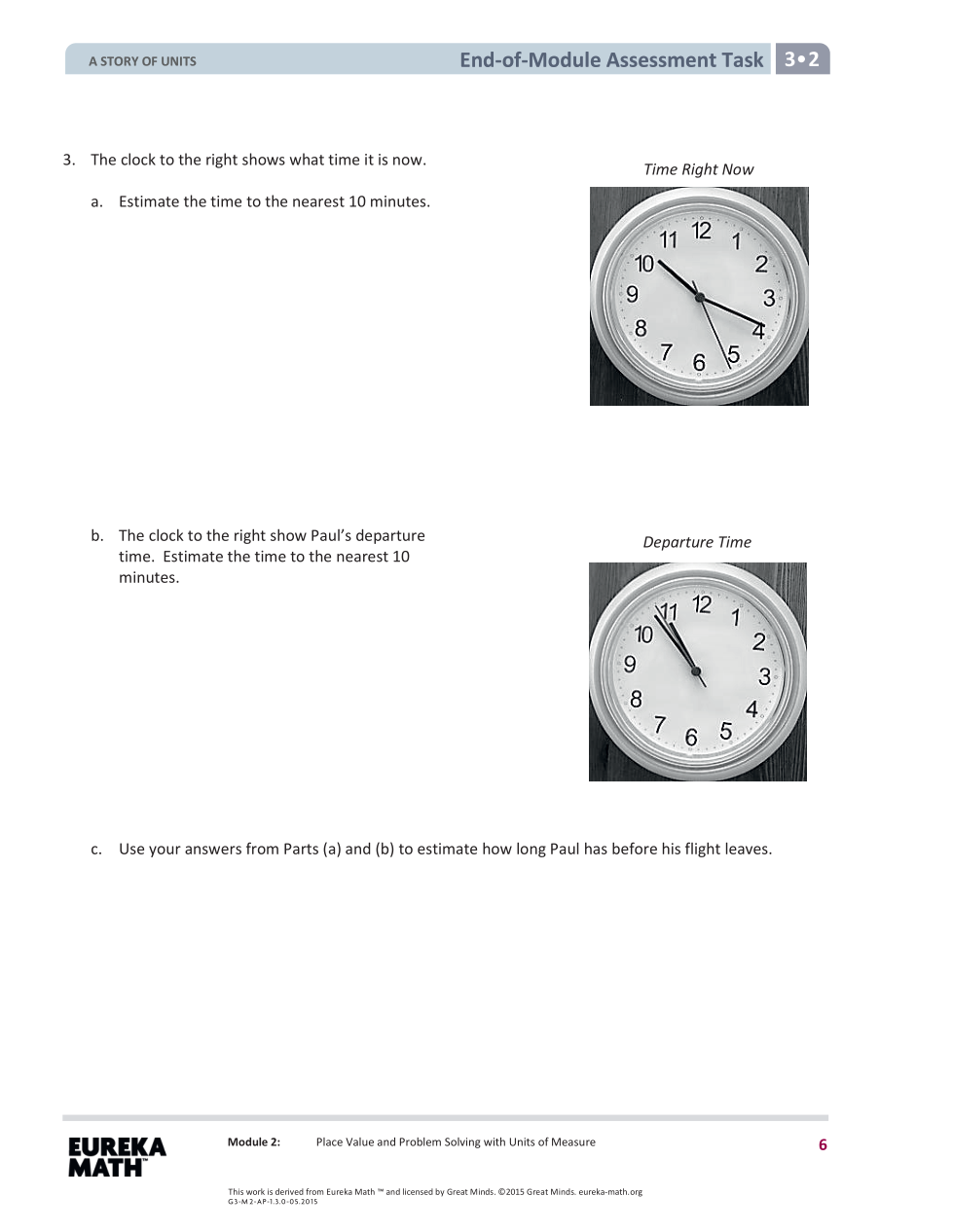
Look at the clock. Estimate the time to the nearest 10 minutes USING A NUMBER LINE. This is the time for Paul now.
Look at the clock. Estimate the time to the nearest 10 minutes. This is Paul's departure (leaving) time.
Using your time estimates from the previous two questions, tell how long Paul has before his flight leaves (departs).
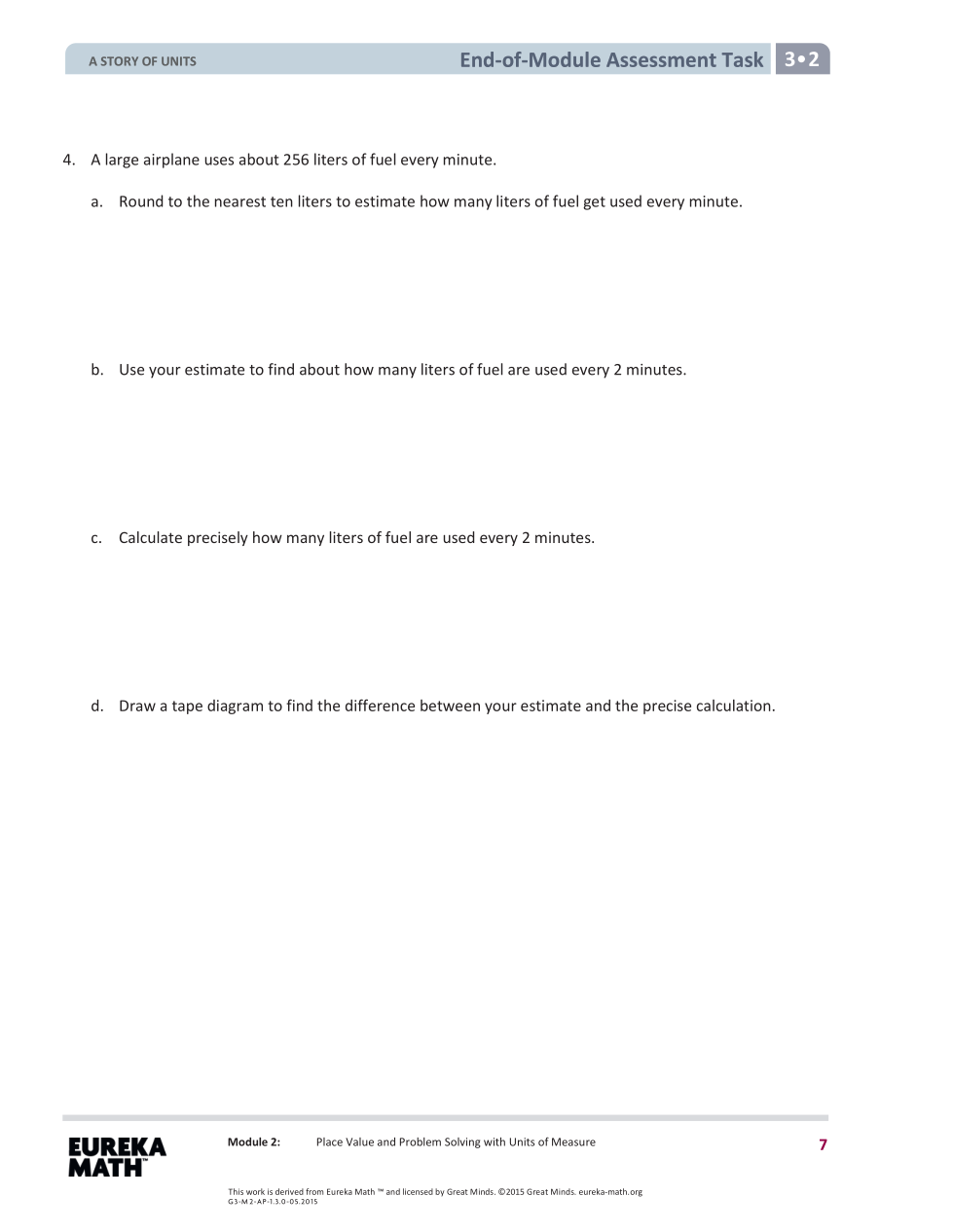
A large airplane uses about 256 L of fuel every minute. Use rounding (to the nearest 10) to estimate how many Liters of fuel get used each minute. Show your work.
Use the estimate from the previous question to find about how many liters of fuel are used every 2 minutes by that plane.
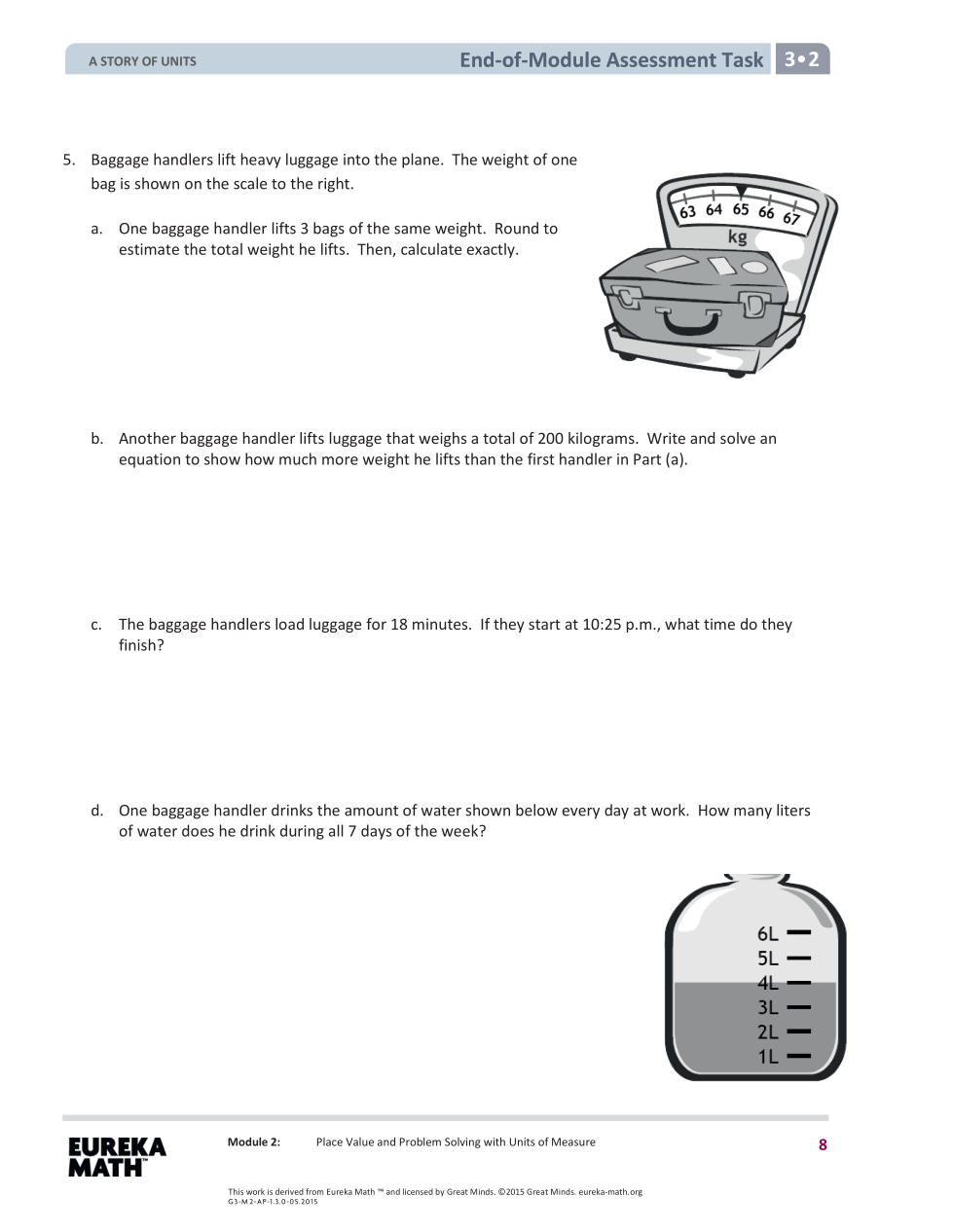
Look at the picture. The scale shows the weight of one bag that is being lifted by a baggage handler. He lifts 3 of these bags. First, estimate the total weight he lifts by rounding. Then, calculate exactly the total weight he lifts.
A different baggage handler lifts luggage that weighs a total of 200 kg. Write and solve an equation to show how much more weight he lifts than the baggage handler in the previous question.
Now calculate exactly how many liters of fuel are used every 2 minutes by the plane.
Now draw A TAPE DIAGRAM to find the difference between your estimate in #7 (part b) and the precise calculation in #8 (part c).
The baggage handlers load luggage for 18 minutes. If they start at 10:25, what time do they finish. USE A TIME NUMBER LINE TO SHOW YOUR THINKING.
Look at the picture. One baggage handler drinks the amount of water shown every day at work. How many total liters of water does he drink during all 7 days of the week?