Kelso High-Chem H-Enthalpy of Reactions
star
star
star
star
star
Last updated over 5 years ago
11 Nsɛmmisa

1
1
1
1
1
1
1
1
1
1
1
Match the term with the best option
| Draggable item | arrow_right_alt | Corresponding Item |
|---|---|---|
Heat unique to a substance | arrow_right_alt | exothermic reaction |
Amount of energy transferring in a reaction | arrow_right_alt | endothermic reaction |
A reaction that feels warm or hot | arrow_right_alt | enthalpy of reaction |
A reaction that feels cold | arrow_right_alt | specific heat |
Fill in the blank: Chemical changes ____ involve the breaking and making of chemical bonds.
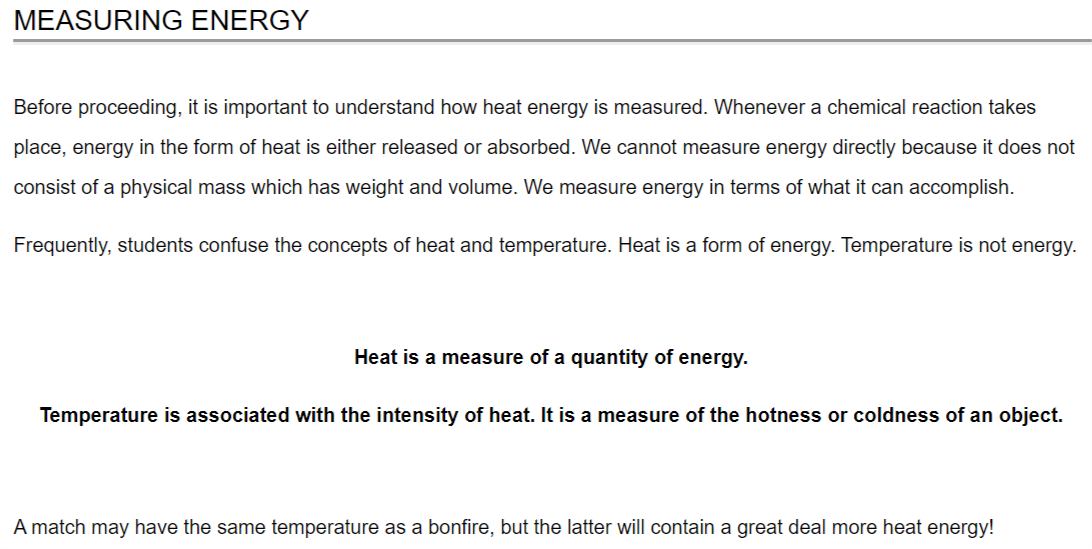
Fill in the blank: ________ is the measure of a quantity of energy.
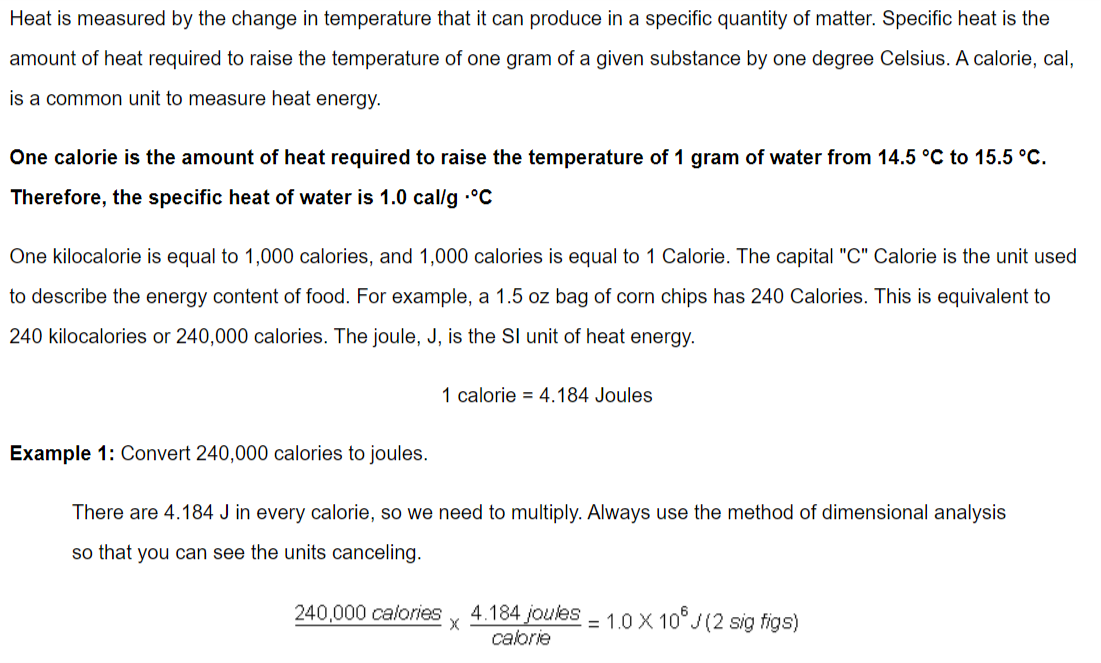
1 kilocalorie is equal to
Which of the following is commonly used on food packages to measure the energy content?
A reaction that releases heat is
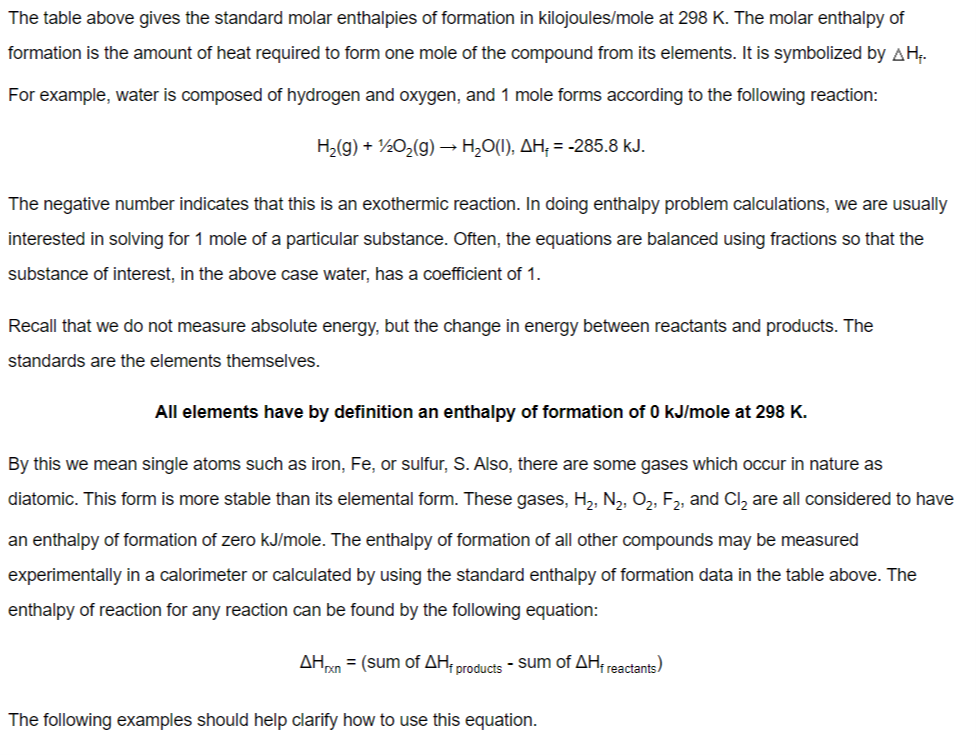
All elements have a ΔHf of ____ kj/mole at standard temperature and pressure
1 calorie is equal to ____ Joules.
Consider the phase change H2O(l) → H2O(g). This equation describes the phase change from liquid water to steam. Think about the heat flow that is necessary for this change to take place. What do you predict about the process?
Formation reactions that are exothermic have ΔHf values that are
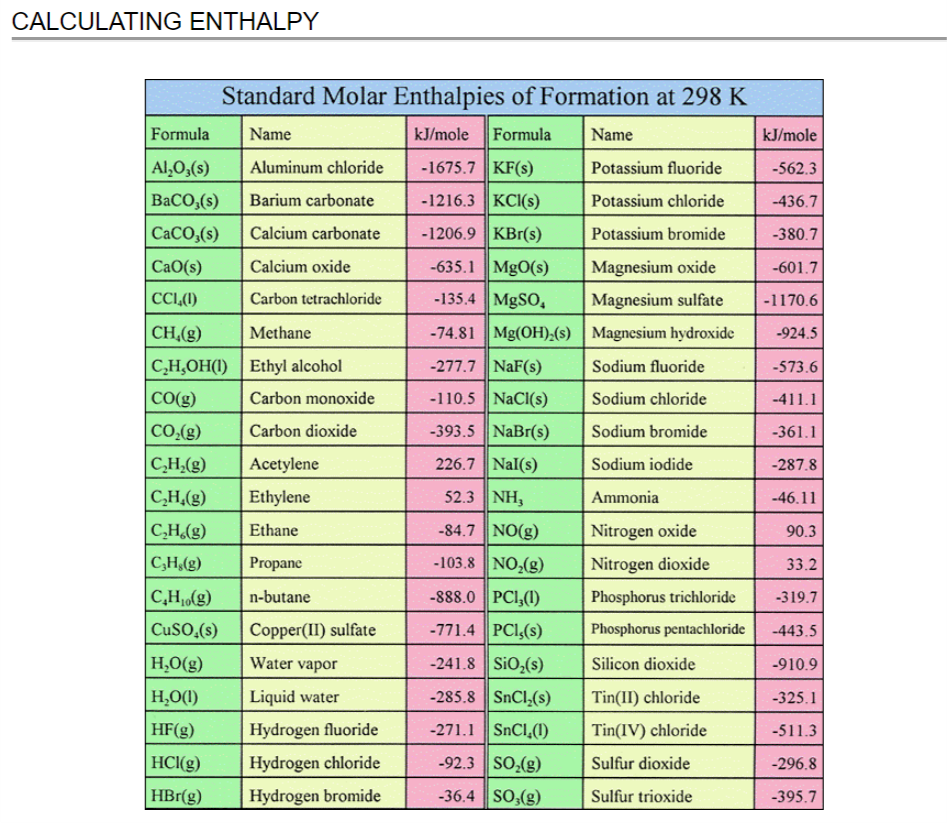
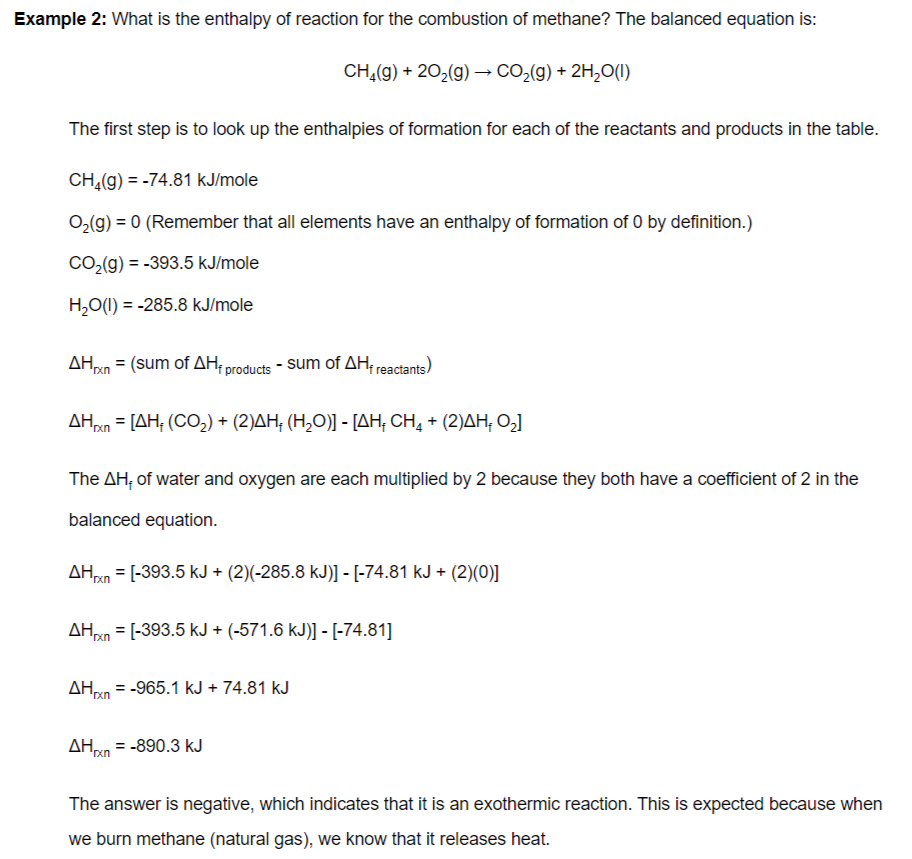
We can also use the equation for enthalpy change for physical phase changes. Consider the phase change H2O(l) → H2O(g). Calculate ΔHrxn.
Use ΔHf values from the table above.
ΔHrxn =