Log in
Sign up for FREE
arrow_back
Library
USH Chapter 7, Part 1: The Road to Revolution (1763-1775)
By Haiyen Truong
star
star
star
star
star
Share
share
Last updated over 1 year ago
10 questions
Add this activity
3
mic
zoom_in
1
IIRC.01
1
2
mic
zoom_in
1
Question 1
1.
What do you think a "revolution" is? Explain this term in your own words using at least
one
complete sentence.
1
RTS.01
Question 3
3.
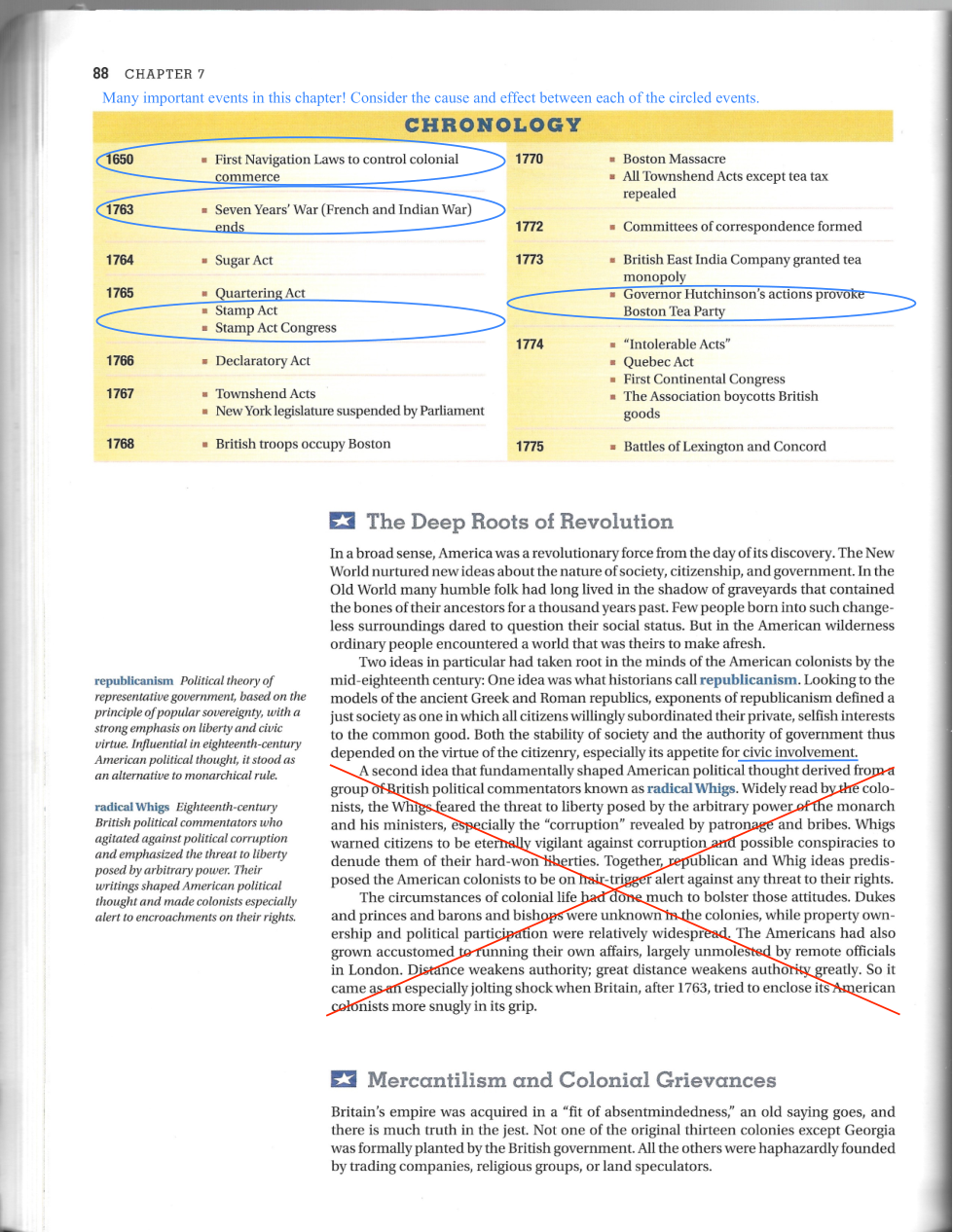
According to the passage, republicanism is
A set of laws in which citizens financially support one another.
A system of government in which the people have the power to make decisions.
A new type of independence created by the colonists.
Similar to monarchical rule, but less strict.
4
5
mic
zoom_in
1
IIRC.02
1
RWC.01
7
6
mic
zoom_in
1
RAG.01
1
IITE.01
8
mic
zoom_in
1
IIRC.02
9
10
mic
zoom_in
1
IIWD.01
1
IISM.01
Question 2
2.
Over the course of the first two paragraphs, the narrator's focus shifts from
politics to economics
cons to pros of British rule
present conflicts to future conflicts
causes to effects of British colonial policy
Question 4
4.
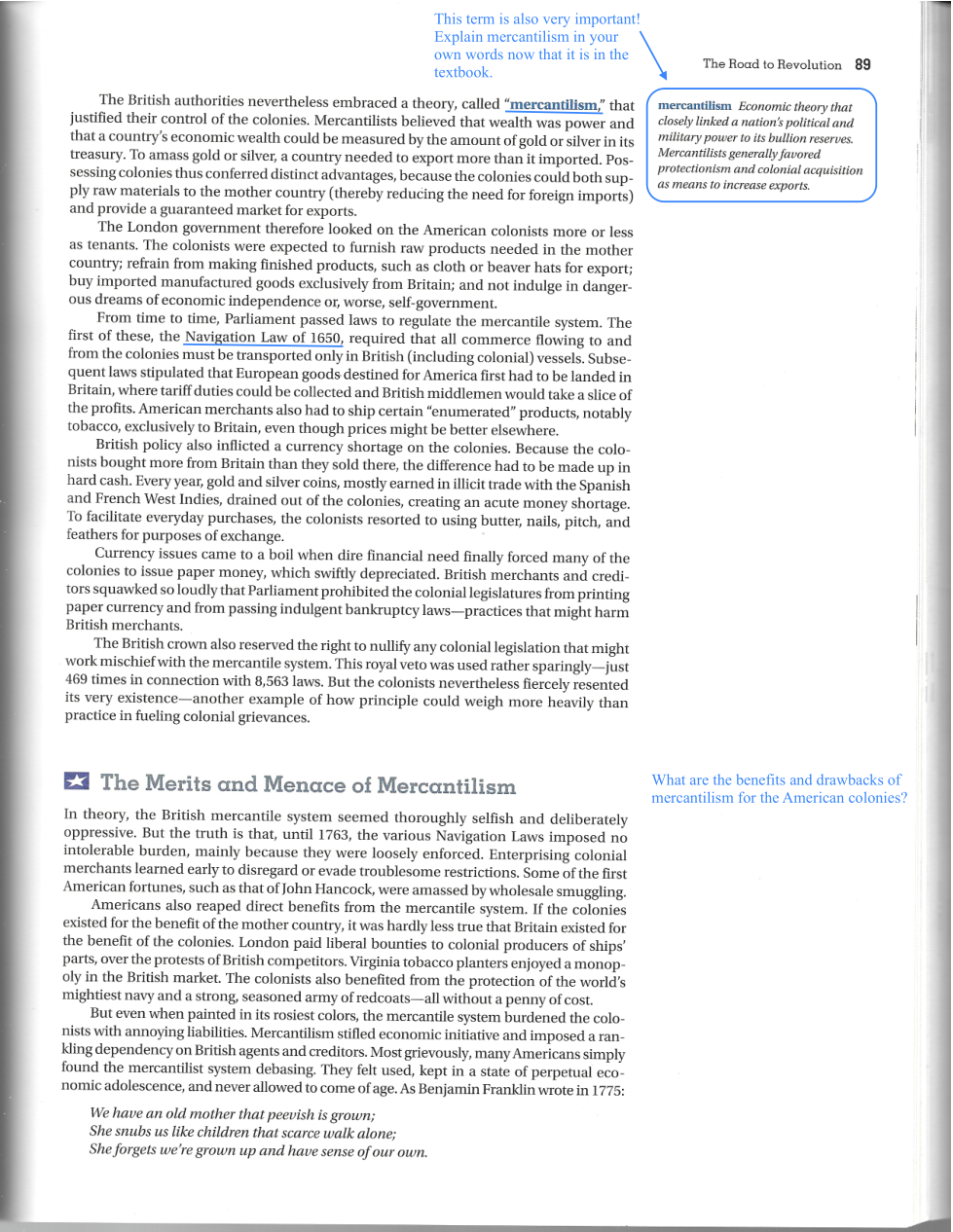
It can be reasonably inferred that mercantilism allowed Great Britain to
import more goods than it exported.
sell raw materials to other countries.
maintain financial control over the colonists.
reduce the need for colonies in the New World.
Question 5
5.
The analogy of mother/child used by Ben Franklin has primarily which effect?
It establishes the growing independent mindset of the colonists.
It proves that most colonists wanted a separate country from Great Britain
It demonstrates the one way advantages of mercantilism for Great Britain.
It highlights the parochial relationship between the colonies and Great Britain.
Question 6
6.
Based on the text, with which claim about the Stamp Act would the colonists most likely agree that the Stamp Act
was an unnecessary tax intended to keep the colonists subordinate to Great Britain.
was burdensome, but not as much as the Sugar Act.
swayed most colonists to support independence from Great Britain.
was unfair because it only applied to the colonists.
Question 7
7.
Which choice provides the best evidence for the answer to the previous question?
"Could its real purpose...their historic liberties."
"Yet the Americans...pinch their pocketbooks."
"After bitter protests...died down."
"Worst of all...juries not allowed."
Question 8
8.
As used in the sentence, "conceded" most nearly means
retained.
denied.
supported.
acknowledged.
Question 9
9.
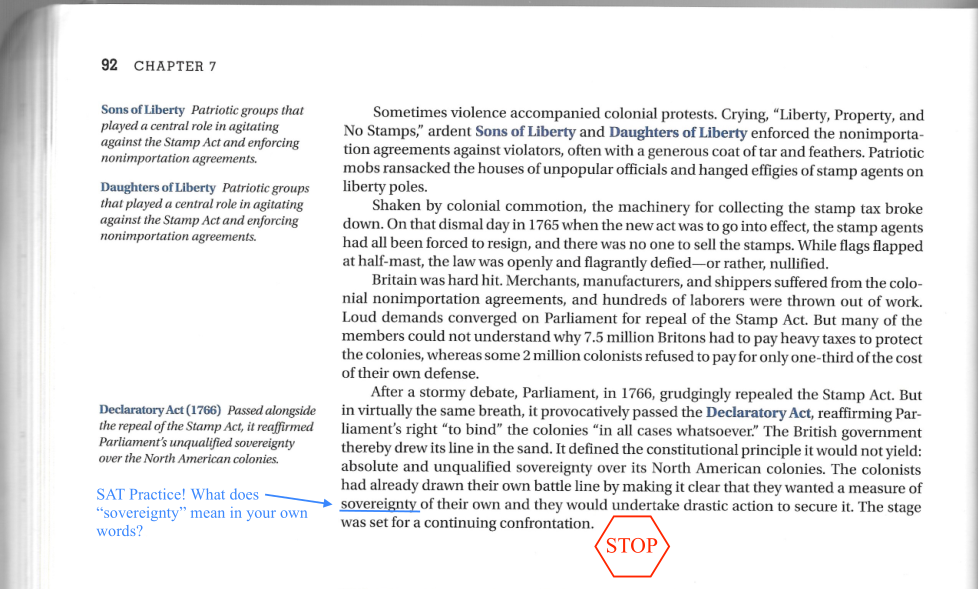
As used in the sentence, "sovereignty" most nearly means
independence.
government.
tyranny.
dominion.
Question 10
10.
Which choice best summarizes the chapter reading?

Although the colonists did not plan to seperate from Great Britain, growing tensions surrounding economic policies made revolution imminent.
The colonies were inevitably going to become an independent nation.
Great Britain was justified in its measures to control the colonies because of the colonists' insubordination.
Most of the colonists supported the revolution from the start.